
Change Will Never Be This Slow Again
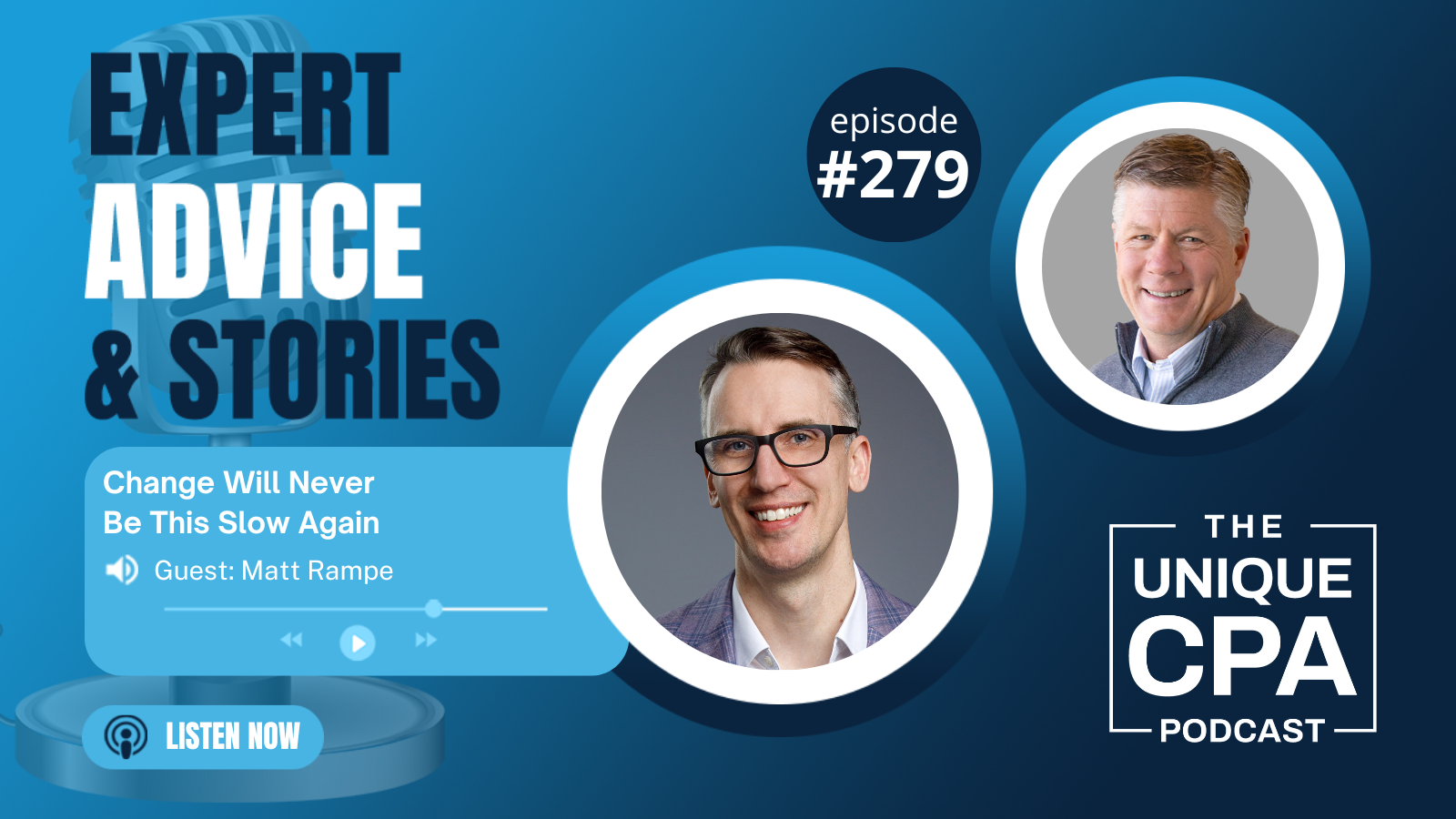
With Matt Rampe
Change has never moved this fast, and accounting firms are feeling it everywhere: AI eating into bookkeeping and tax work, private equity reshaping ownership, generational splits over who’s willing to adapt. Matt Rampe, a change management specialist at Rosenberg Associates, joins Randy on Episode 279 of The Unique CPA to break down why partnership structures built for consensus often become anchors when speed matters most. He argues real transformation happens person by person, through vulnerability and trust rather than mandates from the top. While in theory, smaller firms can pivot like speedboats while giants struggle to turn, Matt points out that larger firms have their own advantages too, but both agree that billable hours must give way to value, tax preparers must at least consider becoming advisors, and that it takes a bit more than just an edict from above on “modernizing the firm” to get partners and associates alike past “that sounds great, but I’ve got a day job.”
Show Transcript Hide Transcript
Today, our guest is Matt Rampe. Matt is partner at Rosenberg Associates, where he advises CPA firms across North America on strategic planning, partner compensation, profitability, leadership, and change management. Matt, welcome to The Unique CPA.
Thanks for having me, Randy. Pleasure to be here.
Yeah. I was thinking about this before we went on. I’ve known of you—I feel like I’ve known you—for quite a while, but I think the first time we actually talked was, I was talking to your wife on a Zoom call a month or two ago and you were in the background. Is that the first time we talked or was there another time?
I think it is, and I kind of ducked down into the Zoom call, and yeah, I mean, I think likewise, I’ve known of you for a long time and heard through Kristen, but I think that was the first time we put face to face.
Well, and I was very happy we did that and I was happy that we got this scheduled too, so, yeah.
Yeah, me too.
This is going to be a lot of fun. The thing I think we’re going to talk about, but before we get into, before I tease what I think we’re going to talk about today, because I never know until we get into this, so who knows what we’re going to talk about. But before we do, give us a little more background on you and, I guess, your journey, how you became this guru to accounting firms and that, so I’ll let you jump in and give us more info.
Well, I think my journey, I’ll go back one step because I know you like to talk about people’s journeys. So I went through college, I started in Boston actually, and I studied English and sociology, and I started changing majors, and I studied economics and then I dropped out, and I studied art, and then I moved across the country and finished in accounting and finance. So from the undergrad perspective, I was always fascinated with sort of two discussions: people and business, you know, practicality. Those weren’t married until later in my life. So those themes. Then I went into business valuation. I was living in San Francisco. I worked doing business valuation for startups. So I was using that analytical side of my brain, I loved it. I learned how CPA firms operated. We had kids, twins, and moved back to the Midwest, where parents were. I did business valuation again, I did litigation support and learned a lot of important lessons about hard conversations, and again, another CPA firm. But at that point, and in part through the litigation, I saw a lot of firms being destroyed. I saw partnerships divorcing and not well, if you want to think about it that way. And I thought, “I don’t want to be a part of that side of things. I can make money doing that, but I want to be more part of the solution.” So I started to study coaching, and I did leadership coaching, and I eventually joined Kristen, consulting with accounting firms on how do we do work better? And I think, again, it was calling back to those people questions. How do we treat people humanely? We all go to work, right? Like, we spend a lot of time at work, we have a lot of relationships at work. How do we do that well and generate the economics and the business results? And so I think that’s always been playing in my mind. And it’s turned into strategic planning and partner coaching and all the rest.
Nice. Alright. Well, that’s a pretty cool story / journey. I love the fact how you had these separate paths that then didn’t get married till later in your career. But I do love hearing those stories and I probably, you and I will get together sometime. I want to hear even more of this story.
Oh, yeah. I’d be happy to.
Yeah. So one of the things, and I didn’t mention this in the intro, but you are certified in change management. Tell me that certification, you mentioned it offline, but what is that, and how did you get that?
I got recently certified in John Kotter’s framework. He’s a professor at Harvard University and I like, you know, lifelong learning and certifications, and that one in particular boils down to a framework for how organizations create change, and rapidly? And so I thought, you know, change was becoming more and more evident to me as an important topic for CPAs. And I thought, I need to get my arms around this and have a clean way to help firms through it.
Yeah. So change, you just said it: change is happening. Change is, and I say this and I’m sure you think the same way, change is always happening. I mean, it’s always out there. There’s any point in time in any profession, but we’ll stick to accounting because that’s what you, and I know, you can go 20 years ago and you’ll say, wow, it’s changing so rapidly. I don’t think it can ever be said that it’s changing as rapidly as it is right now, but again, just the way that things are, that’s probably going to be in 20 years the same thing we’re going to say. But change is scary for people. And change is hard; I believe change is harder in the accounting profession just because the personalities that we have and in this profession, but let’s talk about change management, because this intrigues me. I hear the word all the time. I hear the words, I guess it’s not one word all the time. I know it. What I get, the concept of we need to help manage this change to make it easy for everybody. But let’s just define it. What is it, I guess, what is change management? Because you know, you hear it, but I need a bigger picture of it.
Yeah, I feel like it’s a pretty abstract term. So to kind of bring it into concrete language, to me it’s creating change in a firm that sticks. So I think we’ve all experienced change that didn’t stick. There was like the pronouncement from on high and like that, no, everybody was like a veto, silent veto, you know? Partners that noded yes in the meeting didn’t take root. So this really is about, it’s a process to help the change become part of the firm’s DNA. What I liked about the framework that I studied is it’s a human-centered framework. It’s not an abstract business framework that’s some, you know, pie in the sky at some 30,000-foot level. It’s change happens at one human being scale at a time. And so are we getting people to buy in with their hearts and their minds to whatever we’re asking them to do? You can only volun-tell people so much, right? This is the real messiest stuff of like, how do you get enough critical people on board in your firm such that it tips, to sustain whatever that real change was that you were trying to make.
Alright, so it gives me a better idea, but still there’s a lot more that I need to absorb on this. But one of the things when we talk about change management now, and you kind of mentioned it, the buy-in from other individuals within the company, and how do we get that message out there that they clearly understand it. I’ve been thinking more and more, and I’m really no expert in this area, but I just see it, that the current structure of accounting firm, you know, hierarchy, if that’s the right term, I don’t like looking at it as hierarchy, but leadership structure, I think can hinder change too. Because if I need every partner to buy in and one partner is not, how does that affect things? So, when you’re out trying to facilitate change management, two things: One, do you agree maybe the structure of a partnership model is hindering change management? And two, how do we change that?
Yes, I think I do agree. It’s a great point and I think people have been talking about the partnership model and sort of the flaws for some time, and I would agree with that. I don’t think it means partnerships can’t survive or can’t evolve or can’t do it. I just think it means, you know, we’ve got seven partners and everybody gets to shoot something down just because they’ve got a percentage behind their name, like, you’re going to be stuck. You’re stuck, you’re anchored in the mud, is what happens. And so I think that is a flaw. Two things that I see kind of operationally, how do you fix that then? At the partnership level, you need governance. And that’s where you can operate more like a corporate model. It doesn’t mean you have to be super hardcore about it, but it means, you know, I’m talking about this in Salt Lake City in a couple days. We’re talking about governance and who makes decisions, how does decision flow? Who gets to operate? What’s the latitude? What’s the partnership agreement? You know, you have an MP and a board and partners fall online or whatever that model is so you can make decisions faster.
That said, so I think that’s like people again have talked about that kind of thing before. I think beyond that, outside of the partner room, you’ve got to get the buy-in of your people. And I think that’s what we suck at too. Also, I think the first is a challenge, right? But I think some people are making progress on that. I think the second part is like, how do you really win the hearts and the minds of the whole organization? And I think that’s where you have some platitudes on things like AI, like “It’s going to free us up to be advisors.” And I do believe that. And I believe there’s benefit, but I think it’s like, if I’m a senior associate, what else, you know, if I’m, pick a personality of the organization, how does it affect my life? Am I scared? Am I angry? Am I frustrated? Am I pissed off? How do I feel? You know, I think thinking through all those different things, that’s really what, again, gets it to go past partnership mandates downward to the organization is moving enthusiastically towards that direction.
So what I heard is one of the leadership skills you need during change management is empathy, understanding how this is going to impact others, or at least the perception they have of the impact to them.
Yep. Absolutely.
Alright, I’ll go to my next thing then, which is my thing I talk about all the time: I think empathy and vulnerability are tied together. So I think gaining trust as a leader helps with that empathy. And I think one of the greatest ways to gain trust is through vulnerable leadership. I don’t know if that’s something you ever talk about when you’re out there, but it’s something I’m passionate about.
I love it. I always think of Brené Brown when we talk about vulnerable leadership, and she talks about like, you can’t have connection without vulnerability. You can’t have leadership without some kind of vulnerability. The truth is we just don’t know all the answers, and so I think to pretend otherwise is just fake. And so I think the other part about this moment in our industry is we are facing transformative changes that nobody has an answer to. So if we were talking about business development, you know, whatever, you could sort of tell me how it goes and lean into my discomfort. But we’re transforming into advisory firms that are AI-enabled with a global workforce and, you know, we don’t know what that other side looks like. So I think, I guess, long way of saying, my point is, as a vulnerable leader, I think you do gain points to say, “Let’s co-create this thing together. What do you think? What are your thoughts? Give me input. I’m going to need feedback. We’re going to learn together, because I don’t have the roadmap either.”
Yep. And you kind of just alluded to it, but we’ve always, and we said at the beginning that change is always, I mean, it’s constant. It’s always been around. It’s been our profession. It’s been other professions. But as we said at the beginning, it just seems like it’s that point in time where it’s never been greater. And so obviously that is why change management skills are needed. But what are the things that we’re dealing with now that, you know, when you’re talking to firms, like what are the key things that you’re having to help with? Why is it so, change management skills are so much greater today than it was yesterday?
Yeah. What are some of the changes we see firms dealing with today? Move to AI, right? Everybody’s racing. Every time I do strategic planning, people feel behind on AI. Whether they are or not, they feel behind on AI, and we know that’s coming and we know we got to get on board quick. Move to advisory, AI. The next domino is, well, now you don’t have to do the bookkeeping, the tax can, you know, work, maybe some of the audit maybe, et cetera. Like, what else are you going to do? At that time, time to reinvent and move upstream into advisory. That work is significantly different than the work we’ve done in the past. So that’s a big shift.
Private equity: Are we going private equity? Are we integrating PE firms, integrating those acquisitions? That’s a huge amount of organizational change. They’re growing very rapidly from a venture capital days. I know when you scale a firm quickly, a lot of things are collapsing and it takes a lot of work to just kind of keep rebuilding that organization. Global workforce succession, generational changes, those are there too, right? And any one of those things would be major changes. So I think those things are some of the likely suspects that we see with a lot of firms that are, again, creating these sort of massive transformational changes and putting pressure.
Yeah, and we do have that convergence of all these significant changes happening at once. I think the one that is stressing people out the most is AI, because it is rapidly changing. Like, today, I was just using Claude, a new feature just came out today, which I would play with immediately.
Yeah! Right! And there’s no instruction manual. I am doing the same thing. I’m on Claude and I’m like, something pops up and I’m like, I don’t know, I better just start using it. But you don’t even know how to use it or what it does. Right. But it’s emerging.
Yep. And so I spent probably an hour, which I wasn’t planning, creating a new logo because it was a design studio aspect of Claude that I at least hadn’t seen. Maybe it came out earlier, but it’s the first time I saw it today. And so one, I think people feel this stress, this pressure to know it all, and we can’t, because it’s changing constantly, but they’re also doing what I did today and take an hour doing something they weren’t planning on doing. And so I mean, when, part of change management is time management, I mean, how does that play in? Because you can get so bogged down going down these paths of all this change that I need to come up with, and the next thing I know I’m putting in 80 hours a week because I’m working on change and I’m working on my clients.
Yeah, I think it’s a fair point. You know, one of the things partners always say is like, dude, I got a day job, right? I don’t need, like, you start talking about stuff and they’re like, that sounds great, also, you know, I have all this other work. I think it is an important point, and so again, when we do strategic planning, when a firm thinks about its vision, I think at that “forest” level, you can start to think in big chunks of what’s important for us. To get to where we want to go, what are the couple things that really matter to us that we have to get done that may not all be, you know, today’s day-to-day based. Kotter talks about this where he says, the structure of our organization, traditionally the sort of top-down hierarchy, you know, a little org chart, is great for efficiency and getting stuff done predictably, but change is disruptive, and we need that, but we also need people volunteering and doing experiments like you did in Claude, and taking time out of their day to play with stuff and break stuff and learn stuff and embed stuff, and do trials that fail and then report back, because those become products and service lines in the future. And so there is a little bit of this dance to learn. We’re going to break things, you know, we’re going to do stuff outside the normal, you know, quote-unquote “normal business day.” I don’t want to work 80 hours to do it, hopefully. But normalizing that part of your day is now going to be focused on strategic change, right, you know, in these initiatives that really are going to pay off dividends in the future.
Yeah. And are firms going to recognize that? I think innovation and creativity are so important to move forward and doing things wrong and breaking things and trying new things, but if we are on the, I’m worth the amount of time I am able to bill my hourly rate, how are we going to get past that mindset? Because I think, this is my personal opinion, but the way things are changing and AI comes in, I think everybody has to get away from selling time and instead sell value. So how’s that going to play into this change if I’m still valued as an hour?
I agree with you on that. I think that’s emerging… I don’t know if it’s a sleeper issue or not. But I think it’s common. I think the billable hour is going to collapse from a pricing mechanism. We saw firms publicly discounting, because you used AI, your customers will do it, or some competitor’s going to undercut you or whatever. Or you used Blue J, and it took you less time to do tax research. And so I think whatever it is, you’re going to spend less time. I think we do need to move to some value pricing or fixed pricing.
I think that does tie into—as a barrier, I don’t see a lot of firms with clarity around what does that mean? What does that look like? How do we roll that out? I think that’s a change management kind of flag on that change in particular is you need some leaders or you say, Randy, you do that with your work, I’m going to do me over here, you go do that with your clients first and let me know how it goes. So I think we need some leadership and definition around that as an industry, and I think people need to pop out quick. I think it also ties into this pivot into advisory of like, how do we tell the story of who we are to a client? I think if I could say, “Yeah, I’m going to do your tax return, I think it’ll take me five hours and there, therefore, here’s the bill,” that’s been the story, and I think that narrative has to shift to, “We work year round, here’s all the levels of value that I provided you, and I might have to do different stuff too.” But then we have to adopt that value language.
I agree. And something you said a few minutes ago also is like, you try it, I’ll see how it goes and I’ll keep doing my thing over here. And I’m stereotyping, I’m sure, but there’s people my age—I’m the end of the boomers—that we’re leaving the profession quickly, “why am I going to change?” I’ve been doing this way for the last 45 years, so there’s no reason for me to change, and that may be fair, because I’m not going to need that. But then you do have younger generation coming up that wants this change. They want things different. And that’s another way, how do you manage this generational difference in the workforce when we’re doing change management?
Yeah. It’s a great point. It’s a practical point, and we do see it. I think if somebody’s two years out from retirement, dude, don’t make ’em change. I mean, don’t give them the flag and make ’em lead the revolution, right? I think there are people who are going to lead this stuff. There are people who don’t block, and I would ask them to not be a blocker. And then if you’re blocking, we have an issue, if you’re actively working against what we’re doing, but I might carve a path for that person if we can, and say, hey, two years, don’t block, but we’re going to find energetic leadership where there’s strengths and passion, we will find that elsewhere in the organization and let those people lead it through. But it’s absolutely a reality of, I have firms that partners, and even in the manager ranks, you know, seasoned people, they’re like, oh, we got five people who are going to retire in five years. And you’re like, that’s, they always did it a certain way and they don’t want to change. And you’re like, okay, that’s a lot of stuff to work through. But yeah, it’s a real issue.
Yeah, for sure. So we went through mindset issues of things right now in the profession, “I’m not going to change,” things that we actively need to change to help facilitate us get to the next level. But what are some of the things that you see that firms are actually attempting right now from a change standpoint, and whether they get it right, I guess is important, but also maybe where they’re making mistakes?
Yeah. I think some examples of that is we said AI is hot, the hot thing in everybody’s hands. So that’s an area where one of the things I do see that firms have a lot of, I would call urgency around that. So there is a lot of shared urgency, which is an important part of creating change. There’s alignment behind, “we’ve got to do this.” They have people who are interested, you know, leaders who are stepping up and saying, I want to own this. So that’s going well. I don’t see a lot of strong vision for, what is both from a workflow practical standpoint, what does that look like? Sometimes AI requires, not the AI expert, but I think you have to have some relatively similar processes, or have thought through your processes, and I think people haven’t necessarily, they’re trying to slap AI on what exists, and it’s not optimal. I think even more important than the technical change there is like, what does work look like on the other side of AI adoption, and that vision? And again, that goes to the hearts and minds of the people who are doing the work. So, “Are you going to fire me? Are you going to make me an advisor? What if I know in my heart that I won’t be a good advisor, or I don’t want to be an advisor?” Some people love tax return prep, if you take that away from them, I don’t know. There’s a question mark. And so I think thinking through that a little more specifically, how many advisors do you need in a firm?
I mean, kind of extrapolating out all these pieces in being able to articulate a clear vision, again, that’s compelling to the firm at all levels. I think the other one on that one is removing barriers, and so that’s an important change management skill. And one example, easy example with AI is skills. You said Claude just shot off a new thing today, do people know how to use AI in a way that really they’re comfortable with, is within our AI policy, not putting our information on the internet or whatever to Microsoft or whoever it is, do people have the skills to use it? That would be one example of a barrier that we need to remove, and then we can start to get people on board with that change.
Yeah. Something you said sparked something in me, so I think where you said, hey, are we just trying to put AI on top of other things that we’re currently doing? I have this thesis? I don’t know if that’s what I’d call it. That it’s actually easier for smaller firms and maybe midsize firms to make these changes just because it’s more of a speedboat and turning hats quicker than this yacht, the thousand people on it. Do you see that, or is there a way to, you know, make a larger firm as nimble as a small firm when we’re looking at change?
I think there’s truth to what you’re saying. I think a small firm can pivot faster. A small firm can be, if they want to be AI-native, they can get there a lot faster than if I’ve got a thousand people and legacy systems and legacy mindset, that’s going to be harder. I think bigger firms also have other advantages though, too. They’ve got deeper pockets, right? They’ve got more sophisticated organizations. They can pull in experts with more resources than the smaller firms. I think they just, a larger firm, again, almost needs that R&D function to say, outside of business operations, we’ve got people working on it. And then that gets appropriately rolled out. And one of the things in the framework is generating short-term wins. It’s almost like a pilot, right? You say, in 90 days we’re going to do a sprint, we’re going to define a specific objective for AI, let’s say, as an example. We’re going to do this project and it’s going to convert 2% slice of our business to AI-embedded. And then people are like, oh wow, like that’s cool. And then you go another 4%, and then you go another 90 days, another 180, and you keep rolling out initiatives and it builds practical wins, but it builds momentum through the organization, belief that like, this isn’t just, you know, stuff on the wall. This isn’t just posters in the lunchroom. This is really happening. This is, I can see it, I can feel it, I want to be part of it.
Yeah, as I said, my thesis is that, but there’s things that go against that too. A friend of mine’s managing partner of a top 20 firm, and he and I were on a panel together recently, and they are super innovative when it comes to technology and all that, and so I’ve seen it. Now, maybe it’s a little harder for him at that size, but I also have a friend who, she came from tech, she was a CPA, but she came from tech, was working with a tech company and decided, I’m going to go, her own thesis is, I’m going to, from the ground up, build an AI, like you just said, AI-native firm, and it’s really cool to watch what she’s doing. So, I kind of like watching both of those and seeing where they’re going. But somebody who specifically, you know, a year ago could go in and say, this is what I’m going to build, I think she has her thesis. It’s pretty cool to watch. And I think there’s those opportunities now with all the change happening for people to go and start this firm of their, you know, some people call it their lifestyle firm or whatever, but these firms of their dreams. So it’s a pretty cool time in the accounting profession if you’re willing to change. If you’re not, I’m sorry, but you’re going to have some problems. I assume you agree with that, if you’re not willing to change, I think you’re getting passed by.
I agree. Well, and I think I heard somebody say recently, change will never be this slow again. And I would agree. That’s kind of how you opened up, and I would agree. I think the pace, not only the volume, but the pace of change is accelerating. And I’m an optimist and I think, I think we get, this is a moment to reinvent ourselves as a profession. I think the world is pushing us in the crucible to reinvent. We may not have a choice about that, but I think it becomes an opportunity to say, who does the work? What type of work do we do? How do we deliver the work? Every accountant in every movie ever was a boring person. And I think in the future maybe that’ll be different, right?
I believe it!
Maybe we reinvent, what is the narrative around the accountant in your life? And I think that’s exciting.
I believe that completely. I’m speaking of change, you know, I think you may have heard this, but people listening too, I mean, I’m going through a change right now, you know, retiring from the company. I started Tri-Merit at the end of July. This will probably run shortly before that period in time, but I’m super excited about what’s next, because I’m very lucky, again, team up with these companies that are, I think, going to have a major impact, at least the way they’re going right now. A major impact on the future of accounting, on a positive standpoint, the accounting profession, the people in it. And so just seeing, and honestly the companies I’m working with are all innovative 30-year-olds out there doing these cool things. It’s super exciting to me. So where you say we are at a point in time where it’s super exciting, this profession’s changing, the people coming in are going to be different. And nobody can see it right now probably, but I’ve got a huge smile. I think this is a really awesome time to be in the accounting profession. Alright, but so what, my point was…
Agreed! You’ll get no objections from me, Randy, I agree.
There you go. So my point besides plugging, and I’m doing something different apparently, was my point. I don’t know.
This is going to run at high schools across the country.
Exactly! Oh, that’s a cool thing too. I’ve just, I’ve been talking with a handful of universities about, you know, even teaming up with them, about attracting people into the accounting degrees. You know, even starting at high school, I think is great. I often say five-year-olds, but that’s probably a little young. But when we’re talking about change and the excitement that’s going to be happening, is happening in this profession, we said early on, change is hard, people fear change. If you throw a thousand things at somebody once, they’re just going to shut down. So for anybody who’s managing partner at some level in their organization that can have that impact on creating change—I think everybody can—but that can manage that change, where do they start? Where, what would be, how would be the, you know, give ’em a couple steps or something to feel more comfort level that they can handle this change?
So you can feel good for today on change?
Yeah!
Absolutely. I think bring it down to the practical level. I would say three things, do three things, and you’ll be off to a good start. One is, change thrives in specificity. Pick one area of change that you already have urgency around with your leadership team, and I think there’s probably plenty, right? But pick one specifically. Next, I would say identify a group of leaders who are going to step up to make that change happen in your firm. I think without leadership it becomes like a, you know, gotcha, like a game of tag of like, that sounds great, but you know, the partner door closes, people leave the room, nobody’s there. Who’s going to stand behind this initiative? Talent, skills, mindset, and organizational clout. It could be at all levels. Step three is then form a clear vision for what does that look like in the next, you know, two years? If we were successful at making that transformation in AI or advisory, value billing, or whatever, fill in the blank, building your CAS group out, what is that clear vision that makes the humans who it will touch better off on the other side? If you can do those three things, which I don’t think is impossible, you’ve got a lot of momentum, you’ve got a lot of direction, you can probably overcome a lot of the pieces that are going to come next.
Yeah. Believe me, this is super informative to me. I think, it better be, everybody in the accounting profession needs to listen to this, so somehow Matt, and you and I have to get this in front of everybody’s eyes and ears over the next month or so.
Deal.
But I really appreciate you being on the show and discussing this, because it is, I think the most important thing that we’re dealing with in the profession right now is change management, because there’s so much change happening. Before we wrap up, two final questions: First is, we just did that whole discussion, amazing things, talked about the accounting profession, but you and I are not thinking accounting profession 24 hours a day. And so when you’re not doing this change management or other consulting you’re doing with firms, what’s your outside of work passions, what do you enjoy doing?
I would say maybe two things. Kids and family, for sure. I love my kids. I have twin boys. I love them. They take a lot. They take a lot of my time. I love them. I love the family. And physical fitness. I have found as I get older, and I’ve always enjoyed it, but it’s the foundation, right? It’s the foundation. I think without that, when you have, and I’ve had a health scare, when you have a health scare, you realize that’s the foundation, everything else is on. And I enjoy lifting weights and swimming and bodybuilding and all this stuff, different stuff.
Nice. Those are good ones. And then lastly, if they want to hear more about you and what you’re doing, working with firms, change management, all the other things you help with, where would they find out more about you and the organization?
Our website, Rosenberg Associates, would be a great place. LinkedIn, I’m there and, or find me at a conference or a webinar or a podcast like this one. But yeah, reaching out through the website is probably the first place.
Got it. Well, Matt, I really appreciate you being here. Thank you for being a guest on The Unique CPA.
Thanks so much for having me, Randy. It was a pleasure.
About the Guest
Matt Rampe, ASA, PCC, works with CPA firms across North America, helping them navigate the complexities of practice management. He focuses on providing valuable and actionable insights to CPA firm leaders with strategic planning, succession planning, partner development, and profitability. Matt regularly shares his knowledge through forums like the Rosenberg Associates blog, Accounting Today, and Inside Public Accounting. He is a sought-after speaker on practice management topics at national conferences and webinars for CPAs. In addition to his business valuation designation, he is a certified professional coach and has additional training in change management, organizational change, new product design, and difficult conversations.
Meet the Hosts
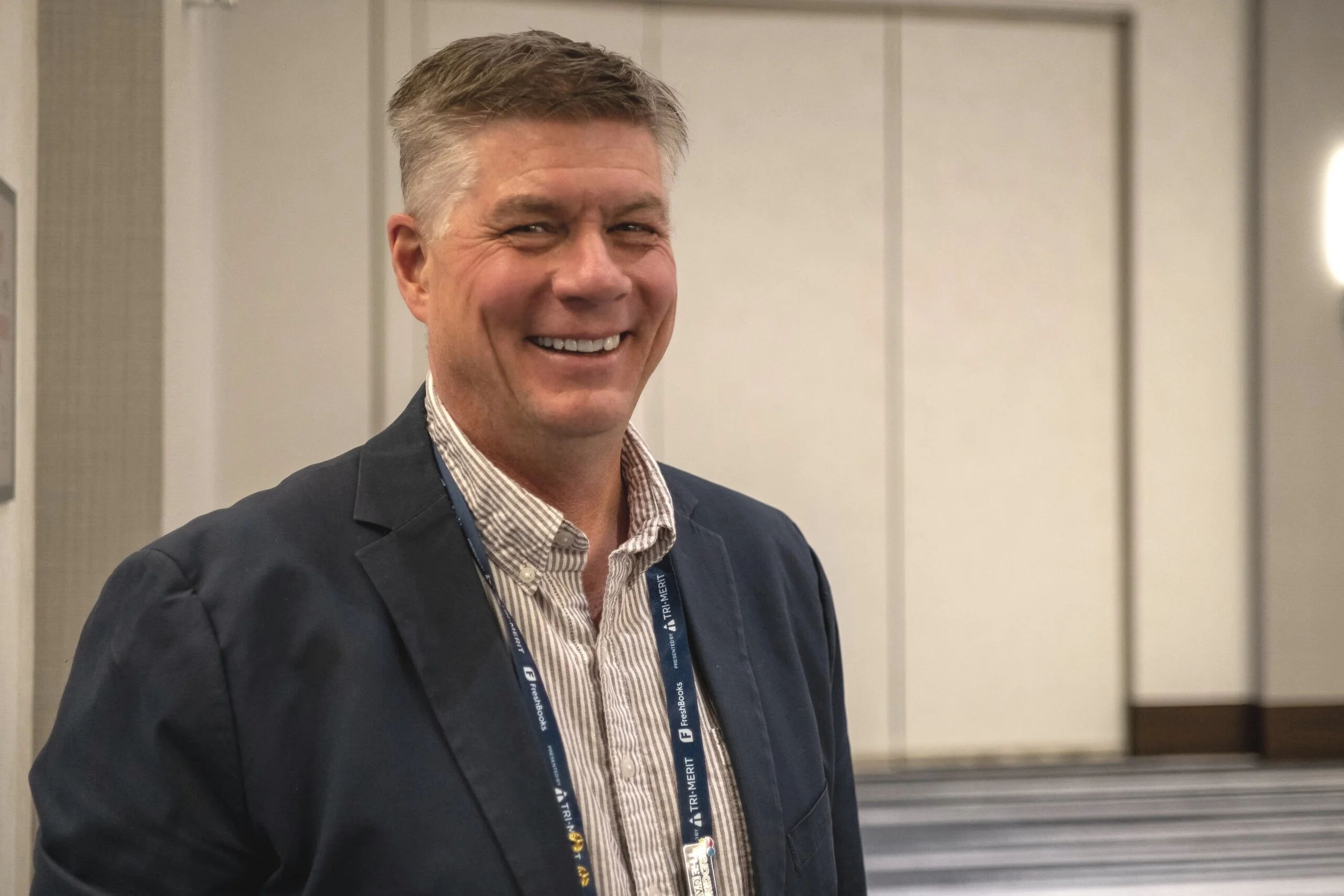
Randy Crabtree, co-founder and partner of Tri-Merit Specialty Tax Professionals, is a widely followed author, lecturer and podcast host for the accounting profession. Since 2019, he has hosted the The Unique CPA podcast, which ranks among the world’s 5% most popular programs (Source: Listen Notes). You can find articles from Randy in Accounting Today’s “Voices” column and the AICPA Tax Advisor, and he is a regular presenter at conferences and virtual training events hosted by CPAmerica, Prime Global, Leading Edge Alliance (LEA), Allinial Global and several state CPA societies. Randy also provides continuing professional education to Top 100 CPA firms across the country.
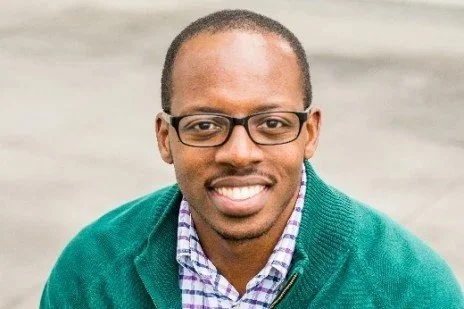
Terrell Turner is a 3x nationally ranked CPA, 2x Top 20 Global Finance Influencer. He is the founder of the TLTurner Group, which has been recognized in NYC Times Square and the NY Times as a top accounting and CFO firm that specializes in supporting law firms. Outside of running an accounting firm, Terrell hosts multiple vlogs and podcasts in addition to co-hosting The Unique CPA. Terrell is also a speaker and a content creator who regularly hosts and collaborates on video and audio content projects with multi-billion dollar corporations, bar associations, universities, and non-profit organizations.