
The Unique CPA Heads “Upstream”
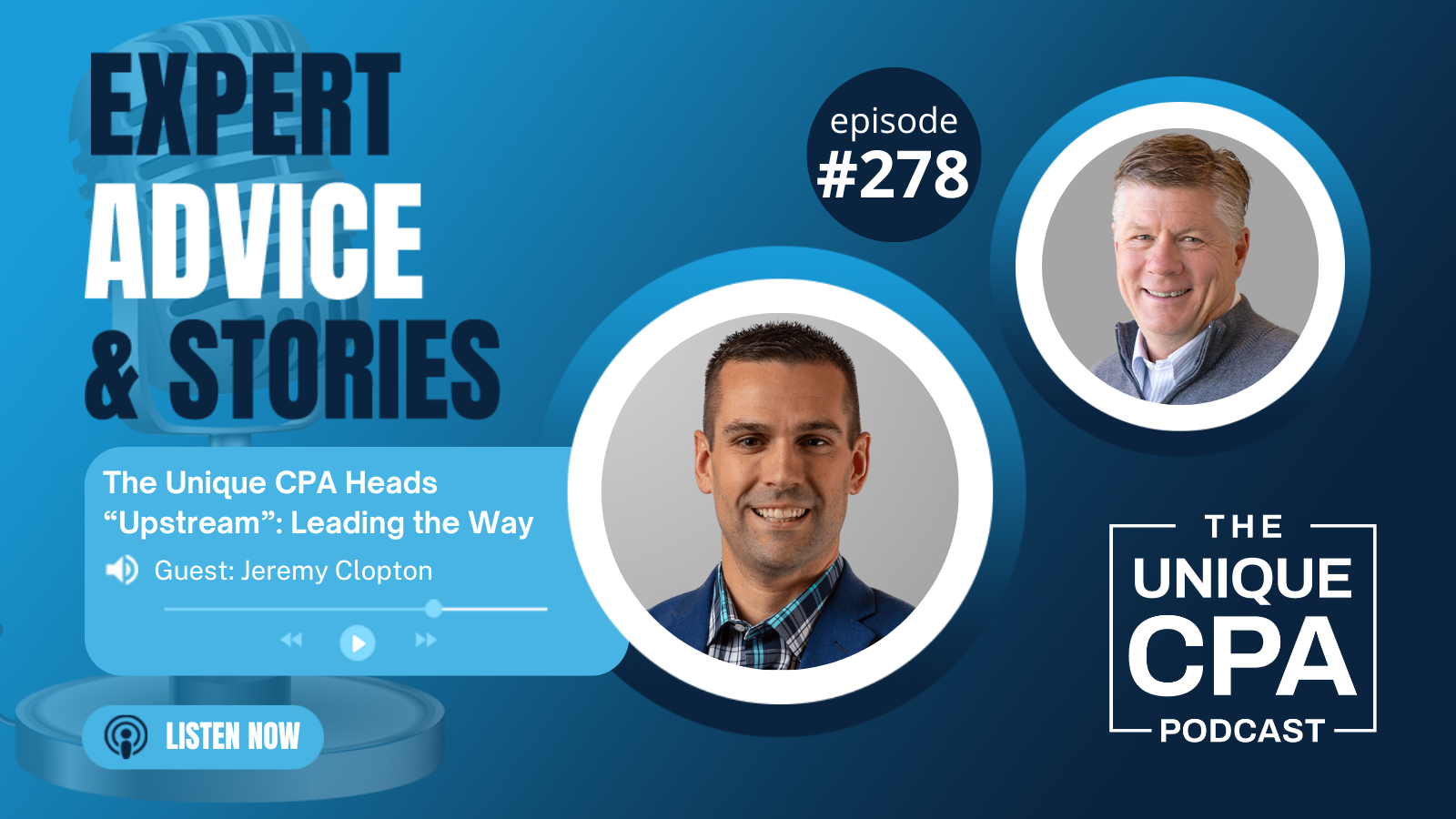
Leading the Way with Jeremy Clopton
Randy Crabtree steps away from tax season and toward retirement from Tri-Merit, joining forces with Jeremy Clopton of The Upstream Leader for a crossover conversation on Episode 278 of The Unique CPA. AI dominates firm conversations right now, but Clopton argues the real anxiety comes from chasing an uncertain future instead of holding onto what won't change: being the protector of public trust. That anchor reframes everything from staffing fears to succession planning. They dig into leadership structures at growing firms, the false choice between serving clients and running the business, and why hiring managers instead of developing them rarely works. Private equity and M&A come up too, with the two sharing a conviction that independent firms aren't going anywhere, and that the choice between selling, scaling, or staying small comes down to knowing who you actually want to be. Randy closes by dismantling the doom-and-gloom narrative around recruiting, pointing to rising enrollment numbers as proof the pipeline is healthier than the algorithm-driven headlines suggest.
Show Transcript Hide Transcript
Well, hello everybody. My normal introduction is “Welcome to The Unique CPA,” but today we’re technically not just The Unique CPA. I’m talking with Jeremy Clopton and we’re The Unique CPA and The Upstream Leader Podcast. And so we are doing a joint recording that’ll be released on both of our podcasts. Jeremy is a good friend of mine, I’ve known for quite a while. Respect the guy, he’s the smartest guy in the accounting profession, so I’m going to have a lot of fun talking to him today. I was going to say, welcome to The Unique CPA, but welcome to our joint podcast, Jeremy.
Yeah, absolutely. Thanks for having me, Randy. I think perhaps a touch generous on the introduction there, but hey, I’ll take it, and I look forward to a conversation and hope that both of our audiences get a lot of value from it. You’ve been busy here lately, right? Conferences and all the things like that. I’m sure there’s lots of things you’re talking about at conferences. You want to dive into the things nobody wants to talk about in front of others?
We probably should do that, ’cause I’ve been at, I don’t know how I’m at so many conferences for the last, whether we’re recording on June 29th and we’re barely past tax season, I feel I’ve been all over the world at conferences and hearing a lot of things and seeing a lot of things. But also I have another month and two days until I officially retire from Tri-Merit. So that’s been pretty busy, ’cause I feel like I’m doing ten jobs at the same time, getting ready for the future and wrapping up the past. And so, yeah, it’s been pretty interesting. Before we get into a discussion then, let’s see what you’ve been up to.
Yeah, so not getting ready to retire from anything. But congratulations to you, though it doesn’t sound like retirement will slow you down. It sounds like it may keep you quite busy.
It is.
You know, similar to you. It feels like post tax season, it’s been on the go. Less conferences, this year. We’ve had our conferences, I do a couple conferences that are every year happenings for me in the May, June timeframe. I always enjoy those, especially because both of, really, all three of them are with earlier career professionals and younger professionals in the profession, which I really like because there’s so much enthusiasm and excitement at that point in someone’s career, not that there isn’t later, but it’s different early on, I think. So I really enjoyed that. But spending a lot of time with firms, a lot of firms trying to figure out what does the next five years hold, what does the next year hold, maybe what does the next few months hold? It’s, you know, a pretty consistent thing that I’ve been hearing is there is so much going on, there is so much changing. I don’t know that we can look out five or six years. We’re trying to figure out how do we look out five or six months, and that still makes us uneasy. So a lot of future-focused conversations that tend to all be coming back to present day action that’s required. And I don’t know, I find those conversations incredibly exciting. Maybe I’m just a little bit odd like that, but I love trying to take the future and turn it into current day action, because that means we get to go create something. And what an awesome opportunity that is to be able to go create what we want to create.
Yeah, I agree. It’s a lot fun. Our conference, BTG, we’re subtitling it, “The future of accounting is built differently.” But then right after the conference, I am doing a roadshow where “The future of accounting is now.” And it’s kind of that same theme like you were just saying. We are in the future right now and we’re able to shape the future right now, and we need to be shaping in the future right now because things are changing so quickly. But it is exciting. But I’m hearing a lot of people just almost feeling overstressed because they want to know what that future is. Where am I supposed to go, what am I supposed to do, what is the most important thing today, and how do we, you know, lean into that to get us where we want to be in the future? Which again, the future is today. So, obviously, and I, we weren’t going to really make this about AI. I don’t think we’re going to, but that is an area where people are just overwhelmed right now. Are you seeing the same thing?
I hear a lot about it, yeah. AI is driving a lot of conversations. There’s several acronyms, I guess, that are driving conversations: AI, PE, M&A.
Yes.
We don’t want to say the words, we just want to abbreviate them. It makes it feel—
A little bit more time than saying the words.
Yeah, it’s just easier if it’s a couple letters, maybe it’s less daunting. Here’s the thing: And it’s the conversation that I tend to have with firms, and my background is in technology. You know, we were utilizing AI at the firm that I was with, the practice that I was leading back in, I think we were writing articles about it and educating about it back in 2012, 2013, maybe even late 2011.
Wow.
So this was back when Watson was winning Jeopardy and that was all the rage and “AI is taking over.” We’re 15 years on from that, we’re still having the same conversation. It’s just not Watson, now it’s Anthropic or ChatGPT or whatever. There’s all kinds of things. From my view, what’s overwhelming people is the uncertainty of what to do with it and how fast will it change, and by the time we invest in it, will it be better?
Yep.
Which is a very, that’s a fair concern. I mean, it’s not cheap. It’s obviously going to be a heavy investment of time and money and people and of probably emotion and all the things that go into it. But my concern, Randy, is that we’re getting so focused on what’s changing and preparing for trying to speculate what it will be and trying to make decisions now about an uncertain future for tomorrow, that we’re losing a lot of focus on what we know will be true. If our profession is going to be successful 10, 20, 30 years from now, which by the way, I very much think it will be...
Me too.
…we’ve got to be working with companies and clients that believe we add more value than the technology where we will be. It’s cliché, but they’re a trusted advisor. The best way that I’ve heard it put, and it’s a mutual contact that we both have, Marty Brown at PYA in Knoxville, Tennessee always says, “We are the protector of the public trust, and that’s what makes this profession so prestigious.” That doesn’t change in the next three decades, it hasn’t changed in the last century. We’ve got to start viewing the changes that are coming, all of the uncertainty, through the lens of what we know will need to be the same. It helps with the overwhelm. By the way, it doesn’t take away all the anxiety and stress and uncertainty, it just frames it through a different lens of, I don’t have to solve all of the questions about AI, I need to solve this question. Because that’s what matters for our firm and where we are going is if this is who we’re still going to be, because that’s our identity, then I’ve got to look at AI through that lens. I don’t have to care what everybody else is doing. I need to care about what we’re doing. I don’t know, what are you seeing? I’m sure you undoubtedly talked about it at least one conference in the last few months.
I actually hosted a panel where this was the conversation, and I had a couple of firms integrating AI into different areas of their business. And I had firm leaders that are managing the overall vision, which I thought was pretty cool. And then I had the technology companies as part of it as well. And I think the thing that you said is what’s most important to us? Where do we need to lean in? I don’t need all this noise of what everybody else is doing out there, and all the opportunities. Identify the most important thing for us right now, as, as you said too, the identity we have. And I agree completely with what Marty said. I love that. I’m going to have to go back and listen to this episode so I can write that down and quote him. But I love that, because what do we need? Who are we? Where are we going? How do we want to be that most trusted advisor that’s bringing value to our clients, and how can we integrate tools that are going to free us up more to be that? And so that’s what I’m seeing.
I really am excited about what’s going on with AI. I’m excited about taking the mundane tasks away. I know people are concerned about what that does for, do we lose the incoming level of people in accounting because they don’t need to do some of these tasks anymore? I’m not sure that is a concern. I don’t think the training time or the education time is nearly as long as people have thought in the past. You bring someone in, I think they can get up to speed pretty fast. I don’t think you have to go through five tax seasons of inputting everything before you know how to do a tax return. I think you need to go through 50, a hundred tax returns maybe, and now you’re going to be up to speed on what’s going on and you’re going to learn as you go. I can see the concern with that: Are we not going to have a way to bring up the next generation because they’re going to not be coming in as staff, all of a sudden now we need a senior staff now, or supervisors, or managers? I think we’re smart enough to figure out ways around that. I don’t know. I changed the subject there, but do you have an idea on the staffing, and I’m going to even go a step further there. I think I’m hearing less concern on finding people right now too, so I don’t know if that ties in with that, but what do you, what’s your view on people as we look to staff up and our firms feeling comfortable with their current staff, the numbers of people? Have they met their quotas with who they need?
Yeah. I still very strongly believe that people would be our biggest differentiator and our competitive advantage. If technology is that we’re competing with tech companies, we’ll lose. We’re not designed to compete with tech companies, so we’ve got to have people.
Oh, totally. You said that great.
My concern is that I’ve heard some firms start to say, well, we don’t need them as staff, so we’ll just hire them as managers. To which my response would be this: how well is that going for you today, hiring managers?
Oh, good call.
Because since I started in this profession, that’s been the hardest thing in the world to do, is recruit and hire at the manager level, so why do we magically think it’s going to start working now that we have AI? And even if we can, if we’re not developing them, who is? I mean, when I hear somebody, and I have heard some firm leaders and they’ll tell you, I will call them out on it, I have heard some folks say, “I’m not sure that we can train our people without the old way, that we can get them to where they need to be as quickly as we need them.” And frankly, I don’t know the best way to put it, and maybe it’s not the nicest way, but that’s a cop out of leadership. As a leader, that’s your biggest responsibility, is to develop the next generation. It’s not to be the best at doing the work. That’s a technician’s responsibility. A leader’s responsibility is to develop the next generation. And if you’re just going to sit down and say, “You know what, well, with tech we can’t do that anymore, we’re not able to,” then you’re not being a leader anymore. And I mean that as kindly as I can, but that’s a leader’s responsibility. I believe that we can. We’ve got to start teaching more of the what and the why and less of the how. Nobody is teaching how to run a 10 key to foot a ledger.
No.
But we still have people doing audits, right? I mean, when I started, and I’ve shared this story several times: When I started I was given an audit briefcase and a 10 key, red pencils, and then, you know, your ledger paper. We moved to Excel, I remember when people were like, yeah, but did you test to make sure that it really fits? Like, it’s in Excel! What? So we’ve been here before, is my biggest thing. We’ve been here before. We have changed our education and development model from paper-based to technology based. That changed the how, we adapted. Now we’re adapting again. Just because it makes you uncomfortable doesn’t mean it’s not possible. It just means it’s hard. And you know what? Welcome to leadership, right? That’s the thing, is when the profession evolves, the great leaders don’t sit down and sit back and say, oh, this is too hard to do it. They say, how do we figure out how to do it faster? And the firms that figure that out first will be the most successful over the next 10 years.
Yep, I agree. So, leadership, let’s go down that path because I think leadership’s so important. So I assume you’ll agree with this. I know somebody that you know really well, that John Sensiba who I think is a great leader. And when I first talked to John seven years ago, you know, he talked about leadership, his leadership role in the company at that point in time, and it was “the firm is my client.” This is what I have to lead, this is what I have to do. I think when I see leaders that want to continue to do the technical work and, you know, client work, I know maybe there’s a firm size where that makes sense, maybe it doesn’t, but I know plenty of small firms where the leader is not doing any client work. Their whole mission is to lead the firm, and especially, I think that’s important now, as, as again, you’ve said it, we’ve, and I’ve said this before too, we’re always going through change. Every moment in time in the profession, there’s always change. And the people, the leaders that can manage that change are the ones that are going to probably create the greatest environment for somebody to thrive within their firm. Thoughts on that? I assume you agree?
Well, and let’s call it what it is: Change, I mean, you’re from a tax background, right? A tax specialty firm. Change is what has allowed us to create so much value, is we’re the experts that help you adapt to the change. If everything stayed the same, I wouldn’t need an expert to help me through it. I’d just figure it out once and just set it and forget it. But that’s not how taxes work. That’s not how any of this works, right? So change is actually the catalyst for our value, if you really think about it. So I hope we never stop changing.
I do believe there are different types of leaders within a firm. At some firms, you have to balance serving clients and serving the firm. I don’t disagree with that, because especially in a smaller firm. Smaller firms are designed in a way that you’ve got to both lead the firm and you’ve got to lead your clients. So you can’t just say one or the, well, you can say one or the other. Most firms don’t have the structure yet to be able to do it. I do believe that it is most effective in a multimillion dollar company to have a leader. I don’t know any accountant that would argue that. If a client came in and said, “Hey, we’re an $8 million company, we’re thinking that we’re going to have our CEO work on the production floor, what are your thoughts?” Most of us are going to say, “You’re out of your ever-loving mind. That’s a ridiculous idea. They’ve got to be leading the company.” But that’s exactly what we do, is we take our CEO and put them on the production floor. Right now, she’s trying to balance between running the firm and doing all the work. The problem that I see with it, Randy, is the amount of time that it will take to make that change is not insignificant. It’s not like you can just flip a switch and say, “Okay, I won’t serve any clients.” You’ve got to build up capacity for the leader, so you may have to bring in two people to take off that client load so that person can actually run the firm. I do believe that’s the best path forward. I don’t think it’s the only path forward, and that’s because some firms don’t want to do that, and they will spend more time fighting it because it’s not who they want to be.
You know, one of the things that I’ve come to the realization over the past year and a half, one of those “aha” moments, is I can’t, and I don’t believe anybody else can tell you how to run your firm until I know what type of firm you want to be. Because if you tell me we want to be a firm where the partners are hands on with clients, then the best practice of how to run a firm like that’s going to look way different than if you want to run a scaling enterprise that happens to be in public accounting. Now I can have my opinions as to how I would run it, and I’m sure you have your opinions as to how you would run it, ’cause you’ve done it. But at the end of the day, I think that we would be a little bit foolish, and I say that as a consultant, I’d be foolish as a consultant, to come in and tell you the right way to do what you’re doing if I don’t first know what you’re actually wanting to do. And I think that’s where I think we’re getting a lot of noise right now in the profession of, “Oh, you’ve got to do it this way and this is the right way and the best way,” and all of that. Well, we forget it’s the best way if this is what you’re trying to achieve. But if that’s not what you’re trying to achieve, it’s not the best way.
So I do believe that if you’re running a business where you have everyone operating at their peak capability within their role, and you’re running it through the lens of a business, you need a leader whose number one client is the firm. But f you say, “I don’t want that, I want to run a five partner firm that is designed essentially to create enough profitability, we can take care of our clients and provide opportunities for enough people to, over the next 20 years, have some succession, but we’re not looking to grow it and we’re not looking to…” There’s a different way to run a firm like that. But you just have to recognize there are costs that come with that as well. You will lose out on some high performing leaders. Because they’ll want to move faster than that structure dictates. It’s not that it’s right or it’s wrong, but it might be wrong for them, and that’s okay.
Yeah, I can see that. But I can also see, I don’t know if everybody actually defines what they want to be and if they have that down as well. And so they need to know that first, because let’s say I define that I want to be a compliance firm. Well, I think you’re in trouble then. And so then that’s where the people like you come in and advise them on…
Or people like you.
Eh, I’m a short-term relationship guy. I go out and speak and then, that’s it. You’re in there, you’re advising. I guess I am doing some of that as well. But that’s the thing, so we can go down that path, I’m sure. But I keep asking you questions and this is a joint podcast. Let’s, let me turn the tables and let you ask some questions.
Yeah. So you’ve had a big last year, kind of, if you think about your last 12, 18 months, perhaps change, right? Getting ready to retire, doing more speaking, doing things. What’s been your, yeah, “retired,” you’re going to get “re-tired” at the end of every day.
I like it.
What’s been your biggest “aha” moment over that process? What’s the thing that you’ve just been like, oh my gosh, this is so clear now, and it wasn’t before?
So it took me probably a year and a half to really pull the trigger that, “Okay, it’s time to move on.” And so what caused that or what created that mindset? One, it was like, I was thinking, saying that I’m going to retire from Tri-Merit. The first thing that was like, am I leaving people? I mean, I love everybody I work with. Am I leaving them? Are they, you know, this is sounding maybe egotistical a little, but am I, you know, and I trust Tri-Merit leadership, but are they going to feel as comfortable when I leave? And that’s a weird thing to think, because they’re great and everybody can do their own thing. So that, I had to get past that mindset. And I talk about mindset a lot. That mindset was just a thing of me, and in reality, everything is going to be good.
So when I made that decision then, which was really just, boy, I think it was end of April, beginning of May, so we’re just two months into this, then the “aha” moment was, well, it was more of a what the heck moment, is like, wait, what am I going to do now? Because I know what I want to do. I want to have a positive impact on the future of the accounting profession and the people that work in it. I mean, that’s, I didn’t say that mission completely accurate, but I want to inspire change. That’s going to have a positive impact on the lives of people in the economy and profession and the firms that they work in. And so then it was just trying to decide what does that mean? How do I keep defining this? How do I decide where to go?
I always want to speak. I think that has an impact, but I think a longer term relationship like you do can have a bigger impact. So then I was looking at, okay, can I team up with companies that I think have the ability to have a positive impact on the accounting profession going forward? And some of them, you know, I’ll pick the ones that are, and some of them will just not have the same impact that I thought they would have, but that’s not for not trying, it’s because there’s going to be something else that pops up that maybe changes how they’re looking at things. And so this is still coming in together in my head. So when you say, “How did I get this future,” it’s still evolving to me, but that’s fine, because as we said at the beginning, the future of accounting is today and it is again tomorrow, and it is again the day after that. And so I constantly am like figuring out that next step over the next couple of months, and that won’t ever stop. That’ll always be something changing. But it excites me. If I’m going to go down that path that is, it’s always going to be this one direction, and I’m going to have tunnel vision and blinders on, and this is where I’m going. You know, that’s going to be boring. If I see all these opportunities and see people that are helping the profession and somehow I can help them a little bit, that’s exciting.
So for me, it is just this excitement, this passion, this whatever this next step is looking like, which is defining, you know, a new definition, or revising the definition constantly. It’s just super exciting, ’cause I love this profession and I see so many positive things happening, and we’ve heard people like, “Oh, what’s going to happen to accounting? And you said it earlier, accounting’s going to be thriving.”
It’s in a great place, yeah. So saying that and knowing that there is so much just kind of doom and gloom. cast out there, which I think is algorithm driven as much as anything. It gets a lot more clicks if it’s depressing somehow. What do you think that firms are worrying about that it’s really, it’s distracting them? It’s almost becoming noise that’s getting in the way of the things that they actually should be worrying about. What are those? What are those distractions from your standpoint?
Well, we talked about before, I think one of the key things is, are we replaced by AI? Are we replaced by technology? And that’s not. We already went through that. That’s not going to happen. You’re going to evolve, you’re going to change, you’re going to be able to define yourself based on the value you’re delivering rather than the hours that you put in. I think that’s one of the most exciting things that we finally, I think, are going to be fully into this value-driven profession rather than time-driven profession.
I think that people are, and this has always been the case, they’re concerned with, “I need to help everybody.” And that’s still a mindset I think we have as accountants, because we have all the knowledge, we know what people need and we want to keep doing it. I think going forward, and I’ve always felt this way, you have to have expertise in a small niche area. It doesn’t mean that your firm can’t have 20 of those, but you have to have passionate leaders inside those. And I think with technology now and AI, that’s just going to be accelerated. But when you do have that knowledge that you can share, that your passion comes through that, people go, “Wow, if I need this, you can tell, listen to Jeremy, he’s the one I need to go to.” That’s going to be a value creation going forward as well. And AI and whatever is just going to support us in that.
So those are the things that I think need to happen, things that are going to happen. I think we still hear the concerns about people: Can we attract the people? That’s still a concern, I don’t think it’s as big a concern and I don’t think it should be. One thing that I’m trying to do going forward is even starting at the university level, I’ve already been in contact with about six universities where I want to see what I can do to help them educate their people on what accounting truly is, or what accounting truly can be, and what their role can be in this profession and why they should be considering this. So I think going forward, that people problem is not going to be there. We’re going to attract such an immense range of professionals into this profession because of, wow, professionals into the profession, we’re going to go with that.
I love it!
Because of the new opportunities we have going forward, and that face-to-face, and you said earlier, people are the most important thing we have and that’s not going to change. And so people are going to see that, “Hey, I can actually go out and have a conversation and have an impact with this clients rather than just data entry and putting out a tax return that already existed. I just needed to put all the data together. Now I can have an impact instead.” So I don’t think that should be a concern. I can ramble on this all day.
No, I’m with you. I think that tech is going to free us up, and not just AI, it’s technology in general. It’s going to free us up to be the experts that we went to college to be. I don’t know anybody that went and got a five year degree, and that’s not a soapbox I’m going to, or rabbit hole we’re going to go down, but just call it what it’s a five year degree, and pass the exam so that they could go do data entry. I don’t need a degree and a certification to do data entry. So I look at it as, “Hey, let’s free us up to actually go do the things that we’re really good at.” And let’s give the next generation some credit, that everything from a development standpoint, an education standpoint is set up that the next generation should be able to be way better than we were. But we’ve got to be okay with that. That might be the hardest part, is the fact that we’ve got to believe that the next generation can and will be better than us, and it’s our responsibility to get them there. But I’m with you. I mean, look higher, what enrollment in accounting programs is going up. It’s been up the last three or four consecutive years. No, we haven’t seen that in graduates yet, but if anybody’s like, why not, that’s because it’s a four or five year degree. So we can’t get an increase in graduates until we have a lag from the increase in enrollment. So let’s stop painting the doom and gloom picture that, oh, graduations went down, even though enrollments went up. That’s called math. We know. It’s okay.
But at the same time, the profession has invested so much time, energy, and money into improving the pipeline. Let’s not now undermine our own success by saying, oh, but we don’t need people out of college anymore, we’ll use technology and outsourcing for that. We’ll pick them up later. We’ve invested too much to go undercut, we’re smarter than that as a profession. We’ve got to be smarter than that, figure out how to get straight out of college graduates operating at a higher level. It’s not as hard as we want to make it to be. It starts with, as you said, it’s a mindset shift more than anything. It’s a belief that the people that we’re hiring are capable of that. And if they aren’t and we don’t believe that, I would argue with why are we hiring them? But that’s a whole other conversation to go down. We haven’t hit it yet. And I know we only have a few minutes here, so I’m just going to get your brief thoughts on this: Independent firms, will they exist 5, 10, 15 years from now? What do you think?
Yes. I think there’s actually a lot of opportunity with the PE and M&A. We’re already seeing it where firms, employees that are part of a transaction, and they don’t even have to be part of it, that are going out and they’re starting their own because they see a different way to do it, or they see a niche, an opportunity. So independent is not going away. Sure, does the PE money help with technology integration or whatever else you want to do? It does. But I see some very small startup firms that are very innovative and really leaning into all the positive things we talked about so far today that I see just thriving already. So yes, independent firms are not going away.
I agree. I think there’s a great place for independent firms. I believe we’ll probably see partners that maybe weren’t on board with a PE transaction or M&A transaction that will ultimately continue to create independent firms and may leave a larger firm and say, you know what, we wanted a smaller firm, we’re going to create a firm, and that’s okay as well, by the way. I’m not anti M&A or anti PE by any stretch of the imagination. It goes back to the conversation we had earlier, Randy, which is “who do you want to be?” And then for some firms, I think private equity or M&A is a great way to actually accomplish getting to where you want to be, because you may not be able to do that given the structure, the infrastructure, the capital that you have. So, hey, it’s not right or wrong, but you’ve got to know why are you doing it, I think is the key.
Why are you doing it? I like that. And I want to dispel one myth a little bit on PE and people being unhappy that are part of a transaction, ’cause you hear this, so a friend of mine, Dominic Piscopo, runs the Big Four Transparency. Do you know Dom? I don’t know if you do or not.
Yeah, I’ve seen some of their stuff. I’ve not interacted with them.
Okay. So he does a lot of surveys, and very fortunate that we’ve teamed up on the surveys in the past or shared data. But one of his cool findings that I saw that happened over the satisfaction levels within firms, when there is a PE transaction, you do see a drop. Within a year, you’re back to where you were when the transaction, or really close to where you were. So it’s that fear of change. It’s not the transaction itself, it’s not the reality of what happens. It’s the mindset, we said mindset before. It’s the mindset of what’s this going to do for me? I fear this change. And then when they see what’s happening, that goes back to that normal satisfaction level.
Yeah. And for what it’s worth, there are people that are not satisfied in their current firms that are independent. Like there’s unsatisfied people in firms of all types. And that’s the great thing about the profession is we’ve got very business savvy individuals in this profession. And if the situation they’re in isn’t the situation they want, like you said, the future is now, go create it. There’s nothing wrong with that. I mean, combine firms to create a bigger firm if that’s what you want to do. Go create a small firm if that’s what you want to do. None of that is right or wrong. It’s just so much opportunity, and I don’t know, that’s what excites me about our profession: There’s so much opportunity to go do what you want and be successful. If we keep dwelling on everything that’s wrong, we’re going to miss so many great opportunities right in front of us, because we just want to look at the negativity. And I’m not here for it. I’m here for the opportunity, and the enthusiasm, the excitement, it’s too good of a profession to not look at it that way.
I agree. It’s the greatest profession in the world, and the future is so bright that I can’t imagine that not everybody in the world would, how they would not want to be in the accounting profession.
That’s right.
So you and I are going to make that happen.
Yep. It’s a great place to be.
Well, I suppose we’ve probably hit about time. I want to still do what I normally do at the end of my podcast, and we both can answer unless you have a different thing you want to end on. But let’s go with this.
Well, let’s hear yours. Let’s hear yours, yeah.
Yeah. Well I’ve asked you this a couple times before because you’ve been on the podcast, but when you’re not having this positive impact on the profession, the future of the profession, what are your outside of work passions? What do you love doing?
Yeah. Outside of work passions, family time is number one. And right now that looks a lot like coaching youth softball. I’ve got three daughters, all play competitive softball, various age groups, and I’m actually getting ready to embark on the adventure of being a head coach of a 10U travel team, and teaching nine and ten year olds the amazing game of softball. But more than anything, being able to teach them how to be just great competitors in life, and how do they learn to lead themselves? How do they learn to lead on the field and using softball as the catalyst to develop great people. So, really excited about that. That’s probably the number one. I mean, always, you know, following the kids around to the various sports, my wife and I are typically dividing and conquering.
Beyond that, other passions: Formula One racing is a big passion of mine. Thoroughly enjoy that and try to watch that pretty often. And then, yeah, right now looking forward to season four of Ted Lasso.
Oh yeah. When’s that out?
I’m a huge Ted Lasso fan, so I think it’s August is, last I heard, I think it comes out in August. I don’t remember the date off the top of my head. But yeah, it’s looking good. It combines sports, leadership, comedy. I mean, Jason Sudeikis is awesome. So you can’t go wrong. So really looking forward to that. Looking forward to it.
Yeah. Well, I’m going to give you mine now. Family, obviously, that’s the no brainer. We have a six month old granddaughter now, and we get to see her all the time. In fact, we had her six month birthday party yesterday.
Oh, good times!
It was fun. It was just a spur of the moment thing, but we went over and did that. You know, we’re very fortunate, our kids and their wives, we have two boys and their wives. One is actually getting married in October, but I still call her my daughter-in-law at this point. They live near us. We get to see them all the time. We travel together all the time. So that’s number one. But I’ve got one I’ve probably never said on a podcast before, but I don’t know if it’s a passion or it’s an obsession.
I’ll take either!
We bought a new house about, eh, September will be two years ago. Really beautiful piece of land, but it was overrun with buckthorn. And buckthorn, if you don’t know what it is, it’s almost like a weed tree. Weed. It could be brushy or tree, and I’ve spent the last two years just eradicating buckthorn from our land, which is very, very hard to do. And it’s, there’s, I won’t go into the techniques, but there’s a few different things you have to do. So it’s pretty much every free moment right now where there’s not a family thing, I’m not at a conference, I’m not on a podcast, I’m out getting buckthorn out of our yard. So that is my obsession.
Buckthorn eradication. Okay, I’m going to have to check in with you on like, do you have a, you’re an accountant by background, right? So is there a dashboard tracking the percentage of buckthorn eradicated?
I should have a spreadsheet on that. My guess—
Expect a heat map next time, right?
It’s so hard because, so if you do it wrong, and if you just cut a buckthorn down, it immediately tells its roots. “Send up sprouts. Send up sprouts. Send up sprouts.” And so you have to do it a certain way. If I counted all the sprouts that I’ve pulled along with the trees themselves, we could be over 50%. I’m guessing we are over 50%, but it’s, that’s a long-term battle, ’cause it’ll still start popping up again. So if you don’t do it the right way. I think in my mind, this is probably a seven year process and I’m in year two right now.
And you’re in year two. Well, I’m going to be checking in next time we talk. I’m going to see how the buckthorn removal is going.
Just, oh, that was me, though. This is my obsession right now. But it’s, that’s awesome. I enjoy it. And that’s exercise.
Yeah, I was going to say, you’re outdoors, it’s got to be, yeah. That doesn’t sound pleasant, but not horrible. How about that?
Not horrible. It’s not. Listen to a book on tape, pulling on buckthorn trees out of the yard, getting exercise and just having some downtime, even though I’m working hard.
Yeah, very good. Well, that sounds like a pretty good passion. Well, Randy, I appreciate you joining and allowing me to join you for this crossover episode. It’s our first crossover on The Upstream Leader, so I’m excited for it. And hopefully it worked well for you as well.
It did. Anytime I get to talk to you, it’s a good time for me. I always learn and I always get inspired. So thank you for. Again doing the crossover episode with me.
Likewise. Absolutely, Randy. I bet we’ll talk soon.
You got it.
About the Guest
Jeremy Clopton serves as the Managing Director of Upstream Academy, where he’s been for over eight years. Upstream works with accounting firm leaders who want to improve performance without burning out their people or defaulting to outdated leadership models. Most firms don't struggle with ambition, they struggle with focus, alignment, and developing leaders fast enough to keep up with growth, and Upstream has a number of programs and academies to tackle these challenges.
Jeremy helps firms build intentional leaders, strengthen accountability, and develop the capabilities sustainable growth requires, through leadership academies, executive coaching, retreat facilitation, and strategic advisory work. He's driven by impact, helping professionals rethink leadership, responsibility, and the influence they have on themselves, their firms, and their teams. That same mission carries into his podcast, The Upstream Leader, where he explores what it actually takes to become high-yield and low-maintenance.
Meet the Hosts
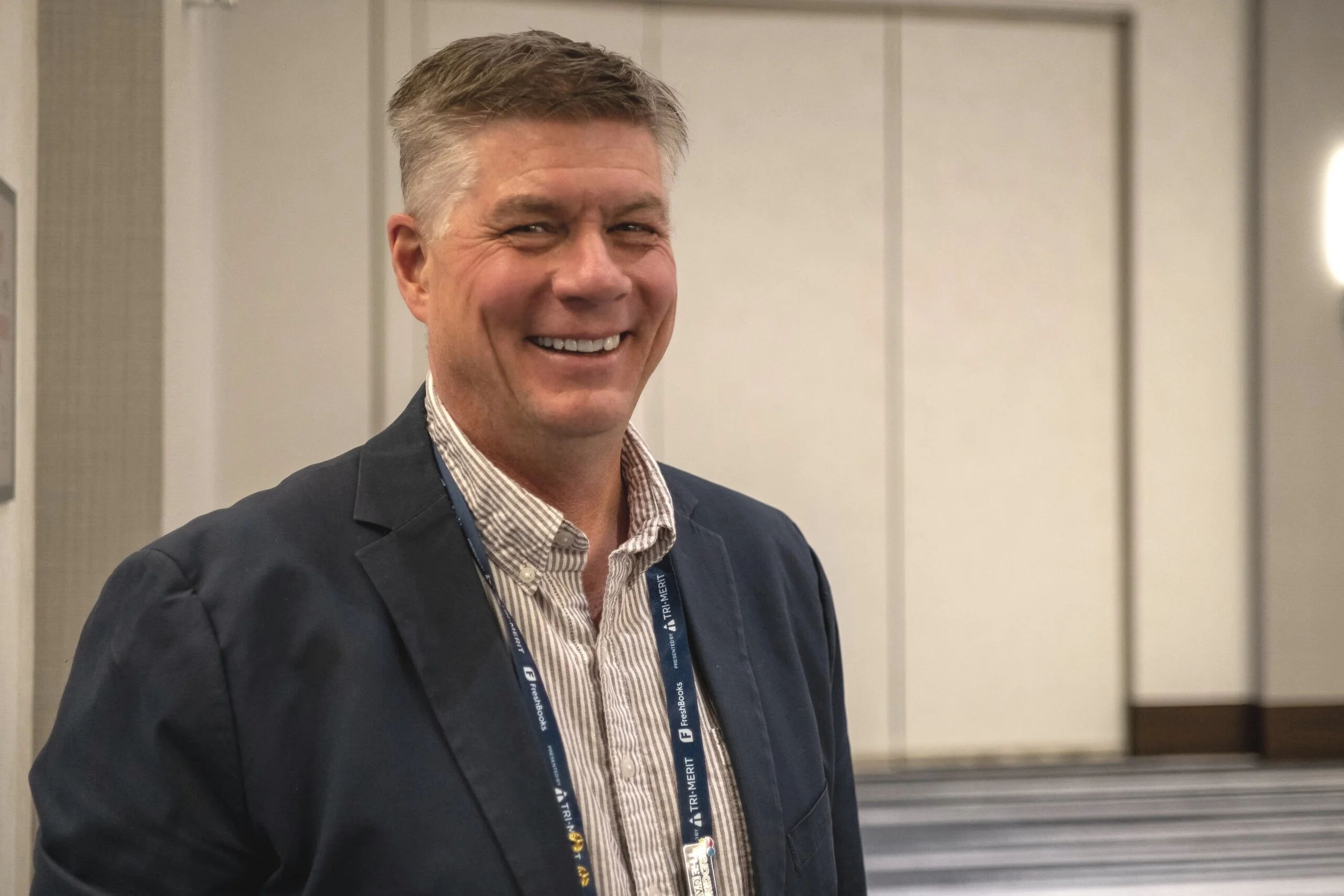
Randy Crabtree, co-founder and partner of Tri-Merit Specialty Tax Professionals, is a widely followed author, lecturer and podcast host for the accounting profession. Since 2019, he has hosted the The Unique CPA podcast, which ranks among the world’s 5% most popular programs (Source: Listen Notes). You can find articles from Randy in Accounting Today’s “Voices” column and the AICPA Tax Advisor, and he is a regular presenter at conferences and virtual training events hosted by CPAmerica, Prime Global, Leading Edge Alliance (LEA), Allinial Global and several state CPA societies. Randy also provides continuing professional education to Top 100 CPA firms across the country.
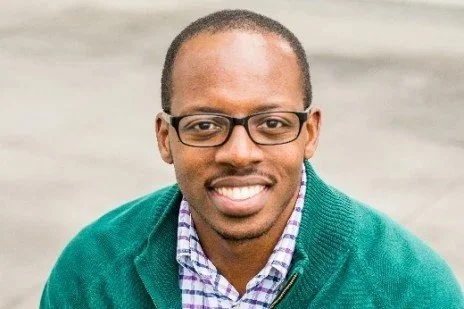
Terrell Turner is a 3x nationally ranked CPA, 2x Top 20 Global Finance Influencer. He is the founder of the TLTurner Group, which has been recognized in NYC Times Square and the NY Times as a top accounting and CFO firm that specializes in supporting law firms. Outside of running an accounting firm, Terrell hosts multiple vlogs and podcasts in addition to co-hosting The Unique CPA. Terrell is also a speaker and a content creator who regularly hosts and collaborates on video and audio content projects with multi-billion dollar corporations, bar associations, universities, and non-profit organizations.