
Making the Profession “AI Native”
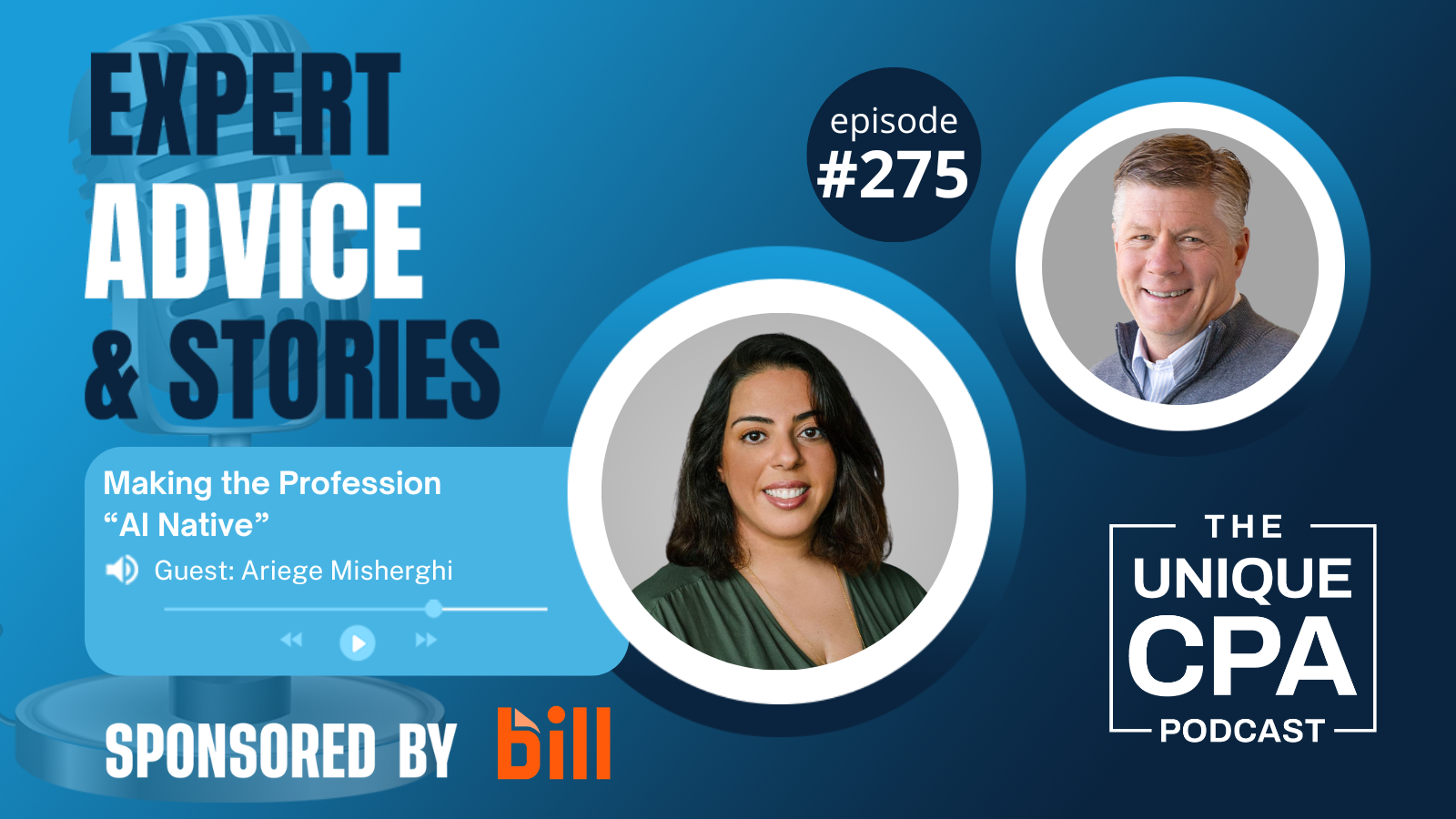
With Ariege Misherghi of BILL
This episode of The Unique CPA is brought to you by BILL and BILL’s Accountant Console. Accountants deserve tools that work as hard as they do. Learn more at BILL.com/uniquecpa and get a $250 gift card. Terms apply.
Small business clients are increasingly showing up to their accountants armed with AI-generated answers, and Ariege Misherghi thinks that's actually an opportunity. A Senior VP at BILL, Ariege has spent years watching the relationship between accounting professionals and their clients evolve, and she sees the current moment as the clearest stage yet for accountants to demonstrate what a professional truly brings. On Episode 275 of The Unique CPA, she and Randy also dig into what “AI native” actually means at BILL, why auditability is non-negotiable in financial automation, and why Ariege's number one piece of advice for AI-fatigued firms is to stop reading every email and start with one problem worth solving.
Show Transcript Hide Transcript
Hello and welcome to The Unique CPA with your host Randy Crabtree. In recognition of our commitment to our community of accounting professionals, this episode of The Unique CPA is brought to you by BILL and BILL’s Accountant Console. Accountants deserve tools that work as hard as they do. Learn more at BILL.com/uniquecpa and get a $250 gift card. Terms apply.
Today’s guest is Ariege Misherghi. Ariege is Senior Vice President overseeing BILL’s AP, AR, and Accountants’ businesses. We will dig into that a little bit more, but first Ariege, welcome to The Unique CPA.
Thank you. It’s great to be here.
Yeah! Excited to have this conversation. Before we jump in, we had a pre-call a few weeks ago and I was joking, we should have hit record on that call ’cause we were having a great time having a lot of fun conversation. So the same thing will happen here today.
Yeah, I hope to deliver. Let’s see.
You will, I can already tell. I gave you a quick intro, give us a little more background on you and the journey that led you to BILL and the accounting profession.
Yeah, for sure. Born and raised in California. I studied computer science in school. Actually it was a degree called Science, Technology and Society, and I’m so glad I went in that direction for my degree, because it really helped me kind of build a framework of how to think about the interplay between the evolution of our culture and societal needs and technology, how they influence each other. My first job after college though was actually in customer service, and I was surprised by how much I loved that kind of work. There’s some level of accomplishment you get from serving your customers so fully that the immediate problem they’re experiencing is addressed, and you get to live that over and over again in a customer service role. And it really shaped me as a professional, as a leader, and also as a product manager, which is what I did next. So the vast majority of my career, 20+ years, has been building products for small businesses and accounting professionals who need them across a variety of financial management domains including payroll, accounting, tax, and now accounts payable and accounts receivable, and spend management here at BILL. I love working for the accounting professional community because I find that we have the same kind of values, like the mission that gets me up every morning of helping my community and serving small businesses and just enabling their success, that’s what gets accounting professionals up every morning too, and it’s what they’ve devoted themselves to. So I love serving that profession.
Yeah. It is an awesome profession. I completely agree with you on that. Accountants are a special breed, and they’re fun to hang out with, and actually that’s a thing that probably most people don’t realize, which is something that I think you and I have learned over the years is that accountants are pretty cool.
They are, you’re right. They’re fun loving and they’re extremely community-oriented. So in addition to putting the needs of their clients first, they really love getting together. And finding that community connection is something I really enjoy too. I’m a pretty introverted person.
Really?
Oh, yeah. But I feel like my energy gets charged when I go to an accounting professional event and I’m just surrounded by these pros that are exchanging information and ideas and problems and everyone has each other’s back. It’s a very nurturing community, you know?
Very collaborative. Very not guarded with “Hey, this is my secret.” I’m going to share this with you. I’ve learned this.
There’s no gatekeeping among accounting professionals. I’m with you.
Well, let’s dig into that accounting professional a little bit more then, because it sounds like you are passionate about it and enjoying it—not sounds like it, I know that for a fact. So, having worked with accountants for so long, are there lessons that you’ve learned from accounting professionals, the people in it, that you’ve been able to use in your career?
Mmm, yeah, well number one, accounting professionals will always remind you to put their clients first, so that’s not just something that they do, but it’s a baseline expectation they have. And as a person developing software in service of accountants and their clients, I know that the number one thing I need to do is make sure that whatever I’m building is the best tool that could be found for their clients. So that helps me focus quite a bit, actually, in thinking about the work that I do. The other, I would say, is just the standards that accounting professionals have when using your tools. When you’re building tools, especially in the financial management space, small businesses and even midsize businesses are almost reluctant users of your tool. They use it because they have to use it, or they use it because they were told that this is necessary in order for them to focus on what they want to focus on, like automate this back office work so that you could do what you want to do. But accounting professionals are different. It’s their professional tool. They’re using what I build day in and day out. The effectiveness of the tool matters in terms of the value that they deliver to their clients, the quality of the tool, the performance of the tool matters. Accounting professionals care about things that small businesses wouldn’t even think about—load times, as an example, are deeply felt and experienced by accountants because the tools that I build are their professional tools. So accountants have really taught me to sweat the details, and to know that anything I put out, if I’m going to move their cheese, if I’m going to change something in the experience, it better be worth it. So there’s no willy-nilly updates or changes. It’s all with a high degree of intention, highly tested, highly focused, knowing that what we’re putting out is the professional tool that these pros are using to serve their clients. So those are a few examples of ways that the profession has influenced the kind of work that I do.
Yeah, that’s pretty cool. It sounds like, when you are building these tools and finding out what they need, you are working closely with them rather than—’cause I get concerns sometimes like, someone’s going to build a product and then say, here, go use it. But it sounds like you’re building a product that is going to fit the need that they have. And so I’m assuming you’re on that two-way street of communication on what’s working, what isn’t, what we need, what we don’t, that kind of conversation’s happening with your accountants?
Oh, yeah. You have to. I mean, it’s not even just conversations. What I like to do is watch them use my product and other products. So I can see the keystrokes, I can see where the pain is, I can see the process that happens outside of my product. The one area that’s actually been tough is that I can’t see the interactions they have with their clients, which actually I feel like would be a Rosetta Stone for a software developer, you know what I mean? But what I can do is talk to their clients. So I make sure that I not only speak to accountants and observe them, I consult with them individually and collectively, and also the clients that they serve. So in order for me to deliver great experiences for accountants, I have to be super, super connected to small and midsize businesses and understand their needs and how their needs are evolving, both their need for the software I’m building, but also their need for the accounting professionals that serve them. Like understanding the relationship and the nuance of that relationship is something that I like to geek out about.
I love it. I love it. I think that’s super important and I appreciate the fact you’re doing that.
Get clear insight into payment status and cashflow with BILL’s Accountant Console. BILL uses AI to simplify your tech stack so you can increase productivity and spend more time delivering truly personalized client service. Take a demo at BILL.com/uniquecpa and you’ll get a $250 gift card—terms apply.
I was going to ask you about what keeps you energized about building for the accountants today, but I think you already answered that. If you want to say anything else on that, I’d love to hear more, but I can tell that it’s a passionate area.
It is. It’s the mission. I mean, I’ll just reinforce it: it’s the mission, it’s the mission, it’s the mission. All of us have a connection to small businesses, and when you serve small businesses, you are serving your community, and there are a lot of ways that I try to serve my community. I’m all up in the city council sessions, I’m really involved in my kids’ schools, and I serve accountants and the small businesses that make our downtowns better. Community service is a big theme for me, and the mission of just tipping the odds in favor of small businesses, that's what I'm really passionate about. The number one ally I have in that is the accounting professional community. So yeah, that’s where the passion comes from. It comes from watching my dad struggle when we were growing up with the business that he was standing up. It comes from knowing what my neighbors are trying to stand up in our downtown community. It’s a struggle for them and it’s a benefit for all of us. So anyway, those are the kinds of things I see in my everyday world that just reinforce the—you’re right—the passion that I have to serve this community.
Yeah, well it is an amazing community, which I said already, but there can be issues with the accounting profession at times. And I think sometimes they’re self-induced. But I talk to firm leaders all over the country. I’m out at conferences nonstop. I’m very fortunate that I get to do this. But you hear about the things that they’re struggling with, the pressures they’re feeling from a lot of different directions, talent, margins, whatever, client expectations, obviously AI, which we’ll dig into some AI stuff ’cause that’s going to be a very, very strong positive. But I think people are feeling some pressure right now. But from your perspective, what are the bigger challenges you feel the accounting profession is facing today?
Yeah. Look, I think you hit the nail on the head with what you described. I would say, when I speak with accounting professionals, they’ll talk to me about talent shortages. I think that’s true, but I also think my frame on it would be less about “hey, it’s hard to find the right talent” and more about how do we enable them to scale with the talent they have? How do we help them coach up early career talent to the level of client management professionals that have the gravitas and presence to engage directly with clients, that can build confidence in clients? That’s one example of a problem. And you mentioned margin compression, that’s true. Client expectations is a big one. Man, I’ve seen not just ever-increasing client expectations, where clients expect more, but one of the nuances that I see behind that is that clients are coming to accounting professionals at a different time, Randy. So whereas in the past, in the life cycle of a small business, a client may have self-selected in to get help sooner, over the past many years I’m seeing the point in which a small business says "hey, I need help" getting more and more delayed. You mentioned AI tools—AI is actually a big part of the reason for this. Small businesses have confidence because they have this other brain that they can engage with. They’re less lonely in it, right? They’ve got what they perceive as a thought partner to take them through a little bit longer, until they get to the point of real pain: until they get the IRS notice or get to some challenge that they can’t tackle, and because AI is a function of feeding back your own thoughts and perspectives, like kind of a generalization of online thoughts, it’s not yet unique thought, they still need the connection to a pro, but it’s delayed. And that in and of itself creates a bunch of challenges for accounting professionals.
Yeah. Probably cleanup being one of them.
Oh, yeah!
But there are plenty of challenges. When clients are coming in more educated, or to whatever extent AI can do for them, what I’ve seen is that clients are coming in more with a specific question and they’ve looked it up on AI and they say, “this is what AI told me, and this is what I need,” and so they’re coming with almost a partial solution rather than just the questions that they used to come with. Is that anything you’ve seen when you’ve been talking with accounting professionals?
Exactly. That’s exactly right. And I hear it when I talk to accounting professionals, but I hear it even more when I talk to small businesses, their clients. When I speak with them, what I hear from small businesses is “Hey, I think I know what I need to do. I don’t exactly know how to do it, but I also just want confidence that this direction I’m taking is the right direction for me,” or some nuance on it. So they kind of come in looking for part validation and part “walk me through the execution.” But what I’ve seen from successful accounting professionals as this shift has taken place is they don’t fall into the trap of just doing that. They use that as an opportunity to reinforce their value by unpacking the thinking behind the options, the what, the why, the how. And in those moments, they share with me that you could see the light bulb go off in the client’s eyes: The difference between the kind of sterile guidance that you might get from AI, or maybe less customized guidance that you might get from AI, versus the nuanced, deep thinking that you get from an accounting professional. It’s almost like the best opportunity and stage you have to demonstrate your distinct value in that moment. You know what I mean?
Oh, I do. I completely agree. And I think we’re at the point with what you were just describing where accountants, I say finally, but they’ve been talking about being that strategic advisor forever. There are lots of stats out there that show that clients want to pay for advisory and accountants don’t have the time to do the advisory, so they’re still more compliance-based than advisory-based. But that’s the point where now we can do that. Whether clients are coming in more educated or where we’re adopting the tools now that are going to free up time to do this work that should be of higher value to our clients. So let’s dig into AI. We mentioned it before, but you’re working with AI, you’re seeing AI with your clients, so do you have some practical guidance that firms can use to navigate this whole AI conversation, either with their clients or internally with what they’re doing?
Oh, absolutely. Maybe I’ll just start with the client view, just kind of carrying on the conversation we were having. Like what do you do when a client is saying “Hey, AI is telling me to do X,” and there’s nuance behind it. You know what’s funny is I’m going to offer you some advice from my own personal experience, because other professions are having the same problem. The medical profession is a great example. I took my son, and I have a 3-year-old and a 6-year-old. My son was going through some issues, I was talking to his doctor and I was sharing with his doctor what I had gleaned from AI and what I thought was going on. And the doctor very patiently, after several back and forth, was like, “Look, I really appreciate that it is important to you that you’re informed and it’s excellent that you’ve kind of come to this from a place of collecting information. What I can do now is share with you my professional experience and my education and the output of my education. So let me walk you through how I think about it.” Which I thought was such an excellent, in practice, reframe that doctor went through with me, and I do think it put me in a different position. It’s like, you know what, look, I’m here to get the advice of this professional. I sought this professional out for their input. Let me step away from what I think I know and learn from somebody who does this for a living. So I really valued the reset that I got in that moment. And it did help me think about how I might show up in that forum differently. So anyway, I’m sure everybody is going through these experiences independently, but I thought that would be an interesting anecdote that I recently went through that might be useful to accounting professionals.
But to answer your question, there is so much that accounting professionals are having to navigate right now, and I see them leaning into very different modes. You have some folks that are leaning back and just kind of observing what happens. They’re still attending the conferences, they’re listening to the conversation, but they’re not really yet exploring and engaging. That is a very small chunk of professionals, I’ve found. I’ve found that most accounting professionals are very forward-leaning with any technology, and also with AI. And AI, to your point, maybe causes a lot of fatigue because they feel the responsibility to learn and explore and get ahead and discover. I think for me, for accounting professionals that find themselves in that boat, just a little overwhelmed by what’s out there and the demands on their time, and that feeling that you have to learn in order to stay relevant, that you have to spend your time constantly investigating to stay on top of things things, my number one piece of advice is rather than start with exploring all the options that are out there, reading every email, looking at every site, checking out every app, just to start with the problems that you have, maybe one problem that you have: Something that’s taking your time that you just don’t like doing, that you wish you didn’t have to do, something that’s taking your team’s time. It’s a very specific task. And get more task-oriented with what is a point solution that might help me with this specific problem I have. It’s just a more targeted, time-boxed way where you can feel successful because you can evaluate a specific option versus constantly having this feeling of being buried by every possibility that’s out there.
Yeah, that’s the thing. And you said it early on in our conversation, accountants are out there, they’re helping, they want to be on the forefront of things, and that’s why they get bogged down—not bogged down—but the AI fatigue that you mentioned. They want to know they have the best tools, they want to know they have everything, but that’s where they get bogged down because it’s like, I just can’t do it all. Do one small thing, find that big pain point that you can solve and then you can work on the next? I love that advice. That’s the way to do it.
And I’ll give you one example of this. You know, I work at BILL, as you mentioned, and we are recasting the process of AP in the context of this new technology called AI. And so it’s a bottoms-up reimagination of an experience and a workflow. And I think often about, yes, I want to do big thinking and really reimagine this top to bottom, and we are. And also, what is a very painful, specific problem that I can just eliminate for our customers right now. This tax season, we took a big bite, and that bite was W-9 collection. And Randy, I don’t know about you, but if you’ve ever been in a role where your job is to make sure that all those W-9s are collected and validated and ready for 1099s, oh my god, do you have your work cut out for you! It’s hard to get the attention of your vendors in January to close that out.
Right. Hey, that’s a good example.
Yeah, exactly. So what we did was we released an agent that will automatically reach out to your vendors and collect the W-9 for them. It’ll explain why we need a W-9, it’ll offer the actual W-9 form, and when we get it back from your vendor, it’ll follow up with your vendor, if your vendor has questions, it’ll answer them, follow up to arrange so we get that W-9. And once we get that W-9, we’re not done. We then validate it. So we actually go a step further than a human-based collection of a W-9 can usually do, which is we’ll validate the TIN and the name and the address with the IRS. And if we get a hit, great. And if we don’t, we’ll let you know and we’ll keep collecting. So actually, what I love about what we’ve done is not only does it eliminate a whole workflow that was really painful at a time that is high pressure, where every minute counts, but we collect those W-9s faster than a person does, with less pain, and also, performing the validation means we’re eliminating the downstream issue of when the 1099 is filed and then rejected by the IRS. All of that is eliminated just by this one very specific agent to collect W-9s, and it’s a year-round agent. We’ve collected, since tax season, over 100,000 W-9s on behalf of our clients.
Nice.
Yeah, really effective. And it’s one part of AP, and we’re reimagining spend management end to end at BILL. This is just an example of a very specific solution that causes a lot of pain that AI can just eliminate.
And you just created capacity. We talked about not finding enough people. You just took a lot of human time out of that equation, which then lets us dig into what we are good at, what we love doing.
Hundred percent.
That’s where I see AI being the future. So let’s talk a little bit more about BILL specifically, and what you know, we talked about BILL being AI native, or I’ve heard this. But for listeners, what does that mean? Can you define what AI native is?
Yeah, totally. AI native is a term that’s thrown around a lot, but we are doing the work to quantify AI native experiences so that we can objectively say that our product is AI native. And really fundamentally what that means is a few things. Number one, that AI is so core to the experience that if you were to remove it, the product would just not function. And also that the product is built from the ground up in such a way that you could have an agent perform work on your behalf through the entire workflow of the product experience without any interruption or need for human intervention. That being said, while we’re doing that, we know that when people choose an AP solution, when it’s time for them to select an AP solution, it’s often because they need some checks and balances. It’s not just to digitize a workflow, it’s often because they need some checks and balances, and the implication of that is that you need human intervention at certain points within the AP workflow to ensure those checks and balances. So while we’re building an AI native platform, one of the things I love about the way we’re doing it is doing it in such a way as to enable you to apply your policies so that humans are included in the way that you need them to be, when you need them to be, consistently, and the work that the agent is doing is completely transparent and auditable. So in the places where you don’t want to do the work, like W-9 collection, like coding a bill, and all that risk management, and all those places, the work that the AI is doing is completely transparent to you and auditable.
Yeah. Which for accountants, that’s a big deal.
It is a big deal.
Yeah. Knowing that, trusting that what is happening is what should happen, and protecting data, that’s another big concern that people have. And let’s touch on that. ’Cause we just talked about trust and auditability. Right now, you hear stories, actually I heard one yesterday. A CPA was saying, yeah, one of my clients put their tax return into Claude and then came to me with all these questions. I’m like, wait, they put their tax return into Claude? That’s something I think most of us know we shouldn’t do, but that’s the extreme. But when we’re talking about trust, and how are you at BILL making sure that data is protected and not going out there for everybody to see?
Yeah, totally. You know, it’s funny because you see all these vendors out there that are building software for accounting professionals and their clients, particularly in the financial management space, and the message is “Everything’s automated, AI native,” and they stop there.
Right.
And what’s so funny to me is when you think about the role of an accounting professional, the role of an accounting professional is to make sure that the work is complete and accurate. I don’t care if you’re in audit or you’re in tax or you’re in bookkeeping, whatever it is that you do, your job is to make sure that things are complete and accurate. And if all that work is happening in a black box, independent of your ability to audit, then it is unacceptable to you as a tool to use to deliver service to your clients. It’s just unacceptable. One of the reasons I actually joined BILL, which is a René Lacerte company, is because they really understand accounting professionals and how they work. And we talk about it every day. What will differentiate us in the market is that we understand accounting professionals and the criticality of ensuring that any automation that happens is happening in tandem with the ability to audit that work, but in a way that you don’t have to audit the work. In other words, the transparency is present for you, it happens where you’ve set a policy for us to go execute on your behalf, and in places where you require human injection, the work is ready for you when you’re ready for it.
And that, again, is important to accountants. Auditability, transparency, trust is a guiding factor of how you’re doing things. But what else is leading that guidance of how you’re creating these products?
Yeah. The other two things that guide the way that we build are, number one, ensuring that fundamentally we’re enabling firms to scale their capacity without necessarily scaling their headcount. So the time spent, the work eliminated; it’s not even about saving time. It’s funny, one of the things I do is transition my team from kind of stopwatch testing of “did we save people a minute here or an hour here or a week here?” And it’s like, yes, save time. But at the end of the day, what you want to know is that you can do much more work with the staff that you have. In other words, you can take on more clients and it doesn’t mean you need to add more people. So that’s one. The other is this concept of how do we inject a risk-free experience into the product? And this is distinct from trust. When you’re moving people’s money—BILL moves 1% of GDP every year, right?
Wow. That’s a big deal.
Right? When you’re moving that amount of money, you need to know who you’re paying, how you’re paying them, what’s changed systematically. The degree to which we have optimized risk management is a major feature of the product experience, and when we inject automation on top of that, we will not compromise on our ability to continue to protect our customers. So it is about trust and safety, it is about enabling people to scale capacity without scaling headcount, and enabling them to manage the risk associated with money out that is inherent to any small or mid-sized business, and is even more important to the accounting professionals who serve them at scale.
Nice. That’s a good guiding light to have when you’re doing all this. I want to ask a final question, but before we do that, we’re seeing, we discussed it earlier, AI, automation, integration, all this happening, it’s going to make the accounting profession, I think, so much better. I know there was some fear from people, but that’s a bunch of whatever. It’s not. This is unbelievable, the positive impact this is having. But if anybody feels they’re behind or they feel they’re not up to speed yet, or they feel that AI fatigue, let’s say if you were running a firm today, what would be the first thing you would focus on to be prepared for the future, which the future is today. It is here. But what would be the advice you’d give to that leader to be prepared or to get to that next step?
Again, I would start small. I would look for a specific workflow that I’m looking to automate. I would make sure that I have a team that is in the rig ht mindset, which I find most accounting professionals are, which is that these tools, AI is exactly that: it’s a tool to enable you to serve your clients better. And I would make sure that in my evaluative measures of my team, I’m thinking about how effectively they’re adopting and using AI. How am I going to show them that there’s a measurement around the effectiveness of their adoption of these AI tools so that everybody recognizes that their role is changing and expectations are changing, and your expectations are changing, in a concrete way?
Yep. And change management in general is important. Setting those expectations, showing what we’re doing, I think is important. So, great advice. Before I ask my final question, I want to give you an opportunity: Any final thoughts on anything we discussed or anything additional today?
My final thought is that I have a lot of optimism for this community, and it’s because I’ve seen over and over and over again with new technologies that the community adapts. Accounting professionals are probably the most resilient group of professionals that I’ve observed, and it is inspiring to me. So I know that despite all this change, the accounting professional will be resilient as they always have been. Even for myself, I think I derive a lot of inspiration and optimism as a result of knowing that.
No, I completely agree with you. It’s the greatest profession in the history of the world. At least I’m going to say that right now. And you already did. So, okay, final question. This has been awesome. I appreciate your insights and everything you’ve shared. I am even more excited about the future of accounting than I ever have been, and that’s one of the key things I talk about right now, so thank you for all the information, for me personally and our listeners. But what I want to dig into now is when you’re not making this profession the most amazing profession in the world, what do you do for fun? We already heard you have two kids, but what are your outside-of-work passions?
Yeah, and they’re little ones, right? I have a 3-year-old and a 6-year-old, and I really try to make their childhood magical, so that definitely takes a lot of time. How can I be, you know—I’m a very intense person, but how can I be intensely playful with them? How can I be intensely fun and encourage their passions and their interests? That, actually, I really, really enjoy spending time thinking through that and creating those experiences for them. I’m a really family-oriented person. And then I would also say I love to swim, I love to bike, I love to take walks in our neighborhood. We have a beautiful neighborhood with gorgeous, old, mature trees and I just love to feel the sun on my shoulders and walk through the shade of those trees, and that experience is lovely. I find a lot of gratitude by being around nature and it centers me. So the more I can be outside experiencing that, the better.
Nice. Another big smile on your face as you were talking about the kids and being out in the sun, so that’s awesome. I love hearing that. Well, Ariege, thank you so much for being on the show and thank you for everything you’re doing there at BILL, and thanks everybody for listening today.
It’s a pleasure, Randy. Thank you.
About the Guest
Ariege Misherghi serves as SVP of AP, AR, and Accountant Channel at BILL, where she leads product strategy and innovation. With over 20 years of experience building financial technology for small and mid-sized businesses and the accounting professionals who serve them, Ariege brings a rare combination of deep customer empathy and technical vision to her work. Her career began in customer service supporting accountants, an experience she credits with shaping her approach to product development and leadership. Since then, she has built solutions spanning payroll, accounting, tax, and financial management, always with a singular focus: tipping the odds in favor of small business success. Ariege is driven by the belief that accountants and their clients deserve technology that is not only powerful and automated, but transparent, auditable, and trustworthy. She lives in California with her family.
Meet the Hosts
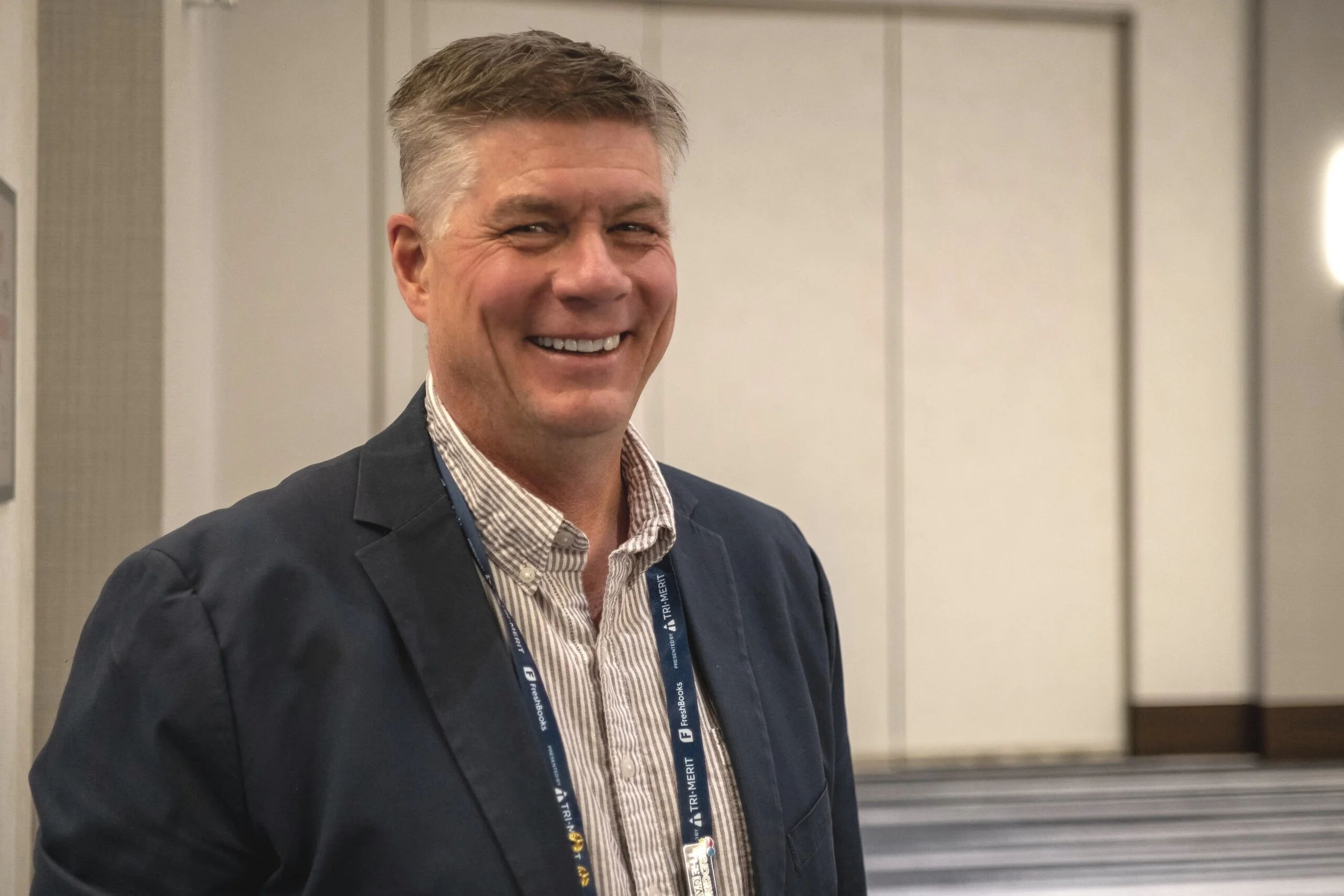
Randy Crabtree, co-founder and partner of Tri-Merit Specialty Tax Professionals, is a widely followed author, lecturer and podcast host for the accounting profession. Since 2019, he has hosted the The Unique CPA podcast, which ranks among the world’s 5% most popular programs (Source: Listen Notes). You can find articles from Randy in Accounting Today’s “Voices” column and the AICPA Tax Advisor, and he is a regular presenter at conferences and virtual training events hosted by CPAmerica, Prime Global, Leading Edge Alliance (LEA), Allinial Global and several state CPA societies. Randy also provides continuing professional education to Top 100 CPA firms across the country.
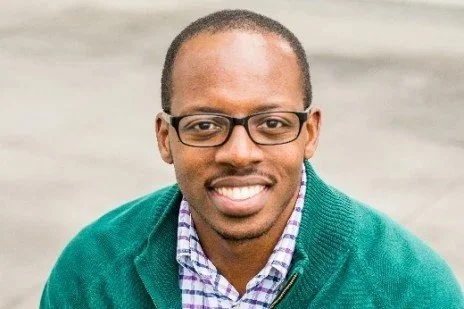
Terrell Turner is a 3x nationally ranked CPA, 2x Top 20 Global Finance Influencer. He is the founder of the TLTurner Group, which has been recognized in NYC Times Square and the NY Times as a top accounting and CFO firm that specializes in supporting law firms. Outside of running an accounting firm, Terrell hosts multiple vlogs and podcasts in addition to co-hosting The Unique CPA. Terrell is also a speaker and a content creator who regularly hosts and collaborates on video and audio content projects with multi-billion dollar corporations, bar associations, universities, and non-profit organizations.