
How Community is the Real Currency at Bridging the Gap
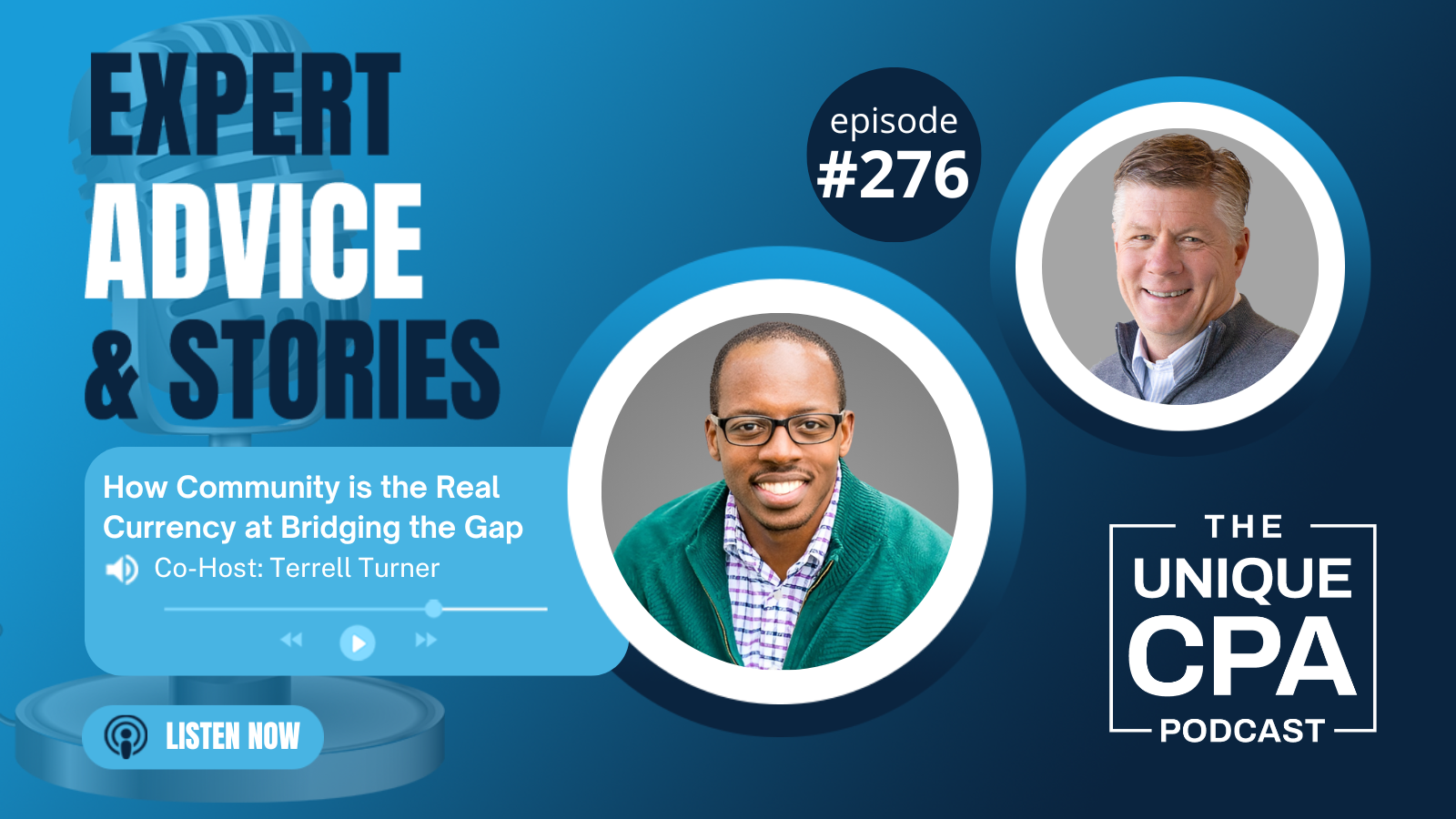
Randy Crabtree and Terrell Turner team up to co-host Episode 276 of The Unique CPA, previewing what’s coming July 28th at Bridging the Gap 2026 in Charlotte. Four years in, the conference has moved past simply naming burnout and connection as problems worth discussing, with the focus now turning to implementation: accountability structures, longer workshop formats, and the potential for speakers to linger and chat with attendees in the future instead of disappearing once their time on stage is over. Tying directly into a session on loneliness at the top, Terrell reflects on his newly promoted manager, who quietly absorbed weeks of team burnout rather than raise it, feeling exactly the kind of isolation hits so many leaders, and reminding him how topical and on the nose BTG is every year. There’s a session Randy’s son is speaking at, which he’ll admit up front he’s a little biased about, and when talk turns to the gala’s NASCAR theme, “The Winner’s Circle,” they decide that there will be multiple winners this year, with scores of folks playing the roles of pit crew to each other, all of them just trying to help the next person get further down the road.
Show Transcript Hide Transcript
Welcome back to The Unique CPA. Today’s going to be a little different. Instead of Terrell and I interviewing a guest, Terrell and I are going to talk with each other, which we’ve done a few times before, but this time it’s going to be with a theme in mind and a theme about BTG, Bridging the Gap ’26, which is just around the corner. We thought it’d be fun to talk about what we’re most excited about, the conversations that we think will shape this year’s event, and why we believe there’s never been a better time for accounting professionals to come together. You know, community, we both think is so important. So Terrell, let’s just jump into this. And again, thanks for being part of the show. When did we start this? January or something? You and I start doing this stuff together?
I think so, yeah.
Alright, so let’s jump into it ’cause this is, we are recording on July 1st. So the conference is this month. We are coming up fast. And so when you think about BTG 2026, which is going to be Charlotte, North Carolina, July 28th through the 30th, what’s the first thing that gets you excited, first thing that comes to mind?
Yeah, the first thing that comes to mind are the conversations. I think there have been so much value that has come from just sitting in the lobby or after a session, being able to just sit down and talk with the people that are there, and I think there’s so much that you can learn from it because I think some of those conversations allow you to go past the surface level, like, oh, that was a great presentation and maybe hit one point and then move on. But I feel like you can actually have substantive, real conversations with people you look up to or people that you’re learning from in the industry and, for me, I will say those have been the best things for, whether it’s my career or building a firm, it’s just being able to have those real conversations.
Yeah. So when you talk about the conversations, you talk about the sessions, you learn in the sessions, and I agree, but, and you take something out of that, but I want people to go implement that too. That implementation starts with that conversation in the hall then, hey, Terrell just said this in that session, that was pretty cool. You know, is that something you’re doing when you’re talking to somebody. Or not even something that comes up in the Q&A session, something that just comes up in the natural conversation. That’s why at the beginning, you know, I said it, but we both believe that community is such an important part of this profession in general, but this conference. So yeah, I agree with that. The people part of it gets me excited.
The one thing I want to add, before we even go too much further, is this is year four. The first three years we’ve really set the stage on the importance of, well, community, the importance of connection, and which is again, part of community in my mind. But really the overall theme, the importance of mental health awareness, the importance of physical health. We have the wellness room that is open the entire conference. We do morning walks, this year we’re actually going to do a run club as well. And so we set the stage of the importance of all that. But this year when I first started thinking about what are we going to do, what’s the next logical step, one of the things I’ve been researching a lot lately is the progression of your career and what’s the best skills for you to lean into as you get older in your career. And I thought the same thing with the conference. We’re getting older in our conference life, and so what’s the next logical step for the conference to go? And I thought, okay, and we’ve always talked about implementing the things we talk about, but let’s lean heavier into that. Now we’ve set the stage, and so now let’s not just talk about why it’s important to avoid burnout, but let’s talk about the impact of that. Let’s talk about how we lean into all these positive things for our team and how we have a strategy when we leave the conference of this is the things I want to do. And so, so that to me is what I’m excited about, is seeing the evolution of Bridging the Gap into the next phase of its career.
Absolutely. I do think that there’s a lot of benefit to being able to have the space to have those implementation conversations because I’m very curious for you if this ever happens on your end as well is that some of the times I feel like I get on stage, I give a speech, we have a great conversation about whatever I’m talking about, but I know as a speaker there is more that they need to hear to actually put this in practice. And sometimes I feel a little bad coming off stage to where I don’t have the time to sit and talk to every single person in the room because they’re running off to their next session. And I experienced that, like I was speaking at a conference in Orlando and I realized, man, 60 minutes wasn’t even enough to really go in and really give them, hey, here’s what you need to go do next. Like we covered some of it, but I know there was a lot that we couldn’t even get to. So I’m curious, when you speak, do you ever feel like that?
Oh, all the time. This is why that hallway conversation I think is so important. And that’s the one thing with Bridging the Gap—and other conferences as well, but I think Bridging the Gap specifically—is those speakers are in the hall talking, they’re in the happy hour, they’re in the lunch room, the breakfast room, the morning walks, and that’s where then we can at least one-on-one expand on that, answer more questions. That’s part of what I see BTG evolving into going forward as well. Not ’26 as much, but maybe ’27. I’ve wanted to do this every year and it’s just, we don’t find the space, but I want to have a room where, after a session, the speaker could go hole up in the room and if five people from that session want to go have further conversations, they can do that. I think we can do that going forward. I really wanted to see if we could do it this year. I think right now it’s going to happen in the hallway, in the exhibit hall, wherever it’s going to be. But to go back to your question, I’m trying to expand the time I have in sessions, now not necessarily at conferences, although some conferences will give you option of 50 minutes or 100 minutes. So lately I’ve been trying to ask for the hundred minute option and then when they do that, not just a hundred minutes of talking, but building a workshop in there and making it actionable. Making sure that, hey, even having the, just coming out and say, here’s what you need to do. Here’s what I’m asking, here’s my challenge to you, the next 30 days, 60 days, 90 days, implement this, analyze this. Stop doing this, start doing this, whatever it is.
And then the next logical phase for that, and I haven’t put this in place, but it’s in my mind, I got all these things in my mind, and sometimes they need to really work themselves out, but at a minimum have a place where people could feel like they’re being held accountable. It’s a website, it’s, you know, what’s that one out there now? Circle or something like that where at least there’s communication, but not just that. It is like, hey, you’re specifically going in and you’re putting, here’s what I did, here’s what I need help with, here’s my question. And then we’d have to have, obviously somebody looking at that. But maybe it is a community-led thing. You’re being held accountable by your peers, which I think is better than somebody being held accountable by me, one person. I think your peers are big. So again, that’s not 2026 right now. But when we talk about the evolution of what I see, the importance of what this conference brings and what we as whatever: speakers or people that can have some influence need to do, is we have to figure out ways to have this positive impact on the profession and always be looking at that. So that just was like a 20 minute ramble on my part, but that’s what I see going on.
But I think that’s a really good point because as you were talking, one of the things that I was thinking about is for some of the speakers where we know that there is a bit more, you could say, detail to fully implementing what they discussed. Even if it was something like after the conference, we’re just going to do an implementation kind of conversation on whether we do something virtually, if you really want to dive a little bit deeper, we’re just going to go a little bit more deeper into very practical situations. Because a part of me almost feels like when I’m designing conversations or presentations, it’s like, can I cover this content in like 10 minutes and then just open the floor the rest of the time for questions? Because I find that it’s those questions that generate the conversation that lead to implementation. But I love what you said about the accountability, because I think about that every time. Like I sat in a session where I heard about all of these amazing tech tools. Like whenever I sit in a session with Chad Davis and he’s talking about all these great tools, and I’m like, I’m excited about it. Now I need a couple more nudges to help me actually build the things that we just discussed. Now, I’m grateful that I’ve known Chad for a couple of years and Chad’s always been gracious to where I shot him a message and I was able to get that nudge afterwards. But I think about all the other people in the room who may not necessarily feel like they have that connection, that relationship already to be able to say, hey, let me just send him a message. Now, he’s very open and generous, and I’m sure he would be glad to help whoever, but I think creating a space where people feel like they can go a step further than what they just got from the session.
No, and when you were saying that, that’s the one thing that I was thinking about in the past from the conference that people talk about a lot is those Chad Davis sessions because it is like a hands-on almost thing and where you’re taking away, you’re seeing live action of what’s this possibility of what he’s doing through AI or building tools. We are going to have a session like that this year. It’s just, unfortunately Chad can’t be there this year, but we will have somebody else doing that, which is pretty exciting, ’cause those are the things that I really hear people talk about. I mean, they talk about all the sessions and, you know, I’m going to do a keynote and there’ll be, and whatever inspirational, that kind of keynote, which people take a lot away, and I love doing that, but I want them to have actionable steps going forward and I will challenge them in what I’m talking about as well. Since we’re speaking about that, let’s talk about the things you’re doing at the conference.
Yeah. So another thing I’m pretty excited about is I will not be dressed like this at the conference.
I will be dressed like this!
So I’ll be dressed a lot more relaxed at the conference, as I’m kind of floating through the hallway and really capturing some of those conversations that people are having and the energy of the event, because I think as the event attendance has grown over the years, which I think has been phenomenal, I think there are still a lot of people who don’t understand what it’s like to be at a Bridging the Gap event. And so I’m looking forward to working with some audio visual teams to really capture the essence of the conference and really sitting down talking to people, “Hey, how has this conference made an impact with you?” And it not necessarily having to be like a formal conversation, but really getting kind of that, I guess you’d say, in my case, would be that man on the street kind of interviews, conversations, because I think that there’s so much value in having those just impromptu conversations, like what are people getting as they’re coming out of a session that they just enjoyed? What were some of the highlights?
And I think part of it is capturing those conversations, but I think also it’s just helping the people who are at the conference kind of solidify what they just heard, because I think it takes on a whole other level of implementation when you actually have a conversation about what you just heard, I think it helps clarify it for the listener so that they can actually go put it into practice. So I’m pretty excited about that. And then our session that we’ve been working on, so there’s a couple of us that are going to be on stage: Nicole, Nancy, you, myself, and Liz. It is going to be an interesting conversation, I think, of all of us sharing our perspective when it comes down to really those elements you need in building a practice. And I think we’re going to cover a wide range, because I think all of us have different perspectives, which I think is going to be a pretty interesting conversation.
Yeah, I’m looking forward to that, but I’m also—not nervous about that, what’s the word—I am delinquent in getting my answers to Liz on the things we’re need to talk about. So, Liz, I hope Liz doesn’t listen to this podcast because I feel bad I haven’t gotten that to her yet, but that will be fun. I’m actually excited. I think the first two years, the first year for sure, I didn’t do any sessions. I was like, I just want to concentrate on the conference. I think the second year I was on one panel. And then the third year is where I got on a panel and I did the keynote, and then this year I’m doing a keynote and two sessions. So, wow, every year I’m adding to my role a little bit, but it’s going to be fun. I want to read a couple of the sessions to you that, I mean, they’re all sticking out to me, but the one that you just mentioned with Liz is “Building an Agile Firm: The Six Foundation Pillars of Powerful Firm Culture.” That’s the one, right?
Yep, that’s the one.
Okay. And that’s with Liz Farr, Nancy, you said this, McClelland, you and Nicole Davis and myself. So I’m excited about that. “The Mind, Heart, Gut Connection: Leading Through Clarity, Chaos, and Choices.” Excited about that. Excited about all of them, again, I’m going to keep saying that ’cause I am. This one’s pretty interesting ’cause I’ve been hearing this a lot lately. But the “Leadership Loneliness: The Loneliness Epidemic in Accounting.” We talked about this yesterday on another podcast you and I were on, but I think there is this loneliness at the top and the more I read about it, it is a real thing. Leaders, it’s just a natural reaction that people look at somebody who’s in leadership differently, and it just happens. And a book I was reading by Arthur C. Brooks was talking about that. So interested to see that session. And I try to walk into as many of these as I can. It may just be for five or ten minutes, but I try to get into all of them.
Can I say something about that one? The loneliness epidemic. ’Cause I do think that that one is such a very applicable topic that I don’t think that we talk about enough. And I know that, you know, this is maybe a counter perspective, or I’ll say a different perspective than I think what we often see where across, let’s say the social media platforms, across books. I think there’s been so much of a focus on what leaders should do for their people and how we should take care of our people, which I think we should. But I think in the process of focusing so much on what the leaders, what the company need to do for their people, we kind of forgot to talk about leaders, what they need to do to stay healthy themselves. I think that if the leaders, all of their energy is going towards their people, and none of it is kind of sustaining them as leaders, after a while, they’re going to run out of gas and they’re not going to be any good to themselves or to their leaders. And so I think this session is really good.
A very, I would say very practical conversation I had recently with my accounting manager is like a few weeks ago, her and I met and she was telling me, she was like, hey, I talked to the team and a team is, they were a bit exhausted because we had been doing some, there’s some special project, there’s some cleanup stuff we needed to do. Some of it was things that got missed that, hey, we should have caught this, so we had multiple things that we needed to do, all in a very short period of time. And one of the things that she asked the team, she was like, hey, how long have you guys been feeling this way? And they were like, well, about two, three weeks. And she was like, well, why didn’t you guys come tell me about it? And her and I had to have an honest conversation. I was like, now she got promoted from a senior accountant to a manager, And now that she’s part of leadership, what inevitably happens is the team feels like they can’t bring everything to her, and she’s going through kind of that feeling, that person on an island kind of stage to where I realized, as a managing partner of the firm, I need to step in and spend a little bit more time with her, ’cause she’s going through that temporary lonely feeling as she’s navigating this new role. And I’m just like, man, when I saw that session of loneliness in accounting, I’m just like, it happens at the senior level and the middle management level. I was like, this session is going to be a really good one.
I agree. I’m excited about that. And then when you were just saying this, there’s actually another one, I think it might be right after it, and it’s “A Psychotherapist’s Framework for High Stakes Conversations: How to Project Calm and Confidence Under Pressure.” Now that will be a nice add-on to the other one, but I also want that to be, hey, be a vulnerable leader somewhere in there. Because I think vulnerability comes through, then you’re more approachable, then people won’t be afraid to say, hey, I didn’t want to put more pressure on you if you do that. So I’m excited to see if that is a good compliment. I’m going to just call out a couple more because one, I have to be selfish and say I’m very excited about my son speaking at the conference this year. He’ll be in a session with Michelle Rose, who is co-founder of Breakaway Advising. My son is now a Breakaway Advisor, has his own business under the breakaway umbrella, CAS business, but also using his investment banking background when he is working with clients. So I could go on and on and I’m not going to call them out, but I am going to call out a couple more, ’cause this ties into the history of BTG, which is “Where Wellness Meets Results: Leading Without the Mask.” And that’s the one where you know it’s leadership without having to hide the struggles you’re going through or the stress that you’re part of. So excited about that.
Alright, I’ll stop on that. So let’s pivot. We talked about people taking actionable steps away from this. People leaving with something. A friend of both of ours, Al-Nesha Jones, one time told me that when she leaves a conference, she actually blocks out like a couple days afterwards where she can digest everything she learned and figure out what she wants to implement into her business from the learnings from that conference. And so, I don’t know if we can call it specifics, but what do you want people to leave that conference with? Like a strategic plan? These are one or two things I need to do? I mean, leaving with a great feeling that I make great friends is great, but I want to have a positive impact on their profession. So what are you thinking about that?
Yeah. I think the first thing I would say is leaving with one to two people that you can reach out to if you have some questions about things. And I think that one is a huge one because it has been pivotal to my story. Like I remember leaving certain conferences and knowing, hey, I could reach out to Jody, or I can reach out to Matt. And we kind of developed that rapport, like we went on one of the walks in the morning, and there was a conversation we had during that walk to where, I mean, he turned to me and told me, he was like, “Hey, I know you’re navigating, if you have some questions, here’s my number, reach out to me.” And so I do want people to walk away with at least one to two people that you can get on the phone, you can text or you can call, you can reach out to if you have some questions, because that’s going to help with implementation.
I think the other thing is a practical plan around one thing that they can implement over the next three months. Because I do think when we go to conferences sometimes and there’s so much information coming at us that it is very hard to implement anything because it’s like you’re drinking from a fire hose constantly. But I think if people can go in with the perspective of, all right, I’m looking for one thing I can just really work on implementing over the next three months, then they’re going to walk out with a lot of value. If they have that person they can reach out to and that one thing that they can implement over the next three months, I think they’re going to get a ton of value, and this conference is going to more than pay for itself.
Yep. I agree with that. I want people to leave with, same thing: If we throw so many things at you and you get overwhelmed and think there’s 20 things I need to implement, you’re not going to do any. So what you just said, the great advice, pick one for the next three months, and pick that one based on, this is something I’ve been talking about a little bit lately, but based on who you are or who you want to be, define who you are. I’d love to have a session on that—we don’t this year—but this is becoming a passion of mine, is defining who you are as a person, as a business, who you want to serve, what offerings you want to have. Because once you have that in place, then picking that one thing that you want to implement gets easier. So that’s great advice. Before I ask a final question or a final thing, anything that we didn’t talk about that you want to make sure we bring up?
Yeah! How excited are you for this gala?
Ah, that was going to be my final question, so we’re on the same page. Nice. So I’m excited. So every year, the first year was a little more subtle with the gala event, and then it’s really picked up every year. Last year, man, I had a long blonde wig, I basically looked like I came in off the set of Game of Thrones, which was fun. I think I’ll be a little more subtle this year, but the gala event is “The Winner’s Circle.” And Charlotte, North Carolina is the home of NASCAR, so it’s a theme based around racing. So I have ordered my costume. Just anybody listening, you don’t have to get dressed up, you don’t have to do anything. But if you choose to, there’s some pretty unique outfits people will put on. You can look on the website, I think there’s more information, but I was thinking things like race car driver, people said things like Ricky Bobby, people said things, team owner, a pit crew, just a NASCAR fan or just a gala event attire with a, you know, dressed up in a tux or a dress or something like that, with the color theme we have, which is kind of like, I think, black and gold, white checker flag type theme. But yeah, I’m excited. It’s always a great time. It’s where people let loose, people have fun. I think more relationships are built on the gala event night than probably the rest of the conference. So how about you, are you looking forward to it?
Yeah, I’m looking forward to the gala. I do think that it is very fun to see the creativity of the attendees. I mean, I think last year where we did the Enchanted Forest theme, you had some people that showed up as characters from Shrek, you had Game of Thrones, you had Lord of the Rings. I mean, there was a massive span of people that showed. And I think it’s a testament to the community that people feel like they can show up and really just have a good time together, we’re not all just numbers and figuring out tax codes and FASBs, but we actually have a lot of fun together. And so I’m looking forward to that. I’m looking forward to seeing how people really lean into the theme. Because what I love about the themes is that I think the themes also help people get in the right mindset coming into the conference. And I think a theme of the Winner’s Circle, people are kind of going in with a different perspective. Because I mean, you and I go to a ton of conferences, and there are a lot of conferences we’ve probably gone through where there is no theme. You just kind of show up. And it does become a little bit of a challenge to show up to a conference that doesn’t have a theme. Like everybody’s looking for so many different things and it’s kind of hard to have those hallway conversations in the same direction because there’s no uniting idea that is helping us see what we’re hearing and internalize what we’re hearing. But I think the theme helps out a lot. Plus, I think a lot of people have fun at the gala and have fun with seeing the costumes and the outfits.
Oh yeah, that’ll be fun. Well, the theme, I don’t know if I said that already, but the theme overall this year is “The Future of Accounting Is Built Differently.” I thought a good idea for a theme for the gala event would be “Race to the Future,” which would be pretty interesting. We still could think around that, but I also, the thing I, why we didn’t do that is I don’t like looking at accounting as I’m racing the firm next to me. Especially this conference, it’s a collaborative event. We’re always helping each other and so, seeing, even “The Winner’s Circle,” I don’t think business, I’m a Simon Sinek fan, the Infinite Game, and I don’t think business is a game that you win or lose. So that was why we didn’t, I don’t want to end on that.
Well, I will say it is one of the amazing things I think about our community, and this is my prediction, that even when you have a theme like the Winner’s Circle, what I predict based on the character of the people in our community is what you’d probably end up with. There’s a lot of people who see themselves as members of the pit crew. And I think what’s unique about the pit crew is these are people that, they know their job is to help someone else continue down that race. And I think that even if you come up with a theme of “The Winner’s Circle,” so many of us see ourselves as, I’m not here just to race against other people, it’s like I’m here to be part of the pit crew. I’m part of your pit crew, you’re part of my pit crew. How can I help you get to whatever you define as winning, how can we be there to assist you, whether that’s helping you change some tires, adding a little bit more oil of motivation into your vehicle as you’re making it down the road. I think it’s something unique what Bridging the Gap has created to where we all understand, we are moving towards some objective, some goal, some milestone that we’re all moving to, but at the same time as we’re driving our own car, we’re also here to help other people as they make progress in their car, to where I think that does create a unique thing for the Bridging the Gap community.
Yep. We’re all going to win together. Maybe that’s it, “The Winner’s Circle, Together.” That’s not what it’s, but we’ll figure out a thing on that. Alright, we should probably wrap up. Bottom line is, I think everybody can see we’re excited about this. We’re excited about the people. We’re excited to meet new friends. We’re excited to see old friends. We’re excited to create an atmosphere where you’re going to learn, be able to implement something that’s going to make a positive impact on you, your firm, the people you work with. So if you want more information on that, it’ll be in the show notes, but BTGconference.com, you can get a lot of information there. I think we will release this next week, which is what, the 7th is Tuesday, July 7th. At the time we release this, the hotel block will have three days left to get the special pricing. So if you’re listening to this right away, make sure you go and book your ticket, and book your hotel block before, one, it sells out and before, two, the prices go up. Any final thoughts then on your end before we close it up?
Yeah, I would say it is going to be a great event. I think the vendors are excited. People that I’ve been talking to that are coming to the conference, they’re excited. Charlotte is an easy city to get to. They have a phenomenal airport. Maybe I’m a little biased ’cause I live in Charlotte, but—
Yeah, we should have talked about that!
I will say I fly in and out of Charlotte a lot and it is probably one of the easiest airports to kind of navigate. Plus I think where the venue is compared to the airport, pretty easy ride. And what I think is cool about this one is that the event is actually in downtown. So you go to a lot of events where they’re kind of on the outside of the city, but this one is actually in the city, so it gives another element to the conference. And I’m pretty excited about people making it out here. Now, I will tell people it is hot in Charlotte in July, so that is exactly why I will not be dressed like this at the conference.
Yes. And most of the events, if not all, at least, one of the things that we try to do at BTG is keep everybody together all the time. And so all events are inside the hotel. Not that we don’t want you to go out and walk around and enjoy Charlotte, but you don’t have to because we’ll have things planned morning until night that you can choose to be part of or choose not to. But there’s a lot of fun little nooks and crannies in this hotel too, which I’m excited about. There’s actually a speakeasy that we’ll be using one of the nights, and so it’ll be a fun time.
Alright, well, thanks everybody for listening. Again, we hope to see you there end of July, and that is coming very quick. So Terrell, I look forward to seeing you 21 days from today.
Absolutely!
Meet the Hosts
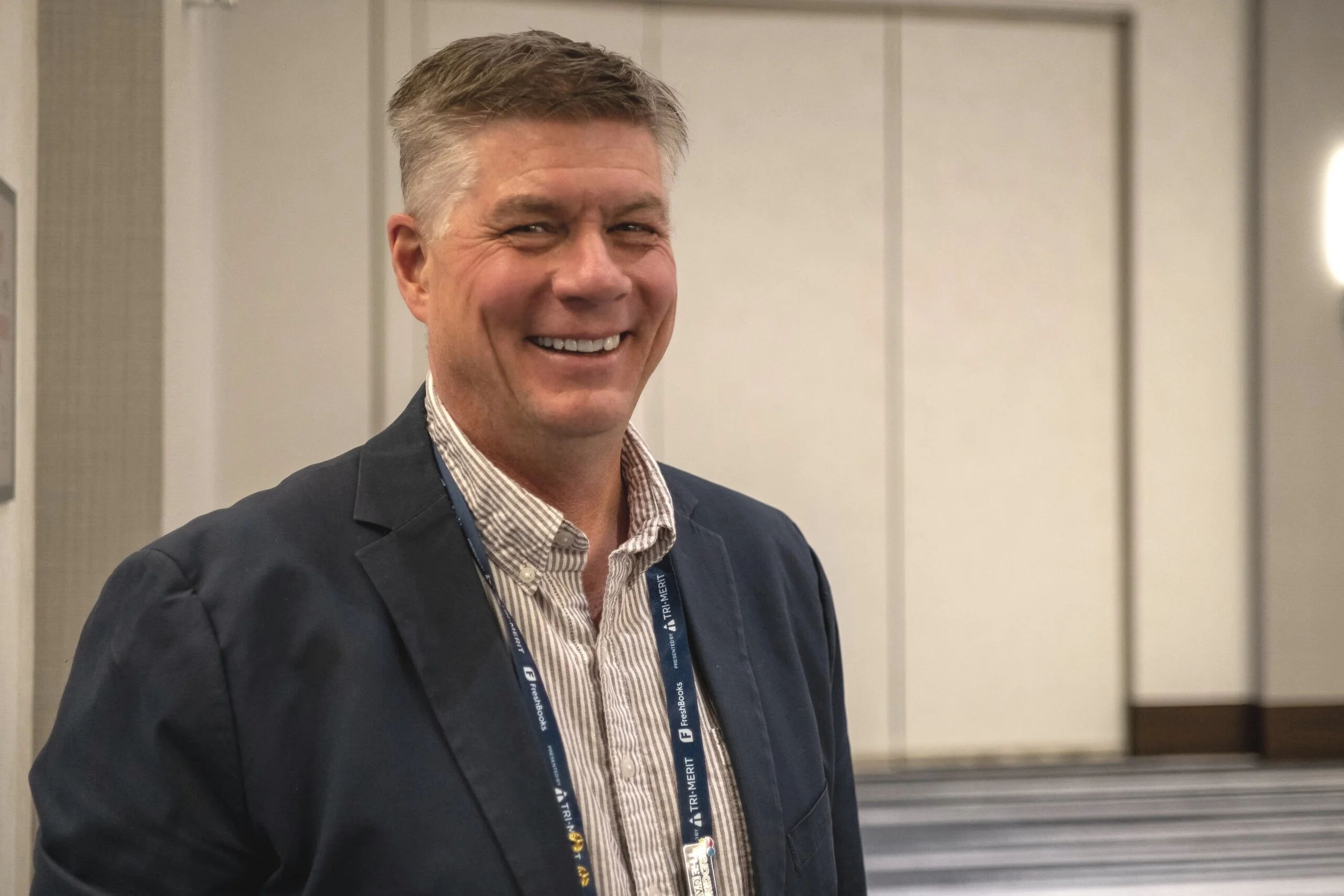
Randy Crabtree, co-founder and partner of Tri-Merit Specialty Tax Professionals, is a widely followed author, lecturer and podcast host for the accounting profession. Since 2019, he has hosted the The Unique CPA podcast, which ranks among the world’s 5% most popular programs (Source: Listen Notes). You can find articles from Randy in Accounting Today’s “Voices” column and the AICPA Tax Advisor, and he is a regular presenter at conferences and virtual training events hosted by CPAmerica, Prime Global, Leading Edge Alliance (LEA), Allinial Global and several state CPA societies. Randy also provides continuing professional education to Top 100 CPA firms across the country.
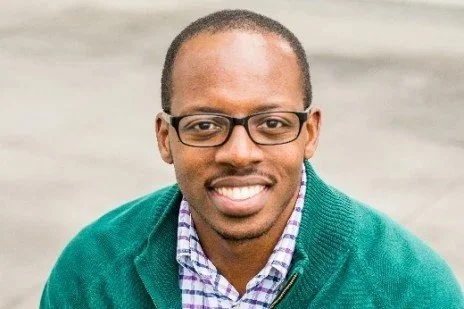
Terrell Turner is a 3x nationally ranked CPA, 2x Top 20 Global Finance Influencer. He is the founder of the TLTurner Group, which has been recognized in NYC Times Square and the NY Times as a top accounting and CFO firm that specializes in supporting law firms. Outside of running an accounting firm, Terrell hosts multiple vlogs and podcasts in addition to co-hosting The Unique CPA. Terrell is also a speaker and a content creator who regularly hosts and collaborates on video and audio content projects with multi-billion dollar corporations, bar associations, universities, and non-profit organizations.