
Mental Health, Better Clients, More Money at BTG
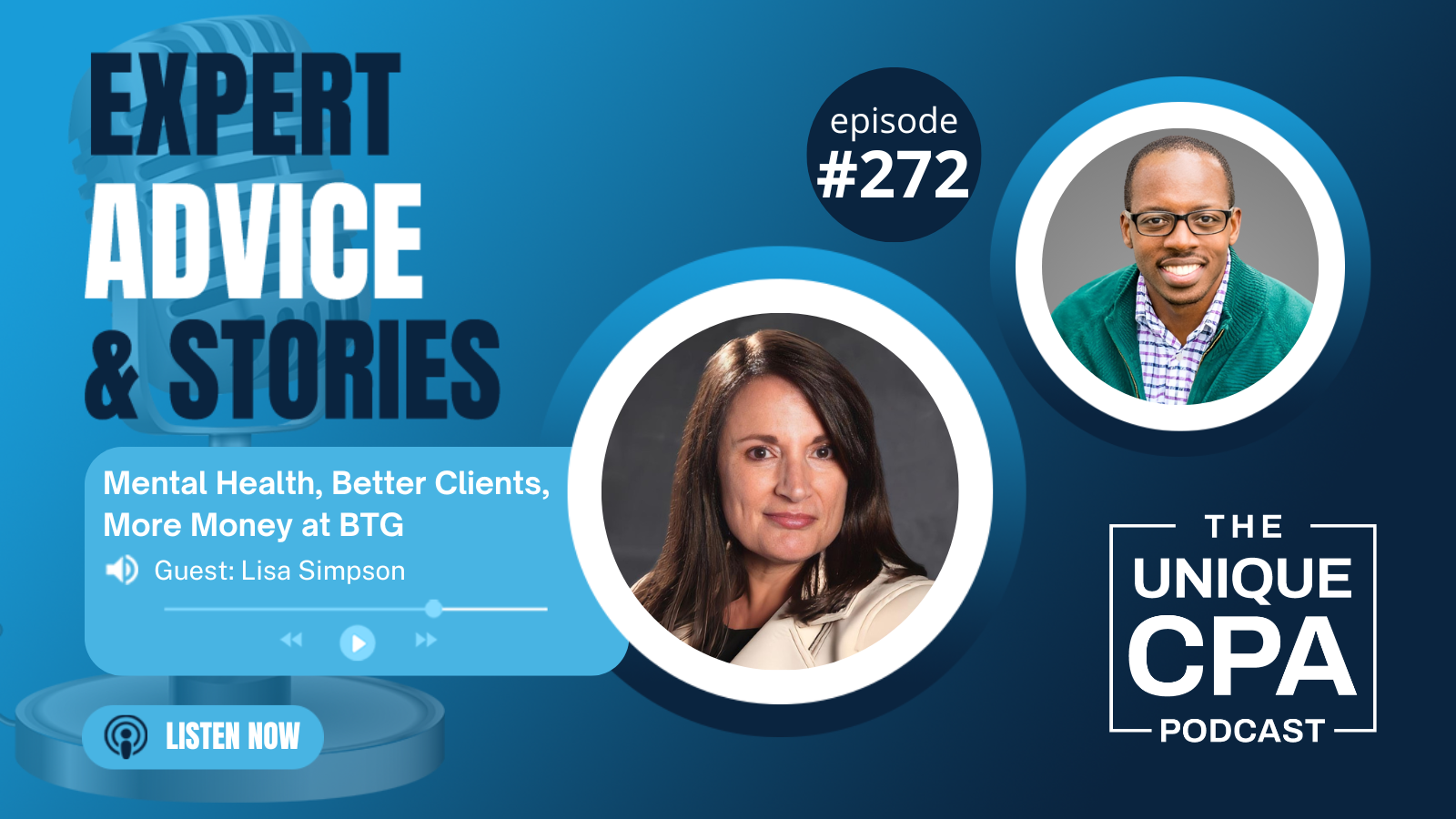
With Lisa Simpson
Terrell Turner sits down with Lisa Simpson of the AICPA, who leads the organization's Transforming Your Business Model initiative, live from Bridging the Gap 2025 on Episode 272 of The Unique CPA. Lisa makes a compelling case that the old model, with its long, billable hours where firms carry too many of the wrong clients, is not only unsustainable, but actively unnecessary. Firms that have right-sized their client base are almost universally earning more the following year, not less, because they can finally deliver the kind of advisory value clients will actually pay for. She traces how the pandemic's visible toll on practitioners sparked a broader reckoning inside the AICPA, and how that translated into concrete tools, peer stories, and low-cost resources now available to firms of every size. Lisa also touches on the cultural inertia that slows change down, and why technology is making that resistance increasingly hard to justify.
Show Transcript Hide Transcript
Welcome back to another special episode of The Unique CPA Podcast. We are at Bridging the Gap 2025, and I have the pleasure of sitting down with Lisa Simpson. Lisa, welcome to the show.
Thanks, Terrell, it’s good to be here. It’s my first Bridging the Gap, and I’m really looking forward to seeing all the sessions and meeting all the cool people that are here.
Awesome. Well welcome to the show, and welcome to Bridging the Gap. So I’m very curious: Before coming to Bridging the Gap, your first one, what were some of the things you heard about this conference?
I think the definition of “it’s an unconference,” and I assumed that it was going to be a little more relaxed, so I’ve got my tennis shoes on. I knew that there was going to be a lot of focus on mental health, setting boundaries, wellness, and just a different aspect of the profession. So that’s what I was excited about.
Now, when you go to other conferences, do you hear those topics talked about a lot at other conferences?
You know, it’s really interesting. I would say since COVID we are having many more conversations in the profession about mental health and boundaries and work-life balance and how crucial it is. But it’s nice to see that this one has so many sessions purely focused on that.
Some of the feedback that I hear from people about, you know, I feel like I can have conversations here that I desperately need to have, but just don’t have anybody to talk to back at home, so I’m glad to hear that. So now that you’re here at the conference, how does it live up to the expectation that people set for you before you came?
I walked in the door, I came through to get on the elevator to go to my room, and I had to stop 20 times to give hugs to all my friends that I get to see at conferences and events, or that I’ve met through connections, you know, like you through social media is kind of how we met. And then I’ve met several friends through the AICPA Town Hall community. So I’ve just been chatting away with a lot of old friends that I haven’t gotten to see for a while.
Awesome, I love that. I mean, I think a lot of people talk about the community here of just when you’re at a bigger conference, sometimes there’s so many people that you don’t have time to get those, you know, longer quality conversations in, but it’s big enough to where there’s enough people here, but small enough for you to have those a little more in-depth conversations. So I’m curious for you, like what is your big thing that you wanted to get out of coming to the conference?
That’s a great question. I would say that I wanted to see what the energy was like when you’re having more open and honest conversations about wellness, both mental and physical, and how smaller firms are looking at the opportunities to reshape the profession. That’s where I spend a lot of my time is talking about how we can transform the business model and break the mold of long hours, low pay, bad busy seasons. And I know that everybody here is really focused on that same mission, so really just hearing what others have to say about that.
So I guess with your experience of the things you do, like what are you hearing people say about, you know, is that changing, or are those things changing fast enough, or is there resistance to the industry really adopting those things of like, you know, hey, let’s kind of reduce the number of hours, or hey, how do we improve the pace? So are you hearing people talk about that it is changing or does it still feel like it’s kind of an uphill battle?
I think things are changing. I’ll be at a meeting next week with some of the biggest firms, and several of the leaders in that group have been very vocal about the need to change the model. So partners are having conversations about what would it take to raise starting salaries to $100,000? Not saying we’re going to do it, but what would have to change in the operating model of the firm? We’ve got a lot more firm leaders of all sizes talking about culling clients so that they have a more reasonable workload. They’re identifying who they want to work with, and they’re also talking about how to price their services differently, how to manage their client expectations, how to own their future. And I am hearing that through firm leaders of all sizes. So that’s fun.
So I’m curious, you know, I know because you and I have had many conversations, but for the people on the podcast who may not be as familiar, tell us a little bit about your role in how you help the industry kind of make progress in those areas.
I tell everybody I have one of the best roles, if not the best role at the AICPA because I get to travel all across the country talking to people like you and other leaders in the profession who are really great people, really smart people, people really focused on doing the right thing for their people and for their clients and for their profession. So I lead several teams at the AICPA, one of them doing a multi-year initiative that we call “Transforming Your Business Model,” and it is really helping everyone in the profession understand the forces that are causing accounting to maybe not be as attractive a profession as it was back when I graduated, and how we can all fix so much of this. So we talk about how firms should have a clearly defined strategy.
We don’t just talk about it. We give them tools to implement change. And then we have podcasts with both the consultants in the profession who are experts and then peers who have gone through some of these fundamental transformational processes, because I could talk all day long, and you might listen, you might not, I wouldn’t blame you. But if you hear it from your peer about how they right-sized their client base, and it has absolutely fundamentally changed their mental health, their physical health, their relationships with their family, their spouses, their kids, they’re making more money, and they’re working fewer hours with the right people. It’s just bringing back their love for the profession and why they got into this in the first place. So finding more and more stories like that and amplifying them to give courage to the others, we can all do this type of transformation, and it will help the people in the firm, the clients, the owners of the firms, and then the profession as a whole. So that’s what gets me jazzed.
I mean, I would be jazzed about that as well. As you were talking about it. I’m just like, that just sounds like a win-win-win scenario.
It is!
Everybody’s winning at every level. So I’m very curious, like you may have some exposure to this: Are there any common things that people are saying of why they aren’t ready to take those steps to right size their client base? Because all of those wins to me just sound like a good idea. So I’m like, what’s holding people back from actually making those types of decisions?
I think it can be two things: One can be fear. If I’m going to let go of clients, what’s that going to do to my bottom line? You know, what’s that going to do to the paycheck I’m going to take home? How am I going to deal with having less revenue? What every person I’ve talked to has said is the next year you’re making more money, because you’re able to give more value to the clients that you’re working with, and then they are willing to pay for that value because you’re bringing so much more insight, you’re not just handing them a tax return or handing them a financial statement. You’re spending time helping them make better decisions on how they run their business.
So fear is one. And we just get stuck in a rut. I was raised in the profession a certain way, and the people that I brought in were raised to do the same thing that I did, to do the same thing that the generation before. And now I think with the fundamental shift in the profession because of technology and what it’s enabling us to do to be faster, stronger, smarter, and more efficient, I think we can eliminate some of that change resistance. I also focus really hard on making the business case: Here’s why we have to change. If you’re billing by the hour, but technology is making you three times faster, five times faster, then you don’t want to decrease your earnings just because you’re working smarter, not harder. So you have to look at the value that you’re bringing to the client.
You know what, that makes a lot of sense. So I’m very curious, how did you stay so mentally nimble to adjust to that? Because that hasn’t always been, you know, the way the industry was approached. So I mean, for you to have those conversations, you have got to believe in the things that you’re saying as well. So how did you stay mentally nimble with that?
Thank you for that question, because it gets kind of emotional for me because during COVID we launched our AICPA Town Hall. You know, we started out with a few hundred and then a few thousand, and last week we had 18,000 people on. And what I learned during COVID, during the business relief period, where we were throwing around acronyms like PPP and ERC and IDLE and all of these new terms that so many of us in the profession didn’t know, I could see from the questions in the town hall chat how much pain there was, how much loyalty there was to our clients. People were working themselves beyond the bone to help their clients get through this period of crisis.
And that kind of started the conversation within my executive committee, my group of volunteers, about how can we help? How can we help firms position themselves to be successful into the future in times of uncertainty, times of transformation, and help them own their future. So that’s kind of what started it was because of the just the pain that we all felt during the pandemic, and the need to kind of focus a little bit more on ourselves, our mental health, our physical health, our people’s health, and who the right client should be. So that’s all what kind of led into this big initiative, and my volunteer committee has been great. I’ve worked with some of the greatest consultants that we all know in the profession to really bring their insights and be able to help firms of all sizes take advantage of it.
I love it. So if people are interested in learning more about the awesome things you’re doing, the resources that are out there, where’s a good place for them to go to start learning more about that?
I think the easiest way, because I’m really horrible at email, is to email my team at PCPS@AICPA.org and we’ll get you set up with a tour and an overview of the resources that we offer. It’s very low cost. A lot of people, Terrell, don’t know that this section around practice management exists within the AICPA. For a sole practitioner to join, it’s $50 a year. And you get access to all of these resources—I’m not here to make a sales pitch—it’s just that we are so passionate about helping the profession become a better, healthier place, and that helps us draw more people into the accounting pipeline, it sets us up for the future. So we just really want to make this available to as many people as possible, and especially those firms, you know, with let’s say 30 or fewer professionals who can’t go hire a consultant for 20 grand to come in and help them transform. We can help them do that in the DIY approach, that’s much more cost effective.
I love it. So the final question I want to ask is, let’s say you and I are sitting down, we’re talking to a person who has never been to Bridging the Gap before, and we’re talking about Bridging the Gap 2026. What is a reason you would give for them, why they should show up to Bridging the Gap 2026?
Well, I have heard that there is a crazy party tonight. I think it’s called the Gala. And so I’m looking forward to my first Gala because I’ve heard so much about that. So I’ll get back to you after tonight’s Gala.
I love it. Well, thank you Lisa, so much for being an amazing guest.
Thank you.
About the Guest
Lisa Simpson serves as VP of Firm Services for the AICPA. She leads the Private Companies Practice Section (PCPS) team in the development of practice management tools that address topics most important to firm owners. Lisa and her team develop and foster relationships with firms of all sizes, including through the AICPA’s Major Firms Group and Group of 400 initiatives as well as networking groups for small firms. Lisa began her career with Ernst & Young, gaining audit and tax experience in her six years with the firm. She then worked for a small firm in Lexington, Kentucky for five years. Lisa has 20+ years of industry experience, having served as the CFO for non-profit and for-profit organizations before joining the AICPA in 2012.
Meet the Hosts
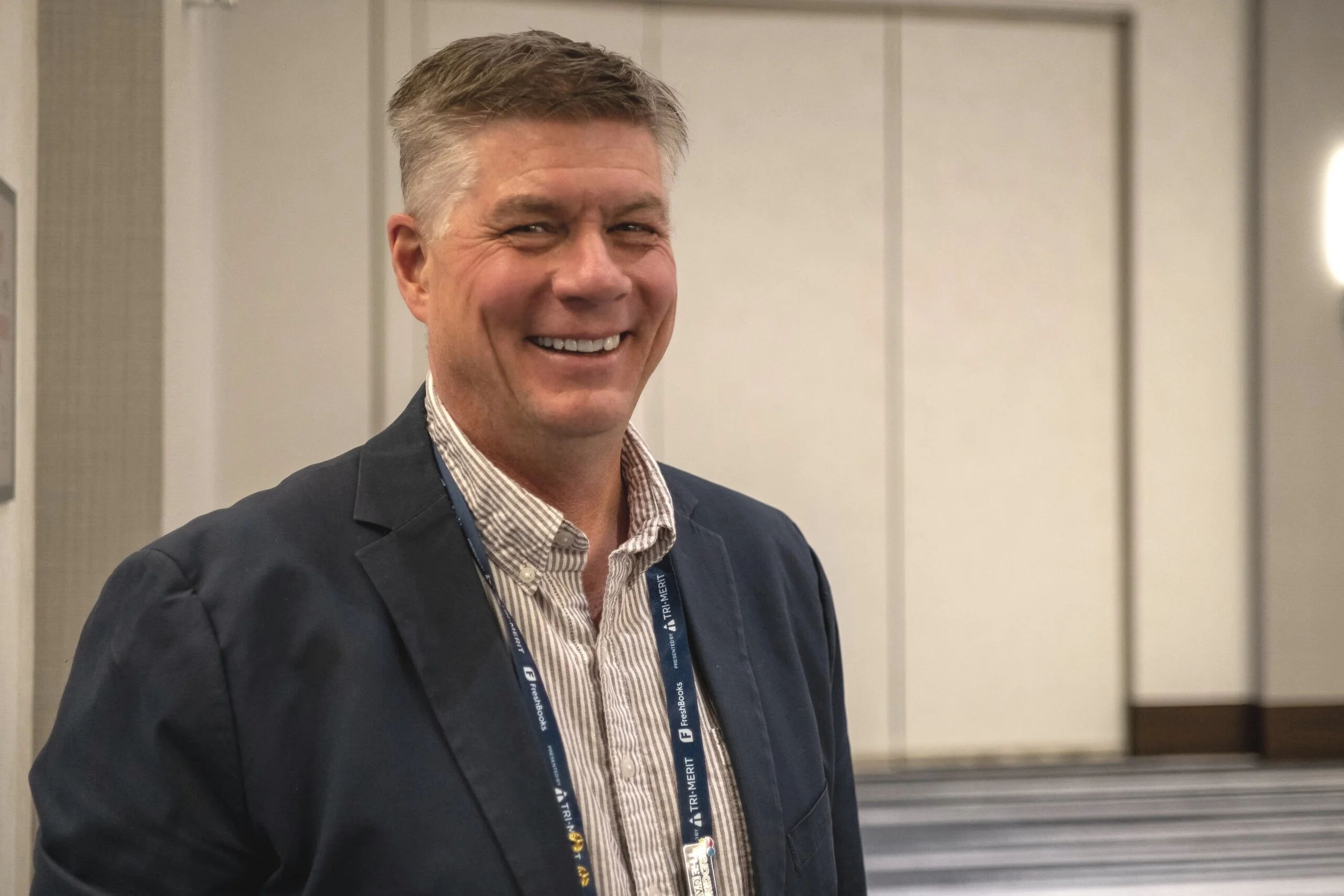
Randy Crabtree, co-founder and partner of Tri-Merit Specialty Tax Professionals, is a widely followed author, lecturer and podcast host for the accounting profession. Since 2019, he has hosted the The Unique CPA podcast, which ranks among the world’s 5% most popular programs (Source: Listen Notes). You can find articles from Randy in Accounting Today’s “Voices” column and the AICPA Tax Advisor, and he is a regular presenter at conferences and virtual training events hosted by CPAmerica, Prime Global, Leading Edge Alliance (LEA), Allinial Global and several state CPA societies. Randy also provides continuing professional education to Top 100 CPA firms across the country.
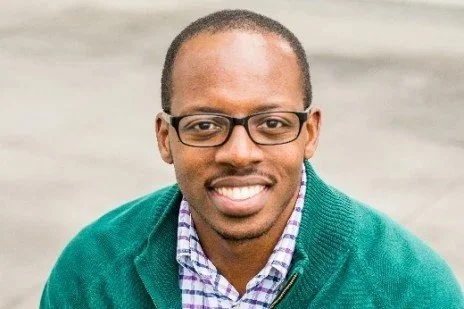
Terrell Turner is a 3x nationally ranked CPA, 2x Top 20 Global Finance Influencer. He is the founder of the TLTurner Group, which has been recognized in NYC Times Square and the NY Times as a top accounting and CFO firm that specializes in supporting law firms. Outside of running an accounting firm, Terrell hosts multiple vlogs and podcasts in addition to co-hosting The Unique CPA. Terrell is also a speaker and a content creator who regularly hosts and collaborates on video and audio content projects with multi-billion dollar corporations, bar associations, universities, and non-profit organizations.