
A Family Reunion You Actually Want to Go to
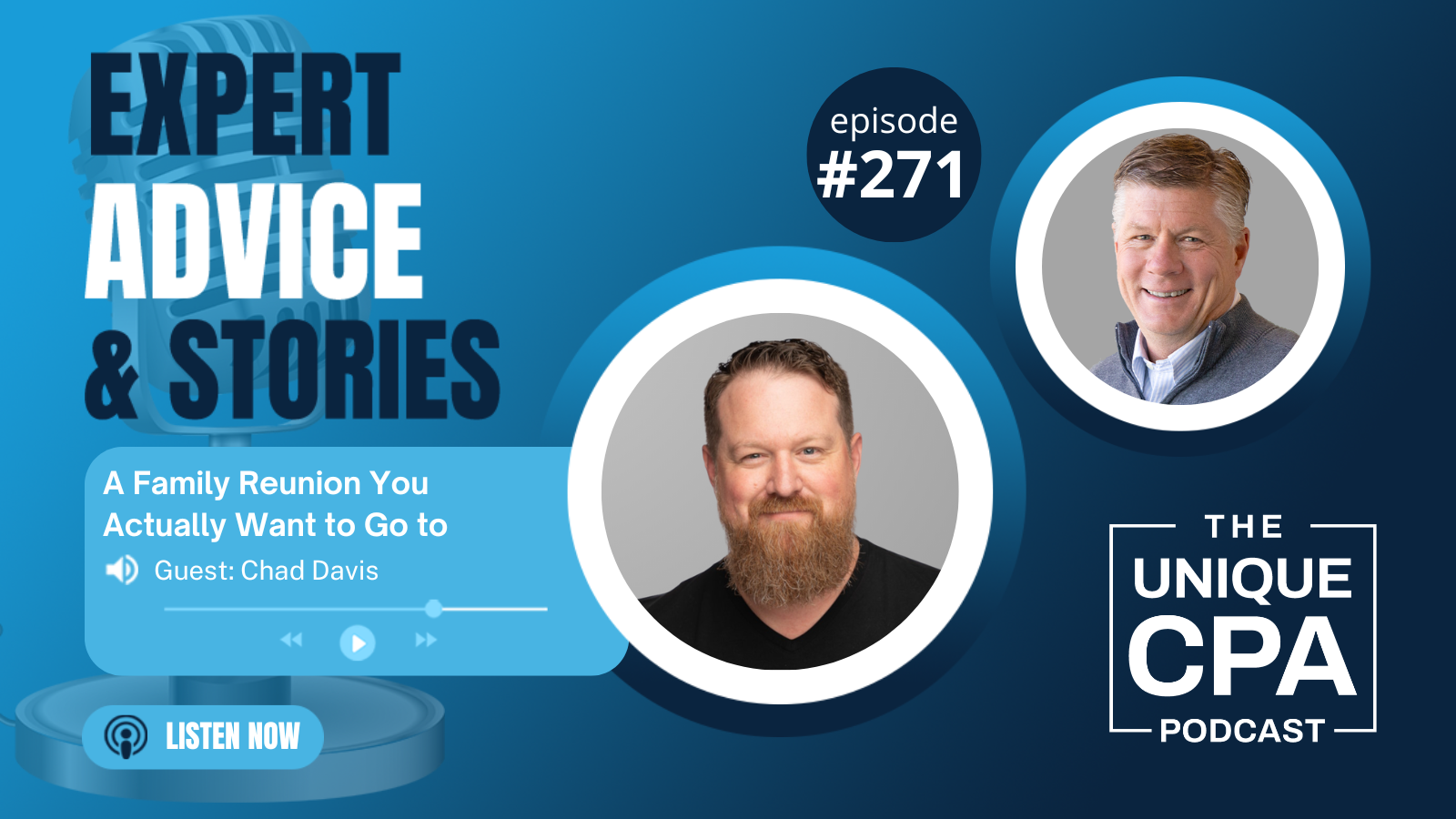
With Chad Davis
Recorded live at Bridging the Gap 2025 in Denver, Randy Crabtree sits down with founder of LiveCA, tech commentator, and full-time glamper Chad Davis for a wide-ranging conversation that captures exactly what makes BTG different from every other conference on the calendar. On Episode 271 of The Unique CPA, Chad talks about why he rerouted his entire week just to be there, and the two get into the real tension Randy is wrestling with: how do you grow something without killing the thing that made it worth growing in the first place? Shifting to Chad’s upcoming session on what accountants should actually care about in tech right now, they discuss the mental health dimension of overwhelm that rarely gets named, and why having an operating framework like EOS changes what you actually do with the ideas you pick up at a conference. A candid and camp-themed conversation.
Show Transcript Hide Transcript
Hello everybody, Randy Crabtree here recording live at Bridging the Gap 2025, day two. Day one was a great success. Lots of fun, high energy, great people, great speakers, great everything. We’re having a good time. And you may be wondering why I’m wearing this hat. One of the sub themes this year is “Camp BTG,” so I’m camp counselor right now, and one of our campers is with me today, Chad Davis. There’s a camera here too. So as you see, we’re having a lot of fun here. And Chad, thanks for sitting down and talking with me, I appreciate it.
This is the most gorgeous set up with fancy mics. I am so out of place right now. I almost have to put on pants.
He means—he has shorts on! He is not naked under the table, just so you know. So let’s go into the camp theme, because you’re kind of a camper. Your life is living in a camper. So why don’t you give us a little background.
I think the people that actually camp with tents would chastise me. I do the glamping thing.
It’s called a camper though. It’s a trailer.
Is it? Let’s just say I have a nice king-sized bag and it’s fluffy and I have a nice coffee maker. And a lot of batteries. So it’s the exact opposite of tents, but yeah, ever since I think 2018. We left, we’ve got the two kids, the two dogs. One wife. And there’s a trend going around that says, like “my current wife,” I would never say that, I love her very much, very much. But yeah, she puts up with everything that happens in that like 330 square feet of space. So it’s kind of fun, like watching the kids grow up, see the country. We do six months in Canada, six months in the U.S. and wow, is it ever cool to just immerse yourself in a city for as long as you want, and then leave.
Yeah, that’s pretty cool. I’m jealous. It sounds like it’d be fun. I don’t think I could do it though.
You did send me a photo of your backyard and I am jealous of that.
Our backyard feels like I’m out in the wilderness. And I could camp in my backyard. I do have a travel trailer, that’s what we call it. And I could probably pull it in the backyard and see if I could live there for a day or two.
Why did you decide on the Camp Wilderness theme this year?
Just being out west, being in Denver, it just seemed to fit with the mountains and everything. It’s actually on my shirt: “Expedition Innovation” is one of the sub themes as well. And then the camp came and the camp counselors and we have camp counselor hats for our people. And I got this one, but it just was fun. The fun factor of this conference is just through the roof. And actually I want to ask you about that, because you’ve been here, this is year three for you.
Three for you.
Three for me too, yes. So luckily I’ve made all of them. What’s your impressions of the conference in general? You did get in late last night, so you saw a little bit yet this morning, but you’ve been the other years. Why, I guess, do you come to BTG?
I think I could answer that with a story, and the story won’t be too long, I promise. I was doing other events this week with a couple other companies, and BTG was right in the middle. And I was with some friends and they said, “Wait, you’re flying to Denver, and then flying back to that other event?” I’m like, “Yes, I wouldn’t miss this.” And the reason I wouldn’t miss it is because as I walked in late last night, it was like 12:30, 1 o’clock after the flight landed. And there’s four people in the lobby just chilling out. Like, “Hey Chad,” like, I want to go to my room. But it was really good to see them. And then this morning I walked down, I didn’t make it past the lobby, and there’s Chayton, and there’s you and we met immediately. And then we walk four feet and it’s friends. You cannot walk 20 feet without being stopped, because you want to stay and talk to your friends. And I feel like it’s like a reunion, like a family reunion that you actually want to go to. And that’s what brings me a lot of joy with these. And I think I never want to miss one because every single person is unique, they bring their whole selves, there’s no posturing, there’s no “I’m better than you, I’m worse than you.” There’s just community respect and like a whole lot of fun.
The fun factor. One thing that was one of the camp rules I announced yesterday is fun had to be had and there was a lot of fun being had yesterday. The cool thing that, like you said about the reunion and the people and seeing these people, you know, we have 110 additional people from last year, and there’s people I haven’t met before, but they’ve all pretty much integrated immediately into this conference and now they’re all like veterans one day in, and they’re the ones that are going to promote this next year and we’re going to end up having 400 or 500 people because of that, the feel of the community that is part of this and I just pinch myself. It’s amazing.
That’s a hard position to be in because do you get too big and lose that feeling? Or do you keep it small and keep what you know works? How do you think about that?
So that’s, and now you are interviewing me, which I don’t mind at all, it’s cool! That’s something I’ve actually been struggling with, the idea, ’cause my original plan just, doesn’t mean it meant anything, but when I originally was walking around the park by my house and had this idea that we need to do a conference, I thought 250 people would be a good number, and I thought we’d get that the first year. We were short of it, we were 174 on site, last year we were 214 on site, this year we had 325 registrations. Now what I’ve seen is we’ve kept that community, that collab, that feel where we are right now.
But the other thing that I’ve been thinking about this week, not to sound like I’m thinking egotistically here or anything, but this is an important conference. There aren’t other conferences that I think concentrate on the things that we do, with the overriding theme always being mental health awareness, that’s always going to be an overriding theme. And why would I turn away people that feel like this is an important thing for them to attend? So that’s where I’m struggling right now, but I also want to keep that community feel. I want the good aspects of the family reunion, like you said, but I also want to meet new people over here. I want to know people out there. I tell people, “I want you to introduce yourself to me. If I haven’t met you, I’ll try to go out of my way, but if I haven’t, you come up to me. I don’t care if you interrupt me mid-sentence, I want to know you. I want to hear why you’re here. I want to see what impact this is having so that we can keep leaning into that.” So that’s a little struggle that I’m going through.
It sounds like a good struggle, because you’re leading with what works, which is giving people access to the support they need. And if you really think back at how a really well run camp works, there’s people that have been there for years that are essentially training up the next version of counselors. And they match people, right. They put people in the same cabins that need each other. Like there’s a model here that works that could scale to pretty large. Could you imagine 15 years from now where this is a multi-city thing that happens? Or multi-tenant, like multi-tracks? Where one hotel is this track, one hotel is this track. And I mean, that’s crazy to think, but.
You just gave me goosebumps, by the way, because it’s things that have been running through my head. I have ideas, I haven’t told Marketing these things yet, so we better not record what we’re talking about right now. But I have thought things like that, that maybe there is the multi-conference-a-year where we are a traveling road show. That’s an idea that I actually had last year on a small scale, not BTG, but a small scale, just going out with a group that is passionate about talking about different topics that are going to help professionals advance in their career, advance in their business, be more efficient, you know, create a work-life balance. And I know people are getting tired of that word, but create a fun factor into what they’re doing. And doing that as a multi-city. And then a friend, a mutual friend of ours just stole my idea. So he’s just…
A mutual friend that shall not be named.
Jason Staats, we’re talking about. And I think he’s doing a great job out there. I tell him every time I see him, he’s doing a great job. I have been talking to some people about doing this, some other people in the profession and they’re all in. It’s just a matter of deciding, you know, the mechanics of it, because I mean, it’s not like a money-making thing. It’s just us going…
You don’t want to saturate it.
Right. You don’t want to saturate either.
People will carve out time once a year. Will they carve out five times?
Right. Maybe not. Right. And so it’s something, there’s ideas, there’s things, but going back to what your original question was, can you imagine this in 15 years? I’m 63. I’m not sure I can imagine this in 15 years for myself. I can imagine this living on past my involvement in it, and I sure hope it does, because this is such a passion project of mine. It feels like a kid, and it feels like I am watching it grow up right now, and I just have this pride factor in what’s, see, you’re going to make me cry here. I’m having this pride factor in what’s happening at this conference, because it’s just truly amazing.
I want to look back in 15 years and be like, I got to sit down with Randy.
Well now you’re just going to make me laugh. I’m not crying anymore, alright. Slice the tension. Alright, let’s move on from that. But the love fest on the BTG, but it is a great place. Let’s continue. BTG. But you have a session coming up in like an hour. Let’s probably go prepare.
What’s it on again?
Do you know what it’s about?
Yes, I do. You were actually pretty gracious when we were planning this. You said, “Chad, you can do whatever you want.”
Yeah, they, that exact words. They asked me, what’s Chad going to do? And I said, “Chad can do anything Chad wants to do.”
It was awesome. I’m not known for being the most prepared for anything in life, but I showed up to the hotel last night. I opened up the laptop and it’s my favorite topic, which is like, what is new that accountants should care about. And it could be tech, it could be AI, it could be automation, it could be firm running, it could be whatever. But you gave me that space to create an update where we can essentially look back at the last few months, show everything that was developed, released in the accounting space since May—it’s July now—and just kind of cut through what’s important, what’s not, but give them a resource that they can take home and look at. I think one of my biggest pet peeves is when a presentation could have been an email, and I really don’t want that to be this. I mean, we are here, we put money to be at a conference and honestly, there is a mental health side to tech overwhelm.
Oh yeah. I’m sure there is. Luckily I don’t pay attention to it.
Yeah, that’s probably why you feel better. But yeah, like I think we all have to address the elephant in the room that there will always be a feeling of being left behind and that someone is further along than you, but that’s true with anything in life. And it’s more about a reflection of what that says about how you think of your own self than it is about where you actually are. Firms are moving at their own pace, they have their own belief systems, their own propensity for change, their own sense of adventure. And when you can take something from a conference and decide whether or not to use it, that’s awesome. That’s a good power. So that’s what I’m hoping to do in the next hour is to say, here in the first five minutes, here’s all the entire resource of everything that happened. You can go see Dawn Brolin if you want to, but if you want to stay, let’s open up the laptop, let’s go through and actually show some of the updates. If you have questions, there are going to be runners. An interactive live, everybody-participating type of session is my jam, and if as long as people will let me keep doing those, I will a hundred percent be there.
Oh, you’re always welcome to do that here, every year. So it just depends on where you’re at in the trailer, the 330-square-foot home. I do have a question though, oh no, I have a comment: So what you just said, that was the challenge I gave people yesterday. Don’t just sit in a session and think that was fun, that was good. Sit in a session and think, what am I going to take away from this? And not even just think what, then try to do it. So often you’re at a conference and yeah, we had a lot of fun. And then you leave and then you don’t do anything based on it. I want people to take away from here and make a change in what they’re doing in their firm, in their life and for the better, because especially with technology, you can become a lot more efficient if you want to.
You can. I think this plays into, I was at a table with Jacob and Casey this morning. Someone asks someone like, hey, are you running on EOS? And for those that haven’t heard of EOS, it’s an operating framework for your business, right, it gives you structure. It’s kind of culty. I love it.
I know you do.
It’s very nice. It saved our company. But what’s kind of cool is like if you operate in any sort of framework with any type of organization, those sessions fit in, in EOS they’re issues, or they’re headlines. And you know exactly where to put them. So you don’t have to feel the overwhelm of putting pressure on yourself to deal with it, because within a proper framework, the priorities will eventually push through. And I know you’re an EOS person too.
We are an EOS firm.
Yes. So you understand like when you go to a session, you see something that sparks you, you write it down, you’re like, shit, is that a headline or is that an issue? And then you put it right in your system and you may not deal with it for three months, when you’re reviewing that list every quarter, great. You have the handouts, you have your notes, you have your thing, but when it becomes a priority, it’s a priority. And that’s what I love about frameworks and systems. And I wish I had that when I was younger or just starting out, because I would have taken so much more from conferences and put that on the list because it typically stays in our head. It doesn’t get to the people that it really should in your organization.
Well that’s awesome. I really appreciate you being part of the Advisory Council for this conference. I appreciate you sitting down and speaking today, and I appreciate you presenting in an hour and 10 minutes. I have to look at your watch. I took mine off.
Well, let me give you a thank you hug on the right camera, here we go.
Alright, thank you. Was I supposed to stand up?
No, you’re good.
Alright.
About the Guest
Chad Davis is a co-founder of LiveCA, a fully remote Canadian accounting firm serving businesses in the $1M–$15M revenue range. The firm’s founding concept was "tax + tech," and Chad was the tech half. He holds a BCom from Toronto Metropolitan University, an MBA from Saint Mary’s University, and a CPA designation.
Chad also founded AutomationTown.io, a community for accounting professionals to learn and geek out on AI and automation, and has served on the Bridging the Gap advisory committee. He and his family spent eight years living and working from an RV before relocating to Spain, where he continues to run the firm remotely.
Meet the Hosts
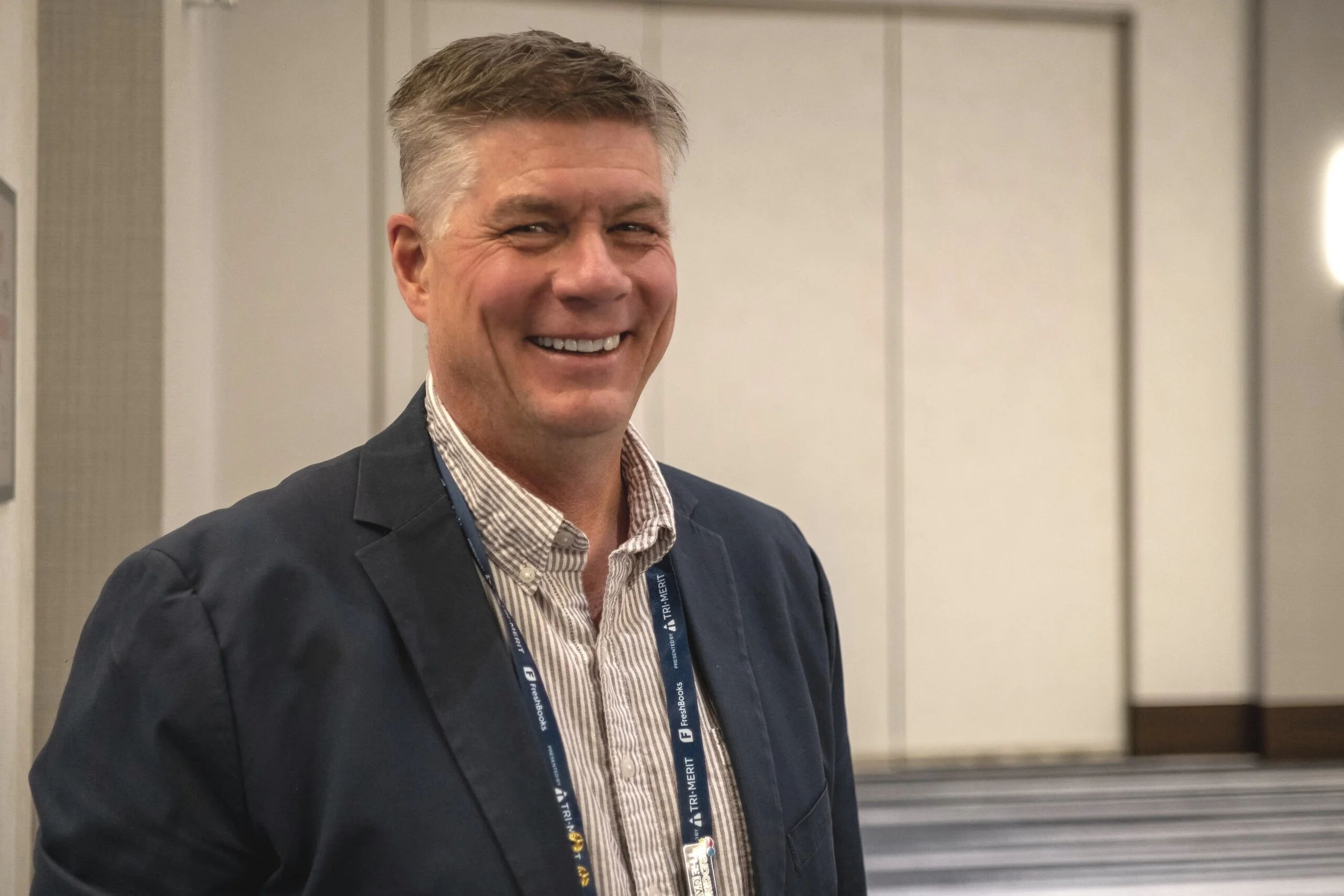
Randy Crabtree, co-founder and partner of Tri-Merit Specialty Tax Professionals, is a widely followed author, lecturer and podcast host for the accounting profession. Since 2019, he has hosted the The Unique CPA podcast, which ranks among the world’s 5% most popular programs (Source: Listen Notes). You can find articles from Randy in Accounting Today’s “Voices” column and the AICPA Tax Advisor, and he is a regular presenter at conferences and virtual training events hosted by CPAmerica, Prime Global, Leading Edge Alliance (LEA), Allinial Global and several state CPA societies. Randy also provides continuing professional education to Top 100 CPA firms across the country.
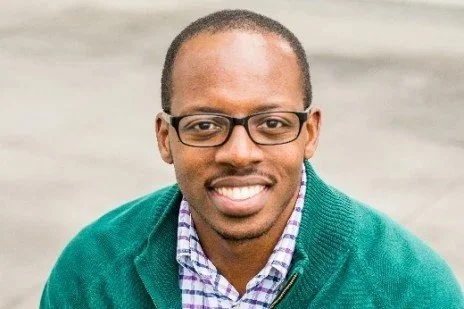
Terrell Turner is a 3x nationally ranked CPA, 2x Top 20 Global Finance Influencer. He is the founder of the TLTurner Group, which has been recognized in NYC Times Square and the NY Times as a top accounting and CFO firm that specializes in supporting law firms. Outside of running an accounting firm, Terrell hosts multiple vlogs and podcasts in addition to co-hosting The Unique CPA. Terrell is also a speaker and a content creator who regularly hosts and collaborates on video and audio content projects with multi-billion dollar corporations, bar associations, universities, and non-profit organizations.