
Growth Almost Broke the Firm
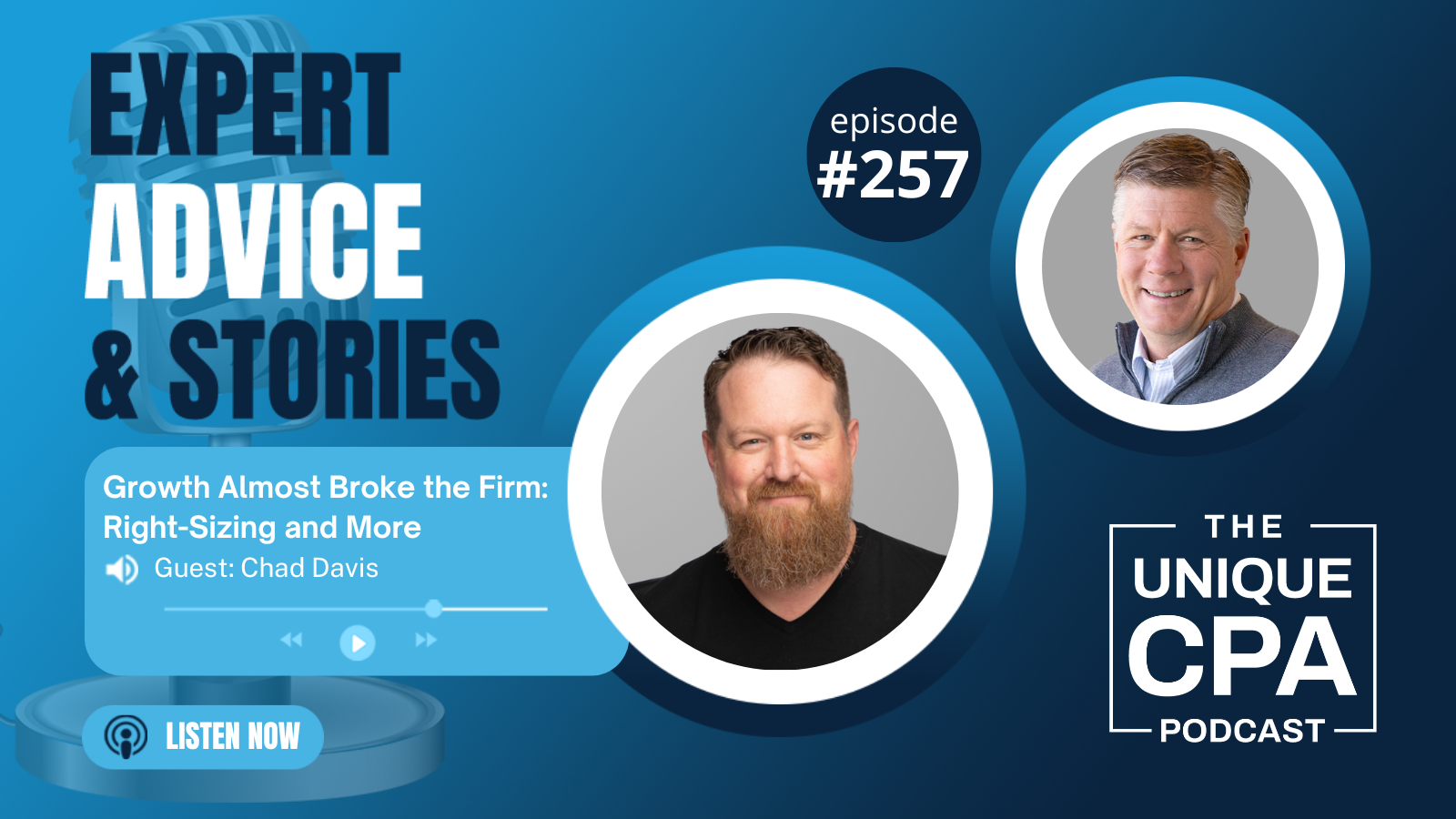
Right-Sizing and More with Chad Davis
Big thanks go out to Magnetic for backing The Unique CPA. Most AI tools only handle basic forms, but Magnetic prepares the entire 1040 with industry-leading form coverage, so your team just reviews and signs. MagneticTax.com.
Chad Davis helped build LiveCA to 120 people and then made the deliberate decision to cut it nearly in half. On Episode 257 of The Unique CPA, he tells Randy that at that size it wasn't enjoyable, and the math, modeled out on a road trip through the Italian countryside with his business partner Josh Zweig, pointed clearly to 60 as the number where profit, people, and sanity could actually coexist. That restructuring meant repricing every client, moving from value pricing to budgeted hours, and navigating the realities of headcount changes. Randy and Chad cover all of that, the AI tools accountants are trying through his AutomationTown community, the time-zone arbitrage of running a Canadian firm from Spain, and why changing people’s mindsets inside a firm matters more than any efficiency gain the technology can deliver.
Show Transcript Hide Transcript
Big thanks go out to Magnetic for backing the show. Most AI tools only handle basic forms, but Magnetic prepares the entire 1040 with industry-leading form coverage, so your team just reviews and signs. MagneticTax.com.
Well welcome everyone. We’re here at The Unique CPA, a podcast hosted by Randy Crabtree. Today we have someone who shouldn’t be on the podcast, but has been invited within, what, 30 seconds of being asked because the other person dropped out, is that how this works?
Well, kind of. There’s some scheduling issues, so I’m like, alright, I’ve got to get a new show recorded really quick so that we can have one scheduled for next Tuesday.
No, I did say—you I have been friends for a long time and at the end of the day you’ve said I’ll have you on as soon as I “need” somebody to come out. So you are living up to your original ask, and I’m just glad that I was available, so this is really cool. Thanks for having me.
Yeah, well, I’m glad you’re available. Did we actually introduce you yet?
It doesn’t matter. I’m Canadian, used to live in an RV for eight years. Currently moved to Spain to kind of chill out in Europe for a bit. Have a firm called LiveCA, almost broke it at 120 people, it’s really great now at 60 people. Been to all three BGCs and not very happy that I can’t go this year because I did decide to go to Europe. But this will be the first year where I kind of don’t go to any accounting conferences, so if I did have to go to one, it would be yours. But I’ve said noto all.
It’s not mine. It’s the world’s conference. I just happen to be the guy that hosts it, I suppose. And do you have a name?
Hi, my name’s Chad. Isn’t it called RandyCon, though?
Some people call it RandyCon. I pretend I don’t like hearing that, but I do enjoy it, I’m not going to lie.
Well, look, what are some topics you’d like to cover today? I think if you don’t mention AI on an accounting podcast, either you have everybody loving it or everybody hating it. We can cover the firm stuff, we can cover BTG, whatever you want.
Well, I think we’ll just see where this goes. But one thing, you mentioned pretty much everything about you, but just again, just to reiterate, Chad Davis, a co-founder of LiveCA, once was a 120-person firm, now a 60-person firm, crushing it at 60. Probably some pains at 120. And so maybe we should talk about that a little bit. Let’s start there, and let’s just, you know, you started this firm, what, 13 years ago or something?
Yeah, it was my business partner, Josh, Josh Zweig. He was living overseas, like when I met him, and I was in Halifax, Nova Scotia. And we had never met when we had a bank account together and the company was started. Early days, it was, I think, Will Lopez who made the introduction to Josh and I, which is crazy. It kind of started in really early 2013. Him and I had our own firms in 2012, we brought those together, and just kind of rode the wave of cloud accounting from there.
Yeah, cool. And then, so let’s just go right into it. Sorry, do I sound like an official podcast host rather than a good friend of Chad’s right now? We should probably just go to good friend mode instead of podcast mode.
I mean, it’ll just be me and you listening to it anyway.
No, we have thousands listening on a daily basis—at least that’s what I believe in my mind. I don’t think it’s accurate, but we do have thousands listening on a monthly basis. I know that.
That’s great. Congratulations. And you’ve been running this for many years.
Yeah. I honestly don’t, we’re in our seventh year, if that’s the right way to say it.
So how many hundreds of episodes?
So what we’re recording right now is probably around 260, I’m guessing. When we first started, we were every other week and about four years ago, three years ago, I have no idea, we went to weekly. So, you know, I guess if we did the math, we’d be able to figure that out. But I’m not going to do math right now.
Yeah. Let’s go into the pain. That’s what people want to hear about. How’d you screw this up, Chad?
Yeah, so the pain is interesting, but it’s a learning thing, I think. I look at things like that as, hey, you know what, you’re never going to be perfect and you’re going to learn from it. And obviously you did because, like you said, you’re crushing it.
I never said that. I said I’m enjoying it.
That’s the most important thing, is you’re enjoying it. Crushing it, enjoying it. Look at you. You’re living how you want, you lived in a camper for years, now you’re living in Europe, you’re having fun, your kids are experiencing the world. How could it be any better than that? But, okay, you said it. Let’s talk about the pain. What happened when you got to 120?
So it was really weird. Between 75 people and 100 people, it just felt like a conveyor belt. So the more people that we thought we needed to serve customers the way we thought we were supposed to serve them, because we never really looked back at all of our procedures and said, how can we massively change this? We just kind of used the same things that had happened all the way through, even though we thought we were innovative. It’s really hard to get that many people to kind of move. I really feel for the firms that have thousands of employees. I can’t imagine that being very easy at all. But what happened was too many people doing things in a way that shouldn’t have been done that way, and needing to fill the pipeline with new customers in order to pay for the people. So that recipe was a disaster.
And what ended up happening was we were bringing on probably 10 to 20 clients a month, and what I didn’t tell you was that our client profile is in American dollars, a million dollars USD and up in revenue. So no small companies, but also no $200 million companies either. So when you’re taking on that much complexity over that many people, you have to have a lot of middle management, a lot of training, a lot of education, a lot of coverage, a lot of people leave. It was just a recipe for disaster and it broke because people couldn’t get their work done in a regular amount of time. There was just always too much. So what happened was my business partner and I were over at the Expensify thing in Italy.
Oh, don’t rub it in.
That was so fun, meeting George Clooney and being there on Expensify’s dime before they went to F1. Expensify, if you want to do that again, that would be really great.
It would be. My goal was to get to the next one and there hasn’t been a next one.
Your money went to F1. But when we were there, things were blowing up, and I remember we rented a little small car, and in Europe everything’s a manual car, so I was driving it all around the countryside and Josh and I were like, we have to come up with a new business model. So we were just trying to think about, at what level is there not so much middle management, but there’s enough that it’s supportive? And at what level could we make enough profit to keep investing back into the company? So we just modeled out those different things in five or ten person increments down from 20 all the way up to like 100 people, and all the math pointed to 60 people. It was just blatantly obvious for us, and we realized, oh, we could probably, what’s the polite way for exiting a relationship with a client?
A friend of mine, Diana Crawford, says, “inviting people to be successful elsewhere.”
That’s it! So we went through the whole exercise of going from value pricing to budgeted hours, which then was the crux to reprice everybody, and meet with every single person to explain the change. And through that…
Wait, say that again because I missed it. What was the change?
We realized that in order to control our capacity, we needed to sell capacity. So we moved from value pricing to budgeted hours, and now every single customer is charged the same way at the same rate. So it means our team can now be involved in rescoping and repricing, and adding and subtracting things is directly related to the price. That’s the crux. Capacity management, new pricing model, very clear expectations with customers, aligned incentives to reduce price and not increase it, which, I know a lot of accountants listen to this and they hate me for that, but I really like aligning incentives with customers. And then from there it all just kind of clicked, and then we could focus on the things that were super important to us, like internal databases and keeping data clean, and figuring out what projects needed to be worked on through EOS, and that got us through all that kind of stuff. So when you stack on four to five big changes and you allow time to go by and don’t rush yourself, it’s a pretty cool outcome. And the result is that you have everybody aligned in the company towards what you’re working towards, a far greater amount of people on the leadership and manager level aligned and contributing more than it being top down from one person’s vision, and now you have a company of “we” versus a company of “me,” and it’s just fun to be around.
Yeah. Alright, so I’ve got to dig into a few of those. I don’t understand the budgeted hours thing. What does that mean?
It means that we have a rate per service, and then we have variables for the service. Let’s use payroll for an example. Payroll has a rate. That rate is then multiplied by a time. The time is calculated by a hundred different variables and a very sophisticated calculator. It could be based off of what provinces they’re in or states, the tool that they’re using, other stock options, are we doing 401(k) stuff? Regardless of what it is, it’s all calculated at once to come up with a number of hours per month. And that can be annualized items that are divided by 12, quarterly ones that are divided by four, you get the idea. And then all of a sudden you have a number, that number times the rate is what they’re paying for payroll. And then as things change throughout the relationship, you change the variables, and those variables then update the proposals and you’re good to go.
Okay. Yep. I still don’t understand, but I’m guessing people listening do. I don’t bill anything.
Where are you confused, Randy?
Well, you said there are hundreds of variables that go into this. I’m like, that’s what’s confusing me. And now you explained that, depending on what you’re doing within that payroll, that could be different.
What makes it complicated too is that there are relationships. So if you’re using one tool with another HR tool, and you know that’s a crappy relationship, then you’ve multiplied the time and effort with that combo. And then you might have a conversation that says, and I’ll put this into US terms, “Just move to Gusto. Everything’s under one roof. You can save some time and some effort because everything’s now a little bit more streamlined.” So it also helps that if they really like you, then they want to keep working with you and they’ll take recommendations to help save them some money. And again, I know people don’t like that because you’re creating value and you should get paid for that and blah, blah, blah. But I like what we’ve chosen because we have a lot of really happy customers, we have the right amount of profits built into every calculation, and it’s super, super stable. So I really enjoy the stable factor more than I do the other side of it because, I think if I was like a therapist looking at this, I would say, yeah, you’ve been burned, so you have an aversion to being burned again, so you are finding comfort in the absolute versus the risky.
Wow. Okay. So you don’t even need to go see a therapist now. You’ve done self-therapy.
I totally do.
Well, I’ve done it before, I think everybody has heard that story. It’s been good for me. Alright, so then there are a few other things I’m curious about, because you went from 120 to 60, you obviously got rid of clients, you got rid of people. Well, the first thing that comes to my mind, were the people self-selecting and leaving, or was this a process that you had to go through and ask people to be successful elsewhere?
Both. I would say a lot of people self-selected because it takes a certain type of person to want to go through a complete change in a company when they’re not quite sure what’s there for them. And we were going through this at a time, if you remember, 2022, 2023, that was sort of like the end-ish of the employee market, where it was like, you could get a job anywhere and get paid a lot of money, but it was like towards the tail end of that. So people were self-selecting out and getting great offers elsewhere. And then the people that stayed, they’re all thriving now.
That’s what my next question was.
We really appreciate them and have made the company a good place to work. And because they contributed just as much to making it, I think they could see the impact of their efforts very clearly.
Yep. And did you and Josh actually go through and it’s like, “Hey, these are the people we do not want to leave? We want to make sure that we can keep these people.” Was that a process you went through?
Nothing I want to talk about. But at the end of the day, you can’t really control people. And that’s something I think we learned a long time ago. You just have to create an environment where they can contribute, and hopefully you want a team that wants to contribute.
Exactly.
And I think that’s what’s kind of cool about this, is that you look at any single one person and you can understand why they’re here. And then as long as that aligns with why you created the company in this current version, you’re just laughing.
Yep. And then how about the people now? I mean, you don’t have an office. Does everybody work remote, working from home or wherever they want?
Yeah. I mean, some of my best friends have offices and they love them. I learned early on not to judge people based on their choices of how they want to run their firms. We just have never wavered, like not even one conversation about being 100% remote from the very beginning of the firm.
Okay, so let’s move on then. You’ve got the firm that you love, you’re enjoying it. You teased at the beginning about your vagabond life, living in an RV for a while, currently living in Europe. I want to hear the backstory on how all this began, and how it ties in with the business.
Yeah. I think the overarching reason why we have the business is that people can have a meaningful life outside of work and at work. So if you think about every single person here, they should be able to live up to that. So for us, we just wanted to lead by example, and this was exactly the way we want to live. My business partner does a lot of hiking and mountaineering and cycling. He did Kilimanjaro and then a 2,000 kilometer African bike trip in the same week.
Wow!
He’s nuts. He’s the kind of guy that will take the bar and just, you know how you can walk up with the calisthenics and like abs of steel, that’s him. I think he could give Roman a kick at the can as like, the fittest accountant out there. But he’s a machine and he loves it too. He climbs a mountain every year. He did the Antarctica, Mount Vinson, or whatever it’s called, trip a year or two ago. Spends a lot of time in Argentina hiking and having business owners go down and do hikes and stuff with him, he’s incredible. But then you look at the rest of the team and they get to do that too. We currently have a guy that’s doing that highway from Alaska down to the bottom of Mexico on motorcycle, and he’s working. That’s kind of cool. Other people have just done the same thing, travel and work. There’s a woman right now working from Portugal.
And at the end of the day, that’s what we wanted to be known for. It’s like a place where accountants could go and still have a good life. And it just takes a lot of effort to kind of get to that because you always have to balance profit and investment and growth and stagnation or whatever you want to call it. But for me, we just wanted to do a quick trip in the RV. That was in 2018 or ’17 or whatever it was. And then it turned into stopping in sort of mid to late 2025, and then we just checked out Spain and we were like, geez, this is a really nice place, we should probably come here for a little bit, and then just never left. So pretty fun.
And you’ve got, I don’t know how much you say or don’t say, but you’re going to be there a while, I suppose, right now huh?
Yeah. All signs point to that.
Alright, that’s cool. We were texting yesterday or two days ago about our Norway trip we just got back from. Are you actually officially going to Norway?
Maybe. I was sending you screenshots of the flights from here to the different airports. And what was the cheapest one? Like 23 euros to go to Oslo.
Yeah, it was nothing. It’s crazy.
I was like, and to go to the one that you liked with the Northern Lights, I think it was like 60 or 70 with two legs or something So I think that’s just another thing that my brain can’t wrap around, because in the US and Canada, to go anywhere it’s hundreds and hundreds of dollars. Canada’s worse. It’s like, is it really, in American dollars, probably like $500 US just to go for two hours. So I don’t know. It’s just a weird thing to wrap your head around, and we’re just taking it slow and just trying to enjoy the culture and the siestas and the time zones. Like, okay, this is the coolest part: I get to wake up, be with the kids, take them to school or sleep in, my wife can take them to school, and I have pretty much until three o’clock every single day with my wife. It’s just insane. And then I can work from three to whatever, taking some breaks to be with the kids, but it’s like, I had never thought about that before. And now that I’m living it, it’s like, holy cow, I’m getting so much done when no one else is around, and I get to work on projects I want to work on. Just today I spent two hours building out this five-week cohort so accountants can learn how to use Code and Claude Co-Work and Claude for Excel, and it’s launching Tuesday. I don’t know when this is going to air.
Tuesday. This is launching too, that same day.
Oh, seriously? Yeah. So go to agents.automationtown.io. You can absolutely come on board. But yeah, we’re going to launch that April 1st, and our first guest host is Bo from Australia, and he’s going to teach some Claude Code stuff. We’ve got some other super heavyweights in the accounting world coming in to teach the Claude ecosystem to a bunch of people. And it’s so fun. I don’t think I’d be able to do that much unless I had the free time in the mornings like this.
Yeah. Well, I just resubscribed to Claude, so maybe I need to get on there, and every time I need something I won’t have to reach out to you and say, Chad, can you build this for me? Because you did mention BTG, and you’ve been on the advisory committee the last, what, two years, and technically are this year, even though you can’t be there, and you are a member emeritus, is that the right way to say it, of the advisory committee?
“Member in the shadows helping build cool tools?”
Yeah, in the shadows. And so I want to talk, you did mention at the beginning about AI and all that, and we should probably, because you are, in my mind, the accessible AI guru in the profession. There’s another guy out there that’s hard to get ahold of.
He who shall not be named, but he’s awesome.
He is awesome.
That’s who you wanted to have on beforehand, wasn’t it?
No, no. I’m done asking. He was on once and that’s enough. So he’s got his 22-city road show coming up, so he’s got to prepare for that.
I wish I could go to some of those. Those are so fun. But yeah, I think everybody is going to be, it’s just going to be as accessible to most people that are just curious about tech. I think that’s, we’re getting to the point now where you can pretty much learn anything with a little bit of time and a little bit of nudging. So some of the coolest learnings have been for me, personally, just talking to other people in our industry about how they’re approaching certain things, and huge unlocks. And I think the focus for this year, in conferences and events, even though it’ll come up like, how are you using AI, I think it’s going to be deeper than that. The people that have closer relationships are going to spend more time really trying to learn from each other instead of mass complaining about how it’s not working, because it’s easy to complain and it’s easy to say it’s not going to be helpful, but I think the closer and deeper you have these relationships with people, you meet people for the first time and that’s what you kind of build your relationship on.
It’s kind of cool because we’re all going through this at the same time. The tech is pretty new at this level that we’ve never seen before. And accountants are, they’re going to take that thing that they’ve done for so many years at conferences and events, to be collaborative and helpful to each other, and they’re just going to take it to the nth degree. You’ve got some people sharing on socials, some people sharing in groups, some people sharing at conferences, a lot of people just sharing amongst their friends. And that’s the real unlock, just getting ideas from other people and sharing. So to everybody that is sharing, kudos. I learned a lot from you, and please keep doing it. Because without it, we’re all just going to not be as far along as we could be.
Yeah. And speaking of being as far along as we can be, I assume that you’re constantly tinkering and building for the firm, and I assume you’re living it with LiveCA. So what’s that done? Have you created a lot of efficiencies in the firm with the AI tools?
Yeah. I think the real win though is in changing people’s mindsets. If you have somebody who’s, I’ll say it like pushing for it, you’re eventually going to do something about that push. And it doesn’t have to be mean, it just has to be, oh, did you see this? Oh, did you see this? Oh, this is possible. Because 60 people is nothing like a 100-person or a 300 or an 800 or 1,000-person firms, but there’s still more than two people, and you have to get buy-in, and you have to navigate the human condition of not wanting to change very much. So I think if I look back and think about all the tech efficiencies, I’m like, yeah, cool, we’ve got some great scripts, we’ve got databases, we’ve got tools, we’ve got scripts, we’ve got all the things that kind of save us time. But the biggest wins are like when your director of tax says, hey, can I talk to you? And he’s like, I’m just feeling a little bit behind, or I’m just curious why you’re so excited, and you talk to them for an hour and then he leaves invigorated to try anything. And then his people in his team will feel more invigorated to try new things. So I think we often overlook the impact of just the human-to-human assistance and over-index on the efficiencies, because you can still be incredibly efficient but also incredibly hesitant, if you know what I mean.
Nope!
You can have all the tech, but if people don’t want to be involved in it or maintain it or give you feedback on how it’s working or be invested in improvements, it’s probably not going to materialize into anything great.
Yeah. So the thing then, based on what you said there, and you said it earlier and you just said it again, with change: You’ve somehow became a leader that’s allowed people to accept change or embrace change, and that’s a hard thing to do. And so I think that’s one of the big, whatever, AI, whatever, going from 120, but the fact that you’ve been able to create this firm and create this atmosphere and this culture where change is cool and acceptable and appreciated by people, I think that’s one of the biggest wins that I could see out of this whole situation.
I think the biggest win is seeing new faces on LinkedIn and on Twitter and at conferences. I think that’s cool too, because you hear the same things from the same people over and over again, you tune them out. I think my favorite thing about LinkedIn is that I can see who follows or unconnects from me. So when you see your friends doing that, you’re like, ah, okay, what did I post? What did I do? So that’s why I’m trying to connect with more people that are posting for the first time or that are putting themselves out there. And one of the guys that’s doing one of the sessions in Automation Town for the Claude Code stuff, his name is John from Zeroed-In Consulting, and he’s quite new to the put-yourself-out-there phase, and he’s just sharing all kinds of cool stuff. And I think the more we can lift up people like that who are trying to teach the profession and give different points of view, the better. But to all my friends that unfollowed me on LinkedIn, no hard feelings, I still love you.
I didn’t know you could do that. Is that because you’ve got this special LinkedIn paid version or something?
No, you’re allowed to get your own follower list and things like that. So I just have a script running every day that brings in all the connections and followers.
Of course you do!
And then I just compare it to the day before.
Alright. So if I’m on your Linkedin page right now, and if I unconnect with you…
I’ll see it tomorrow.
I’m not going to do that though.
You totally can. No, but that was also kind of fun too. I never thought I’d be the person that posts daily on LinkedIn.
Actually, yeah, that’s what I was going to ask about.
I didn’t want to. But my business partner Josh was just like, dude, you’ve got nothing to lose, try it out for a few weeks, just see what it’s like. And honestly it was more fun than it was an issue, and then it becomes a habit, and then the habit, if it’s enjoyable enough, something happening from it, you’re like, oh, I’m going to keep doing this. And for me it was never about the tech per se, it was like, you know what, for some reason the connections I was having with people that didn’t unfollow me were way stronger, and it was just cooler to be at events and hang out with people more, and they’re like, oh, I saw this, I saw this. You start a conversation from a point of shared stuff.
Right. We at the beginning talked about the fact that I have, whatever, this is episode 260. I mean, you’ve done, with the daily videos, you’re well past that now.
Yeah. But also some videos are like, “Hey, did you see this new feature at ChatGPT?” And you’re like, oh, I’m like one of those people, this is like the stupidest thing ever. But the reason I do some of those things is because I feel like I got something out of them, so I’m like, oh, this is actually a cool feature, I wonder if there’s anybody that hasn’t seen this. And then I just started trying to make the videos more about what I was doing and how they can be helpful, because we do not need more people telling people there are new crazy features that are not actually standing up with actual helpful things that you can do with it. And there’s even the whole idea of Automation Town, it’s kind of weird because you don’t want to be like the community person sometimes. But then I look back and I’m like, actually, I really want to be part of the community stuff because that’s where you can help people in this safe space, and even if it’s just for a couple of people a month that are getting something out of it, you’re making something. So until that turns out to be so bad that it is hurtful, mayb e we’ll stop it then. But for now there are still people posting that they’re learning and they’re getting help and there’s stuff, which is why I wanted to do this cohort thing for five weeks, because if we can just sit down together as accountants and build, there’s a million YouTube videos out there, but wouldn’t it be cool if you were all talking about the QuickBooks connection process and the Xero MCP together, and how to use Cowork to do this and that, and having real security conversations with other accountants? I feel like that’s where the value is.
Yeah, but you’re already over my head. Just those words you just said. So I’ll get out and I’ll listen.
You should come.
I should come, but I have people to do that, like Chad Davis.
That’s good! What are you spending your time doing now? I saw the post online about taking your conferencing and your coaching stuff. Can you tell me a little bit more about that?
Oh, okay. So now you’re the host, which is cool. Yeah, I’m just leaning into, so what I’m most passionate about is this profession and educating this profession and finding ways that we can build the best accounting profession we possibly could be. And that just doesn’t mean the profession, it means the people, and how we can treat the people right, and how people can have this, you know, I just got back from Norway and I posted on this, and I don’t know a better word than work-life balance right now, but I’ve got to find it, just living your life like you’re doing. And so if I can at least show people that you can actually enjoy what you’re doing and have a life at the same time as you’re working, you don’t have to wait till you’re 65 years old and retire to have a life, it can happen today, things like that.
And so the more that I can lean into those things, the more I can be out, I love being on stage, I love speaking. And that sounds selfish, but it is somewhat from a standpoint that every time I’m on stage and I get emotional, which I do often on stage, someone comes up to me and talks about how that’s having a positive impact on them and how they didn’t realize they can make this change and how they could seek help or whatever it is. And so if that’s what you’re passionate about, which I am, how could I not lean more into that? And so that’s really kind of the direction I’m going. And then I have to balance that with, you know, if I am out speaking and I am on the road, that’s a moment, that’s a second, that’s a minute, that’s an hour I never get back with family. And so that’s the kind of balancing act that I’m working, even though it’s important to me to be out there, family is the most important thing. And so how do I balance—there’s that word again—balance those two to make sure that I get fulfillment out of both. Did I answer your question? That’s kind of where I’m going.
I feel like a lot of people are moving towards that. And before we go on, just know that people come to Bridging the Gap for you. We love going and hearing your stories and giving you the hugs, and seeing what you’re up to, because creating that environment where people can connect with each other, in less of a professional environment but more of an emotional one, you’ll always have that on the profession, which is incredible. So thank you for that.
Thank you!
But also the idea of, I don’t even care about using whatever the word is, it’s like prioritizing what’s important to you.
You, yeah.
A lot of people are like that. That whole concept of rocks and sand and pebbles and all that kind of stuff, however cheesy it is, it’s really true. And it feels like you’re picking your rocks. If there were four of them, two could be the speaking and the conferences, and two could be the family things, and you just pick those as part of the year and you don’t waver no matter what it is. And then the rest just kind of falls into place. And that’s how we always did the RV trips. We would pick three to four major stops throughout the year and the kids could pick, I couldn’t care less where we went. If they had an interest in going to a cave somewhere, cool. If they wanted to go to the desert, awesome, they wanted to go to snow, sweet. It was awesome because it didn’t matter because we were doing the rocks that we really, really wanted. I guess maybe that’s one of the final questions, is I can imagine with your family growing up now, that’s going to take more time to be home because you want to be around all of that. But what are the three or four accounting things that you want to make sure happen this year in 2026?
Accounting for me or accounting in general?
Relating to your new focus, like the speaking stuff.
Yeah, so there’s a brand-new subject that I want to start talking about and I probably will start it this year. In fact, I was talking with Kenji Coronado about this as well, because he’s kind of living a similar life as me. He just transitioned from one thing to another in his early to mid-50s, kind of when I did. And it’s a session about, it’s a keynote, whatever we want to call it, a story, it could be a workshop on just leaning into your skills at different parts of your career, and what’s the best use of your time for this profession, for you, for your firm at different stages. And there are studies out there that show, dependent on your career, technical skills wane quickly. You’re the albatross? Where your technical skills are like growing.
Don’t say albatross, I think that’s a bird.
Yeah, but I think that’s what it says, that’s the rare thing. Your technical skills are going through the roof with everything. But technical skills in general just start to leave you pretty quick, but there’s so much knowledge you’ve gained during that time, and sharing that knowledge and being a mentor, an educator, a leader, whatever, a shoulder to cry on, whatever is needed. And so there are different stages, different parts of your career, and it could be a little different for everybody, but there’s a really good book called From Strength to Strength that kind of talks about this. And so I’m going to build a new talk because I think in the profession there are so many things that I see that we can be better at, and everybody’s different, but I think often we just hang on to trying to be this technical expert way too long, and a better use of our skills is going to be as this leader or this mentor, this educator. And so I want to just build out this, let’s talk about this and how this can be beneficial to you, how you can look at yourself differently. It’s not bad that maybe you don’t have the skills you had before, it’s something that now you get these new skills and this knowledge base that you can share with others, and it’s going to make everybody better.
So that’s one thing I want to try to start leaning into a little bit. Leadership in general, I’m going to continue to talk about and be part of. Two years ago or so, I started talking about vulnerable leadership. That’s always going to be key, but there are different ways to say that. Leaders are afraid to make mistakes often. Without mistakes, you know, you learned a lot—I don’t know if I’m going to call them mistakes—but from the growth you had, you learned a ton. And so learning from mistakes and showing what you’ve learned from that are important. So things like that. There’ll be something new that’ll pop up this year that I’ll just get passionate about, it’s funny, every year it does happen. I just don’t know what it is yet, except it is this one most likely, this leaning into the best use of your time at different stages of your career.
I think what will be really cool is if you can bridge the gap between that message and actually how to apply it. So you’re lucky: you have a platform where people love you, they want you at the events. That’s your outlet to share this information. There might be some accountants that have been accountants their whole life, and they don’t have those opportunities. So how do they do that? And I wonder if you can give them guidance and support, that’d be interesting.
Yeah, and I can, I think I can. But the thing is, this is the story I’ve told before a hundred times, and it’s my story of how I found this out back when I was 51 years old, transitioning from managing partner to something else. So I have to find a different way to say it, it’s a different message, it’s kind of the same path that I’ve gone through, but now this is another thing that’s been a benefit of this path that I’ve been on. So I’ve just got to figure out how to create that story, because the story again ties into everything. Tri-Merit grew, Tri-Merit became one of the fastest-growing companies in the U.S., we have a great culture where people stay, all these benefits. And part of it is, I’m not saying it’s me, but I made a change, and that change had a positive impact on me and seemed to have a positive impact on others. So it’s that same story, but it’s a different way of saying it. I don’t want to reiterate that same story, so there has to be a better way to educate on that. And so that’s what I am working with ChatGPT on to try to figure out the best way to share this information.
And I could go straight from, it was Arthur Brooks who wrote the book From Strength to Strength. I’m not going to go straight from him. I’ll give him credit for these ideas for sure, because that’s where I got these ideas. And same thing, Kenji read the same book, that’s why we were passionate about talking about this together. But it’s just a matter of now figuring out the best way to educate on this and then show the benefits and show the implementation of this. And the stories could be, hey, this implementation made this benefit for me, or for Kenji, or whoever, talking about real-life stories. Maybe I need to start interviewing people that have had that career or that job role change in their profession and the impact. I mean, you’re probably one of them. You’ve had different stages of your career, and then sharing other people’s stories on that.
Do you know of any, I wouldn’t say industries, but like associations or groups where retiring, or people towards the end of their careers, can like help other firms? Because I feel like in the age of this agentic work, there are going to be a lot of firms pop up that are really small, and they can handle a lot, but they’re going to miss the 30 years. Do you know of anything like that where these newer firms or these younger people could get support from someone like that?
Off the top of my head, no. But funny, I had the same conversation yesterday with Cosmin Nicolaescu, who is the founder of Accrual. I’ve mentioned Accrual to you before. Because I asked him a question. I said, right now we’re going to, you know, hey, things you’re doing with AI and things you’re doing with tax, you’re going to automate a lot of the front-end stuff. And he was talking about how a tax return, a complex tax return, was going from a hundred hours to 10 hours as the time that people are putting in now. But then the thought process was, okay, so there’s that 90 hours where we’ve always looked at there being a learning phase for new people in the company. And now how do we start training people if we get to skip this whole aspect of the data entry and the analysis and research and whatever, and just go straight to the advisory? “We’ve got 10 hours to finish this tax return, but now I freed myself up to be more of this advisor. I can spend a lot more time on having an impact on this client rather than reporting what happened with this client.” And he was talking about how what they’re doing is they’re looking to build tools in that just help people become educated quicker through this whole process.
And so they’re doing it with tools, but I think you can also figure out a way, like you’re saying, retired people like me can be out there and knowledge-sharing like you’re doing with your five-week session, something like that. I think we—man, you’re getting me going here. I think we’ve too often thought the training, the education, the training process is a lot longer than it really is. I think people learn a lot quickly, and we’ve always had this, it’s just the SALY method that accounting has, “same as last year,” we’ve always thought it takes 10 years for somebody to get to a level where they can move up from this role to that role, and 15 years before they could be a partner, when in reality, I think that all can be truncated with different tools and different methodologies, and we just never spent the time and effort to figure out what those are. Do I have the answers? No. Are the answers out there? Yes. And do I want to see if I can be part of that? I think I do.
I think it’d be cool. There’s also this major opportunity now for every time something happens, it could be a review, it could be a teaching opportunity, it could be an error that’s found, it could be an opinion or a judgment that was made, if those can start to be documented, could you imagine getting people that are tech-savvy to organize, catalog, turn those into skills, and before they would be knowledge bases and all that kind of stuff, you don’t need that anymore. You literally could have someone in charge of the skills and knowledge of the firm. And I’m not saying that you would sell that, or it would be a service that people would pay for, but it’s like, at a bare minimum, a firm operates in a specific way with a certain level of judgment and ethics and values and all of the things that make people unique. How cool would that be if most firms started thinking like that at every learning opportunity, so that knowledge gets captured forever. I know we’re doing it at our firm. It’s just a slow takeoff, but I think once it becomes more part of your habits, it could be really beneficial.
Yeah. It is funny, I had another conversation yesterday kind of on that, you know, sharing the ethos of your company, especially when we have this rapid growth going through M&A or private equity or whatever, and knowledge and everything being distilled down. We just don’t know what everybody’s doing. And I’m not going to give away what this guy has because he has a plan on doing something, but he just wanted to get my opinion and I’m like, yeah, I think that’d be pretty cool to try to, you know, if nothing else it’ll have a positive impact on the culture, but it’s also going to be a way to share knowledge and make sure that you have more of a cohesive firm and people feel more connected. And so he has an idea, again, I’m not going to share his idea right now. Maybe I’ll get him on the podcast and we’ll actually discuss that when he feels comfortable about it. But he just wanted to get my opinion. But I think there are people out there already thinking about this process, or what we need to do.
Well, people’s dog walks or bike runs or runs are probably over now. So what do you think, should we wrap this up?
I think we should, but I could talk to you forever. And so, it only took probably, when did I first meet you? Was it ’21 or ’22?
At least five years ago.
Yeah, I’m going to say ’21. Did I meet you at Intuit Connect?
Mmm hmm. You paid for dinner at a beautiful restaurant. One of the first, I was like, who is this Randy guy and why is he balling around buying people dinner? I like him a lot.
I forgot about that. That is where we met. But it’s also where you and Jason and Jake were walking around together and you were the first guys to tell me about this ChatGPT thing, and I’m like, what are you talking about?
That would’ve been after 2022.
Yeah, I think it was, I think it was October of ’22 or, you know, end of ’22.
Yeah, that’s right, because it would’ve been at QuickBooks Connect and it came out at the end of October.
Yep. And so that’s when we first met. And I’m glad that happened. I’m glad that after five years of me asking you to be on the show, well, no, I haven’t asked you that often lately. I haven’t asked you in a while, but you said at some point we will do it. So I’m glad that we got this done in the last second.
We literally had six minutes to prepare, but it was the best news to get on a nice Friday afternoon, and again, thankful to call you a friend, and I’m sad that I won’t be able to see you this year in person. But thanks again for this and for all the WhatsApp conversations every few days. I look forward to them.
Well, and don’t forget, there’s a chance I’ll be in Madrid in the fall, so if that’s the case, maybe we do need to get together this year.
I’m just five hours away. Let’s do it. See you, Randy.
Alright. Well Chad, thanks for being on.
About the Guest
Chad Davis is a co-founder of LiveCA, a fully remote Canadian accounting firm serving businesses in the $1M–$15M revenue range. The firm’s founding concept was "tax + tech," and Chad was the tech half. He holds a BCom from Ryerson University, an MBA from Saint Mary’s University, and a CPA designation.
Chad also founded AutomationTown.io, a community for accounting professionals to learn and geek out on AI and automation, and has served on the Bridging the Gap advisory committee. He and his family spent eight years living and working from an RV before relocating to Spain, where he continues to run the firm remotely.
Meet the Host
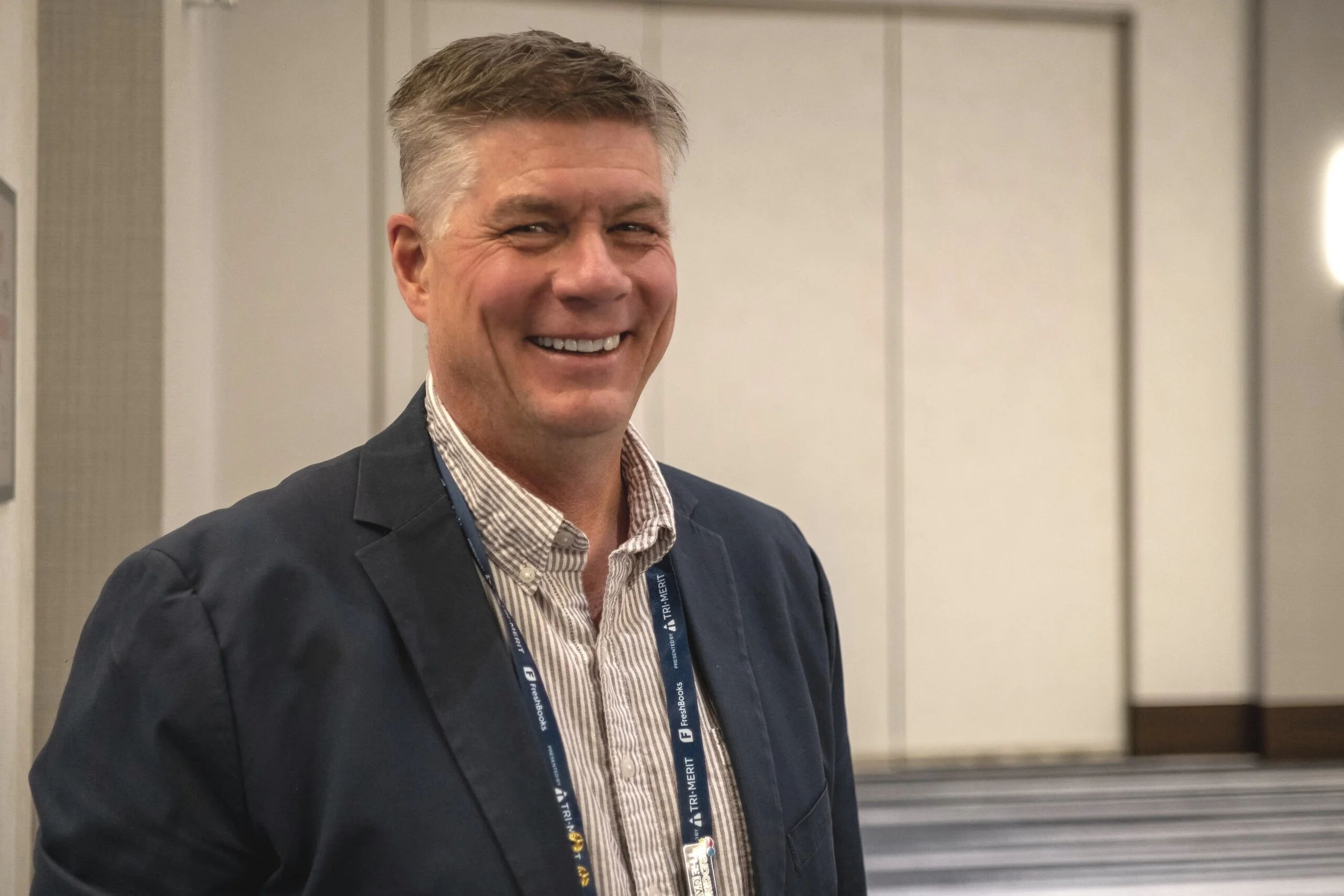
Randy Crabtree, co-founder and partner of Tri-Merit Specialty Tax Professionals, is a widely followed author, lecturer and podcast host for the accounting profession. Since 2019, he has hosted the The Unique CPA podcast, which ranks among the world’s 5% most popular programs (Source: Listen Notes). You can find articles from Randy in Accounting Today’s “Voices” column and the AICPA Tax Advisor, and he is a regular presenter at conferences and virtual training events hosted by CPAmerica, Prime Global, Leading Edge Alliance (LEA), Allinial Global and several state CPA societies. Randy also provides continuing professional education to Top 100 CPA firms across the country.