
“Don’t Quote Me”
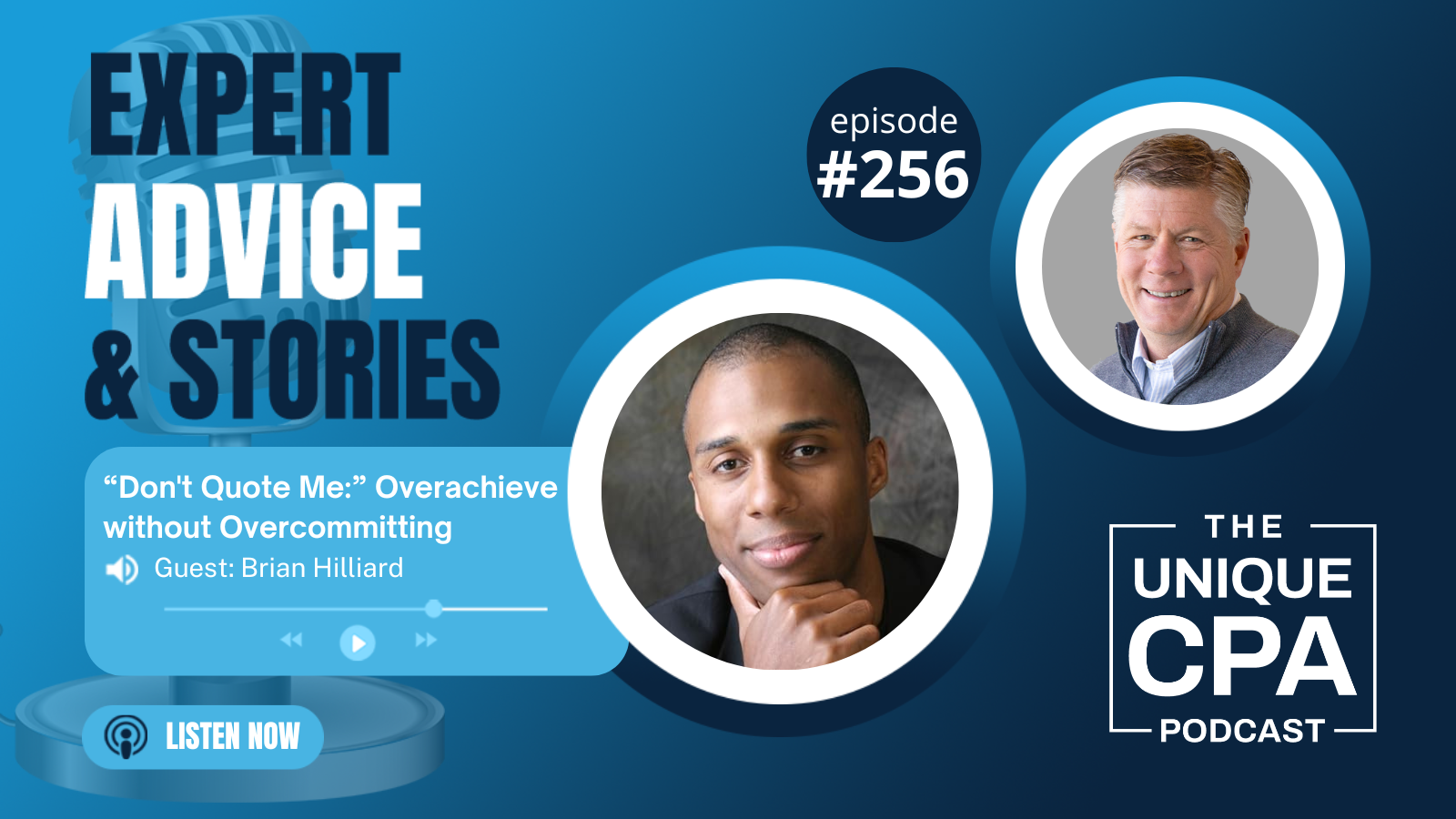
Overachieve without Overcommitting with Brian Hilliard
Speaker and leadership strategist Brian Hilliard joins Randy Crabtree on Episode 256 of The Unique CPA to make a case that burnout in the accounting profession isn't a character flaw, it's “good qualities gone out of bounds.” The work ethic and integrity that make CPAs excellent at their jobs are the same traits that, left unchecked, drive them straight into the ground, and to illustrate, Brian draws on his own early experience of getting sick three times in two years before recognizing that his body was simply taking the vacation he refused to schedule. The conversation gets practical quickly: managing energy rather than time, clustering deadlines to reduce background anxiety, and rethinking the to-do list with a whiteboard, a four-by-six note card, and a Sharpie. None of the fixes Brian proposes are dramatic, which is exactly the point: You can do them starting today.
Show Transcript Hide Transcript
Today’s guest is Brian Hilliard. Brian is a speaker, a leadership strategist, and eight-time author, including Networking Like a Pro and How to Overachieve Without Overcommitting, which is something we’re going to kind of talk about today. For more than 25 years, he’s worked with high-performing professionals who are tired of feeling like success always comes at the expense of their time, energy, and health—sounds like a pretty good topic for The Unique CPA. Brian focuses on sustainable high performance, he helps leaders figure out what to do and actually just as importantly, what to stop doing, so they can deliver strong results without burning themselves or their teams out. Brian, welcome to The Unique CPA.
Awesome, well, I really appreciate it. Thanks for having me, Randy.
It was a no-brainer for me. You and I, a little background, we, what about a year and a half ago? Over a year ago…
I think I would say 18 months…
…Yeah. We got introduced. And honestly, I was trying to think this morning who introduced us, and I have no idea. Do you remember?
Michael Haynes.
Ah, that’s right, I do know that! I’ve asked you that before and you’ve reminded me in the past as well. Yeah, Michael’s a good guy, he’s very good at making introductions, so.
He’s awesome with me. He’s been great.
So you and I, you’ve been helping me with some submissions and some putting together sessions and I appreciate that. Just as background, you actually submitted a session for Bridging the Gap, which will be coming up in July.
Yeah, I’m looking forward to that.
We haven’t selected speakers or anything, but when I was looking at your submission…
…Right, I shouldn’t have said that. I’m looking forward to the idea potentially.
Well, I wasn’t saying that to you! I was saying that to the audience. I like the topic, and so as I was looking through the submissions, I saw the topic. I go, okay, we should probably do a podcast and talk about this. And so just to give everybody a background on what the title of what you submitted is, “How to Overachieve Without Overcommitting, How CPAs and Firm Leaders Can Stay Productive Without Burning Out.” And that seems to be a pretty nice fit to a lot of things we talk about here. This is a topic that you did, oh, was it in Texas? Houston CPAs?
Yeah. Actually it was in Texas, it wasn’t Houston, it was the overall state. So I’m going to be going down to, it’s a topic that’s coming up. I did speak in Houston, that was actually on how to get more referrals from everyone you meet, but the overachieve piece is going to be down in League City. League City, Texas.
I have no idea where League City is.
Neither do I, but it’s south and it’s close to the border.
Okay. We used to have a condo at South Padre Island for years, and that’s about as far south as you can go, but you can definitely go further west. So my guess is it might be further west than that. Alright, so let’s talk about this topic because it is an important topic. It’s very important to probably all professionals, but accounting seems to have the stigma with burnout attached to it. And in your submission, you actually started this session with, “Can I be blunt?” And so I want to ask, what is the blunt truth about burnout in the CPA profession?
Yeah. Well, first of all, thanks again for having me. I appreciate it. And I think part of it is that as CPAs and accountants, what happens is, there is a work ethic that is good. Like that’s a good start, right? You have a work ethic, you want to do it. There’s also integrity. That’s also a good start: work ethic and integrity, excellent start. Brian, how can you go wrong? Well, part of it is when you put some of that into the pot and you mix it and it goes a little bit too far. I’ll just put this right out off the bat, I’m a spiritual person. And one of the things that my pastor said to our church was the idea that our benefits, like what we bring to the table as a person, is actually usually almost always good. What happens is that where we fall down is usually our good qualities gone out of bounds. And I was like, isn’t that interesting?
He’s like, yeah, it’s not like you come up and all of a sudden, and I’m just coming up with something, all of a sudden I am, you know, smoking too much as an example. “I’m here, and all of a sudden, I’m smoking ten packs a day.” It doesn’t happen like that, right? It’s something where I’m a hard worker, I’m really ethical, I want to make sure that my clients or whatever are able to get a high quality service. There’s high stakes involved too, let’s not put that away. There’s high stakes involved. There’s real money for most people involved, and that creates an environment where if you’re not careful, you as an accountant or CPA can literally work yourself to death. And I’m not a CPA or an accountant, but I’ve had very much experience of working myself to death, I can tell you that. When I started my business, and we can get into that maybe another time or another story or whatever, but the blunt truth is that we can go down a road that seems good, that seems right, that actually is right, except it goes out of bounds, and then it becomes not so right.
Yeah. We don’t see that line. And I like the out of bounds, because you and I are both basketball fans, but we don’t see that line. We don’t see the out of bounds line. We don’t see that. It is just, we push through it. And why do you think we have this mentality of, we maybe feel it. Maybe we feel like, oh, I’m just getting a little tired. I’m getting a little cynical, but we don’t equate that to, okay, I need to change something. Why do you think we have this mentality of just, hey, I just need to push through?
Yeah, I think I can speak for myself in this regard. So I had a situation I alluded to earlier. When I started my business back in 2001, I was working in corporate and I started my business. And what happened was for three times in two years, I got sick for like a week each. And when I say sick, Randy, I don’t mean, oh well, I’m just playing at 80%. I was on the couch, down, sick. Couldn’t watch television, couldn’t read a book, didn’t get into the shower for two days, the third day I was able to. Like, sick. Happened three times. And what I realized was on the third time, halfway through, I remember thinking to myself, I can either take a vacation or my body can take one for me. My vacation is going to a place like South Padre Island, like you alluded to, or maybe even Daytona Beach if you want, or Myrtle Beach actually is a good start. That’s my idea of a vacation. My body’s idea of a vacation was on the couch, you know, break glass in case of emergency, full stop. I liked mine better.
Now to get to your question of how is it and why is it we push through, for me I didn’t really know there was anything else. For me, there wasn’t this idea of, oh, like, I don’t know, I just felt, I thought that was the way you did it. But when I was sick, well, I knew that couldn’t be right, and even if it was, I wasn’t going to make it doing it that way. So for me, I think part of it, and I also think part of it is the Western approach too. I don’t know if our Eastern friends are grappling with this. They have other issues, but I don’t know if they’re grappling with this. And I think that here in our culture as accountants, like I said, as people who are in this profession, I think what happens is we don’t listen to our body, we hear it, but don’t pay attention to it, we treat it like a yield sign instead of a stop sign, when actually it’s a red light, and as a result, we wonder why we’re on the couch for three days, haven’t taken a shower and can’t get up.
Yeah, I think your body’s telling you, it’s too much. And you just pushed so hard to get through that, that was the only chance you, the only choice your body had was to say, alright, this is the way we’re shutting down. And you kind of alluded to a few things there, but one of them is our society is, you know, high performance is celebrated, high performance, I think is also misnamed maybe, because I think you could be high performing without, you know, burning out. I think you could be productive without burning out. And I’ve heard you talk about this before that we have this mindset of high performance or wellbeing, and not both. So why do we have that belief? Is it culturally? What is the deal here?
So the short answer is yes, I think it’s culturally. And then going to your point, taking a step back, there is this misnomer, in my opinion, of a binary choice. I’m either going to go whole hog and, okay, it’s almost like it’s on par with re-orbiting. You know how you read about like NASA and it’s like re-orbiting, the heat shields are flying off, but it’s fine, we’ll land in the Atlantic. Or it’s, I’m sitting on my couch watching NBA league pass and I’m not really doing anything and I’m just kind of watching stuff. And we think that’s a binary choice. And what are most high performing people going to choose? Door number one.
What I talk about is really old school Steve Covey, which is the idea that Mr. Covey talks about Seven Habits of Highly Effective People, one of them was this idea of, you know, the third alternative and the third alternative in this high performance without killing yourself in the process is: Alright Brian, what is it that I can do to be high performing without being dead? Well, how about for a start let’s take a look at doing things that are moving the needle, like actually moving the needle. How about we try to stay away from the busy work? Now I own my own business, not everyone listening here does, but I’m talking about, you know, whatever. Let’s take a look at if we can stay away from some of these high, you know, non needle moving endeavors. That’s number one. Number two, and what’s his name talks about this, Darren Hardy. How about we stay away from, he calls it “switching.” And what that means is you go from one task to the next, back to the second, to the first to the third. And you feel like you’re some type of modern day Mario Andretti and you’re not, actually. So how could we stay away? He had a statistic on that, 15, 20%, whatever, something like that, don’t quote me, but something like that, where he said that your switching actually adds more time. It doesn’t take away time. You think you’re cutting corners, you’re actually adding to your time.
So how about we take a look at the needle moving endeavors, how about we stop the switching, and then here’s the other thing that I talk a lot about during my presentations, this concept of manage your energy, not your time. Manage your energy, not your time. Quite simply says, we have grown up in a world that is all about time management. Nothing wrong with that. Myers-Briggs is excellent. I still do it, it’s fine. But there is this energetic component that in the modern workforce, so I learned the other day that Henry Ford was the one who came up with the five day work week. I learned that about two weeks ago. And the modern day workforce before that was the case, when you were putting together cars five days and two days off probably was fine. But try doing five days on in a CPA, accounting world, and I’m not even talking about deadline with taxes, I’m not talking about March 15th. I’m not talking about March 12th. I’m not talking about April 15th. I’m not talking about April 10th. I’m talking about just your regular baseline, I don’t know, July kind of thing. And what you’ll find is that you can literally, with all of the different things back to the manage your energy, not your time, you can literally deplete yourself because you’re doing all of these different things.
Oh yeah. It’s just a cumulative effect. We have this mindset, and again, looking at the accounting profession, but in general, just like we said earlier, just push through it. Just, you know, we have this constant, you know, looking at this to-do list that’s never ending. And I think if we just work harder and longer, that to-do list is going to go away. Which I’m guessing you have an opinion on to-do lists and we’ll talk about that in a second. What happens is it’s like a snowball effect: I’m going to work harder, I’m going to push harder, I’m going to put more hours in because I’m going to get past this to-do list, and then it is just this, you know, starts with a little snow pebble becomes rolling down this hill into this snowball that’s crashing through the front door of your house and blowing things up and that’s what happens. So we need to figure out how to manage better. I like the switching, not switching, obviously, you know, we pride ourselves in general as a nation probably, and oh, we’re so good at multitasking. No, you’re not good at anything if you’re multitasking.
And one other thing, I have to, I’m going on a rant here, but one other thing I have to tell you, when you said, don’t quote me, sorry, you’re on, we recorded this, so we’re quoting you. So it’s going to happen. In fact, we’re going to, this is going to be the name of this episode, is “Don’t Quote Me.” I want to get your opinion on something because everything we just talked about there, the accounting profession and anybody that listens to the show, they know that I’ll rant on the billable hour and how bad that is for burnout. When you look at it, so many accountants still value themselves based on the amount of time they put in. That’s how I look at it, because you’re billing by the hour, what am I worth? I’m worth the hours I put in. I think that’s a big cause of burnout. Just wondering your opinion on that.
I think you’re absolutely right. I think that, you know, if we’re talking accounting probably has that problem, and I also think lawyers have that challenge as well if we’re talking, making the list. You know, I think, here’s how it made sense to me, in terms of understanding that, because I’m going to go back to one of my earlier points. So billable hours started off being okay and, you alluded to basketball. If anybody watches the modern NBA, what happens is there’s a lot of injuries typically in playoff time, like stars go down: achilles, knees, and I’m trying to figure out what’s the problem is, right? I was reading an article on this that was actually on YouTube and they were talking about it and they said, the problem is that in the modern NBA, because there’s such an intensity and propensity for shooting three point shots, offenses are spaced. The impact and the amount of energy as a defensive player is much, much more than it was even 10, 15 years ago. Larry Bird wasn’t running to try to get James Harden in the point. He wasn’t doing that. I mean, I don’t even know if there were corner threes at that point in time.
So the idea is the reason why guys are getting hurt in the NBA is not because the old schoolers like to say, oh well they’re just less tough, and we were tougher. Maybe, maybe not. But what’s also true is these people are sprinting side to side at a rate for 82 games a year that you didn’t have to do, at all. The same concept is true in the modern workforce with accounting and CPAs. So you’re talking about the billable hours, right? And this notion that, oh, alright, well we’ve got these billable hours, and I already said, I think it started off okay. The problem is the game evolved. So now we’re not just doing billable hours, but we’re fitting in email, which was not there 20 years ago. We’re doing, if you’re a business owner, social media, which was not there 10 years ago. We’re getting in messaging and texting, which was also not there 20 years ago. We’re answering our cell phone, which again, not there 20 years ago. So you add all of these things in there. Suddenly you’re doing the business equivalent of going side to side, trying to chase Steph Curry around. You want to have a good idea? Spend an evening in the Bay Area chasing Steph Curry around.
No, thank you.
See how you feel when you’re done.
Yeah, that wouldn’t work for me.
No! That wouldn’t work for anybody! So I think the key for accounting and the CPAs and how to get around that, there’s a couple of things. Number one, I think it’s the point I just made, if you don’t mind me saying. It’s understanding that the game has changed. So it’s not you being less than, or your father’s father or this guy., no. The game changed. The second thing then is once you understand the game changing, then the question is, alright, what does success look like for me inside of this new game? Maybe it looks like getting into work a little early before everyone goes and leaving, heaven forbid, at five o’clock. Maybe it looks like making sure you take lunch. Maybe it looks like, okay. I’ll tell you something that I got away from over the last few weeks, but getting back to now, maybe it’s having a clear, discernible “at work” and “not at work,” especially if you guys work at home. So I used to do this. I got away from it, and I think it’s because I didn’t have, I ordered some new sneakers, but the idea of going out and doing a walk.
Here’s another thing: Think about starting your day off a little bit. Now, I know if people have kids, that’s a little challenging. So I get that. I don’t, but what I’m saying is maybe see if you can do some stretching or take a walk, set your day and then close your day, and this is especially if you work from home: Close your day, take a walk, work out. I usually get some shots up at the gym. Do something. And by the way, you’re like, well Brian, I’m not really that physical. Try to do something physical because that will switch, and now this is a good use of that term. Not that the one was bad, but this is a good application. Now we’re switching your body, your brain is like, oh, okay. I can stop ruminating over this challenge, stress or issues. Those are good first steps.
I like those steps. I think I’m going to brag now for a second. It’s 11:30 central time right now, I already spent 45 minutes working out this morning, and I went for about a three quarter mile walk in mid-morning already. So I live by what you just said. That is so important to your energy levels. We were talking about energy, but it is so important to your energy levels. I want to, I think, pivot a little bit because I want to get your opinion on this too. And I want to go back to what we teased at the beginning, “how to overachieve without overcommitting.” And so when we’re looking at that, a lot of what we talked about already, but I think sometimes that overcommitting might be a culture or leadership issue within an organization as well. I just was going to get your opinion, your thoughts on that.
Okay. So overcommitting is a personal thing for me. You can slip into it at any point in time. It’s like a bad golf swing. You can take it at any point in the afternoon. So I have a lot of deadline driven work with clients, and probably not too much different than our listeners. And what I noticed was it was a little bit like I felt this need to get the deadline done as quickly as possible when I don’t think the client really was expecting that.
Right. Oh, expectations, yes.
Right? Like, I mean, now I’m not saying, oh, well I’ll just wait until summertime. I didn’t do that, but like, I don’t know if the client needed it next Tuesday versus Thursday or even the following week. Like I don’t know if that was the case. So here’s one quick thing that I did as far as expectations are concerned: I wound up, and I have all of my deadlines to the degree that I can, at the end of the week, or if I have to in the middle of the week, Wednesdays and Fridays. Now, you know why I do that? Because I was finding that I was panicked a little bit sometimes going to bed, getting up just doing my regular day to day. “Did I miss the deadline?” You know, my heart rate’s going up. No, I don’t do that anymore. And this is just within the last like three weeks, this is not a 20 years thing. And I was like, so now every deadline, I don’t care where you are, it’s Friday, default, next Friday. And then if I feel like, an example where I would do Wednesdays for you would be like if I wound up having to reschedule a meeting or maybe you had to reschedule a meeting, or I’m traveling next week, I’m speaking for a bankers association. I’m going to be out there. So like, you know, when I’m speaking, usually things kind of come to a halt, I don’t like doing a ton of non-speaking work when I’m speaking. So if I feel like that’s the case, I don’t want to slow these people down, right? So I’ll put a deadline Wednesday.
But if it’s not that, and the other thing, the second thing, talking about overachieving without overcommitting, so the first one was expectations and deadlines. And then the second thing I talked about was managing your energy. Understand if you’re a morning person or a night person. I’m a morning man myself. If you’re a morning person and you have to come into the office, get there early before everyone else comes in. If you’re a morning person and you’re working from home, block off your calendar so that the first hour is not meetings. I do not like 7:15, 7:30 meetings in the morning. I like working and moving forward. And then the last thing on that same deal, take a look at your to-do list a little bit differently. So what I do is I have my to-do list, and we can get into this some more, but like one of the things I do is I have a running list of client deadlines; I already told you about that. What my goal is, is to knock out three of those things each day in the morning. I’m at two right now. I feel if I can get three in the morning done, that gets me what, 12–15 over the course of the week obviously. If I have more than 15 things and I’m not able to get them done, client driven deadlines, that I need to hire another person, or I need to take a look at my workflow, I need to do something differently. Those are the three things that I would say: expectations, the manage your energy in terms of whether you’re a morning or an evening person, and the client, you know, the deadlines and the three things and stuff like that. I’m telling you, that works.
Yep. Alright, so in what you were just talking about, you did mention the to-do list and we teased earlier that we’d get your opinions on to-do lists. So let’s dig into that.
Okay, so I’m going to go long form here for a second just to cover this. So there’s three kind of basic principles for to-do lists: The first one is the idea of, I’m going to write it on a post-it note and I’m just going to put it out, and this is the person that you see with all the post-it notes on their desk, right? If you’re in the office. The second is the one who doesn’t write it on a post-it note, but they just want to, they’re going to do it right now. Like I got, oh, I need, let me do this right now. That’s the person who, if you took their blood pressure at any point during the day, it has to be elevated. The third person is the one who is more studious, they’re the ones who walk around with the legal pad, and they’re like, I’m going to write this down, they write this down, I’m writing this down, and they’re going to flip it over and they write this down.
There’s different problems with each one of those. But the problem with that last one I just said is you literally feel like you have a never ending to-do list. Because it is never ending. Doesn’t work. So here’s what I do, and I’m going to also incorporate this with the “manage your energy, not your time.” First of all, what you’re going to do is you’re going to want to download from your brain all the stuff you need to do. I did this about 20 years ago, and just by doing that, it’ll take you about 20 minutes, Jjust write down everything on a piece of paper, write down everything. And then another 10 minutes will go by, you’ll have a break and then another, then the next 10 minutes, you’ll find some more stuff. I had 50 things on my list. Right off the bat, you’re going to feel better, and you’re going to sleep better that night, guaranteed. If you don’t, send me a text, because you did it wrong, download it that night, you will sleep better.
Now, once you’ve got that, that’s the first thing. The second thing is, now this is personal preference, I personally like to use a whiteboard. I go buy the biggest whiteboard I can afford, $30 at Office Depot, and I put down all of those things on my whiteboard. That way I have it in a place I can trust. Really good book talks about this, Getting Things Done: The Art of Stress-Free Productivity, David Allen. That’s where I got this from and so I’m writing it down, a place you can trust.
Now I then take my—I am a four by six note card man, colored. Now I know there’s some men out there thinking that’s a little, no, you’ll be fine. Get the colors, get the dark colors. No one says you have to get pastel. Get the dark colors if it makes you feel better. And the reason you can’t do white is you’ll lose it on your desk. So you’ve got to get the colors and then what you do is your to-do list if you do it this way is I’ve got this four by six card. I take what I have either from the list I just did, or the whiteboard, which is my recommendation, and I just put down four or five or six things. And I have that on my desk, as the day goes on, so my boss comes in and he says this, that, and the other. Or she says to do this, I add it to the list. It’s no problem. Or here’s a great thing, as I remember to do things, oh, I put that on the back of the thing. And now I have a document in my hand or at your desk that I’m crossing things off. Here’s another best practice. Do yourself a favor, go buy yourself a Sharpie. You can get 10 of them for $15 at Walmart, and when you cross it off, use a Sharpie. It makes you feel better. You can try to use a pen. I like a Sharpie. It feels like it’s “off.”
So there’s these little things that you can do. Now, at the end of the day, “Brian, I still have five more things.” Of course you have five more things. Then what that does is you can put them back on your whiteboard, and there’s different schools of thought to this. You can be the school of thought where you take it off and then you translate and create the new list the night before, which is totally fine, I’ve done both. Or you can be like, my work is done, put it off. And then when you come in the morning, you have a fresh mind, fresh idea, and you write down the new list and you tackle your day. That’s how I do it.
Nice. And how about, I got a question on the whiteboard. So when you finish one, do you get to erase that then I assume?
You erase that right off.
And what’s that like, a dopamine rush or something?
It absolutely is. All of that, you know, the Sharpie. The Sharpie I just started doing within the last six months. The whiteboard, that’s been a while. It’s a sense of accomplishment. Here’s the issue. As CPAs, as accountants in the profession, we’re probably goal-oriented, high-achieving type personalities, right? Like I don’t know how many right brain, like CPAs and accountants we have, right? Like I’m a left brain man myself. We’re goal oriented, we’re getting after it, we’re going for what we need to be able to do. Here’s the problem a lot of us, including myself, are facing is we’ve let the left brain become a problem for our growth because we just latched onto it. We kept going, going, going. People burning out today, Randy, is not too much different than if you gave my cat, I’ve got four cats, if you gave one of my cats unfettered access to like treats. You just put a bowl in the middle of the, on the kitchen table and just leave, the cat has to, Mr. Tom and all these, they need to know you’re gone. And then they will, absolutely. And for a lot of people, you talk about the dopamine rush, that’s what it’s like. So what we do is we say, alright, let’s still keep the same. And where people make the mistake is, oh, well I want to be less Type A, I want to be less, you know, high performing, and that gets back to that binary decision. No. You could still be high performing, you could still be Type A, you could still be in, you know, integrity and stuff like that. But let’s put some guardrails on it. Let’s give you the four by six note card. Let’s get that stuff out of your head. Let’s give you a Sharpie marker so that you can feel a sense of accomplishment.
Yep, I think that’s all great advice. All things we can do, all things that could be simple to implement because the overall, if people like try to think, okay, I’ve got to do everything that Brian just talked about, they’re going to shut down, and like, nope, it can’t happen. So if somebody is right now in a situation where they’re just feeling tired and exhausted and cynical, and those are signs of burnout, what are, you know, just a couple, very simple, and we’ve probably already said them, a couple of very simple things that someone could just, baby steps that they can take to get this course corrected?
Okay, first three things: Number one, get yourself the whiteboard. Download all the stuff out of your mind, that will help. You’ll sleep better that night. Better night’s sleep always helps with your outlook the next day. Number two, if you own your own business, or even if you don’t, see if you can take this next Friday, a half a day. If it’s not this Friday, see if you can get the next Friday, half a day. That will get you into the weekend, half a day makes a big difference, just a reset. Number three, make it a point to go out and start getting outside more. Whether it’s walking in the morning, walking at night, walking during the day, you know, like during lunchtime or something like that, do something like that. And bonus tip, I just thought about this because it’s helped me, bonus tip would be on the weekend, seriously look at getting into a little bit, a different or better or more time consuming hobby. For me, I watch a lot of movies, I play a lot of golf, I shoot a lot of basketball, I spend a lot of time doing those kinds of things. Find a hobby that you like and that will also switch the brain on the weekends so that you’re not looking and trying to constantly think about things. That would be my three plus one.
Yep, I think that’s a great point. You can train your brain to act a different way, and that’s one of the things that I’ve looked at a lot recently. And yes, we can definitely do it. Just that whiteboard that you said and not waking up at three in the morning because now you’ve downloaded from your brain. So those are great tips. Anybody listening, take one of those, start with it. I think the easiest is go for a 10 minute walk during the day. You do that, and here’s the problem though, people’s mindset is, well, I don’t have 10 minutes, so I don’t have that time. Believe me, you’re going to be more efficient if your brain is relaxed and rested. Maybe give yourself a little note that, hey, here’s what I was working on, so you’re not thinking about that your entire walk. And when you get back, you read that note and you’re like, I’m jumping back in. I’m not switching now because I’m going right back to that same thing. So I think those are great. Great piece of advice.
Brian, I appreciate all that insight that you’ve shared today. I have a couple last questions before we close out: First one is, and we kind of got this already, which is great, but I’m going to ask it again anyway. So when you’re not doing your leadership work and you’re out speaking or helping others, what do you do for fun? And we did hear this already, but what are your outside of work passions?
Oh man. So I play basketball over at a league, not a league, but a bunch of guys. We play in the mornings and it’s interesting because I moved from Atlanta to Fayetteville. And in Atlanta we didn’t do the three point line. But in Fayetteville, they absolutely do, and they do it in twos and ones, which actually is not how it’s supposed to be. A three point shot’s not supposed to be a hundred percent better, it’s supposed to be 50% better. But I didn’t want to get into that with them. So what I had to do was I had to become a better three point shooter. So one answer to your question is that three point shooting percentage does not increase itself. I go and work on that a lot.
A second thing I do a lot is I will go out and, like I already mentioned, read and watch movies. That’s another thing too, I know we just mentioned this: I’ve also implemented a like, three movies a week. Like I will watch a movie after work, that switches too, a little better than a television show, by the way. I’ve noticed a movie a little bit better than a television show. And then the other thing too I’m doing is I’m going out and, you know, traveling, going to different parts of the country, going to different parts of the world. One of the things I’ve really, you know, you hear people say, oh, well I need to travel more, I need to travel more. Next thing you know, there’s 78 and they haven’t traveled at all, let alone more. And no, I’m not doing that, I’m traveling more. So I’m going out to different parts of the country and world, and I’m thinking about having a full 360 summer, which entails, as you guys know, astute listeners, that entails a trip to the Southern Hemisphere. So we’ll see what that looks like.
Nice. Those are great. And I have to make a comment on the basketball because I played in a lot of pickup basketball where it is twos and ones. My theory is people just can’t do the math and the math at twos and ones is easier.
It’s threes and twos! I mean, there’s a reason why didn’t the NBA do twos and ones, you guys are brilliant. No, it’s threes and twos!
It’s much easier, I guess, for a lot of people to add two rather than add three. I don’t know. That’s just my theory. So and then last question: If people want to hear more about you, what you’re doing, where’s the best places for them to find out?
So you can go to my website, BrianHilliard.com. You can also find me on LinkedIn, same deal, and I’ve got all that kind of stuff going on. I do some different posts. I’m going to be speaking over some of the different associations and the CPA, Texas, and some different events across the country. If you find me and you heard me here, by all means come up to me. Don’t come up too quickly though, because I’ll scare me. Just come up and shake my hand normally, like a normal person and I’ll be like, hey, good to hear you.
That’s nice. I have this one person in accounting that every time she sees me at a conference, she comes sprinting towards me. It’s a thing now, and we know it, but it’s actually kind of nice to be greeted that way as well though too.
Well, I think we can say this. If somebody’s doing that and they’re coming from a place where you already know the person.
Yes, exactly.
It’s a lot [easier]. But let me tell you guys, if you’re like six three or something and you come running at me. Maybe the ladies can get away with that, but if you’re some 6’3”, 225 guy, like, I don’t know you!
Fair enough. Alright, well this has been a lot of fun, Brian. I appreciate you being on the show today.
It’s been great. Thank you.
About the Guest
Brian Hilliard is a speaker, leadership strategist, and eight-time author with more than 25 years of experience working with high-performing professionals. His work centers on sustainable high performance — helping leaders and teams deliver strong results without burning out in the process. Brian is the author of several books, including Networking Like a Pro and How to Overachieve Without Overcommitting, and has delivered over 400 speaking engagements across industries including accounting, finance, and professional services. He is also the creator of the Conference Speaking Accelerator, a done-for-you service that helps speakers get booked on more stages without the time-consuming grind of finding and applying to conferences themselves. Brian is based in Fayetteville and speaks regularly at state and national association events.
Meet the Host
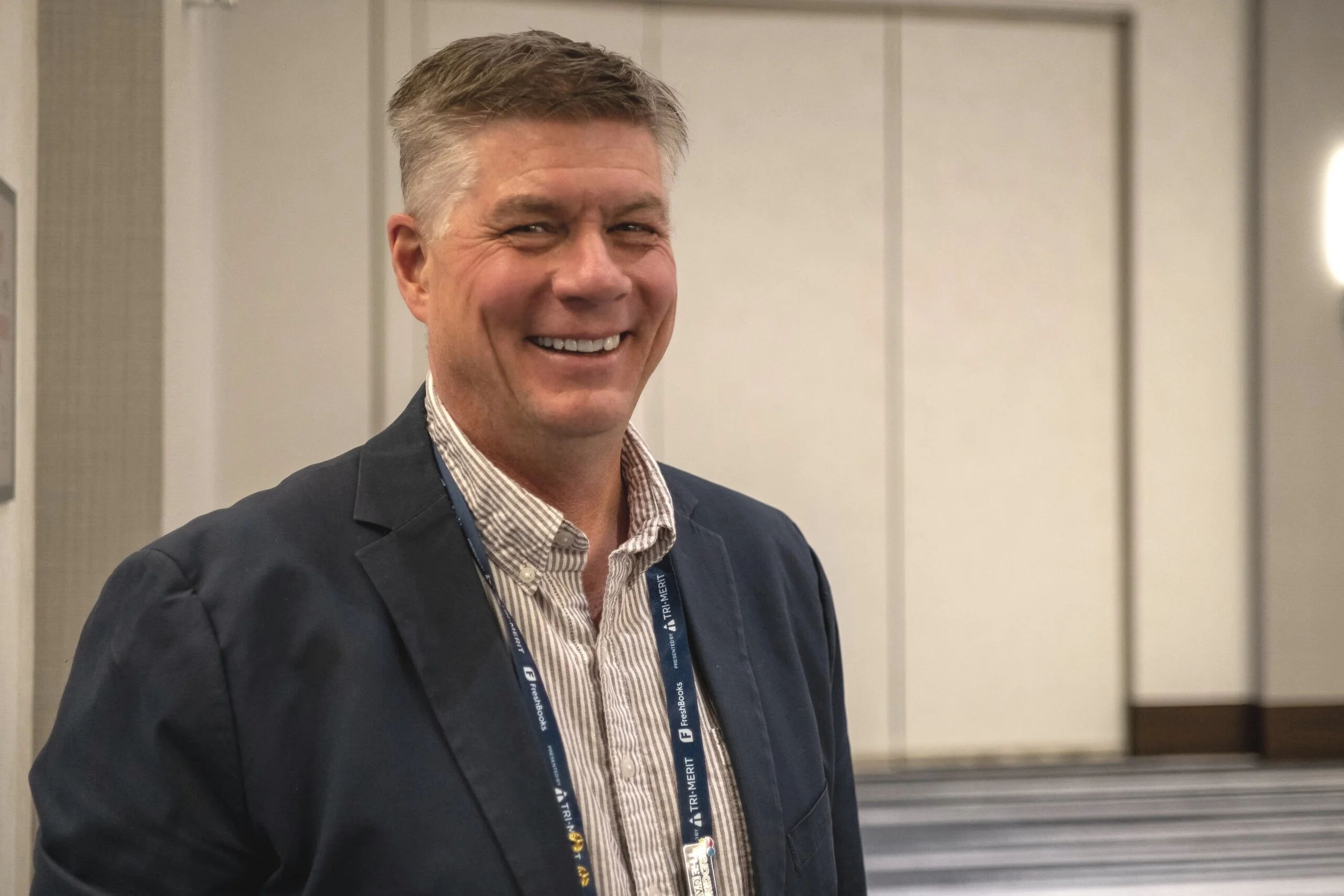
Randy Crabtree, co-founder and partner of Tri-Merit Specialty Tax Professionals, is a widely followed author, lecturer and podcast host for the accounting profession. Since 2019, he has hosted the The Unique CPA podcast, which ranks among the world’s 5% most popular programs (Source: Listen Notes). You can find articles from Randy in Accounting Today’s “Voices” column and the AICPA Tax Advisor, and he is a regular presenter at conferences and virtual training events hosted by CPAmerica, Prime Global, Leading Edge Alliance (LEA), Allinial Global and several state CPA societies. Randy also provides continuing professional education to Top 100 CPA firms across the country.