

With Alex Tong
Thanks to Byron for supporting the podcast. Byron automates tax prep on individual and business returns from the 1040 to the 1065, 1120, and 1120-S. They cover the full return with deep support for K-1s, including K-3s, footnotes, reclasses, and state K-1s. Byron builds the workpapers, flags what your reviewers need to see, and syncs approved data to your tax software. Book a demo at UseByron.com.
Saving 15 minutes on one client’s books might seem modest, but multiply that across a firm, and an accountant could get their weekend back. That’s the kind of change Alex Tong is betting on at Seguin Ventures, and he joins Randy Crabtree on Episode 296 of The Unique CPA to explain why he backs accounting technology founders who work closely with practitioners. He explains why the people behind the software matter as much as the product as AI makes software easier to build, firms face pressure to decide what to create themselves, and where to buy. Alex does have a warning though: buying technology means choosing a partner who understands accounting’s low margin for error, and it shouldn’t be all about productivity. Freeing accountants from busywork should create room for better judgment and advisory work, not just more assignments, and a sense that these venture-backed products can bring “financial clarity.”
Show Transcript Hide Transcript
Thanks to Byron for supporting the podcast. Byron automates tax prep on individual and business returns from the 1040 to the 1065, 1120, and 1120-S. They cover the full return with deep support for K-1s, including K-3s, footnotes, reclasses, and state K-1s. Byron builds the workpapers, flags what your reviewers need to see, and syncs approved data to your tax software. Book a demo at UseByron.com.
Joining me today is Alex Tong. Alex is Co-Founder and General Partner at Seguin Ventures and author of Accounting VC Newsletter. Alex invests in technology, helping CPAs, CFOs, and business owners gain financial clarity. Alex, welcome to The Unique CPA.
Thank you for having me, Randy.
Yeah, no, it’s a pleasure. We’re going to have a fun conversation today. You and I, I was going to say we met at a conference recently, but we really didn’t get to talk till after the conference, but we were in the same location at the Accrual Exchange Conference.
That’s right. Better late than never. You’re a bit of a legend, I’d heard a lot about you and couldn’t find you IRL, but we’ll do that soon.
Well, that was surprising. And the reason Alex is on is ’cause I paid him $100 to say I’m a bit of a legend, apparently. I appreciate it, actually, I’m not sure $100 would do it. Alex is investing in a lot of companies, and I appreciate what he’s doing out there. Let’s get into this because that’s what you are doing: Seguin Ventures, that’s what you’re investing, in fintech. You’re investing in companies that I’m excited about, that I’m seeing doing some amazing things that are going to help the profession. And as a guest, full disclosure, I am advising a handful of fintech companies now in my new role through the Brainstorm group, and I’ve invested in a few. So I guess I’m looking at the fintech arena through my accounting lens, and you’re looking at it from the VC end, I guess, but I think we have a lot in common, and it’d be fun to just talk about what we’re seeing out there together. So first question for you, just setting the stage of the discussion: How did you choose accounting as the technology that made sense for you to start investing in?
Yeah, great question. I’ve had a career as an investor for the last 11 years now, or 12 years. I’ve lost track. The first seven and a half to eight years of that was at another fintech fund where I had invested in various types of fintech, including accounting software and CFO software. I co-led that area of focus for our fund. I led and co-led seed and Series A investments in B2B companies building in that realm. But I always felt like it was a bit of imposter syndrome ’cause we were doing fintech companies that sold to banks and wealth management companies in the same fund that we were backing fintechs that served CFOs and accountants. And I always thought the nomenclature of fintech was a bit kind of too overreaching. And so I felt like it made sense to unbundle that and be increasingly focused on CFO and CPA tech, for lack of a better word.
I think that kind of hypothesis was reinforced when ChatGPT came out in late 2022. I was kind of blown away by the technology, like I’m sure everyone was. And I started to see the potential generative AI had in helping high-IQ people that deal with kind of work that I considered low leverage, right? Like a lot of the rote work that’s done across accounting, bookkeeping, tax, etc., audit, I felt like would be supercharged with gen AI and the new crop of technology companies that could come out. And so the combination of the two and my desire to really focus on the earliest stages of investing led me to leave my firm and start Seguin Ventures soon after to focus on this sector. It’s been a huge joy: The tailwind, the interest from the CPA community, the CFOs have far exceeded my expectations. So it’s been wonderful to be able to partner with founders and speak to practitioners interested in innovation.
Yeah. And I’m glad you mentioned both the founders and the practitioners because I look at this as a collaborative effort. When we’re looking at new technology, it’s not us and them, I look at it as us, because the tools that come out now are going to be so amazing and so helpful for the profession. And the technology companies, let’s call it accounting tech instead of fintech, let’s go with that, right?
Sure, let’s go with that.
The accounting tech that’s out there is going to have such an impact, but these founders that are starting these technology companies, are they going in—from your perspective, when you see what they’re doing, are they going in with a deep knowledge of accounting, or is this something that they’re learning as they go? I mean, are they seeing this pain point and jumping in, or are they being collaborative with the industry or the profession as they start building out their tools?
Yeah. As it pertains to accounting, selling to CPAs or CFOs, I find that the founders that have tended to do the best have paid close attention to the needs of the industry and have worked closely with the industry to develop and sometimes even almost co-develop solutions that make sense for not just that specific customer, but for that cohort or segment of customers. I wouldn’t have that same advice for all sectors, as an example. But for accountants and selling to CPAs and financial professionals, I absolutely think you have to have a very close kind of ear to the ground in terms of understanding what their needs are, the nuances, the edge cases, because of just kind of the requirements required.
However, I would say that if you earned money, you pay taxes, and if you’ve paid taxes, you’ve dealt with accounting in some shape or form, directly or indirectly. And so from that perspective, everyone has some high-level understanding of accounting and tax and financial solutions. However, as an investor, I don’t necessarily need to back someone that has a CPA background or has worked at a Big Four or has worked at a firm for many years. In fact, I think not just in accounting, but if you look across multiple industries of software, kind of the outsiders have tended to produce the most outlier outcomes with respect to billion-dollar, multibillion-dollar exits and so on and so forth. However, those outsiders, I find, are learning machines, they have a high bar, they care about their user and customer deeply. I think those things all remind me of accountants and financial professionals. They have a high bar, the margin of error is low, and they care deeply about their work and their profession and want to succeed. And so I think you don’t necessarily need to be an insider per se, but you need to have the sympathy and empathy and put in the work to learn.
Oh, yeah, for sure. That conference we were at, Accrual Exchange, those two owners, Cos and Sid, are not CPAs, not accountants, but they’ve been around accounting startups for a while. But the really interesting thing is—and again, disclosure, I’m an advisor to them—when they came to me, and I don’t know if they’re still doing this, but when they came to me to get involved with them, they told me they were both going back to school online to become CPAs. I’m like, “Wow, that’s commitment to the profession.” That was pretty cool to see. I don’t expect that for other founders, but when I saw that in them, that was pretty cool. So that was just a comment. Now the question, unless you wanted to comment on that?
Oh, I love that.
Yeah. But let’s back up because you were just talking about when you’re looking at companies and that, and we’ll dig deeper into how you decide to invest in. But I think the VC business in general, five years ago accountants didn’t really know anything about PE, and we’ve learned a lot in the last five years after the initial investment that TowerBrook had in EisnerAmper. VC is different from PE, and I think people are a little unfamiliar with the difference. But why don’t you do two things? One, give us a definition of how you compare PE and VC, and then two, as a VC company, as a venture capitalist yourself, tell us what your day-to-day is like, how you run your organization, what you do on a day-to-day basis as somebody looking into investing in companies.
Sure. I mean, at a high level, without getting too much into the weeds, for me, the difference between venture capital and private equity is backing a business as early as a PowerPoint deck or an idea in venture capital, pre-product-market fit, sometimes pre-product, pre-inflection point certainly, and helping that business grow from zero to one, and helping them get that product-market fit, helping them to get to that scale where it is ready for perhaps someone like private equity, who typically are backing established businesses with years of customer data, with years of team history, with kind of years of the market having kind of shaken out and maybe initially maturing, where each of their investments, they really can’t afford to have a zero, so to speak. And I guess the counterpoint is they’re not necessarily looking for 100x or 50x either because their model doesn’t need to. But for me, I’m backing innovation day zero.
And I would say my day-to-day as an investor is finding the founders and rebels that want to build a company from nothing and turn it into something. With accounting and CPA and CFO tech, there’s an established buyer, there is maybe an established incumbent, and so there’s less kind of squinting I have to do with respect to understanding kind of the demand for a product like this, ’cause there’s usually some analog, whether it’s software or whether it’s services. And for me, the barometer I have to keep in mind is to what extent can this founder break through that inertia, break through that status quo, and convert, of the tens of thousands of accounting firms, if we just focus on CPA tech, for an example, convert some percentage of them—it doesn’t have to be big—but convert some very small percentage of them into advocates. Not just customers, but advocates of their solution, and expect that percentage to grow over time, in part through their efforts, and also in part through the market’s kind of realization that there’s kind of an opportunity to switch or adopt something new. And so my job is to find the founders that are tackling the biggest and most attractive areas for disruption that as a fund I can expect to generate a return over the next decade or so.
And when you look at these, if you look at it, and I don’t know how you analyze or what you look at for the future, but when you’re in VC, like you just said: PE, more established, they know what’s there. VC, it’s a, “Hey, we’ll see what happens,” and they’re not all going to make it, I guess, is the bottom line.
Right.
And so is there a math in your mind that, “Hey, if I hit a success 30% of the time, 80% of the time, this is what I’m doing?” I’m just curious, and I’m asking this for my personal self, I think, as well as just anything else. I’m probably invested in or have some kind of equity in, I think, eight to ten companies now. I love ’em all, I think they’re doing great things, but I know at some point they’re not all going to become this super successful billion-dollar company. And so how do you do that? It’s a numbers game, or obviously you go in with your education and your analysis, but what do you expect from these companies in the long run to be successful?
Sure. Look, I’d say if you just focus on the industry in general, early-stage venture, it wouldn’t be uncommon even for a top firm like a Sequoia to have 40% to 50% of their investments operate at a loss or break even. And so for firms like that and for firms that are chasing those 50x to 100x outcomes, which are many venture capital firms, you really need that other 50% to 60% to drive 90% plus returns in your fund. And so taking that to funds like ourselves, that math probably holds true to some extent. I also run a semi-concentrated portfolio where I treat nearly every investment as a core investment, and if I treat it as a core investment, I have developed a lot of conviction over the months or even years, either in the founder or the market or the company, and depending on the maturity of the company, before making an investment.
So for me, obviously every fund has losses. If you don’t have losses, then I think you’re playing a different game. But I would say I come in with a prepared mind. I take high-risk bets. I prefer the biggest disruptors to the status quo as opposed to something incremental. That being said, I do make sure I spend a lot of time understanding that this is the type of company that I think will be the leader in the market, because I’m pulling the full weight of my network, not just my capital, my network and my goodwill behind the business, and I really want them to succeed and help increase their probability of success earlier in their journey.
That’s good. So that’s a little different way than other VCs do it. I mean, you’re getting deeper into the weeds with them before you even invest. Is that what you’re saying?
Yeah, I try as much as I can, and if it’s not into them specifically, it’s into the market and into the founder even before they’ve started this company, they may have been a founder at another company.
Okay. So the people are important.
The people are extremely important, especially in this era where, with GenAI, the cost of producing software now is maybe your time, but not really even your time, it’s just tokens, to be honest with you. And so you really do need to back exceptional teams early on. That’s increasingly important in this day and age.
Well, that brings up a good point because right now I think a lot of accounting firms are kind of struggling or making the decision to build or buy. And so when you’re backing companies, is there a fear that at some point AI is going to just be able to do it so quick for somebody that this new accounting tech will not be as relevant? Or I mean, I hear the opposite. I hear, “Hey, people are going to try to build,” and that build is sometime probably next year they’re going to realize that investing in someone else’s technology is going to be better. But is that a concern at all?
Oh, certainly. I mean, this has been the most exciting but most anxious time, frankly, to be an investor in early-stage technology. It’s the most exciting time because you’re seeing companies get product-market fit extremely quickly, even in a space like accounting and CFO technology. But at the same time, you’re seeing kind of copycats and other competitors, folks maybe from the labs building technology that may encroach on their initial turf. To me, I think accounting is much more insulated than what people think. If you look at the harness, people talk about the harness being kind of like the UI, everything on top of the LLM that an accountant or a customer would interface with. The harness is extremely important in accounting and finance, just due to the reasons that we’ve discussed before around everyone has a specific way of doing things, everyone has a high bar, there’s a low margin of error, and I think LLMs are stochastic by nature, they’re probabilistic, which means you need some layer on top to be able to mitigate that to some degree and translate that to business value and to insights for both the customer and the user of the software.
For me, when I think about backing a founder and a company, I try to envision them as, could they be the face of this industry in the next decade? And so if I back a company that I believe has the team and the CEO that can be the biggest champion, the biggest advocate to drive change in whatever category it is they’re building and be a positive force of change, not only just for shareholders like myself and investors, but obviously for the users and business owners. If I have a feeling that they have a good shot at being that champion, I think that’s a big kind of positive step in helping me make an investment decision. Much like I believe if a CPA firm or a tax firm or a bookkeeping firm were to evaluate, “Hey, do I just keep building skills in Claude to kind of work on these edge cases, one through X?” Sure, I think you can certainly do that, and I think that doesn’t go away. But I think you want to have a partner along your side that’s opinionated, that’s building kind of the firm of the future with you, and has an R&D team that’s world-class that they’re spending a ton of money on, and that they’re getting the benefit of feedback from many hundreds and thousands of customers and business owners. I would want that type of partner on my side. And so if I was a CPA firm, an accounting firm making kind of a build versus buy decision, I think the answer is both. But if you do the buy, you certainly want to pick a partner that you feel is a true partner with you in your journey.
Yeah. Well, the cool thing that you said, I mean, everything you say is cool, so I shouldn’t say there’s only one cool thing. But the fact that you were talking about people as much as the product. I mean, the product’s going to be important, but having that team, you kept saying—the CEO that’s going to be out there, that’s going to promote the positive impact that this will have. It’s the same thing when I do it when I go out and talk about accounting. Hey, the most important thing you have, I mean, all this technology is going to come in, but the most important thing you have is the people, and the most important investment you can make is in the knowledge of the people, because that knowledge is going to be the base for everything that we go forward that technology is going to enable. We still have to be able to communicate and advise and have judgment, and all that is going to be where the people are the most important, and that’s where we really want to spend our time. So for me, technology is this enabler that is going to get us to a spot as accountants that we’ve always hoped to be, and we’re too bogged down in the compliance and the busywork that we haven’t been able to get there. I don’t know, do you have an opinion on that? The technology’s great, and there’s going to be great technology, but the people are still the most important thing going forward.
Yeah, I absolutely agree. And the words that come to my mind every time I remind myself, why do I do this, is the words “financial clarity.” I’m not just investing in accounting software or financial technology, I’m investing in teams that are bringing financial clarity to CPAs, CFOs, and business owners. I think that’s extremely important because I think when you have financial clarity, you have the ability to make better capital allocation decisions: Who the best person to bring on your team is, how much can you pay him or her, where can you be investing in equipment, inventory, et cetera, to grow your business. And to make those capital allocation decisions, you need to have the right accounting, and then you need to have the right financial clarity. And so that’s kind of the North Star I think about when thinking about the reason why I’m doing this.
Yeah. That’s very cool. I think it was in your newsletter maybe you wrote about technology is going to make accounting work more joyful. Do I have that right? Or was that article like that?
Indeed, yes, yes.
Obviously, that caught my attention because that’s one thing, bringing joy to accounting is a friend of mine, Kristen Keats, uses that line, and I love it, but bringing joy to accounting. And so I’m afraid that when you look at AI, when you look at tools, I think too many people are looking at how can we squeeze more out of the people, rather than just talking about the efficiencies. So when you’re looking at AI and you’re seeing the tools or the companies you’re investing in, what do you think accountants should be looking at to bring more joy to their day-to-day? I mean, how should they be using these tools rather than just, how much more can we get out of the people that we already have, or more, should we be turning them into something more than they are today because we’re enabling them through the technology that we’ve invested in? I don’t know if I asked that right, but do you get the point I’m asking?
Yeah. Let me try to run with it. I think about especially with anything kind of SMB software-related, whether it’s accounting or anything else, to the extent you can reduce the friction or eliminate the friction to getting to X, the potential for that market, for that company is enormous. Much like I think Shopify has reduced the friction for brick-and-mortar companies to sell online, Ramp has reduced the friction for companies of all sizes to do expense management and reconciliation when I think about the bottlenecks or the less appealing parts of kind of any business owner’s job, including mine. I run a small venture capital firm, and there’s plenty I do, I put on my CFO hat quite a lot and probably get into the weeds a little bit more than I would have liked to. And so I do like to do the financial analysis. I do like to make these really interesting decisions, and that brings me joy. But there’s a lot of friction that comes in between what’s in my head and the decision that gets made, right?
I think it’s fair to say a lot of accountants, CPAs, financial professionals, have the ability and have a desire to become increasingly strategic to their company or to their client, help them make higher kind of stakes decisions as opposed to kind of preparing the books, so to speak. And so anything you can do to reduce friction in that part is great. And so as much as everyone wants to do advisory, which is fantastic and I love the direction that’s headed, man, there’s a ton of friction in getting kind of all your clients’ books closed in a timely fashion, in less clicks, with less latency between page loads, between logins, between back and forths. And so any company reducing friction on even parts of that, multiplied by the number of clients that you serve, there’s a tremendous unlock there. And I think that’s the fun thing about backing companies that sell to the firms because you might solve something that appears to be very incremental, 1%, 2% improvement if you sold it to one specific business owner. But if you sold it to a CPA, you’re like, “Holy crap, that 15 minutes there times the number of clients I save, do you have any idea?” could get my weekend back, could spend some time doing other things.” And even for me, obviously, I use accounting software as well, and I find joy when the friction gets reduced, and I can make those decisions faster and with more clarity.
Nice. So the companies you’re backing obviously are reducing the friction points, solving the pain points. I don’t know, do you want to go into some of these that you’re invested in and the friction that they’re solving for?
Yeah, sure. So one of the companies I’ve invested in is a company called Kick. Kick.co is the domain. They’re kind of an AI-native general ledger. Their primary go-to-market is by selling to accountants and bookkeepers, and they’ve done a tremendous job listening to their customer, listening to the bookkeeper and accountants, and helping inform what their product roadmap looks like. Think of them as a next-generation Intuit QuickBooks, for lack of a better word. I first came about them actually as a customer. I eat my own dog food. And so I, as a new firm, was looking for new accounting software myself and, eating my own dog food, I looked at the landscape. I had also had the benefit of investing in accounting tech for the last kind of eight or nine years before starting Seguin Ventures. And so I had seen kind of my fair share of tech-enabled bookkeeping firms, and so I had pretty strong opinions as to what good looked like there. After meeting the team at Kick and seeing what they had built, I was blown away, and this was the summer of 2024.
Oh, wow. That’s over two years ago.
I know! And building for accountants is not for the faint of heart, right? And so they’ve made huge efforts over the last kind of year or so, building kind of the requirements that I consider kind of best in class for that persona and for that group, and they’ve been shipping at incredible pace. And so yeah, that’s a business I’m bullish on. I use Kick, obviously. It makes my financial planning actually more joyful. Their Google Sheets extension is world-class. They have read/write kind of capabilities. They’re fantastic.
I know the team there very well, and I’m very impressed with what they’re doing. In fact, I had one of their people out at a half-day conference I hosted this week, and they were on the panel and talking about just AI in general, but what Kick’s doing as well. So I’ve done a little bit of work with them. I think by the time this runs, I’ll probably be an official advisor for them. It is an unofficial role right now, but it supposedly is becoming official as early as today. So I guess I should disclose out there, let people know that that is a company I’m familiar with, but I am very impressed with them. I don’t know, one or two others that you think are doing some cool things?
Sure. Yeah. I mean, I don’t want to just plug my portfolios.
No, I just want to hear what they’re doing.
Yeah, certainly. Maybe I’ll mention two. One in my portfolio, another one called Magnetic Tax, which I think, Randy, you’re familiar with.
Oh, boy.
Yeah, I know.
I’m also an advisor to Magnetic. So again, full disclosure, but yes. Again, I love what they’re doing, and I see what they’re doing. So yeah, go ahead.
I just think you have good taste, Randy. That’s kind of how I consider it. I’ll keep it brief ’cause I don’t want to make it a commercial. But they give tax professionals and firms capacity to take on new work, specifically 1040s. They’re using AI agents and their team of reviewers to complete that end to end. And so instead of using a software solution that kind of helps you do the PBC, helps you do a lot of the work, but you end up having to check it, certainly Magnetic kind of reduces that kind of friction in the process. You can still obviously check the work, but you should know that they have a team of Enrolled Agents and CPAs that are checking the work for you. But they have benefited tremendously from the AI tailwinds. And they’ve put in the blood, sweat, and tears to make sure it works well and plays nice with some of the legacy tax software systems that I know everyone uses. And then finally, obviously where you and I...
Oh, wait. I want to see if we’re going to be three for three on companies I’m involved with. Alright, go ahead.
Oh, I think we are. Maybe I should change it.
No, go ahead. Go for it.
I was going to say Accrual.
Yeah, well, I’m an advisor to Accrual. Okay, just so everybody knows, this is not a commercial. This was not planned, but they’re good companies. They’re doing cool things. So yeah, go ahead.
I was going to say maybe on one other one, the other end of the spectrum, I think Accrual seems to do a great job partnering with, call it the top 250 or so firms, maybe even more narrow, I’m not involved in the business. but very impressed by Cos and Sid and what they’ve done. Obviously, the event that you and I met at, Randy, was kind of exhibit A of the quality of people that they were able to bring to the table. There’s a lot of change management involved in AI. It’s not just swiping a credit card and signing up for a solution and ripping out your case management system or your practice management system or your general ledger. There’s obviously a ton of change management involved, especially the larger the firm you sell into, and I think companies like Accrual, I’ll also mention other companies like Basis, companies like Artifact, I think all recognize that there’s tons of change management involved. I think that gives them more credibility versus less in this day and age.
And a good friend of mine’s at Basis too. I am not an advisor to Basis, but I know Basis well. Kenji Kuramoto is there, and he gives me updates on what they’re doing all the time. So alright, I believe you’re investing in cool companies doing cool things for cool people, which is accountants in this profession. So I appreciate that. I just am intrigued with VC in general and the risks, but the analysis you do and what you go through and how you analyze who’s doing something that’s going to have that positive impact on lives, bring joy to people in the accounting profession. So I appreciate that. Before we wrap up, though, I want to talk about what brings joy to you when you’re not out investing and talking to these startup companies. What are your outside-of-work passions? What do you love doing?
Yeah. Well, I mean, the easy answer for me is family. What am I doing all this for? I love spending time with my young daughters, my wife, my extended family, my folks. It’s fun. I work a lot, honestly, but I love work, so it’s okay. And so when I’m not working, it’s spending as much time with my family as possible.
I love learning. I think if I didn’t, I would find Venture very difficult and less joyful. But I love learning. I love learning about new things, whether it’s music, as you might see, I’ve got a bit of a setup behind me that’s more or less collecting dust, unfortunately, because everything’s gone AI, there’s never a dull day. I love to read; I love reading biographies, learning about people, learning about companies, whether it’s tech or non-tech. I find learning about people fascinating, and biographies, very detailed versus surface level. And then, I mean, I obviously love learning how to scale my own firm, right? I’m not running an accounting firm, but I’m running, I guess, kind of wealth management, asset management, which feels weird to say that, but it’s like a small asset management professional services firm. I feel like I’m in service to my LPs, I’m in service to my founders. So I view myself as more of a service provider, so I’m always thinking about ways I could give myself more leverage, bring myself more joy, bring my stakeholders more joy to my day-to-day.
Nice. Well, Alex, this was a fun conversation for me. I’m glad that even though we didn’t get to meet at the event, I’m sure we saw each other, obviously. I’m glad you reached out afterwards and we got to know each other for the last month or so. So thank you for being on this episode of The Unique CPA.
Thank you, Randy, for having me. Appreciate it.
About the Guest
Alex Tong is co-founder and general partner at Seguin Ventures, where he invests in early-stage technology companies helping accounting and finance professionals bring greater financial clarity to businesses. He also writes the Accounting VC Newsletter. With more than a decade of venture capital experience, Alex previously co-led accounting and CFO software investing at a fintech fund, leading and co-leading seed and Series A investments. He launched Seguin Ventures to focus on the sector as generative AI opened new possibilities for reducing routine work.
Alex backs founders who work closely with practitioners to understand accounting’s demands. His approach combines capital with hands-on support and industry connections, helping companies build tools that give accountants more capacity for strategic work and more joy in their day-to-day lives.
Meet the Hosts

Randy Crabtree, co-founder and partner of Tri-Merit Specialty Tax Professionals, is a widely followed author, lecturer and podcast host for the accounting profession. Since 2019, he has hosted the The Unique CPA podcast, which ranks among the world’s 5% most popular programs (Source: Listen Notes). You can find articles from Randy in Accounting Today’s “Voices” column and the AICPA Tax Advisor, and he is a regular presenter at conferences and virtual training events hosted by CPAmerica, Prime Global, Leading Edge Alliance (LEA), Allinial Global and several state CPA societies. Randy also provides continuing professional education to Top 100 CPA firms across the country.
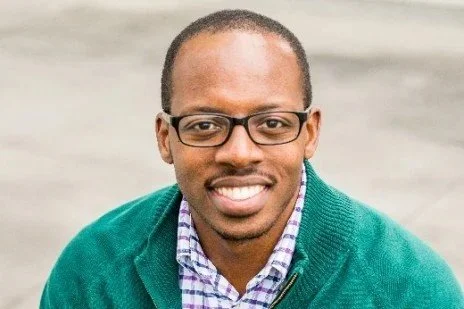
Terrell Turner is a 3x nationally ranked CPA, 2x Top 20 Global Finance Influencer. He is the founder of the TLTurner Group, which has been recognized in NYC Times Square and the NY Times as a top accounting and CFO firm that specializes in supporting law firms. Outside of running an accounting firm, Terrell hosts multiple vlogs and podcasts in addition to co-hosting The Unique CPA. Terrell is also a speaker and a content creator who regularly hosts and collaborates on video and audio content projects with multi-billion dollar corporations, bar associations, universities, and non-profit organizations.