

With Charly Weinstein
Thanks to Byron for supporting the podcast. Byron automates tax prep on individual and business returns from the 1040 to the 1065, 1120, and 1120-S. They cover the full return with deep support for K-1s, including K-3s, footnotes, reclasses, and state K-1s. Byron builds the workpapers, flags what your reviewers need to see, and syncs approved data to your tax software. Book a demo at UseByron.com.
EisnerAmper has grown from roughly $450 million in revenue to approaching $1.5 billion since its private equity deal with TowerBrook. For Charly Weinstein, CEO of Eisner Advisory Group, the numbers don’t justify bringing in people who don’t fit the culture. On Episode 295 of The Unique CPA, Charly tells Randy Crabtree why walking away from a financially attractive deal can be the right decision, and how his mentors shaped that conviction. But growth isn’t the only force demanding a different kind of leadership. As AI reduces the hours required to do the work, Charly argues that firms need to change how they charge for it, as well as rethinking how junior accountants develop judgment and skills as familiar training tasks start to disappear. His response starts with deliberate preparation, while keeping responsibility for the culture firmly in leaders’ hands.
Show Transcript Hide Transcript
Today’s guest is Charly Weinstein. Charly is CEO of Eisner Advisory Group. He’s helped EisnerAmper through decades of growth and transformation. I’ve had the pleasure of meeting Charly for the first time years ago, honestly—I’m sure he won’t remember, and I don’t remember for sure, but I know it was, I think, an Allinial Global event, it may have been in Chicago. And then had the pleasure of sitting next to Charly at an event in New York a couple months ago, where I roped him into being on the show. So Charly, welcome to The Unique CPA.
Thanks, Randy. Pleasure to be here, and thank you for inviting me.
Hey, no, it’s my pleasure. This’ll be fun. I had a great time talking to you when we were in New York and hearing the stories you had to tell, and I’m like, “Okay, we’ve got to let other people hear this.” And everybody knows you for the most part, they’ve seen you, they’ve heard some things you’ve said before, but we’re going to enlighten them with some more Charly Weinstein today. Before we get into it, everybody’s going to be expecting me to ask about TowerBrook, so at some point, we’ll just spend a few minutes on that. But I want to start long before that—I’m not saying you’re old, I’m just going to say “long before that.” When you first came into this profession, give us a little background of you coming into the profession and then the growth and the changes that you’ve gone through in the, I think I’ve read, 40-plus years in the profession now.
Yeah, that is true. It’s 48 years plus now, Randy. And time flies, for sure. So I graduated from State University of New York in Binghamton in 1978, but don’t tell anybody.
I won’t. No one’s going to hear the podcast, so it doesn’t matter.
And I started with a small firm. Jobs were really hard to come by at the time. I started with a small firm. Loved it, nice people, interesting clients. It felt like there was a little bit of a bigger world out there that I wanted to see. So after a little more than a year, I left, and I went to what was called Mann Judd Landau. Mann Judd was a sort of mid-sized national firm, again, great experience, loved the people, lots of learning, worked on some fun assignments. Stayed there for about nine years, was on the cusp of becoming a partner, and the firm was acquired by Touche Ross at the time, so Deloitte & Touche. And it’s great. I loved my roots in the middle market and loved working directly with clients and thought rather than going to one of the Big Eight, I would see what the opportunities were in the mid-market, and so I joined what was then known as Richard A. Eisner & Company, January 16th, 1989.
So I’ve been here at Eisner for 37, almost 38 years. It’s been a blast. I’ve been sitting in the Managing Partner/CEO seat since 1998 or 1999. When I first joined the firm in 1989, I was the 32nd partner, and we were about 230 people. We were probably about $50 million in revenues in 1998, 1999, somewheres around there, and today, this year, if all goes well, we should close in on that billion and a half mark, and we’ve got about 5,000 people. We’re in a lot of countries now, I think 10 different countries through EisnerAmper and EisnerAmper Global. It’s been a lot of fun. I mean, it’s only three jobs, but I feel like these last 25 years as the CEO, I feel like I’ve had 10 jobs. So much transformation. All good.
Yeah. And the fun thing is, and I remember this in our conversation in New York, is just seeing the passion you have. I mean, you could tell you love this. You could tell you love what you’re doing, and I love this profession, too, and the people in it. So that’s pretty cool. But you have seen quite a transformation of that firm. I mean, $50 million was a nice-sized firm. Doesn’t compare to $1.5 billion, but I’ll get into TowerBrook now. Five years ago, you did a deal, and I assume that’s one of the reasons, was to help facilitate growth. I won’t put words in your mouth. And you were the first, what, top 20 firm? Well, actually, you were the first wave of this new generation of PE coming in. Also, first top 20 firm to do a deal, is that correct?
That is correct. I think we led the charge and did a lot of the groundwork for a whole bunch of firms who have followed in the same path. We helped lay the foundation for what’s been a sea change in the profession in the last five years. Why did we go in this direction? Firm’s always been entrepreneurial in nature. Dick Eisner always was a forward thinker. Ted Levine, one of the other Founding Partners, always a forward thinker. And we’ve kind of over the years done things different from other accounting firms. In 1990, we started a healthcare consulting business. Accounting firms didn’t start healthcare consulting businesses in those years—it wasn’t like it is now. We grew it. It was tough slogging. It was a business better off on its own, and so we sold it, made a lot of money for the partners, gave the partners all the money. In 1996, the dot-com boom came around, and we realized, Dick, everything goes to Dick, we realized that the future was technology and that our world was going to change, so we invested in a dot-com company called fashionmall.com. They made me the outsourced CFO until, of course, they got a good CFO, and we took it public, I forget if it was 2000 or 2001. I hope everyone sold their shares on the very first day, ’cause that was the high watermark. I think we beat the dot-com bust by a week.
We built a fund administration company from scratch and sold that. We built a SaaS business before SaaS was what it is today. We raised $80 million of private equity, equity and debt, and then sold that to a very large private equity fund for a lot of money, ’cause we were diluted along the way. And so we’ve always just had this entrepreneurial bent, and I think that sort of paved the way for thinking about private equity. I believed for a long time that we needed capital in our business. In a partnership model, capital comes out of people’s pockets. And it’s not so easy when you need to do all the investing you have to do in technology and new offices and new practices and training and all those things. I thought capital was coming to the profession. We talked with our partner group about it in 2016, and then it took a long time to find a private equity partner who believed in the structure that we wanted to create, that was willing to take a chance on a completely new, quote-unquote, “industry.” We’re a profession, but they call it an industry. We ended up finding a great partner in TowerBrook and freed up all those capital constraints that we had around growth and staying relevant. And I’m going to say it’s been pretty good.
Nice. You always have a big smile on your face, so I know you’re enjoying it, and I assume that means everything’s going well. Let’s talk about, ’cause you just mentioned how entrepreneurial, how you’ve been, and obviously you could hear that from the stories of what Eisner has done over the years. You have done significant transactions since that deal five years ago, right? What has the growth or the change in the firm looked like from a revenue, number of people, number of offices, number of transactions in that five years since?
Crazy.
Yeah!
I just did a presentation for TowerBrook’s investor, a large investor group yesterday, so I saw the presentation they put together, so I’m kind of quoting some of the things that they put out there. But we were around $450 million of revenues, a very nice-sized firm, we were doing very well in 2021. And so since then, we’ve grown from, let’s call it $450 million revenues. For our fiscal year ’27, July ’27, we think we’ll just about touch that billion and a half mark, so more than tripling the size of the firm. We’ve gone from 1,700 people; today we have 5,000 people. We had 200 people in India; today we have 1,100 people in our offices in India. But what’s changed the most is so interesting. What’s changed the most is our partner group. We had 200 partners who signed onto the original transaction in 2021. Hundred percent of the partners bought into it. We’ve had 80 partners primarily retire, some went to industry, but primarily retire in the years since then. So we have 120 partners, give or take, who are still at the firm today, five years later, and altogether we have about 475 partners. So think about that kind of change with our partner group changing from the 200 who’ve been with us for a long time to 120, and 350 relatively new partners in the last two, three, four years.
That’s significant.
It’s significant change. And the partners have joined us in a lot of different ways. In the last four years, we’ve admitted a hundred people from our colleagues and managers, senior managers, et cetera, into partnership. We’ve had 25 or 30 lateral partners join us, and the rest have joined us through M&A. So imagine sort of that shifting partner group and the dynamics around that, and so that’s the biggest change. ’Cause we are our partners. I mean, every firm is the people who make it up. So we’ve changed a lot.
Oh yeah. And that’s significant. I mean, in five years we’re talking triple revenue, triple size from number of people, over triple in partners. I mean, everything’s significantly grown in the five-year period. And so now what I want to get into, and this is what I really wanted to talk about with you ’cause this is a fun conversation, is leadership, because that’s a lot of things to lead people through, and that’s what you’re doing. You’re leading people, and I know you’re very good at it. Before we even get into your leadership and how you’re managing this, and what you’re seeing, let’s go back again to your early career. Was there a mentor that you learned from? Was there a moment in time in the accounting profession where you were like, “Okay, this is what leaders need to do,” or, “This is who I’m learning leadership from?” Where did these skills come from for you, I guess?
I would say that the role models for me, the mentors for me, two in particular, Dick Eisner and Ted Levine, were great mentors and role models, extraordinarily different from each other. And if you have two minutes, I’ll tell you how.
Yeah. Let’s do it.
The third mentor for me was Mitch Agin, who’s a brilliant Tax Partner. He was only at the firm for a handful of years while I was there. I wish we worked together even longer. But Dick’s kind of an icon in my mind. He was just so people-focused. You’d come up in the elevator, and we’d have 200 people, and if you were new joining the firm, Dick had a picture of you already, and it was sitting in his office. And when you came up the elevator, even though it might’ve been your second day or third day, Dick would say, “Hi, Charly. Glad you’re here.” He was just into relationships and people and really smart. I’d hesitate to say that Dick was a great accountant. Loved Dick, and so we’ll just say he was a great people person. And that aspect of leadership, he set the foundation. I hope we still have that same feel in the firm. And Teddy was the smartest person that I’ve ever worked with. And so they loved each other. They got along incredibly well, and they were so radically different. So maybe what I also learned is that different styles can work for different people. There are lots of different ways to do things, and they helped me immeasurably in my career and really in growing as a person. So they were great mentors, great people.
Nice. Well, people is one of my passions, and treating people the right way. I love what you said with Dick, how he knew everybody in the organization. Have you met Sam Allred before?
I have not.
Okay. For some reason I thought when I first met you, Sam was at that same event, but there was two events, I think, at that same hotel.
It is possible.
’Cause Sam, whether he was officially a mentor to me, he felt like it, ’cause the guy was just what you just said: He would go speak at a conference, and he would memorize every single person that was going to be at that conference before he got there. And you’d walk in, and you’ve never met him before, and he’d be, “Hi, Randy.” And, “What? How are you doing this?” And I just thought that was such a great skill, and just the type of person that would make sure that they go out of their way to make people feel welcome and comfortable. And sounds like Dick Eisner was the exact same way, so that’s pretty cool.
And without discounting Teddy, brilliant, and he was larger than life, an absolute larger-than-life personality, and he made people feel big. So Dick made people feel warm, Teddy made people feel big, so you could learn a lot from both of them.
Yeah. Well, that’s awesome. I’ve heard you say, or I’ve read you say, or somewhere I’ve caught it before, talking about Eisner being a destination for talent, but for people. And so with the growth you’ve gone through and everything, I guess this is a two-part question, the growth and everything that’s happened in the last five years: One, how do you keep people feeling important and big, the two things that you learned from your mentors, and not just feel like “Now we’ve grown and we’re just a bigger firm, but we’re not the same, we don’t have that people touch anymore.” So how do you take these things you’ve learned from them and translate it from a $400 million firm to a $1.5 billion firm and keep people being important and having that feeling of belonging?
So it’s interesting. PE is all about driving growth, executing against your strategic plan, putting numbers on the board, value creation, running a good business. And I think all of that is absolutely true. And it also can be compatible with being a great place to work and being a place where people feel valued and a part of the team. And what we’ve tried to do is, we’ve gone through 30-plus combinations in the last four and a half years. That’s a lot. What we’ve tried to do is to share with everyone sort of the culture that we’re based on: collegiality, collaboration, respect, really caring for each other, mentoring each other. And so those touchstones are really important, we talk about them all the time.
We have a business plan, and we have growth targets and M&A targets, but at the end of the day, it doesn’t really matter what the numbers are, and we could see a great deal from a financial perspective. If the people aren’t a fit, if the culture is not a fit, we just don’t move forward. We’ll find another way to make those numbers. Making the numbers is a lot less important than keeping the culture. And I remember our first COO, go back a whole bunch of years, it happened to be Rob Levine, Ted Levine’s son, and Robbie was a partner in the firm, led our technology practice, then he built EisnerAmper University, and then I asked Rob to be our COO. And he said, “Okay, what’s my job?” And I just said to Rob, “You’re the keeper of the culture. And that’s your job. We’ll figure out the rest, but you’re the keeper of the culture.”
Yeah. That’s awesome.
Thanks to Byron for supporting the podcast. Byron automates tax prep on individual and business returns from the 1040 to the 1065, 1120, and 1120-S. They cover the full return with deep support for K-1s, including K-3s, footnotes, reclasses, and state K-1s. Byron builds the workpapers, flags what your reviewers need to see, and syncs approved data to your tax software. Book a demo at UseByron.com.
Alright. We just talked about you managing people through change and the change that you’ve gone through, and what you’ve done, the rapid growth, is not the only change that’s currently happening in this profession. There’s a lot of things. And just as a side note, we’ve always dealt with change, and we’ve always thrived through it. So the profession survives. It’s not a big deal. It’s going to happen. It’s just when there is change, people get a little panicked. But right now, AI is a big change going on. I assume part of what you’ve been able to do with growth is manage that probably differently than a lot of firms. But we’re seeing two things happening in the profession at the same time, and they might be a little bit connected from a standpoint that AI is, one, putting some extra stress on people because they’re trying to figure out how AI is going to integrate into the firm and what roles it’s going to take and what roles we’re going to do as people. We’re still people first. The profession is still going to be based on our knowledge and our relationships and our advisory advice, our ability to communicate, but that base of knowledge is still there.
And so I’m going to go a long question here: I run a survey, and in that survey for the profession, we find out that people are stressed with AI right now. I think that’s kind of a “duh, yeah, that makes sense.” But the positive is they see the benefits of what it’s going to do, which normally, when there’s change, people don’t see the benefits. They just kind of get nervous about what’s happening today. So we’ve got that, so we’re going to want to see how you’re managing that with your people to make sure that burnout doesn’t become a thing, managing work and AI at the same time. But then I guess a follow-up or kind of connected is, we’re also hearing that the next generation coming in is not going to get the same hands-on training that we all did by doing the work. And believe me, I think there’s plenty of ways around that. But is there a concern on that? You mentioned Eisner University or something before. Do you have something in place where you’re already figuring out how to change that next generation? So big question, AI, how are you managing that from a make sure people aren’t burning out, and two, how are we going to train this next generation?
Big question.
Yes, I know!
And for all the years I’ve been doing this, there’s never been a time like this, and I agree with you wholeheartedly. We’re going to come out the other side and we’re going to be even stronger. There are so many opportunities that technology is unlocking, right? And go back to 1996 and fashionmall.com. Some people were really threatened by the internet. “Hey, what am I going to do with my typewriter?” And others were more forward and wanted to learn about it. But three, four, five years later, everyone was doing it. And so I think that’s where we’re going to get to from an AI perspective. It’s really wonderful stuff.
So how it impacts the business is, I think you hit on one of the two things that are important: How are we going to train people so that they have the judgment, experience, they have the right contacts, they have the right communication skills, they can build relationships, when doing that early-level work that we all grew up on, it’s not going to be that work anymore. So how do we, quote-unquote, “train the colleague of the future?” That’s one seminal question, and the other seminal question is: how do we change our business model? As CPAs, how do we finally move from rates and hours to subscription-based services, to bundled services, to outcome-based pricing, to value-based pricing, and how do we do that pretty fast? ’Cause the next six to 18 months, you need to do that. And so we started that probably about two years ago when we started talking with our partners about bundled services and value pricing. And I think it’s Ron Baker who has been talking about value-based pricing forever. And probably like three, four years ago, I listened to one of his podcasts, and it finally dawned on me how right he’s been for 20 years. We just all had to catch up with him, right? But now we’ve got to catch up quick.
So AI, we began to focus on AI probably 24 months ago. We hired a Chief AI Officer, David Fougère. He’s terrific. We built the governance first. We looked at our data. We sort of laid the foundation before we jumped into anything. Around about last fall and going into busy season January, our people really, they just started to use AI for their own prompting, their own skills and projects, and there’s been a remarkable impact on the efficiency we have in doing our work. And what we did, so we’re such a seasonal business, right? If you develop a piece of AI in August, and tax returns are due September and October, well, you can’t train people and put it in. You’ve got to save it for the next busy season, right? So we’ve been building towards sort of more institutionalized AI use cases over the last six to nine months, and they are ready to go. We’re deploying 18 different use cases between now and the next 60 days or so in advance of the upcoming busy season, and they run the gamut from things that we think will help us drive sales and revenues and serve our clients better through expanded services to doing our services more efficiently, and I think we have great quality, but maybe even raising the bar a little bit, right? So our business model has to change, and it has to change soon.
I do a monthly partner call with all the partners, and just updates on what’s happening in the firm, highlight different projects. What I try to do is, might not sound like it from this conversation, but I try and do as little of the talking as possible, and our people are getting it done, and so they’re all front and center. But we do that every month, and for the last four or five months, I have been talking about the radical need to change our business model going into 2027. And so we have to execute against that, it will help us continue the growth that we’ve had and continue whatever success we’ve had, but we have to change. Like, every five years, our firm is a different firm. Five years ago, we changed the ownership model, and today we’ve got to change the business model, and that’s okay. That’s stressful, as you suggest, but fine.
But then think about our people in the second half of this colleague of the future. Think about the newer people coming into the profession, kind of where they stand and what they’re thinking about, and how is this going to impact me and how am I going to grow and learn? And we put together a team about nine months ago to start this process, so first thinking about what will help us train the colleague of the future and help them be more successful in their careers? That will evolve from now till forever because the technology is evolving, the skills that people need around the technology is evolving. Let’s put that focus on the soft skills, right? Relationship building and empathy and respect and openness to change, and all the sort of things that people would get by osmosis by watching successful mentors, eavesdropping on them talking to clients in a conversation, being invited into a sales proposal and participating by learning and listening. And so we are actively evolving the way we’re trying to build the colleague of the future, and the business model and colleague of the future are the two seminal things that are changing as we speak.
I love the fact that you say the business model needs to change because it does. If your business model next year or the year after or whatever is based on hours like it’s been for the last 100 years, you’re in trouble ’cause the math’s not going to work because the hours are going away. Honestly, I think that’s a great spot to wrap up because that’s great advice to tell everybody in the future, and to see that the way you’ve managed this growth for the last five years or the last 30 years overall and the ideas and the way that you’re allowing people to manage this change as a group, as an organization, is impressive and exciting, and I’m excited to see what’s next for everything you’re doing. So anything you want to wrap up before I ask one final question?
I’m good. If you’re good, I’m good.
Alright, let’s do this. So we just talked about what an amazing profession, amazing people we have, the things that are happening, the change that’s happening. We got a history lesson along the way. But when you’re not having this big impact on the profession, which you definitely do, what do you do for fun? What’s your outside-of-work passions? What, I guess, brings you joy besides the accounting profession?
Well, I love to travel, but if you ask what brings me joy, it’s sitting on your shelf behind you in this picture frame, “World’s greatest grandpa parking only.” And so nothing makes me smile more than my boys. And my son and daughter-in-law, John and Emily, they would say they’re not my boys, they’re their boys. But that’s not true, they’re my boys. So they just make me smile. And I have lots of things that make me happy, and I love to travel, and I love to read, and my wife and I have been married, it’ll be 48 years in another month or so. And so I’ve got a lot of consistency, and the CPA profession has been unbelievably good to me. Instant smile when I see my boys.
Oh, I agree with you. Actually, my wife and I just hit 40 years last weekend on our anniversary.
Congratulations.
Yeah! And the grandpa parking sign, I earned that 10 months ago. That’s when our granddaughter was born.
Congratulations!
So looking forward to the next ones. Nothing imminent right now, but looking forward to that. So yes, I’m right there with you with the immediate smile thinking about my girl and your boys as well.
Yeah. Well, Ryan and Gavin make me smile. So a lot of people make me smile, but instant smile.
There’s nothing like that smile you get from a grandchild. That’s just crazy. So well, Charly, I want to thank you so much for being on the show. I’ve loved, ever since I met you originally, watching your journey and seeing what’s going on. And when that transaction happened five years ago, I actually did an episode on that with Allan Koltin on the show, and he was explaining what this meant, ’cause I was like, “Wait, what’s happening?” And so he tried to explain the situation, what was happening, to me, and he did a good job. And then to see the growth and the passion that’s come out of this for the last five years for you, too, has been fun. So thank you so much for being on The Unique CPA.
Thank you, Randy. This has been fun.
About the Guest
Charly Weinstein is Chief Executive Officer of Eisner Advisory Group LLC and a member of its Board of Directors. Over more than 25 years, he has led EisnerAmper’s growth from 400 colleagues to more than 5,000 across ten countries. He guided the firm’s pioneering private equity partnership with TowerBrook Capital Partners and has since overseen 30 acquisitions, expanding its footprint to more than 40 offices across 17 states.
Charly is now leading the firm’s investment in AI-based technology while maintaining a culture grounded in respect, collegiality, and collaboration. He is frequently quoted on private equity and emerging technologies in accounting. He serves on FinReg Global’s Board of Directors and as Audit Committee Chair for The Partnership for New York City. A former board member of the American Institute of Certified Public Accountants, he also belongs to the New York State Society of Certified Public Accountants. He helped establish EisnerAmper Global in 2014 as a Founding Board Member.
Meet the Hosts
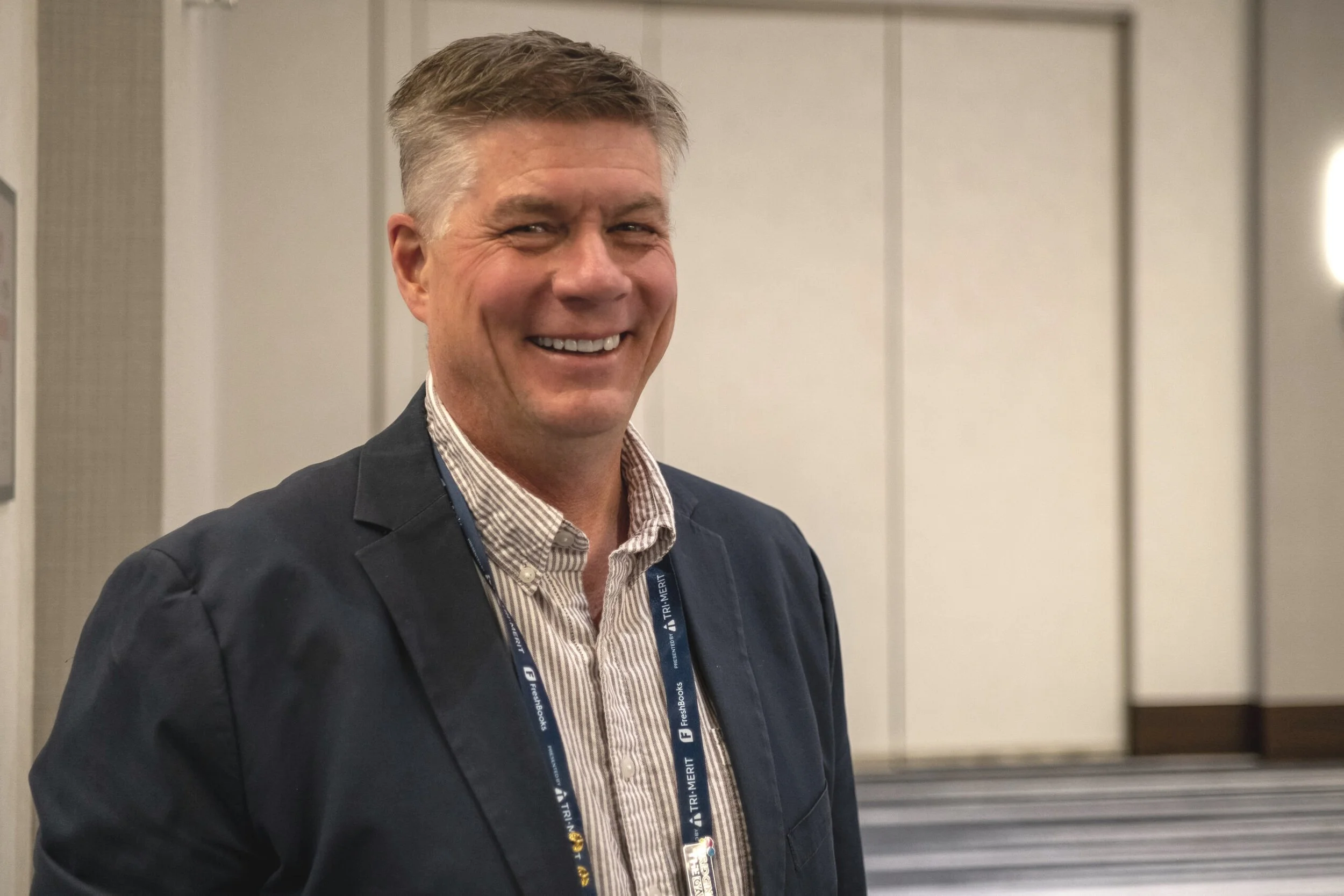
Randy Crabtree, co-founder and partner of Tri-Merit Specialty Tax Professionals, is a widely followed author, lecturer and podcast host for the accounting profession. Since 2019, he has hosted the The Unique CPA podcast, which ranks among the world’s 5% most popular programs (Source: Listen Notes). You can find articles from Randy in Accounting Today’s “Voices” column and the AICPA Tax Advisor, and he is a regular presenter at conferences and virtual training events hosted by CPAmerica, Prime Global, Leading Edge Alliance (LEA), Allinial Global and several state CPA societies. Randy also provides continuing professional education to Top 100 CPA firms across the country.
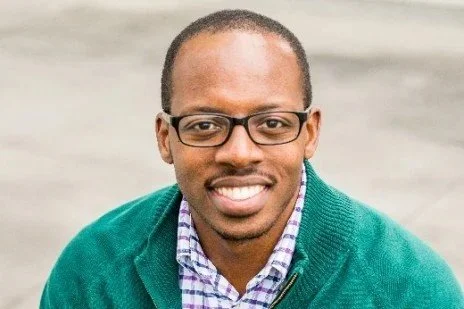
Terrell Turner is a 3x nationally ranked CPA, 2x Top 20 Global Finance Influencer. He is the founder of the TLTurner Group, which has been recognized in NYC Times Square and the NY Times as a top accounting and CFO firm that specializes in supporting law firms. Outside of running an accounting firm, Terrell hosts multiple vlogs and podcasts in addition to co-hosting The Unique CPA. Terrell is also a speaker and a content creator who regularly hosts and collaborates on video and audio content projects with multi-billion dollar corporations, bar associations, universities, and non-profit organizations.