
Living a Life That Matters
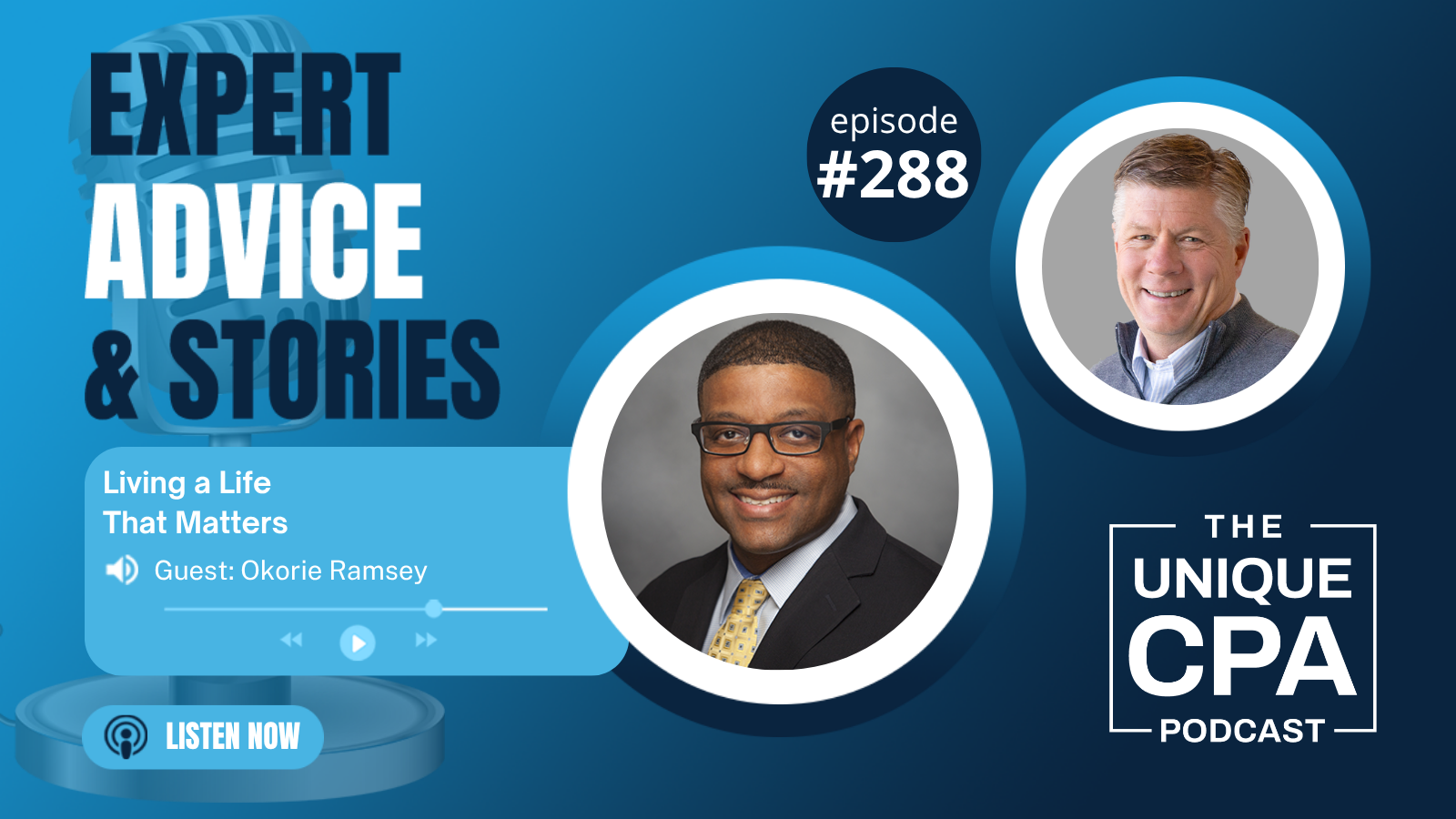
With Okorie Ramsey
Okorie Ramsey built a legacy statement around six words: “To live a life that mattered.” As Vice President of Sarbanes-Oxley at Kaiser Permanente and the first African American male to chair the AICPA, he’s spent his career turning that philosophy into action. He launched the National Pipeline Advisory Group, grew accounting enrollment for three straight years, and brought HBCU students into the profession through the Balance Sheet Bash, among many, many other contributions. On Episode 288 of The Unique CPA, Randy and Okorie dig into the AI governance gap threatening the profession’s role as trusted advisors, why the next generation of accountants needs more than technical skills to thrive, and what it means for seasoned leaders to shift from doing the work to pouring knowledge into those coming behind them. Okorie is also blunt about leaders who treat AI as someone else’s problem, as well as about the point where staying in a role you’ve outgrown becomes its own kind of comfort and complacency.
Show Transcript Hide Transcript
Today I’m joined by Okorie Ramsey. Okorie is Vice President of Sarbanes-Oxley at Kaiser Permanente, where he oversees the organization’s SOX program and has spent years in leadership roles across finance, compliance, risk, and internal controls. He is past chair of AICPA and the Association of International Certified Professional Accountants, and the reason I’m really excited to talk with him today is he consistently is focused on something bigger than titles and technical expertise. He’s passionate about developing people, mentoring the next generation and creating a profession where people can build meaningful careers. And I’ll even go further: There’s one thing that I’ve heard him say before, and I think this is actually when he was coming in as the chair of AICPA, and what matters to him is to live a life that matters. So, Okorie, welcome to The Unique CPA.
Fantastic. Thank you, Randy, for that introduction and for the opportunity to join you for The Unique CPA Podcast.
Oh, believe me, this is like a dream come true that I got you on here. I remember, you and I had the good fortune of meeting in person a year ago at a CalCPA event, and we actually were together, what, a few weeks ago, a month ago, at that same event that Denise and her team is doing out there, and it’s, what do they call it? The leadership forum, or…?
Exactly. It’s like a leadership forum that crosses, you know, people in business and industry, people who are in public accounting and, you know, just different aspects of the profession to bring forward ideas of what’s next in the profession, and how CalCPA can really help support and advance that work.
Yeah, and they’ve done a really good job of trying to promote the profession and bring the profession forward. In fact, this year, I’ve got it written down here, “The human edge: Leading the profession in an AI world.” So we were talking about, you know, all these things that are going to be changing and have changed already, people and clients and our judgment compared to what the AI’s doing for us and all these different things. But here’s my question for you, because it was fun. I mean, I had a great time out there. But after those couple of days, what did you take from that? I mean, were you more optimistic about the profession, or there’s more concerns you have? Is there something even deeper that we need to dig into? I know this is a loaded question, but how did you feel after that day of all this banter and back and forth we had?
Well, I’ve got to tell you, Randy, when we have those sessions and this being the second one that you and I have participated in, I walk away from the session immediately tired from the effort, and you know, my brain is just like exhausted from all the discussion and really just hard thinking about how we can help support and advance the profession. As I continued on for days that followed, there were a couple of different reactions that I had to it. First I was just proud to be a part of something that is bigger than you and I. That really is about how we will lead for the next generation of, you know, CPAs, CGMA, people who are going to be throughout the profession, and that’s absolutely inspiring. I will also say that as days then continued even further, when you start to hear more around, you know, some of the troubling aspects of AI, and I would even say the lack of governance around AI or regulatory requirements around it, that did honestly concern me because we are a trusted profession. And if people are using AI and it’s being utilized in a way that’s not necessarily for good, there is a lot of risk associated with that, and it makes our job that much harder because we have to make sure we’re up to speed on that, but we also have to make sure that we are protecting the public interest as it relates to that in a space that is still fairly new and evolving. So that is something that, like, it’s exciting, but at the same time it creates a little bit of anxiety, honestly, around how do we make sure we get it right?
Oh, for sure. So you hear things like these leaders of the AI companies saying, “slow us down.” You know, you were just mentioning there’s like no, you know, regulatory rules out there on it. And when they’re saying “slow us down” a little, I’m like, okay, is this just a hot take headline I’m reading, or is this something they really want to do? Because that’s the thing that scares me because I mean, I am addicted to ChatGPT and Claude now, and I use it constantly.
Absolutely.
And so you hear stories of, you know, what one of ’em was going and attacking some other, you know, AI, and now they’re just talking to each other behind the scenes and like, okay, we need to be concerned here. Now that’s probably deeper than what we went into at CalCPA, but there’s a lot going on!
Exactly. And it’s something that I think that we, again, as a profession have to be thoughtful about how do we think about like, putting guardrails that make sure that the financial statements and the information that the public relies on can be secure, that it is reliable, right? And so, how do we do that in this space of where we’re dealing with a lot of unknowns, right? And there’s a certain amount of trust that you have to put into leaders within these industries who hopefully are doing things with the right intent versus something that may not be. So it’s definitely a juggling act and I want to make sure that we’re doing our best to be on top of that. And I do believe that the AICPA is putting out a lot of guidance around this that is being monitored and viewed by those in the profession. So I think that we’re doing what we can do, but we have to stay diligent, because you just never know.
Yep, for sure. So, okay, well the bottom line is whatever we did that day, they’re going to be coming out with a, I guess, white paper or something pretty quickly to summarize what we discussed and put it out there. So I’m looking forward to see what comes of that day, and hopefully we’re going to have our little impact on the profession. Oh, and you’ve had a huge impact on the profession already, so I’m just trying to make my way. So alright, I’m going to go back to what I said at the beginning of the intro, this phrase, “living a life that matters.” Tell me what that means to you, where that came from and how you try to live this life that matters. Now that right there, we can go like an hour just on that, I’m sure.
Well first of all, I appreciate you researching that, to understand that that is really important to me. And so to give you a little bit of the origins around that, I was teaching an MBA course at San Francisco State, which is actually my alma mater, so I’m going to say “Go Gators” for all those listening. And this leadership class, it was called “Leadership in Action.” I actually had 10 to 12 leaders across many different professions, different backgrounds, who would come into the classroom and ultimately tell their story of what they did. You know, what were the pitfalls, what were the successes. And I tried to make sure that we had a really broad cross section, because honestly, when I was in college, I didn’t always see that. So I wanted to have the students basically have a reflection, you know, of themselves in leaders that they could ultimately become. And so one of the lessons that I had was around having a lasting legacy and what did that mean? Who were leaders that actually had just a profound legacy that lasted sometimes beyond their existence.
And so to give you an example, Coach Wooden, you know, is a great example of having that kind of lasting legacy in the sports arena. And so we talked about different leaders: What were the traits that they had? And then what I asked the students to do is come up with a legacy statement. And that statement had to be no more than six words. And so when you think about it, if you’re talking about legacy, you can write paragraphs about a legacy, but when you have to define it down to six words of what that means, that’s pretty hard to do. And so for me, mine was “to live a life that mattered.”
Nice.
And how that translates to, I would say, to the work that I do and how I, you know, operate is that I really want to make sure that as I do my work and as I really live, that I’m living in and operating in a way that really helps to develop people, that makes a difference in the lives of others, because I get so much out of that fact that helping others to achieve and be their best self, it really just makes a difference for how I feel and how I show up as well, and it really challenges me. I mean, I think Matt McConaughey once, you know, said something I think at the Oscars, that his competition is himself 10 years from now, and so he never will catch that person as he’s alive, but he is always going to be shooting for that. And so when I think about what I’m trying to do, is I want to live in that manner, in that I’m always going to be chasing being my best self and how I can impact others, and I hope through both my career, my volunteerism, what I do with my family, and just the broader community that I’m doing that, and that when I’m gone, people will say, “that guy made a difference.”
Well, when I was looking up a few things on you just to be prepped for this, one of the articles, I don’t know if it was the headline or what, but, no, it wasn’t a, it was a bio. It may have been with San Francisco State or there were a few bios I saw, it said “first Black president or chair of the AICPA.” I mean, that by itself is a legacy that you had just mentioned showing people a reflection of themselves and showing them where they can be. I mean, when you thought of this living a life that matters, did that role like, hey, I can make a difference by putting myself or getting into this role within the profession, this leadership role?
You know, honestly, that didn’t come into play.
Really!
And so what was interesting about that is that I’m the first African American male to be chair of the AICPA, whereas Kimberly Ellison-Taylor is the first, you know, person of color, first Black female to be chair of the AICPA and the association.
And she’s been on the podcast too, by the way, so, nice.
Awesome. Well, and I love to give her props.
Yeah. She’s awesome.
To be the first in that space is a really, you know, big deal. But what I would say is that when I was like a student in college, I never would’ve fathomed that I would be in that seat. And because I was in that seat, you know, I did want to make sure that it mattered in terms of what were the things that I was involved in, that was helping to push the association and the profession forward. And so when I look back on, you know, those things, you know, I think about NPAG, so the National Pipeline Advisory Group that was started under, you know, my year as chair. And we started to more seriously look at the education requirements and with data, what were the drivers of students not coming into the profession? I’m proud to say now, for three years straight, we’ve actually had growth in those students who are going into four-year colleges and going into accounting. And again, that started within my year. Now I’m not saying I’m the leader of that.
I’m giving you credit. I’m giving you credit.
And I appreciate you, Randy! I got a gift for you after! But you know, it’s starting by, like convening, and bringing these great minds together with, you know, leadership by, you know, Lexi Kessler, you know, who became, you know, a chair two years later to really help us to think about how do we really look at the profession? How do we create change? There were some other things that, you know, I was able to get involved with is, you know, the successor to Barry Melancon, you know, who’d been the CEO for 30 years in our profession. Mm-hmm. You know, and so having now Mark Koziel, who’s also amazing in leading in just a fantastic way, being a part of these things that I view were bigger deals, being that I am African American, I also want to bring more focus on diversity, equity, inclusion, and belonging. And so I, again, to be involved in how we bring the HBCUs more to the forefront, so Historically Black Colleges and Universities, and having that be an area of focus. And we started the Balance Sheet Bash, so the Alabama Society of CPAs, where we go to HBCUs or their offices and bring the students from HBCUs to their environment to really help to educate them about finance, accounting, and why this is such a great profession. So there’s a lot of things that I wanted to make sure that I had a role in creating a difference versus, you know, keeping the seat warm. I really wanted to make a difference and I feel like, in my chair year, I was able to do that and then continue to do that subsequently.
Yeah, well based on what you were just saying and how, you know, we’ve had this enrollment go up and it sounds like, I don’t think it was just a recruiting problem. I think it was, you know, you were starting to do programs and get things in place and make the experience better, show people it’s a better way. Are we still on that track? Is it, hey, we just need to tell people this is a great profession, or we have to change the experience within the profession?
Absolutely, Randy, and so much more. I mean, there were six themes that came out of the impact work, and I won’t hit on all of them, but just to touch on a few of them. One was looking at the cost of education, right? So that can sometimes be a barrier for folks to actually come into the profession because they can’t pay for the education and get through, you know, the years of schooling, the cost of that fifth year, right, that we had with the 150-hour rule, that was also a barrier. So going back to the 120 and then having a couple of years of experience, having a new pathway was also very important to helping us, you know, in that space. Looking at how we do our work, not having that viewpoint of you still got the green eye shade, you’re doing your ten-keying and that you’re sitting in an office versus engaging with people and helping address very complex issues and finding solutions, helping people understand that these are the kind of things that we do. And so part of it is the actual work, but part was also the education of how the work is done that we need to make a difference. [Taking] the CPA. Making sure that people have the ability to take the CPA in a way that ultimately helps them to really well learn the different skills that they need to be more successful. So really, we modified the CPA exam. So we have a greater focus on, you’ve got the core, right, of audit, tax, accounting, but then now your specialties around internal controls, or tax complications or systems. How do we make sure we’re moving that profession forward in a space where the students and young professionals will feel like “I’m more valuable. I’m making more of an impact.”
Yeah. Well, now things are changing fast in the profession and what people need, the skills they need, are probably changing, but also the way that they are going to gain expertise, gain the knowledge that they need to move forward in their careers when we have AI. And this is a lot of the thing we were talking about at the CalCPA event, we have AI coming in and doing a lot of the things that may be first and second year people in the profession were doing in the past, and now they don’t have that because AI is going to be doing the compliance work or the data entry or whatever. Do we even have to look deeper now on how we get people into a position to be able to advance in their careers? Because this is the biggest concern I hear all the time lately is how do we train people now with AI doing a lot of the work? And so does that have to start at universities? Does that have to start with AICPA? Where, what do we need? Again, I keep giving you giant questions! But tell me what you think.
I’m waiting for that question to end!
I know! That’s a good thing, right? We’re having fun.
Well, so let me take a stab at it. But I would say that it definitely needs to start in the classroom, you know, in college for sure. We can’t wait for young people to come into the profession and then say, okay, now we’re going to begin this effort to really get you prepared to provide value to clients. Because clients really, and when I say clients, I’m not only thinking about in a public accounting sense, but also I think of as stakeholders in business and industry. My stakeholders need me to provide value in my teams to provide value day one. So it can’t be, “Oh, well we’ve got to wait for you to get trained up for two years to actually start to produce something that’s going to really add value to my organization.” It doesn’t work that way. So the earlier that we can expose the younger professionals and students to the skill sets that they need to ultimately be successful within our environment is key.
Now, what I will say in terms of the profession, when I think about what are those skills that are needed. So we think about that in terms of the AICPA has this thing called the T-shaped professional, right? And so that T being the stem is your technical competence. The things that you learn in school, our debits and credits. When you think about AI and adoption of digital tools, having that understanding, that’s the stem, and that’s something that I believe is table stakes, that you must walk into the door with. The top of the T, and this is the capital T are the things that are not necessarily always taught in school. Anticipation and resilience, communication and storytelling, strategic and critical thinking, leadership and impact, looking at innovation and collaboration. And I always say from a leadership perspective that like if you’re leading, but no one’s following you, you’re just simply going on a walk. So you need to make sure that you’re getting those skills that really will help you to truly be the leader that people are inspired by and that they want to follow. But there’s so much in terms of these core areas of what are the skills that you need within those categories that will help you to really, you know, launch into being an exceptional professional that will go the long distance.
Yeah. I think that brings me to another question, another area that I think is important because you’re just talking about leadership at the end there, and I brought this up at CalCPA, but I think one of the biggest things that needs to change is just leadership mindset, leadership in general. I’ll make this a short question and then we’ll expand on it. Do you think leaders in general are equipped right now to lead us into this new era of the accounting world with AI and whatever’s going on out there? Or are leaders just too set in the, hey, I’ve got five years left and I’m not going to worry about this, the next person’s going to have to deal with it?
You know that’s a tough one, Randy, because I think it really is about where you are in your career. Because I think we've got a spectrum, I think you have some of the more seasoned, experienced leaders who are looking at running out the clock in certain cases. Not everybody, but there’s some who are, “I’m not going to have to worry about this in a few years.” And then you’ve got those who are maybe mid-career that they need to actively be thinking about how am I going to, you know, address this and not only from a reactive perspective, but also proactive in terms of what are the things, like what’s next? How am I going to approach what technology’s going to be able to do and want to be, you know, a fast adopter or fail fast and figure out how we modify the way that we work so that they can be adaptive and make change. And that again, speaks to that T shape professional, the types of things that you need, the skill sets you need to have to be able to do that. And then our younger professionals who are early career, maybe just moving to mid-career or just starting their profession, that they are native in this AI space. They’ve lived with it their entire lives. So how do we ultimately leverage that background and skillset that they have from a more maybe social networking perspective to making it business relevant, so that they can take that background skills and utilize it in a way that can, you know, create greater value to those who they may be working with. And I think that they are highly interested in doing that, so I really do believe that we have to be a profession that allows younger professionals earlier in their career to be engaged in the process of how we do what we do, and make an impact and hear their voices because they want to be heard. They want to make an impact, but if we don’t create space for them to do that, we will suffer the impact of that.
Alright. So give me your most optimistic view of what’s happening in the profession and where you see us going and what you’re excited about. I mean, I don’t know, there’s always been change. I’ve done talks on change and I look back 25 years ago, and there was change going on then and people were freaking out about, and there’s change going on now, and it’s always been that way. I think it’s accelerated quite a bit. But I’m super excited about what’s happening. So from your standpoint, what are you optimistic about with the accounting profession in general?
So what I would say I’m optimistic about is that, one is that we are a trusted profession. You know, trust is earned, it’s not given, and it also is lost in buckets, but earned in drips. And so when I think about the space that that gives us in terms of where we are starting and can make an impact, we’re starting from a very positive space. And so that gives me a lot of optimism is that no matter what happens, we are starting from a place of being trusted advisors who are looked at as you make a difference, you help me, you help me run my business, you help me make better business decisions and ultimately continue to build the public trust. So that just creates a great deal of optimism for me, when I think about the young minds that are coming into the profession and how hungry they are to learn.
We think about, like right now, there’s this kind of position of, well, the mid-level professionals, they don’t necessarily want to come back into the office, because they’ve got it. They know what they need to know and they’re able to do their job. But that’s not the model of our profession. Our profession is one of an apprentice model, where we help those who are coming behind us to help them to be better professionals, and we need to make sure that we continue to do that, both on the public accounting side, but also in business and industry. And so when I think about that desire and that hunger and that wanting to be present and in the office and that they’re thirsty to learn, that’s also really inspiring, because you’ve got a group of people who really will be the next leaders of our profession and they’re in it. They want to win, right? And so how do we make sure that we are investing in them in a way that allows us to really do that?
One of the things that I would like to see more of between our more senior, you know, people who are in the profession and those who are younger are, how do we build bridges where the younger group are helping the more senior, understand some of this technology and things that they are somewhat, maybe they don’t want to say it, but afraid: “How am I going to engage with this?” Or “I don’t want to engage with it.” But if you’re using or are learning from people who really know it cold. Well, maybe they can actually help you in a way that feels safe and less risky. But then you, with all the experience and knowledge that you bring to the table, you can be pouring more into those individuals and they see that because you’ve got a knowledge bank of 20, 30, 40, 50 years of work experience that can help that individual to really know, “How do I navigate these things that, you know, I’m going to continue to experience, but maybe I learned from someone else’s mistakes or the lessons that they’ve learned.”
Yeah. So you just made me think about this. One of my favorite books somebody just told me about a year ago, and I avoided it for a couple months, and then I saw her text again. I’m like, you know what? I should look at this, and I’m wondering if you’ve read it. Arthur Brooks, From Strength to Strength.
I’ve heard of it. I have heard of that book. I will now go and pick it up because this is probably the second or third time that I’ve heard of that book.
Yeah. A lot of it, what you just said, the, somebody older in their career with all the knowledge they’ve gained and, and their value is not necessarily the technical expertise anymore. It’s this knowledge sharing, and being a mentor, and bringing up the next generation. And I think if we look at things that way, and I think in general, people—I’m not saying accounting people—sometimes it’s hard to realize that there’s different phases of your life and different phases of your career, and you need to adapt to what you’re doing at these different phases. Believe me, I would recommend this book to everybody that is at least in the second half of their careers, I think that’s the best time to read it, because it gives you a really good insight of where you should be spending your time to help that next generation be successful. And so you just said it very nicely as well.
Awesome. Well, you know, I’ll tell you that that is actually one of, like, I have these six principles of leadership that have really been a part of my career and I was in with thinking and working beyond the benefit of yourself, because I really believe that having that ability to make a difference in the lives of others, it just creates this just positive energy, and makes you feel like, okay, I’m doing something in that, I don’t know, those good endorphins, right?
Yeah. Oh yeah.
And what they, what they have done based on maybe some of the things that you, in some small way had an impact on. It just continues that cycle of giving.
It kind of feels like where I’m living now. I feel like I’m trying to do my small part to give back to help others. And I’ve had a long and fun career, and I don’t know if I’ve had any more fun than I have right now just being in this role. It is just so amazing to me that I can’t imagine stopping. So I appreciate the way that you say it and the way that you pointed out. Let me ask you, and I don’t want to put you on the spot so we don’t have to record this if you don’t want. But do you see a next phase of your career, or is this at Kaiser, is this the final place for you?
You know, I never close the door to anything. So I think you kind of always have to be open. And I would recommend that to anyone. You want to make an impact and a difference wherever you are and always give your best regardless of what organization that you’re a part of, because that just speaks to who you are, versus what organization you may be a part of. So I think that that’s important. I have more that I want to do within Kaiser Permanente. I mean, it is a great organization that we are a mission driven organization, and that’s what really keeps me coming, that and our people, every day. I think about how are we going to change the world and making an impact. And so I love being in this environment to do that. But at the same time, when I think about having the ability to always reset and look at, okay, am I still enjoying what I’m doing? Am I making an impact in the spaces in which I work? And am I helping people? Am I helping the organization to continue to achieve its mission? And when some of those things are not aligned, that’s when it’s time for me to reset and determine, is this still the right fit or is there something else? And to not be afraid to make that difference because honestly, Randy, is another, you know, one of my principles is knowing you’re no longer working in the right place for you.
Oh, wow.
And it’s not like the organization’s bad. It is just that you have gotten what you can get in the space that you’re in, and sometimes you have to move and do something different, and that’s okay. So just being accepting of that versus being comfortable because it’s easy to be comfortable than uncomfortable, and we need to be able to do that.
Well, you’re definitely living a life that matters and I appreciate you, and I appreciate you sharing your knowledge and your insights and just the fact that I have a year plus been able to call you a friend now is awesome to me. So thank you for this. I have a couple more questions before we wrap up though. So first question—and this is not based on what we talked about, but it actually could be, based on the way you look at things, it might—but when you’re not making a difference in this profession, when you’re not making a difference in people’s lives, what do you like to do? What’s your outside of work passions? What lights you up?
I would tell you there are a number of things, Randy. I would say, first of all, family. I wouldn’t have been able to do a fraction of the things that I felt like I’ve done within the profession if I didn’t have the support of, you know, my wife and two kids. So having their support, their love and knowing that we go to bat for one another, always, that’s, you know, family first, that’s, that’s always going to be there. And now having one who’s graduated from college and entering the profession, that’s really cool. And then having another one who’s now just starting, you know, her college career at Howard University and that, that’s really exciting, you know, as well. So for that all is great. So that’s number one.
I would say then also volunteerism. That is a joy of mine, feeling like I’m giving back and making a difference. I feel like if I’m not doing that, I’m being lazy and I’m not really doing the work that I need to do that makes me happy. Fitness is also something that’s important to me. So taking good care of, you know, my health as much as possible, I really enjoy doing that. I have an investment club that I’ve been in for now 26 years with a group of friends that we’ve gone from literally, you know, $100, you know, per individual, which was like $1,100 to close to $700,000. You know, that we, you know, our dollars to, just in this small like little friend environment. And that’s also, you know, something that, you know, helping others to understand the importance of financial literacy, that is also part of that work. But if I closed on anything there, I, you know, I would just say that it’s so important to volunteer, whether it’s, again, part of the profession or elsewhere in making a difference. But there’s so many different avenues and spaces where you can volunteer and the impact that you can make, and I just truly enjoy it. And so that’s really, again, just part of my DNA.
Yep, I’m with you there. Well, I appreciate that. And last then, if people want to find out all these cool things you’re doing or more about you, what would be a good place for them to look?
LinkedIn is an outstanding spot, you know, for me. And so if you, there’s a way through, you know, The Unique CPA Podcast is able to share that, my link to my profile, I welcome that. And I have had a number of individuals who have just randomly reached out to me, you know, on LinkedIn, whether it’s for, you know, a conversation or, they, you know, have asked if there’s something that I can maybe do to, you know, support them. And where I can, I do, because my viewpoint has always been, you know, if you take a shot, I want to help you score. So the fact that most people won’t reach out to you if you, you know, you give them your business card or you give them your LinkedIn profile, they won’t utilize that. So it’s like if you take that initiative, then let me see how I can engage and help support you in some way, shape, or form. So I don’t want people to feel, you know, afraid to reach out to that, oh my god, he actually responded, right? That I will respond. It may not always be as quick as they may want, but I definitely respond. And I feel like that’s really important to do and it’s part of our responsibility in the profession to make a difference for those coming behind us.
I completely agree. I get so much fulfillment out of helping others and seeing, you know, again, I keep saying the small impact you can have on others because that just explodes from there. So thank you so much for being here. Thank you so much for the conversations. Thank you so much for everything you do. And I already know for a fact that you are definitely living a life that matters. So thank you for being here.
Randy, this was an amazing discussion. I have been a fan of yours for a long time, and you are making a difference, and I really appreciate you creating this podcast so that people can see the profession and individuals and what they do. There are no norms. I mean, there may be common themes that we have about how we engage in the difference that we want to make in the profession, but how we approach it and the lives that we live, all very different. And so you create a space for people to showcase that, and share, and hopefully, an opportunity for people to learn. So thank you, you know, for creating this environment for us to have this space and conversation.
And thanks everybody for listening today. And remember, based on what Okorie just said, we’re all unique!
Important Links
About the Guest
Okorie Ramsey is Vice President of Sarbanes-Oxley at Kaiser Permanente, where he oversees the SOX program for its $115+ billion integrated healthcare enterprise. A CPA, CGMA, and SEC-qualified Financial Expert with over three decades of experience, his career spans audit and advisory roles at Coopers & Lybrand, Arthur Andersen, Robert Half International, and Ernst & Young. Named one of Accounting Today’s Top 100 Most Influential People in Accounting, Okorie served as Past Board Chair of the AICPA and the Association of International Certified Professional Accountants – the first African American male to hold that role. He is passionate about developing the next generation of accountants, advancing diversity in the profession, and living what he calls a life that matters.
Meet the Hosts
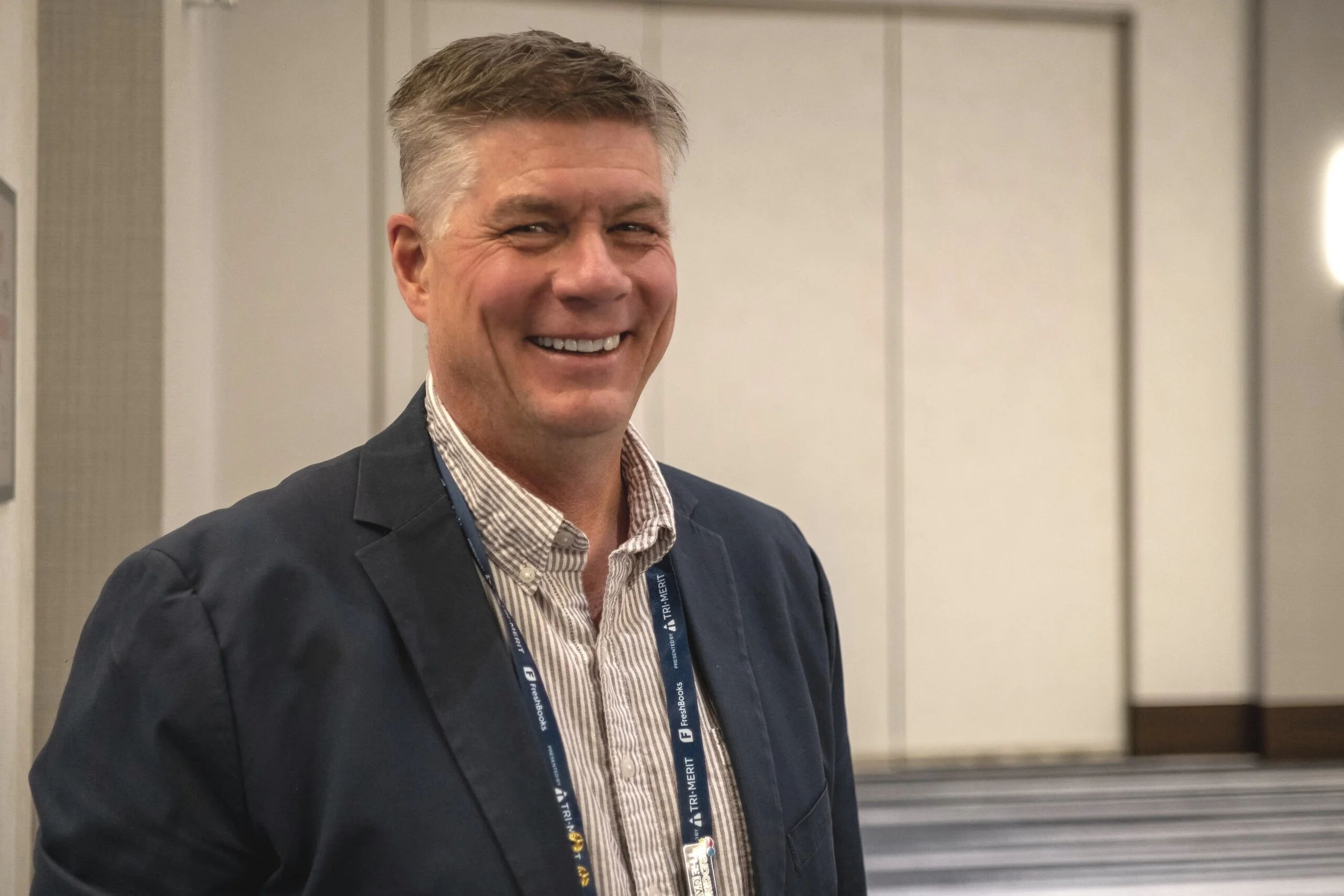
Randy Crabtree, co-founder and partner of Tri-Merit Specialty Tax Professionals, is a widely followed author, lecturer and podcast host for the accounting profession. Since 2019, he has hosted the The Unique CPA podcast, which ranks among the world’s 5% most popular programs (Source: Listen Notes). You can find articles from Randy in Accounting Today’s “Voices” column and the AICPA Tax Advisor, and he is a regular presenter at conferences and virtual training events hosted by CPAmerica, Prime Global, Leading Edge Alliance (LEA), Allinial Global and several state CPA societies. Randy also provides continuing professional education to Top 100 CPA firms across the country.
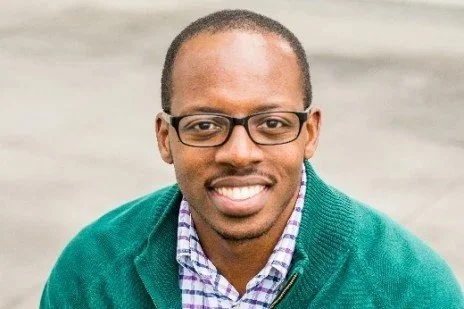
Terrell Turner is a 3x nationally ranked CPA, 2x Top 20 Global Finance Influencer. He is the founder of the TLTurner Group, which has been recognized in NYC Times Square and the NY Times as a top accounting and CFO firm that specializes in supporting law firms. Outside of running an accounting firm, Terrell hosts multiple vlogs and podcasts in addition to co-hosting The Unique CPA. Terrell is also a speaker and a content creator who regularly hosts and collaborates on video and audio content projects with multi-billion dollar corporations, bar associations, universities, and non-profit organizations.