
From Practitioner to Advisor
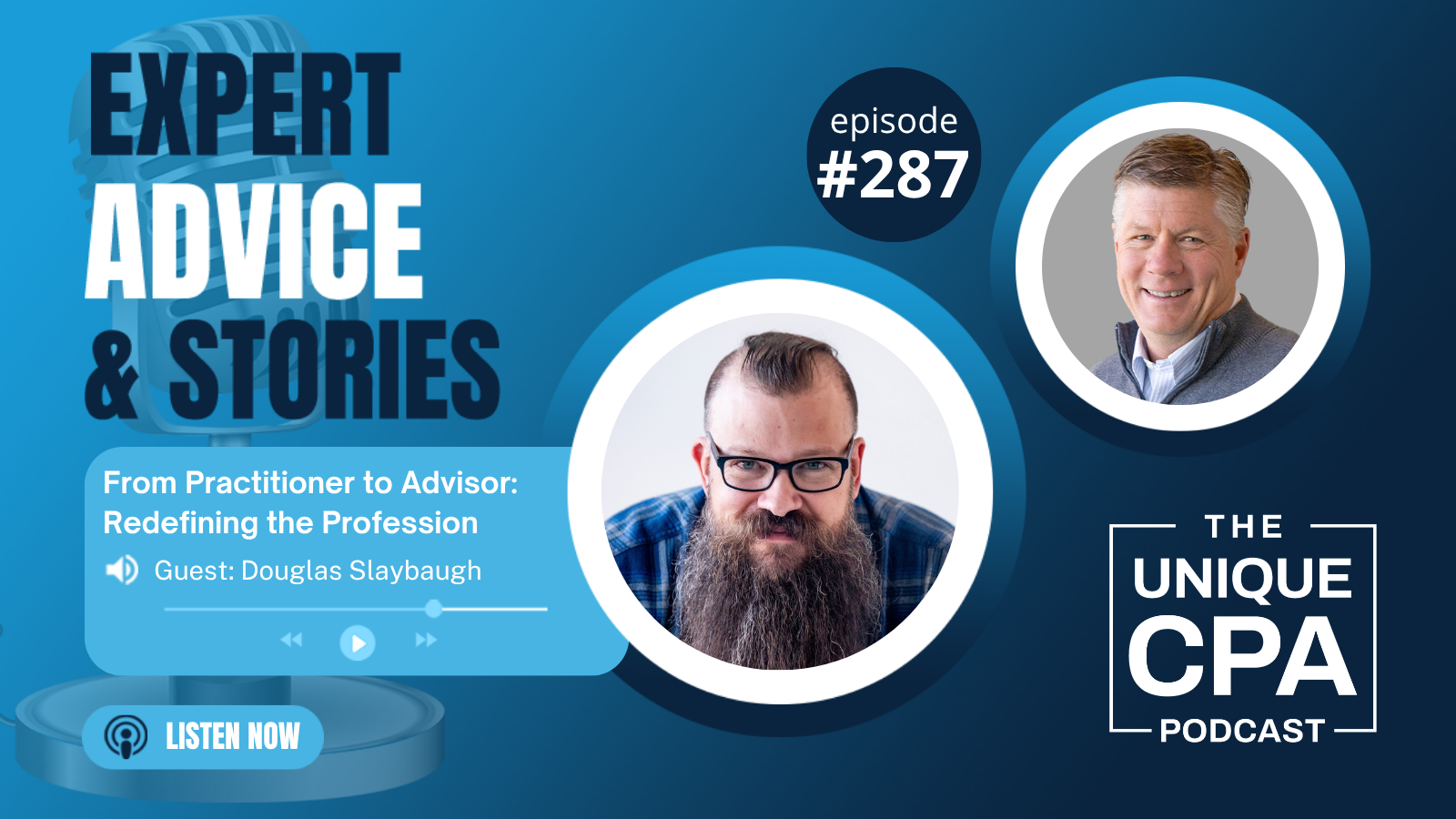
Redefining the Profession with Douglas Slaybaugh
Douglas Slaybaugh has spent close to 10,000 hours coaching accounting leaders, and he’s seeing something he doesn’t like: partners drowning in chargeable work, admin, and meetings. They then don’t have any capacity to do the one thing that actually matters, sit across from a client and talk deep strategy. He calls it the partner bottleneck, and it’s pushing experienced professionals toward burnout and early retirement. On Episode 287 of The Unique CPA, Doug tells Randy that AI could be the fix, creating capacity at lower levels, but he fears firms will just fill that space with more compliance work, thanks to the same “Parkinson’s Law” that has governed public accounting for decades. Doug further unpacks what faces accounting firms, like how “advisor” has become a pretty hollow, ill-defined buzzword if firms aren’t careful to identify what it means to them. He also tells of a coming client retention war, with pricing pressure from above, below, and outside the profession entirely, which makes the current situation in the profession mission critical. The firms that figure out how to turn practitioners into true advisors will hold their clients, but the ones that don’t may not.
Show Transcript Hide Transcript
Today I’m talking with someone who spends a lot of time thinking about how accounting leaders operate. Doug Slaybaugh is founder of The CPA Coach. He’s a CPA and professional certified coach with roughly 30 years in and around public accounting, and he’s spent nearly 10,000 hours coaching hundreds of accounting leaders across more than a hundred firms. Doug and I will have the pleasure of being together, well, I’ll have the pleasure—I can’t put words in Doug’s mouth—but I’ll have the pleasure of being with Doug at the Colorado CPA Society’s Peak Summit in November for a session called “Rethinking How CPAs Operate.” The difference there is Doug’s going to interview me, so it’ll be interesting. Doug has been thinking a lot about partner capacity, which we’ll discuss today, how we actually turn practitioners into advisors, and what I find interesting, and I’m looking forward to hear what he says about this, what he calls “the coming client retention war.” So before Doug gets his questions into me in another couple of months, I’m going to start by asking him questions. So, Doug, welcome to The Unique CPA.
It’s an honor. I got to wake up today and say I get to talk to Randy today, which is a rare thing, so I’m having the best day I could have today.
Okay, that’s it. End the show. Thanks everybody for being here.
That’s it! Two things. One, I’ve actually been in public accounting my entire life. So I was raised in the household of a partner and he was at Cooper’s and he was at BKD, and he ultimately went on his own, so he became a solopreneur. So I got to experience that as a child and being raised by that partner and taught some lessons by him, and then ultimately chose to make my own path in public accounting. So I like to say I’ve been in public accounting my whole life and it’s been a journey. And the second thing I want to say is I’ve started this already, I’ve had AI going into all of your previous podcasts, and I’m trying to come up with the toughest questions I possibly can for you in November. So it should be pretty entertaining because I can actually log how you respond to certain questions and which ones are going to get you stuck. So we’ll see what happens.
This could be, I’m actually looking forward to this. This will be a lot of fun.
Me too.
If I get stuck, I’ll enjoy that as well because I don’t get stuck too often, so.
As much as you talk in some of these conversations you have, I imagine that’s a rare thing, but we’ll see what I can do.
Alright. Well, I was going to say good luck and I mean it, but I think you can do it. This is like a challenge now, so I might have to start studying.
Mm-hmm. Mm-hmm. I’m not going to give any heads up either. It’s not going to be, here’s the questions I’m going to ask you. I’m not going to do any of that crap. It’s just going to come right out.
Alright. I’m all game for it. I’m up for anything, so this will be fun. It’ll be a good time for sure.
It will be, and I’m honored.
Before we get into this, ’cause I didn’t do this in the intro, but it was interesting, I told you this the first time we talked, but I had this barrage of people reaching out to me, I don’t know, three, four months ago that said, “Oh, you’ve got to meet Doug. I’ve got to introduce you to Doug. Do you want to meet Doug?” I said, well, of course I want to meet Doug. So you got the, I don’t know, people on your side saying Doug has to be, somebody I meet and actually Allan Koltin was one of them. He reached out, he said,” I want to introduce you to this guy. He is the greatest CPA coach, I think, in the history of the world.”
Allan’s like the best at introducing anybody, isn’t he? And what that was called, just so you know, is called professional stalking. So you had a target on your back and I wanted to meet you, and so I activated my network and I said, I need to, and then unfortunately the timing worked out where a couple were coming at you at once, but I did get to talk to you. I believe you were having a beer either in an airport on the way to a wedding, I think, is that maybe where it was?
Yeah, so I don’t think I took a flight to any weddings, but it’s very likely I was in an airport somewhere. I honestly don’t get beers in airports very often, or in airplanes. So I’ve got to remember this unique experience I had.
Yeah. Well, good. I’m glad that this has happened. I’m honored that this is occurring today and it’s a pleasure to be on.
Yeah, I’m glad we got it done too. ’cause I, right away, I think I said, Hey, let’s do this. And then I let it sit for a couple months. So once I got in Gisela’s hands, she got it organized and here we go.
Well, I was about to call Ron Baker and have him call you too, but I held off on that. Ron’s just serving me in the value-based pricing mentor relationship now. But I’ll use him again if I need to.
Yeah. Well, I actually thought I was going to see Ron in California a couple weeks ago. He was on the roster of people that were supposed to be at this event I was at, and I never got to see him. So I was very disappointed.
I know he’s going back east, so I don’t know if he was moving, or was in process of moving, but that was something I know he’s been working on.
Well, I’ll have to reach out to him and see what’s going on. Alright, so let’s dig into this. We’ve got to, I’ve got to come up with tough questions now since I know what’s coming for me, but yeah, I’m already set. Actually, I am super excited to talk to you about these things. ’cause everything that we talked about in the intro is like, oh, that’s pretty cool. Let’s see what this is. Let’s see where Doug’s going with this. So let me jump in right away. We’re going for it. So I’ve seen you said in things like, you know, the biggest constraint for a lot of CPA firms isn’t technology, which, you know, we’re hearing a lot about technology now, so this is surprising to me, but it’s actually the partner bottleneck. So tell me what the partner bottleneck means.
Okay, so a typical partner—and just for background, most of my clients are at the partner level or in a managing partner level, or an owner level of some kind or executive role. And so, you know, I get the real conversations with the folks that are really experiencing, you know, the industry right now. And it’s not necessarily that the managing partner would make it sound better than it is or have a different perspective of what it is. But I really get to see, at a level that I can appreciate of what it’s really like as a partner right now in industry. And it is hard. It is hard because they are constantly being pulled into, you know, the chargeable hours, they’re being pulled into admin, they’re being pulled into development, they’re being pulled into tech, they’re being pulled into meetings. I mean, they’re constantly being pulled, and at the same time, for those that are, you know, taking on a PE investment, those that are just trying to remain independent, the expectations are changing. The growth and the accountability that they’re experiencing now is heavier than it’s ever been.
And so they don’t wake up and ask, “What do they get to do today?” They don’t look at a client meeting and say, “What can I bring a value to them?” They don’t have time if they can even prepare for the next meeting. It’s a gift. And so that cadence just really creates an experience for that partner where they don’t have the capacity to do the things that are most important, which right now is going to be around that advisory role for the clients and stepping into a perspective from the client that they are there for more than just the work. They’re there for their business, they’re there to ask the tough questions, to talk about strategy and how they can help them accomplish their goals, improve their bottom lines, and that capacity isn’t just going to come. And at the same time, AI, which is going to help the lower levels, really create more opportunity and capacity for them. All that’s going to do is create that bottleneck even tighter, as more work is going up to that partner. And so they’re getting hit from below, they’re getting hit from above from the managing partner, they’re getting hit from their clients and what they expect from them, and there’s no real reprieve.
And so my theory, or at least my hope, is that the firms figure out ways to create capacity for those partners, remove distractions. There’s a great coaching equation, and it goes like this: Performance equals potential minus interference. Performance is an outcome, it’s just a result. Potential is something you really can’t define, it’s something you explore. Interference is the thing you can actually control. And for a partner to look around and say, “What is interfering with my ability to perform to my potential?” It’s a long list. And a firm should have a series of systems and mechanisms and people that help remove those distractions from the partners so they do what’s most valuable for the firm. That was long-winded.
No, you go. I told you before we even started. You go as long-winded as you want. I’m fine with that. But here’s my follow up question on that then. Well a couple of comments first, because I can’t help myself: You’ve probably, maybe if you’ve listened to any episodes, you may have seen, we do a survey or I do a survey on the profession, on satisfaction levels. And what we’ve typically seen, and it’s what you just described, but we’ve seen it at the middle management level. But I can see it exactly how you see it, because they’re getting it from the managing partner and from the people that are reporting to them. We see it at the middle management level for the first two years, this is year three of the survey. And what I was going to point out is for this year’s survey, overall satisfaction levels, if we look at the accounting profession as a whole, stayed pretty consistent, actually a little more satisfaction levels. But at the partner level, we did see a drop. So we see exactly what you’re seeing there.
Well, some of the stuff I see, I mean, I see panic attacks, I see burnout, I see disengagement, I see early retirement. And I’m not a good case study for this, but I’ve seen more or heard about more early retirements than I have in my career over the last year or two, or people considering it. They’re asking the question in their early fifties when they would usually wait until their late fifties. Like they’re looking for a way out. ’cause they really, they see all the pressure and the capacity that they don’t have to do the things they should be doing, and they’re considering whether they’re going to stick around for that or not. Which is sad.
No, it is very sad because we’ve already have an issue with a number of people coming in and sticking around in the profession. But I think part of that then is, and general AI is causing stress to people. Sure. Because, hey, I have to do my job. I’ve got my billable hours I have to meet, which we can go into that forever on that, but I have,
Don’t do it!
No, no. We won’t do that today. But you know, the realization, we have all this stuff and I have to keep doing this. I keep having to, and this is what I think they’re thinking: I have to keep producing. I have to keep those numbers up there. At the same time, I’ve got to figure out what we’re doing with AI. I have to understand AI, I have to understand when way I can use ai, what AI I can use. Sorry, that’s a lot of AI in one sentence. But what I see is the AI is going to help create that capacity, I believe. I mean, you said it already at the lower levels, but for everybody. And so do you see AI having this positive impact on capacity creation? And what else does create that capacity?
So for the history of public accounting, 99% of the time, what will a firm do with capacity?
Yeah. They’ll just fill it with the work they were doing already. Just more clients or something?
More clients. They’ll grow. They’ll see it as an opportunity to boost numbers, boost revenue, get more clients, take more market share. Capacity means room to grow. And so that is different now in the sense that time needs to be better and more intentionally spent on creating the better experience for the clients, the outcomes for the clients, the value for the clients. And that’s a complete shift from how the industry has operated when it had capacity. And so my fear is that AI will come in and create the capacity, but then it’ll get gobbled up by higher growth metrics, by more push, by more pressure, and the bottleneck stays. And so the opportunity for the capacity is to become that advisor, to really become that individual who can actually value base price. Because if they don’t step into that advisor role, they’re going to have a real hard time convincing the client that they’re being advisors for them. And especially in certain verticals like audit, it’s tough on the face of it to create value outside of an audit opinion. Like what else is that auditor going to do without encroaching upon independence or doing something that one of the others in the firm is doing. But that to me, worries me, is that the capacity will come and it’ll very quickly miss the opportunity because in lieu of growth or in lieu of advising, we grow, and that’s what I fear.
Oh, I have the same exact fear. We’re just going to fill that time with more stuff, whatever that stuff is. And in reality, it could create a reduction in revenue if we are still billing by the hour because we’re getting things done more efficiently and we’re going to do more of that, you know, and that’s not going to be billing what we used to, and then we’re going to keep doing the stuff that we’re billing out at a higher level. I can go on a rant on this.
Well, so can I, but you’re right in, that’s, you know, that pressure then creates, well, we need to address this advisor, we need to address this client who’s upset, we need to address the AI and we need to address the competition. And that means that some of those revenues will go down. ’cause we’re trying to match the market or trying to match the competition, you know, capacity’s going to be filled with more work. That doesn’t really create the profit it used to. And I mean, it’s kind of like a circular reference of bad stuff that’s just going to kind of repeat itself. So the opportunity for me is to be intentional about the capacity. And I’m going to borrow, do you ever read Parkinson’s Law?
Nope!
So the general law of Parkinson’s is work expands to fill the time you allow for it. So if you have a meeting that’s an hour long, but you only have 15 minutes of content, you’ll still take an hour because it was scheduled that way. But there’s another piece to Parkinson’s. An official wants to multiply subordinates, not rivals, and officials make work for each other. That last one is what I worry about, that even with the capacity, we’re going to find new ways to just make work for ourselves, rather than work for the clients. And with those pressure of whether it’s PE or remaining independent or being the star of the rollup, like that capacity is just such a gift that AI will bring that we have to just be very conscious on how we use it.
Yep. For sure. So here’s the deal. We are not going to talk about pricing. I mean, we can, but we’re not going to go deep into that. But let’s assume that we create the capacity now, and we realize this is our opportunity to be that advisor now, to do the thing that we’ve been talking about for years, but haven’t because we’re just so busy being busy doing the work we’ve always done. Do people understand what advisory is? Do we have to retrain, do we have to teach? How do we get to that step?
So one of the things I’ve found in accounting is that how quickly a concept can become cliché. Like take CAS like, you know, it became cliché real quick and we weren’t even sure if it was advisory or accounting services for a long time. And I think we’ve settled now on that being accounting services. And then the next one is trust has become somewhat of a cliché and then how we build it, how we hold it, how we keep it. “Trusted business advisor” became cliché. Now, advisor is becoming cliché, value is becoming cliché. We very quickly just assume these words and definitions without really understanding them. So to your point, there needs to be an education.
I grew up in a firm called EKS&H. It was one of the best firms that I could have ever possibly landed at, and it got bought by Plante Moran and, I don’t know however many years ago, but it was just a beautiful firm. And we had a concept called Trusted Business Advisor. And we actually had classwork around it and levels. So to become a trusted business advisor, like three, you had to cross sell so much work, you had to attend so many meetings, you had to do some certain things to get to the next level, you had to do more training, more cross-selling, more conversations, more outcomes. And it actually had a graduated process of becoming an advisor. Now, I’m not saying every firm should adopt a similar process, but it should be clear for a firm based on its culture and its niche and what it’s trying to do for its clients, what an advisor means in every firm, because it’s going to be different. And the same thing with value, ’cause those advisors are really aiming at creating value for the clients and tracking what value is being created for those clients. Like this is a whole new way of judging the performance of a partner or a team member. You know, it’s not based on charge hours, it’s not based on realization, it’s not based on outputs, it’s based on outcomes. And I think that type of language needs to be had and affirmed, and remove the cliché in assuming what everyone understands it to mean. Yeah. And define it for the firm. And another thing needs to be fine to find it. This is as far as I’ll go in pricing I think today. So I’m just going to get this out of my system. Fixed fee is not value-based pricing.
Right, good call.
And so many firms are moving under the assumption that they have value-based pricing. And because they’re mistaking it for fixed fee or they’re adding a couple of hours to the return, which the IRS says you can’t do anymore because it was worse, more than the time they spent on it. So there’s a misunderstanding of these concepts and what they truly mean within a firm. And the opportunity is to define it for each firm—to walk away and say, here’s what an advisor at Sensiba is. Here’s what an advisor at Plante Moran is. And defining it around their values, their culture, what it means to them, how they run their P&L is going to define an advisor. Because if they’re sinking a ton of money into certain things and not others, there may not be enough room to be the ultimate advisor up here. Maybe you can only get this far because that’s how our revenue works. It’s a very intimate thing for firms to define.
Oh yeah, for sure. So you’ve obviously listened to podcasts ’cause you bring up Sensiba and you probably know that that’s one of my favorite firms, or John Sensiba is one of my favorite people, but I love the way they do it.
He’s one of my clients.
Is he? Yeah, they’re an amazing firm. Actually I did, was lucky enough to get to spend some time with John and Monique, a couple weeks ago out in California. So.
Yeah, I have the honor of working with a number of their professionals and they are just a wonderful firm and they’re doing great things. But every firm’s experiencing these times differently. And in some ways it’s tougher for some, and, you know, the smaller firms I feel really have an advantage now just because they don’t have a hundred years of story behind them. It’s easier for them to change. Yes. It’s, you know, they’re able to be more flexible in these times. But those big firms, and man, they’re struggling.
But I’m sure you heard this analogy, but, you know, steering the cruise ship or whatever, you know, it’s just hard to make that turn on that big ship.
Yeah, exactly.
Alright, so let’s go into that back more into the advisory, because a twofold question here. Well, all my questions I think are twofold or threefold. Maybe fivefold.
I’ll see if I can keep trying, I’ll start taking notes.
Right. But, you know, we are going to, we need to become this advisor then, however we’re defining it for our firm, you know, and educated on that, are current people equipped to do that? And then here’s the second part: Are we going to be attracting a new type of person into accounting because of this switch to whatever, from being a compliance firm to being an advisory firm?
So, just to make sure I clarify. So, you know, are folks equipped to become that advisor, part one?
Yes.
Part two. Do we need to attract that new type of person if we’re not?
Yep.
So I feel like most firms, whether they do it or not, they can put their partners into categories. And they can say, you know, here’s our technicians, they’re the experts in the matter, here’s our rainmakers, we’re going to kick them out of the office, here’s our client service folks, we’re going to, you know, make sure they’re in front of the client and cross sell, we’ve got our leaders who are going to be making sure the firm’s going in the direction and needs to go, and then you’ve maybe got a couple more categories. But where does that advisor fit within those makeups? Like, have we ever really defined that one in a firm? And I think some have, but it might be a blend of all of those things. It might be that it’s more towards the client service side. So I believe that we have professionals that are equipped to do that, that are doing it today. And we’ve seen, you know, in the press here over the last couple weeks, even stories, talking about the numbers or the percentage of their partners that are currently equipped that way. Mr. Koltin has said, you know, there’s three buckets of professional and you know, people need to move towards that number one bucket, that advisor bucket. I think they’re all equipped, but I also think we’re dealing with some human elements here.
First of all, and forgive me for saying so, but you know, partners tend to have a fixed mindset. You know, they’ve spent their entire careers getting to the level they are and why do I need to change? Because I’ve already spent a career getting here? I’m set, I’m good. I’m just going to make it to whatever age it is, and I’m out. So that type of individual, say they’re a technician, for them to have to change, to become more client facing, to become more public facing, more network building, that’s a tough ask for them. And so creating a growth mindset with an individual who’s had a fixed mindset is a challenge. But I think it’s available. Coachability to me is probably one of the most important skills in accounting today. And being someone who’s not only seeking feedback, but receiving it and implementing it, so that technician, equipping them with training on how to be an advisor, teaching them how to network, which they’ve probably not had to do a lot of, you know, helping them with some of the more soft and personal skills so that they can have better relationships with clients. You know, they can create advisory training programs. They’ve been done before, they can still be done, but some of them are going to have to kind of step off of their high seat and recognize that they have to go back and learn some things that their career didn’t need them to up until that point.
So are they equipped to? Yes. Do they want to? Probably not. Should they? Yeah, they probably should. But I think the firms need to redefine those personas a little bit. ’cause I think those personas worked in the old model because chargeability was an underlying feature of each of those categories, and realization. And I think they need to be redefined for the value proposition that the advisor brings or the outcomes that the advisor brings or the transformation that they bring to the clients.
Alright, so here’s a tough question that I think everybody’s trying to figure out, and I wasn’t even planning on asking this, but it kind of just popped in my head.
Is this going to be a fair question?
Well, will it be fair? I think it’s a very fair question ’cause I think it’s one of the biggest things. We’ll see what happens. You know, we hear this and it’s been coming up a lot lately in places I’ve been hanging out, is this, you know, I just asked, you know, do we need a new type of person or will we attract a new type of person into the profession because of the advisory. But the other thing that keeps coming up is how are we going to train people coming into the profession when all this entry-level type work, the compliance, the data entry, the just tax prep in general, you know, accounting, everything’s getting automated with AI. Do you have an answer to how do we get people from this entry level that they might not be doing anymore to this, you know, manager level or whatever is in between there?
Sure. Train them differently. Skip it. So my dad, I shared that he came up in public, you know, one of his first jobs, they gave him a phone book. They asked him to foot the phone book. So he literally would have to go down the page and the phone numbers and foot it and then get to the right answer. And, you know, that’s how he learned to 10-Key. Yep. And so that was, you know, an advantage for that staff person to do. When I was a staff, I had to do a thing called Calling Foot Next, Hey, I got mine.
You got your 10 key? Alright, nice.
How many coaches have a 10 key in their drawer? One. So when I was a staff, I had to do a thing called Call on Foot. I would sit down with another staff at midnight and I would read an entire 10-K, but I would recognize capital letters, I would have to say a period at the end of the sentence, and the other person would read it to make sure that the grammar was right, that it made sense that we weren’t missing some capital letters or some commas, and that’s what we did. Then fast forward to today and a staff isn’t going to have to do either of those two things, no footing phone books, or calling and footing, those have been gone already for a long time. But they’re not going to have to spend as much time in the details as they have. I mean, how many times do you have to do a cash reconciliation to learn how to audit it? How many times do you have to do a 1040 before you get comfortable with it? The amount of repetition that we had to go through to learn, to understand our own judgment and skepticism, was unnecessary. It was just an abundance of work, it was something that the staff did. It’s just what we gave them. So we have to give them repetitions and the things that will matter, as well as the things we’ll want them to know, but we just need to monitor the repetitions in which we’re giving ’em those experiences.
And the new skill set. We talk about upskilling a lot. Which is another cliché word that’s become, without meaning, but upskilling either means you get better at something you already do or learn something you haven’t had to learn before. And so there’s some certain upskilling things like AI prompts, how to manage AI, how to work with AI, how to review AI. Those are brand new skills. But then the other new skills for a staff are going to be how do you be strategic? JOA had a great article back in May about the five competencies for the future CPA, and I think that should be the training for the new staff: Creative thinking, critical thinking, strategic thinking, empathy, and interpersonal relationships. And those things are just assumed to be learned typically as you move up in a firm. Why don’t we just start building those skills as soon as they land in our offices, and give them chances and repetition to do that, like that professional exists, it’s just we need to put the systems around it now.
Yep. I agree. That type of answer’s been coming back to me lately. Somebody actually even said, Hey, universities just need to rethink how they’re doing things. And that’s probably true. That’s that cruise ship again or that large ship that’s hard to turn that quickly to keep up with what we’re doing. But yeah, just a new internship model, a new, you know, whatever, new model that they’re training along the way rather than doing, but they’re doing does not to be as long. And this is what I actually, oh, here I go. I’m going to get on a rant.
Oh, here it comes!
So I’ve been thinking about this lately that, people are getting annoyed. You know, old people like me are getting annoyed with younger generation that, you know, saying, Hey, they want things handed to them. They want, you know, this advancement, you know what? They just know they don’t need that training. They want to get to that next step. They want to do more. And people are complaining about, no, you’ve got to follow this path that I followed. And that’s a, I’ve never sworn on this podcast. I don’t swear in general. I almost just did there. That’s a bunch of crap. That’s what I’ll say, so.
I was wondering if this was a a, I’ve never heard a lot of cussing on your podcast. Yeah, I wasn’t sure. Yeah, but you clarified it for me now. But that exists. It’s real. Like there’s a lot of folks that are pissed that it’s not as hard, or they’re getting paid more or they’re having it easier or they didn’t have to work a hundred hour weeks. There’s a lot of animosity in a certain generation about how the next generation has it. And that’s fine. Great. Good for you. But it does not solve the problem, and creating an experience and creating, you know, a place that doesn’t burn out that creates longevity, that, you know, long-term employee retention, that’s the goal. And there’s a reason why succession’s an issue, is because a lot of people are looking up at those partners and saying, I don’t want that, I don’t want to be that, I don’t want anything to do with that, I don’t like that life, I’m going to stick until I’m a manager or, and I’m going to go the director route, or I’m going to get out. But those partners have to realize that.
I’m borrowing this from Jennifer Wilson, and she shared a story about this with one of her clients, but the partner that treats their position like a steward, someone who’s holding onto this until the next generation is there, that’s the perspective that I hope shows up more in this profession rather than the, I’m going to get what I can while I’m here, and then it’s someone else’s problem. But that stewardship, I think that generation needs to understand that in order to be a steward, I have to create the experience for those individuals so that they can be successful in their way.
Yep. I love it. Alright. Well, we can keep going on that line, because I know, I mean, actually all you have to do is listen to Doug and we’ll be able to make this profession the best it could be.
Done.
But I want to pivot, and this is probably a pretty good pivot. This is like a jetboat. Now I’m doing a quick turn here.
Okay, I’m holding on. I’m holding on.
Alright. But I teased this at the beginning. I’ve heard you talk about the “coming client retention war.” So I want to hear what this is and what you’re thinking.
So I think we’re going to see competition like we’ve never seen it before. I think that there’s going to be pricing pressure on the compliance aspects of the profession, audit and tax returns are going to be at risk of becoming something that firms use to price themselves into situations, and meaning that they’re going to go to the bottom. And I think when you add that on top of other non-accounting opportunities, like a technology company, someone who’s built an AI that does all the accounting, all the bookkeeping, can prepare the 1040s, can tee up the audits. When you add that to the mix, it’s going to be a race to the bottom. And I’m fearful for that. And you know, the opportunity is to freeze fees across all compliance work, but that works great until, you know, you read about KPMG and Grant Thornton arguing over fees and those stories are going to become more popular and firms should be talking to their partners right now about client pressure on AI and how that conversation will go. But I think they’re going to cave.
One of the hardest parts I had about being an auditor and why I became a coach, you know, I was a partner, I was signing returns or opinions very much, you know, being paid well, but I had a hard time really with the value of it. Like I knew I got the bank happy, I knew it got them able to access public markets, I knew that the board was happy they had it, and then I always feared it got put into a drawer and was never looked at again. And so in that case, you know, how is a client going to look at an audit and not say, if I can get PwC to do my audit was cheaper than my top 50 firm, why wouldn’t I go with PwC’s name brand? And at the same time, a little guy comes up from the bottom who’s never really punched above his weight class and says, hey, I can do work for bigger companies now because I got all this AI around me, I’m going to drive the price down because I don’t have this big office and admin that I had to pay for, and I’m going to be able to do this a lot cheaper than the guy above me. So you’ve got pressure coming from above, you’ve got pressure coming from the middle, going up and down, and you’ve got the pressure from the bottom going up and up. And I think it’s going to create the most competitive landscape we’ve ever seen, specifically around the compliance aspects of our industry.
And with that extra technology company coming in on top of it, everyone’s going to have to compete to keep them out and to show the value that we bring as accountants and CPAs and firms. So I think that’s the competitive, that client retention war that’s coming, and unless we’re really spending our capacity that we’re going to build into the firms to strengthen those relationships, to create the value, to be the advisor, the client’s not going to be as sticky as it used to be. It’s not about just getting it by the deadline, it’s not about just answering the phone, it’s not just about, you know, taking ’em for golf twice a year like this has got to become something more than that. And that’s why we go back to the training to become an advisor and the capacity to be the advisor. Look at that. I just wrapped ’em all up in like one neat little bundle. Did you see that?
I know! And with your radio voice. I actually thought I was listening to the radio right now, I was just driving down the street listening to, somebody, you know, explaining the accounting world’s solution to me in a second. That was amazing. Wait, do you have a podcast? You should.
I’ve attempted them. So it’s a couple of things I do. So one, I’ve tried to speak to the small firms and the solopreneurs a lot through a podcast that I’ve run for a long time, but I’ve really found success with the Colorado Society of CPAs in that, and I hope all state societies, anyone on societies is listening, I hope they listen to this. So we created what’s called an Independent Accountants’ Alliance, and I was a co-founder of that. And it brings together members of the society that are basically on their own. And we create a community in which they share ideas, they share their tech stack, they talk about, you know, I’ve got too much work, I need help, or I don’t have enough work, I’d like some. And they come together once a month and talk.
And then the other thing we created, and this one I’m really excited about, it’s called Coaching Collaborative. And so myself and two other vetted coaches that have experience in accounting work with small firms, and we create topics. And so we’re doing it in Colorado, we’re adding Tennessee this year, which I’m super excited about. But, I teach CPA practice strategy or coach it, and then we have someone else who does transitions. Like into retirement, maybe something you should check out. And then a third one on working mothers. And so we’ve created kind of this coaching opportunity as an introduction to coaching for the membership. They get it at a huge discount, extremely impactful and something I’m really proud of. So, I’m not quite sure how I got there, but I wanted to make sure I made a plug for that.
No, no, I appreciate it. I like that. I’ve always, you know, mentioned the small firms there when you started that, and I’ve always felt that there wasn’t the community for the small firms, like all the large firms are part of an association, they get to do these meet in person multiple times a year in that, and I always felt the small firms. Did not have that same, so I love the fact you’re doing it.
Can I tell you a story real quick?
Oh yeah, sure.
Okay, so I’ve got a story and she’s going to kill me, and I won’t mention her last name. But her first name is Bailey, and she might be someone you want to have on the show someday. Her name is Bailey. I worked with her and actually she and I went to the same high school. But Bailey left the firm a while ago and she went on her own, and she started to kind of network with people around her that she used to work with, alumni of the firm. And she started out with like four or five people that met quarterly and talked to each other and started sharing ideas. And then it’s grown to over 60 or 70 participants now, mostly in Colorado, but we’ve got them in New Mexico, we’ve got them in Arizona. She’s created this community of small, very small business owners in public accounting, and it’s just one of the most beautiful things to see, mostly because, you know, that whole competition thing that we are supposed to have with our accountants, doesn’t exist there. Like they’re helping each other. It’s almost like an alliance without the formality of an Aprio or a BDO. It’s just a beautiful place for them to go and talk and the emails come once every other day or once a day, there’s an email from someone in the group asking for help or wanting a referral or who’s a good attorney, or, I don’t know what to do about this, and it’s just, it’s magical. And Bailey created that and inspired, I think a lot of what I’ve been doing and others have done too.
Alright. Well, we’ll have to talk about Bailey when we stop recording. You’ll give me an update there. I do some work with some state societies and I have seen message boards, at least, where they’re sharing that information. It’s not official, but it looks like I’m going to be going out to speak at the CalCPA, they have a small firm group that they started recently and that’s actually just in like four weeks. So it’s cool to see that we’ve got that going because, you know, you do hear some of the societies that the larger firms are the ones that are dominating some of the things happening. So getting those small firms when there’s way more small firms than there are large firms. We are on tangents, aren’t we?
In my experience, those big firms, they don’t necessarily, I know they support, I know they pay their memberships, but they’re not as active in those state societies. And they don’t need ’em because they get their CPE internally. They only have to worry about the things they’re worried about, but the society’s tapping into and going after, as Donnie would call ’em, the Soho’s, the small office, home office. You know, I think it’s a great opportunity in supporting the communities.
Yep. Well, I’m glad to hear you doing that, that Bailey’s doing that.
And they need it now more than ever, ’cause they don’t have all the, you know, they don’t get to talk to Ron Baker. They don’t get to have, you know, Jen Wilson come in. They need that support from professionals who can guide them and help them and support them. And so, you know, the Coaching Collaborative, the little networking groups, they’re a great way to move through these times.
For sure. Alright, well I think you wrapped up like five minutes ago, so I think we’ll use that as the wrap up. But before we actually finish, and so first off, I’m looking forward to, by the time this releases, which I think is next Tuesday. We’ll be about four weeks away from you and I doing this again, so I look forward to that conversation as well.
Me too.
But before we wrap up, there’s two final questions that we need to get from everybody. The first one is, when you’re not, you know, making the accounting world better and helping leaders in the profession, what do you do for fun?
So I collect alternative movie posters. And so what this is, you know, you’ve got your normal licensed movie posters for a film that comes out, and then artists, sometimes licensed, sometimes unlicensed, create their own versions of those film posters and they get really creative. And so I hate to say it, I’ve got 27 movie posters on my walls at home.
Wow!
And if my wife heard me say that out loud, she would probably make me take at least half of those down. But she hasn’t counted, I have. And so I collect them, and I’ve got them in binders and I’ve got them in rolls. And, you know, I flipped through ’em. I was showing someone last night, they stopped by the house. And I just love showing ’em off. I love, putzing in the garage is one of my favorite things, whether it’s organizing the garage or moving one thing over here to over there, creating a better organization system, you’ll find me in the garage on most weekends.
Alright. Well those are cool things. I don’t hang out in the garage, and I don’t collect posters. I’m going to have to look at the poster thing though, it sounds pretty interesting.
Yeah, it’s fun. I’ll send you some pictures.
Okay. And then the last thing is if people want to find out more about what you’re doing with the coaching or just anything in general, where would they best place for them to look?
LinkedIn’s a great place, and then you can visit me at Coach.CPA and there I know that CPAs can sometimes be a little skeptical about working with a coach, and so I’ve done a lot of effort into the testimonials that I collect on my site. So Coach.CPA and you can read a lot about the work that I do.
Alright. Well, Doug, it was awesome to get to talk to you today and it’s even going to be awesomer, to talk to you again in four weeks. So thanks for being on the show.
Thank you for having me.
About the Guest
Douglas Slaybaugh is the founder of The CPA Coach, where he coaches successful leaders in public accounting. His clients aren’t looking to be “fixed,” they’re looking to be challenged, stretched, and elevated by a thought partner who understands their world intimately. As both a CPA and a Professional Certified Coach, Douglas has roughly 30 years of experience in and around public accounting, and has spent almost 10,000 hours coaching hundreds of accounting leaders across more than 100 firms. His work is personal, practical, and about helping his clients become better leaders, make better decisions, and get more from their careers and lives.
Meet the Hosts
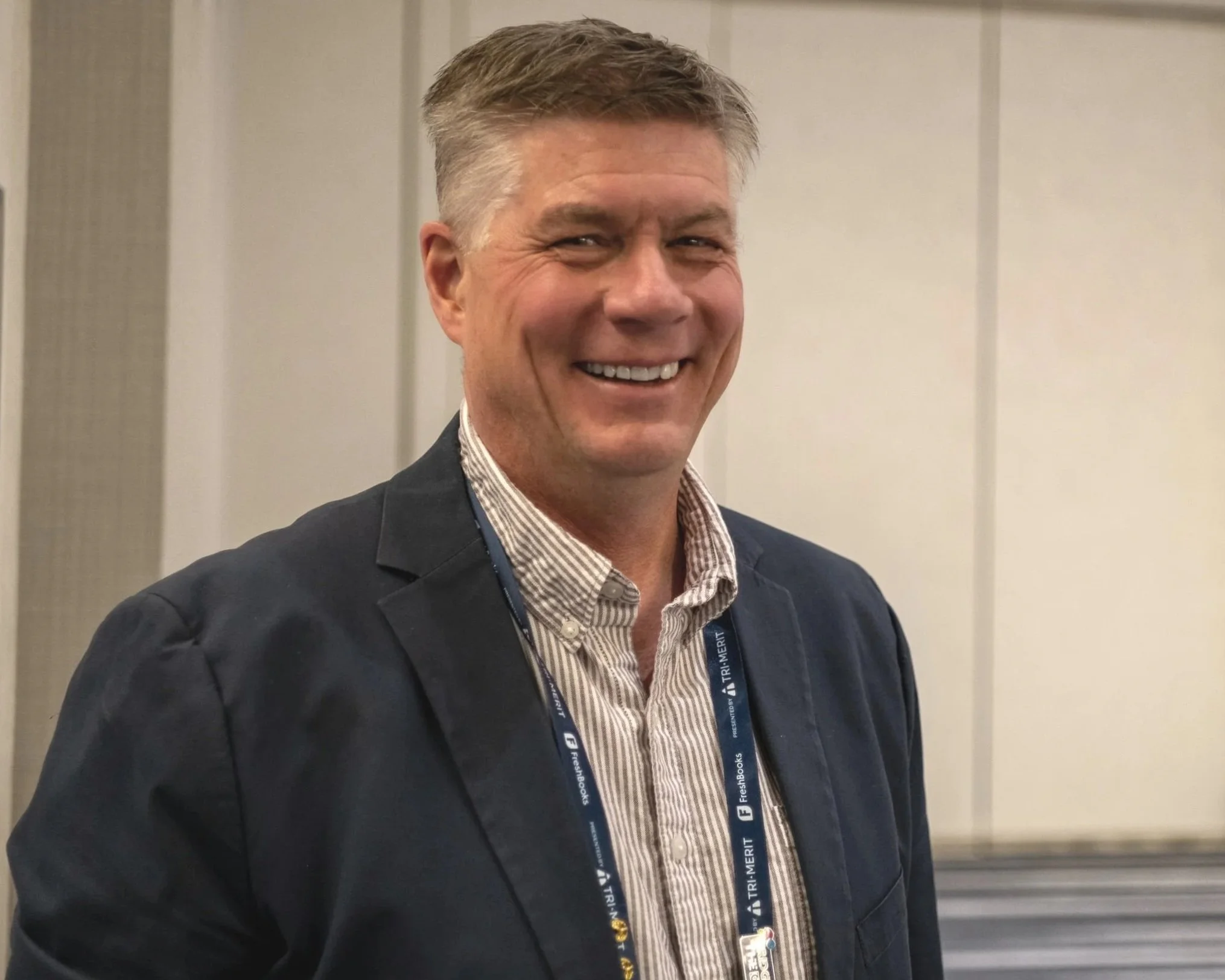
Randy Crabtree, co-founder and partner of Tri-Merit Specialty Tax Professionals, is a widely followed author, lecturer and podcast host for the accounting profession. Since 2019, he has hosted the The Unique CPA podcast, which ranks among the world’s 5% most popular programs (Source: Listen Notes). You can find articles from Randy in Accounting Today’s “Voices” column and the AICPA Tax Advisor, and he is a regular presenter at conferences and virtual training events hosted by CPAmerica, Prime Global, Leading Edge Alliance (LEA), Allinial Global and several state CPA societies. Randy also provides continuing professional education to Top 100 CPA firms across the country.

Terrell Turner is a 3x nationally ranked CPA, 2x Top 20 Global Finance Influencer. He is the founder of the TLTurner Group, which has been recognized in NYC Times Square and the NY Times as a top accounting and CFO firm that specializes in supporting law firms. Outside of running an accounting firm, Terrell hosts multiple vlogs and podcasts in addition to co-hosting The Unique CPA. Terrell is also a speaker and a content creator who regularly hosts and collaborates on video and audio content projects with multi-billion dollar corporations, bar associations, universities, and non-profit organizations.