
The Changing Face of Public Accounting, Then and Now
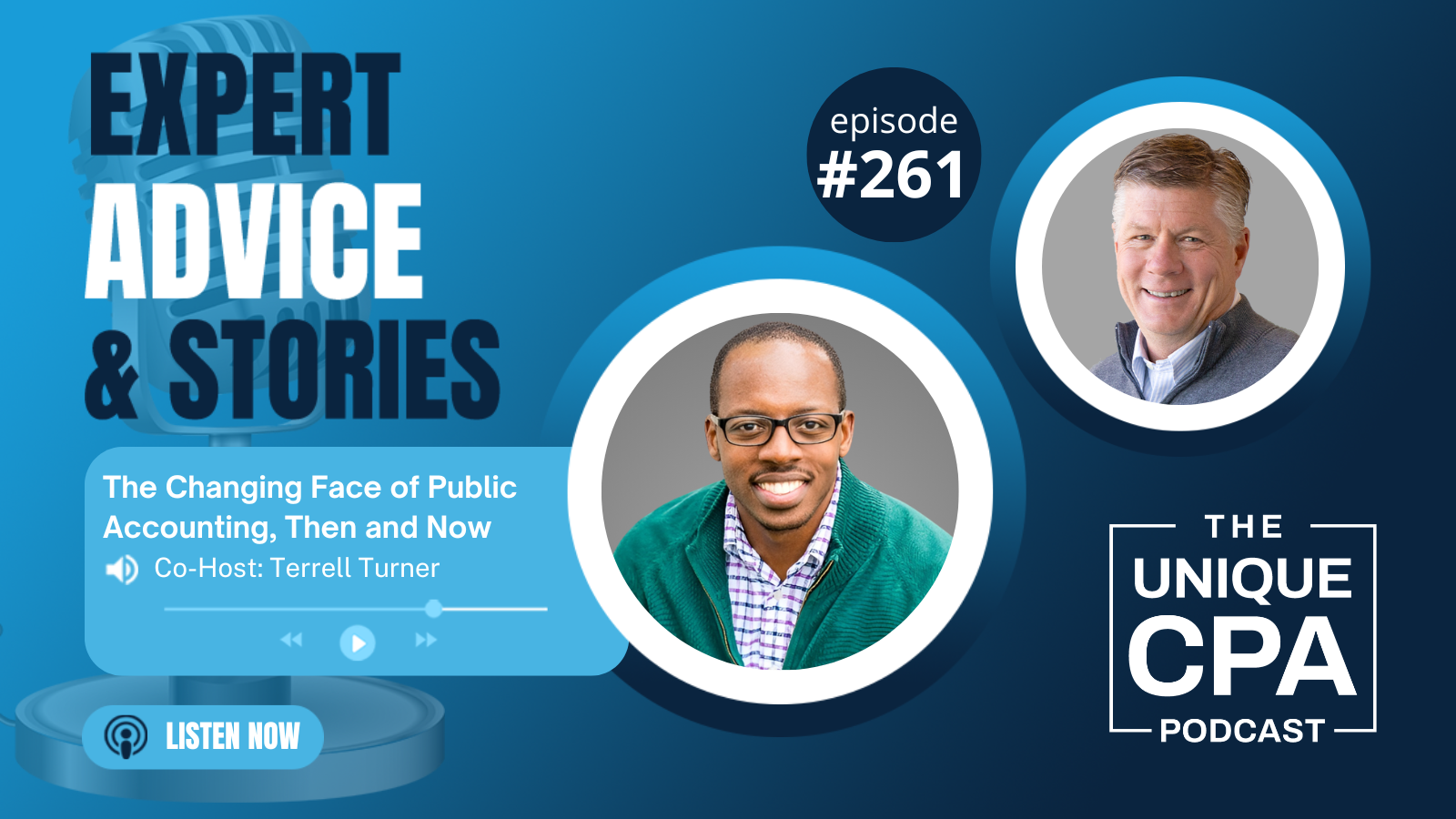
With Terrell Turner
Support for this episode comes from BILL. Get clear insight into payment status and cashflow with BILL's Accountant Console. BILL uses AI to simplify your tech stack so you can increase productivity and spend more time delivering truly personalized client service. Take a demo at BILL.com/uniquecpa and you’ll get a $250 gift card. Terms apply.
Six and a half years in, Randy Crabtree and new co-host Terrell Turner take a rare look backward, revisiting the very first episodes of The Unique CPA to see how well the show’s early conversations about technology, advisory work, and burnout have aged. Turns out, surprisingly well! David Bergstein’s cruise-ship-vs-jet-boat analogy for firm agility still rings true, and Tim Jipping’s casual mention of AI from 2019 lands differently in 2026. The conversation moves naturally from the compliance-to-advisory tension that still defines the industry to something more personal: the importance of knowing the whole person behind the accountant. It’s part retrospective, part honest reckoning with how much, and yet how little, accounting has changed, and a preview of where Randy and Terrell plan to take the show from here.
Show Transcript Hide Transcript
Today my guest is not a guest, it’s Terrell Turner, and Terrell is not a guest anymore. He has been a guest in the past, but as you heard a month or so ago, Terrell is now a co-host of The Unique CPA. We’re going to be doing special episodes now and again, he’ll be hosting occasionally, I’ll be hosting occasionally. And today’s episode, Terrell and I are going to do a little reminiscing: He and I look back at some early episodes of the Unique CPA, which kicked off in, I think it was October of 2019. Did you look at the date on that first episode, Terrell? I did not.
Yeah, I think it was October 19th, I want to say, of 2019. Yeah, I think that was it.
The day after my wife’s birthday. We did that on purpose. We were out celebrating, so we just took time and—no, not at all. A day after her birthday and six days before our anniversary. So they were a week apart. Well, so as I was saying, we looked back at a couple of past episodes. Thought it’d be fun to just look at the beginning, ’cause we’re in a new era of The Unique CPA now. It’s the two of us here doing things going forward. And so we wanted to just look back at the beginning, you know, what were we talking about back then? These first episodes, which was actually episode number one with Tim Dipping and episode number four with David Bergstein, were both titled, or had in the, title “the 21st century,” “Accounting in the 21st century,” based on technology with David, just the changes with Tim. And we thought, let’s look back and see six and a half years ago, what we looked at then, did that really happen? Did we forecast the future? Has it been significantly different? So I guess to start, Terrell, I just want to ask you, you and I both listened to these. I did it at about one and a half times, so I don’t know if you listened at normal speed or fast speed, but what was your impression of the discussions that were going on back six and a half years ago?
You know, my initial impression was, well, my assumption was, this was probably going to be a little more on the technical side when I listened to them, like they’re going to be covering like some of the changes that were happening in technical accounting. But when I started listening, I was like, I didn’t really hear any real technical topics, to where I’m like, it’s amazing how some of the topics that were talked about then are things that we’re still dealing with now trying to figure out. And just to give people a little hint, like some of the stuff around burnout and just how to navigate working in accounting, some of the things about people having hobbies outside of accounting. Now, what I did think was very interesting was I had never met David before, nor have I really heard a lot of content from him. And in it you mentioned, I think you mentioned that he was like 70 years old, but he is like on the forefront of, you know, technology and tech changes. And I’m like, those two things, you usually don’t hear those in the same sentence.
No, no. David’s a pretty interesting guy. And he’s still, I still see him active on LinkedIn. He’s still doing some work. I think he has his own firm that he has always had on the side. But yeah, he always called himself a “boomer and a millennial”—no, backwards. He is a “millennial in a boomer’s body,” and so he always had this mindset of technology’s important, doing things different. And so yeah, he was. And I think I said this in the episode, he was kind of like a mentor to me, and still is. I just was super impressed on the way he’s always sharing his knowledge and I always saw that at conferences. So yeah, Dave’s an interesting guy for sure.
I always say it is very much a big thing to appreciate people who had a perspective at a time prior to, let’s say, the modern era of, accounting. Because I think there’s so much technology that is coming to play and I think I recall you mentioning like in the 70s is when he started practicing. And I was laughing with my wife as we were watching, you know, some movies. ’Cause every now and then we go back to like some movies from the 90s and we were watching like an old Sylvester Stallone, Demolition Man. And the movie is staged as like, it starts off in the 90s, and then they fast forward to what they think the world is going to look like in 2032. And I was just like, it’s amazing to see what they thought technology was going to look like. ’Cause I’m just like, if we compare what they thought technology was going to look like to what it actually looks like now, they were very archaic with what they came up with. And so I mean, for me, it was really cool to hear from David’s perspective, someone who started doing accounting before a lot of this technology came into play, yet he’s still in the field and he is still interested about doing accounting and how excited he is that, hey, all this new technology when used properly makes you so much more efficient and it gives you time for doing things like, you know, playing pickleball as he talked about.
Yeah, that was interesting. There are a couple of interesting things there. One, that just the technology, David was talking about, but Tim was talking about it too, and this is six and a half years ago, so it’s not a lifetime ago, but they were both talking about how technology is so important to create efficiencies for us, and allow us as accountants to do the thing we love, which is the advisory. So advisory, you know, we’ve been talking about advisory for a long time, but it feels like we’ve been leaning in more and more lately. But even six years ago, both of those episodes, both of those individuals talked about the importance of technology to create the efficiencies to allow us to be the advisors that we should be. My question to you is, do you think we’ve leaned into that enough, or do you think we’re still caught in the compliance trap? Do you think we’re just so busy? You know, we’ve been saying advisory for six and a half years now at least, or longer, but I still think I see too many firms where just doing the daily accounting and taxes is where they spend most of their time, just because we are important for that and there’s nothing wrong with it, but we haven’t leaned into the technology enough to get completely away from that compliance aspect of things.
Yeah, I mean, I think it’s an interesting thing because, depending on, like I say, what segment of the accounting industry you talk to, like if you go talk to like many of the people that we hang around at some of the small firm conferences, I mean, they’re all talking advisory, that’s the direction they’re all leaning in. But then when you talk to some of the people at some of the much larger firms, there’s still a lot of heavy compliance work. It leaves you in kind of like this, if you’re looking at it from a business standpoint, you’re just like, okay, a lot of the smaller firms and midsize firms are talking about advisory, but your giant firms are still talking about compliance, to where it’s just like, have we really ingested the technology into the accounting industry enough for us to really be able to say that the technology can do the compliance so we can move to more of the advisory?
I mean, it’s the reality of it, it’s an emotional journey because I’ve done this talk many times about, you know, the history of accounting and when you go back and you look at it, I mean, accounting really got a lot more public branding because we stake our identity on, we are here to bring compliance that would bring a level of assurance or a level of credibility to the numbers. And it’s like our identity as a profession really took significant leaps whenever there was a compliance gap for us to fill. And so I think because there’ve been so many iterations of that over the years, it’s like our identity had been defined by that. So it’s like, to completely let that go and go all advisory, it’s just, well, that’s what consultants do. I think there’s a lot of people in the industry who are still clinging to or holding onto the compliance because I think there is still some value there. So you have some that have made that transition and some that still say like, hey, we can’t completely let this go.
Oh yeah. No, for sure. And it’s an important part of it and it’s the base for a lot of what we do too. I mean, we have to start with the financial statements, we have to start with tax returns when we’re doing advisory, at least that has to be an aspect to it. Well, I was thinking when you were just talking in there, one of the things that David said, and there was an analogy he used which I kind of liked, and I’m going to butcher it probably here, but we were talking about technology and adoption of it, and he said what you were saying: larger firms, you know, maybe harder, because he compared that to I think a Carnival cruise ship. Turning that ship, being that big mega ship, is a fairly hard and long process, just ’cause you’ve got to get buy-in from so many people. But that smaller firm adoption, you know, you’re in a jet boat and you can just turn on a dime. And I don’t think he used that part of the analogy, but it is easier. And that’s funny. He said that six and a half years ago, ’cause that’s a mindset that I’ve had for the last six and a half years. So I don’t know if that’s where it kicked in for me, was that initial conversation, but I thought, wow. Is this where this started for me? That I looked at the smaller firms as the early adopters or more nimble or easier to turn that ship and try that new product? And so it was interesting for me just to hear that David said that because it really, if that’s where it started for me, it had a big impact on my thought process too.
Mmm hmm. And I think that there’s a ton of truth to that and sometimes, I will say, I’ve been guilty of this as well in the past. Sometimes when we think about some of the larger firms, and we forget that it is like a cruise ship turning. And what I will say is like if you try to turn a cruise ship too fast, something is going to break, I mean, you might capsize if you try to do it too fast, to where I do think sometimes we’ve been maybe a little, I guess you would say, not as graceful about the reality of what it looks like for the big players in the accounting industry to make that turn. Because I think in some ways the largest firms, they have been kind of making that change some, but it definitely takes a lot longer. And patience is a virtue that we don’t always exercise, I think sometimes. We’ve seen a lot of the bigger firms moving a little slower than we would like, but I do think that as a whole the industry is shifting more to that, because I think about the time even when I was working in industry that a lot of my conversations were with non-finance professionals. And at that point it was giving me the groundwork on advisory, to where I do think not only in the public accounting space, but also in those people who work in industry, it’s a shift for them too, because it’s like, hey, you’re no longer just internal audit, you’re no longer just, you know, doing the prepping for the 10-K or the 10-Q. It’s like, the non-finance people want your input to make business decisions, and I think it’s just a shift across the board that some of us are moving a little faster than others.
Yeah, for sure. And so anything you want to, I can keep going with the questions, but I’m going to hear what your thoughts are, the things you wanted to talk. ’Cause I think there are a few questions you wanted to ask me about those episodes as well, wasn’t there?
Yeah. So when I went back, starting with episode number 1, the first question is, we’re recording this in April of 2026. How does it feel to have consistently been doing a podcast since 2019? Like, how does that feel for you?
It’s crazy. I never would have expected to continue to do this for this long. I didn’t even think I’d be working this long, but I just love this profession. And I don’t feel like I work, so that’s why. I mean, this doesn’t feel like, I get to sit here and talk with you and hear all the cool insights you get to share. I mean, that’s not work, that’s fun. So yeah, I never would have guessed six and a half years later I’d still be doing a podcast. I never would have guessed I would have even started a podcast. And then at this point, I can’t see not doing a podcast. I know it’ll happen someday, but yeah, it’s kind of surreal. It’s surprising to me that this has been going on for this long.
Now my next thing is, so I wrote this one down so I may have to look and read this one. As I listened the intro that you gave for episode one and the intro you gave for episode four, it was kind of laying out what the purpose of the show was. So the first one was “to be on the forefront of changing the face of public accounting.” The other version of that was “to bring interesting stories from people that are doing cool things in the accounting space.” So over the last six years, how well do you think you’ve stuck to kind of that mission and how has it evolved if it has?
Yeah, so I think it’s still the main thing. You know, you and I both, we get to meet so many interesting people out when we’re at conferences and that, and you hear these stories. And from day one, my philosophy was, I want to just share those stories, ’cause those stories aren’t just stories, they’re leadership lessons, they’re educational, they are here’s something that I’ve tried that worked, or here’s something that I tried that failed, but I’m going to share it with you and you can learn from it. So that was my idea from day one. And I’ve told this story before, but when I first got asked to do the podcast, ’cause it wasn’t my idea, it was our marketing team’s idea, I originally said no. I didn’t say no, I’m like, yeah, I don’t know, let’s think about this. But my thought was, I’m not going to do a podcast. I love specialty tax, I love R&D tax credits and cost seg and all that, but nobody else is going to want to listen to an episode on that. And am I passionate about that? Sure, I’m passionate about that. But I’m passionate about this profession, and I get energized hearing these stories that people just share when you’re talking one-on-one.
And then the next day I went back and said, no, I mean, yes, I will do the podcast, but here’s how I want it to go. And it was selfish probably from a standpoint of, it’s like I want to hear these stories, this is entertaining me. I figure if I’m learning something, you know, why wouldn’t other people want to hear it? So listening back to that opening and listening to how I think I had mentioned to Tim what the goals of the show, or I said to one of them, it was pretty cool to see that that’s pretty much how we’ve stayed.
Get clear insight into payment standards and cashflow with Bill’s Accountant Console. Bill uses AI to simplify your tech stack so you can increase productivity and spend more time delivering truly personalized client service. Take a demo at BILL.com/UniqueCPA and you’ll get a $250 gift card. Terms apply.
Now, mental health awareness wasn’t as big a topic at the beginning, probably. That evolved because that became more of a passion of mine. Different leadership styles, just leadership in general, but there are certain styles I think I concentrate on now. But yeah, overall I think we’ve stayed true to what we were planning on doing from the start. How about you, do you think it’s been consistent?
I think it definitely has been. I think bringing interesting stories from people who are doing cool things, I think that one has definitely stayed pretty consistent. Like I said, from the very beginning as we were just going down the list of looking at a lot of the episodes. I do agree with you about mental health awareness becoming a bigger part of the conversation. It feels like over time the show has really found ways to dial in to specific topics that are more top of mind for people. Like, for example, surprisingly, in 2019 you guys mentioned AI. But a lot of your episodes didn’t go in depth into it. But now AI is a much bigger topic, to where it’s like now you can dial into it more. And I think the show has done a really good job of knowing when to dial in on certain subtopics within that umbrella of, hey, what’s going on in the accounting space?
Yeah, so I was shocked when I heard we said “AI” in the episode in 2019, because I mean, I’ve known the term AI, one of my college roommates back in the early 80s, he was a computer science degree, which I was too, and he wanted to be an AI person. And I’m like, well, I don’t even know what that means. So this was back in the early 80s. So what do you mean AI? Computers are going to take over the world? You know, that was back in the 80s, but I never thought about it really much since then. And in 2019 I probably thought AI was, I don’t even know what I thought AI was. Was it just the AI was taking your credit card statement from Chase to QuickBooks? Did that one, I think, was AI? I honestly don’t know ’cause I didn’t hear about ChatGPT until whatever, 2022, I think is when it probably came out. So I don’t know what we were thinking about when we mentioned AI, but it was pretty interesting to hear that AI was mentioned six and a half years ago on the podcast.
Yeah, because I mean, I’m trying to think back. In 2019, what would have been some of the AI conversations? Because I remember there was the big talk around the “internet of things.” Like when I worked at General Electric at that time, the internet of things was about, you know, all the different types of devices being able to communicate, like we made like the MRI machines and, you know, all of the major equipment in a hospital, like that information being able to communicate and being able to share that with doctors so that we can enhance like the medical research. Because if you can collect the MRI scans across, let’s say 5,000 locations, it can probably help you really improve the medical research. So I remember hearing about some of the internet of things and what you can do with the data, but I don’t really recall people really diving into AI, so me neither. It was really cool to hear that you guys talked about it and it wasn’t like an accident because it was talked about in both episodes.
Yeah, that’s crazy. I do not even remember saying the letters AI together six and a half years ago. So yeah, that really surprised me. But I guess we’ve always been “at the forefront of the changing face of public accounting,” or whatever you said, “at the forefront of the changing face of the accounting profession,” by, I don’t even know what we said back then, I can’t remember the intro. So yeah, that’s cool.
I’m very curious, and now you and I have had some conversations about, you know, some of the leadership topics and also from mental health. And even as we think about the conference name of, you know, just trying to “Bridge the Gap,” where do you see the mission and kind of the, I guess you would say the mission of the podcast going? Because before it was very focused on public accounting and really changing things in the accounting industry. Do you see it staying in that vein or do you see it evolving to something to encompass other things as well?
Yeah, well I think that’s probably a question for you too, but I will answer it first. I don’t know. I think I heard this somewhere or did I think this? When we talked about that initial opening, it was the changing face of the profession and I think that’s still it. But I think over the years we lean more into, or as much into, the professional as the profession, you know, so the people inside of it. And so for me, that part will continue to evolve. We’ll continue to be talking about the person and wellbeing and health, mental health, physical health, having a culture where people feel valued, having leadership that values people, not billable hours, that kind of stuff. So I think the podcast, well, I shouldn’t say always or forever, but I think the podcast will always—there, I just said it—be a part of the accounting profession. But I think the things that you and I talked about in the past and will continue to talk about are not necessarily just accounting topics. You know, when we talk about people that’s elsewhere, we talk about leadership, that’s all over the board. So yeah, I think we’ll always be geared towards accounting, but I think generically, or if you look at it as a whole, the topics are more universal.
Yeah, I would agree. I do think that the series of episodes and the subtopics have done such a good job of really leaning into the professional: The people in the industry allowing the show to really evolve over time, because as professionals, as the people in the profession, we have changed, meaning the role that accountants play, as we were talking earlier, going from compliance to advisory, to where now our role, our impact in an organization, our impact in our clients’ lives, our impact even within our own firms, are not just limited to the technical accounting. It’s just like there are so many different areas that we’re touching, and a couple of things that I think about is over the years as I’ve met so many people who have started in accounting, but they became the CEO of this company, or they became the CTO or the CMO, but they started their path in accounting. And I think, maybe I’m a bit biased in this, but I do think that the accounting profession is one of those unique ones that propels the professional to be successful at so many different areas, to where I’ve known people who are in acting now, and said they started their career off in accounting, and people who are, whether they’re performers, whether they’re comedians, or whether they’re CEOs, or now they started a tech company. I think that the accounting profession has done such a good job of really opening people’s minds and giving them some of those underlying skill sets to then go be successful in some of those other areas. And I would love to see the podcast really start to highlight more of that, of just the transferability of the skills that you get from this profession, and how it does have an impact and the success in so many different other areas.
I like that. And that kind of goes to what you and I, when we recorded last time, talked about, or we thought on air or off air, about getting to the universities and talking to college students about the profession and the opportunities that brings, that ties in with what you were saying there. But to add onto that, I think what we need to do is we need to come up with a TV show centered around accounting, where accountants are the actors, and you and I can star in this show. That’s our next thing we’re going to do. We’ve got to come up with a name for that. I told my wife like three years ago, “I think I want to try acting,” which I would probably be awful at, but now you just gave me motivation. I’ve got to see if I can do this.
You know what I will say is, I think we can pull this off because I’ve talked to my wife about this before and I was like, you know what, I don’t think I would be a great actor, but if you gave me the role where my character was supposed to intentionally be a bad actor, I could do that role.
Damn, you stole that from me then! That would have been perfect for me. Alright, I’ll be your sidekick.
Something else that did really jump out to me. I thought it was very interesting. I think it was in the conversation you had with Tim, where you talked about that leadership program that he had gone through. And I thought it was really cool, of really hearing that because I think it sounds like it was such an impact for Tim of giving him a different perspective about accounting and how accounting plays a role in leadership. I’m curious, have you heard of like other leadership development programs since then?
So yes and no. Not specifically just these, but as part of a lot of CPA associations, I think we’ve talked about this before, and in those associations they all have like the “next gen conference” or something like that, which is tied around leadership where it’s, you know, younger people in the profession get some leadership training. So I’ve seen that. I think there’s probably state societies that have been leaning into that a little bit. But what I did do after I heard that as well is I looked up, and that was the AICPA Leadership Academy—I don’t know if it was called that at the time, but it is now—I think it probably was. That exists and they have a conference coming up, I think December this year. Applications are due, I’m going off memory, I think June 30th this year? I should, we’ll double check my numbers, but it’s a four-day program. I think that’s what Tim said, it was a four-day program. I’m guessing you have to be selected, ’cause he said there were 40 people, a very diverse group, which was cool to hear, that was something that they did. So I think that’s something, I have it up here: “It’s a four-day program to delve into what leadership means, how your personal perspective and abilities influence your career path, and how you can enhance the accounting and finance profession.” It goes on from there. But that, I think something that, I’m rambling here, but when I heard back in the Tim episode, I’m like I’ve got to reach out to my friends at AICPA and find out more about this, ’cause this is something I think we could talk about on the podcast too, let’s have the leader of this come on and talk about this and what it is, and then have, you know, alumni come on and talk about how it impacted their career. So yeah, to answer your question, after about ten minutes of me talking, I’ve heard a little bit of these things out there, but I’m pretty intrigued to learn more about this AICPA Leadership Academy.
Yeah, because I will say when I heard it, I was like, man, that sounds really cool. I will say, I mean, I was fortunate in that the companies that I worked at, they had a leadership development track and, you know, you got that benefit, but I was like, it would be even more impactful to also be able to talk to leaders of other companies so you get different perspectives. ’Cause I mean, if you only talk to the leaders at your company, you’re limited in the amount of exposure and the experiences. Yes, everybody will have a variety, but if you broaden it out with a program like Tim was describing, I’m like, I could only imagine the amount of development that Tim went through in his own journey as he, you know, learned from those others that were in his program.
Plus, I think it was really cool where he talked about, you know, now you have people that you can reach out to when you have questions, because I think about coming up in my accounting career, after moving from different companies, I had people I could reach out to that I used to work with, but it was just limited to, you know, however many companies I worked with. But being able to say, hey, we’re dealing with this at work now, yes, you can’t disclose confidential information, but the nature of what you’re trying to work through, being able to then bounce it off of other people who may have seen it. I think, to me, it reminded me of the value that I get from going to conferences as an owner of an accounting firm now, being able to go to those conferences and bounce ideas off of people. Like we’re in a couple of WhatsApp groups together, to where someone has a question you can fire it off, and I wonder how many people are working maybe in accounting at a company that just haven’t been exposed to something like that?
No, that’s super important. Community is huge. Our profession’s really good at embracing, you know, allowing people into communities, but people have to have access to that and they don’t always do, like you were just saying. A plug here, I’m a board member of the Accounting Cornerstone Foundation and that organization gives scholarships to individuals to attend their very first accounting conference. So people that haven’t been able to go to an accounting conference before, that organization, we go through a vetting process obviously, and we’re in the middle of that right now, I’m about to review scholarship potential recipients, but giving people that opportunity to go to these conferences, like the opportunity you and I have had, has just been life-changing. And we’ve got updates from the people we’ve been doing this, this is the third, it might be the fourth year that we’re handing out scholarships, and we’ve got updates from people, and the impact that’s had on them and their careers and their lives has been huge. So it’s cool to see those leadership type activities out there, and it’s cool that we get to go out and hang out with others that have an impact on our future as well.
Awesome, yeah. I absolutely love that. And the last thing that I’ll say, ’cause I know we could probably go on and on about this, but the last thing that I’ll point out from these episodes, which I thought each guest talked about it in their own way, was really digging into the part of themselves that wasn’t technically related to accounting. Like David talked about pickleball, which I was like, you know, it was pretty interesting that he was spot on with how big pickleball would become.
Oh yeah, he was! That’s a good point.
Like he was talking about, hey, pickleball is going to become a national thing, there are going to be so many people transitioning to it. And now fast forward six years, I’m like, I’ve driven by, I think it was in Dallas, where you drive by and there’s this huge pickleball facility, it’s like this huge court where there’s nothing but pickleball in there, to where I’m like, wow, we would not have bought that six years ago. And then Tim talked about just kind of digging into his creativity and his past and performance and doing podcasting. And I wonder, how often do you see accountants really digging into, you know, what about them or their skillset or their experiences that are not directly tied to accounting, but is something that is important to them? Like how often do you see people really utilizing that and really digging into it and embracing it?
Yeah, I hope it’s become more prevalent. It is. I’ll point to John Garrett and “What’s Your And,” where he talks to people about what their passions are outside of work. I’ve been a big fan of John’s for a long time. I think it’s important, I think it’s something that’s been ignored by leadership in the past, and I’m hoping more people are embracing getting to know the whole person, and realizing that they have passions and skills outside of debits and credits or tax code, because that really is going to have a major impact on the profession going forward, to know that this is an individual and not a unit of billable time that I’m working with, because I think that alone makes a big impact.
Absolutely, I totally agree. And I’ll say it’s been really cool to see that talked about from John Garrett’s podcast and his book, and even as I’ve listened to many of The Unique CPA episodes, you can tell, like when a person starts talking about what is that thing that they really like to do outside of accounting, you can just tell how it just flows so natural. To where it’s like, it is a foreign thing to live a life and never let that stuff come out, to where I agree with you. I hope that more and more people learn to embrace that and leadership learns to encourage that, because I think it does allow people to show up in a very unique way. And it adds a bit more interest to the profession of accounting as well.
Yeah, no, I agree. And just the world in general, if we get to know people on a personal level, it gets a lot more people being able to get along as well. I want to say one thing before we wrap up. Listening to these two episodes, there was a lot of stuff they both said that I’m like, wait, is this why I think this way because of these two guys? Like, or did this topic come out because I was asking him questions? Because things like, we didn’t even talk about this, but after that Leadership Academy, Tim started the Whole Person Project. It was like a conference where it was not technical at all, it was just talking about people in general, and like we were just talking about. Tim mentioned changing the archaic business model of accounting. That’s something I’ve been passionate about forever, like, hey, we don’t have to keep doing the same thing all the time, we can see that there are new ways to do things. They both talked about embracing change, that’s been a passion of mine. They talked about having a life outside of work, that you just mentioned, that’s been a passion of mine. So there were so many things that came out in these two podcasts that I’m glad I got back to listen to them, because it was like, yeah, that’s so cool that those things that we were talking about back then, whether that started my passion for those or not, I think it was always there, but maybe I should just give Tim and David credit that they started that. But there were so many things that have continued with me that we talked about in those, and I was really appreciative to hear that and to listen to those again.
Awesome, yeah, it is always good to go down memory lane. Which I will say I feel like we’ve got to do this again. We’ve got to pick some more episodes to go down memory lane and see, like, what did we learn from those episodes, how much of that panned out to be true, and then also how much of that conversation probably had an impact on where you are now and today?
Yeah! Right! Well, I think that’s good and I think we definitely need to do one of these here and again, for sure. We’re probably at the end now. Anything else before we wrap up that you could think of?
I would just tell people, hey, stay tuned for more great content like this because I think there’s so much more to come.
Yep, I agree. This was fun going down memory lane, listening to these things, but just comparing and contrasting, you know, what was said then and what’s happening now. And a lot of the things were pretty spot on. Nobody predicted the pandemic when we talked, and that was only a couple of months later. So we didn’t know everything at that point, but we knew some things going on. So yeah, I love this. I love that you and I, these conversations we have are just always energizing. So having you be part of this going forward, and I know we announced that a month or so ago, but to actually get on the episode together now, it’s been a lot of fun for me, so thank you for making it fun and being part of this.
Absolutely, my pleasure.
Alright, and thank you all for listening to episode whatever number this is, and the first, or the next, of many more to come. And we appreciate you all listening.
About the Guest
Terrell Turner is a Certified Public Accountant and managing partner of the TLTurner Group, providing consulting and training services to make accounting and finance less complicated for law firms. He is also the founder and host of the Business Talk Library, The Finance & Accounting Show, and The Law Practice Today Podcast. Terrell has been honored by being named as an inaugural 40 Under 40 Black CPA Award recipient from the Illinois CPA Society.
Prior to launching his firm in 2020, he served in several finance and accounting leadership roles with Ernst & Young, Navistar Inc., General Electric, and Passport Inc. in both North and South America. Terrell earned his Bachelor’s in Business Administration from Lander University in 2007, and his Master’s in Accountancy from the University of Notre Dame in 2008. He is certified in accountancy by the Commonwealth of Virginia and the State of North Carolina.
Meet the Host
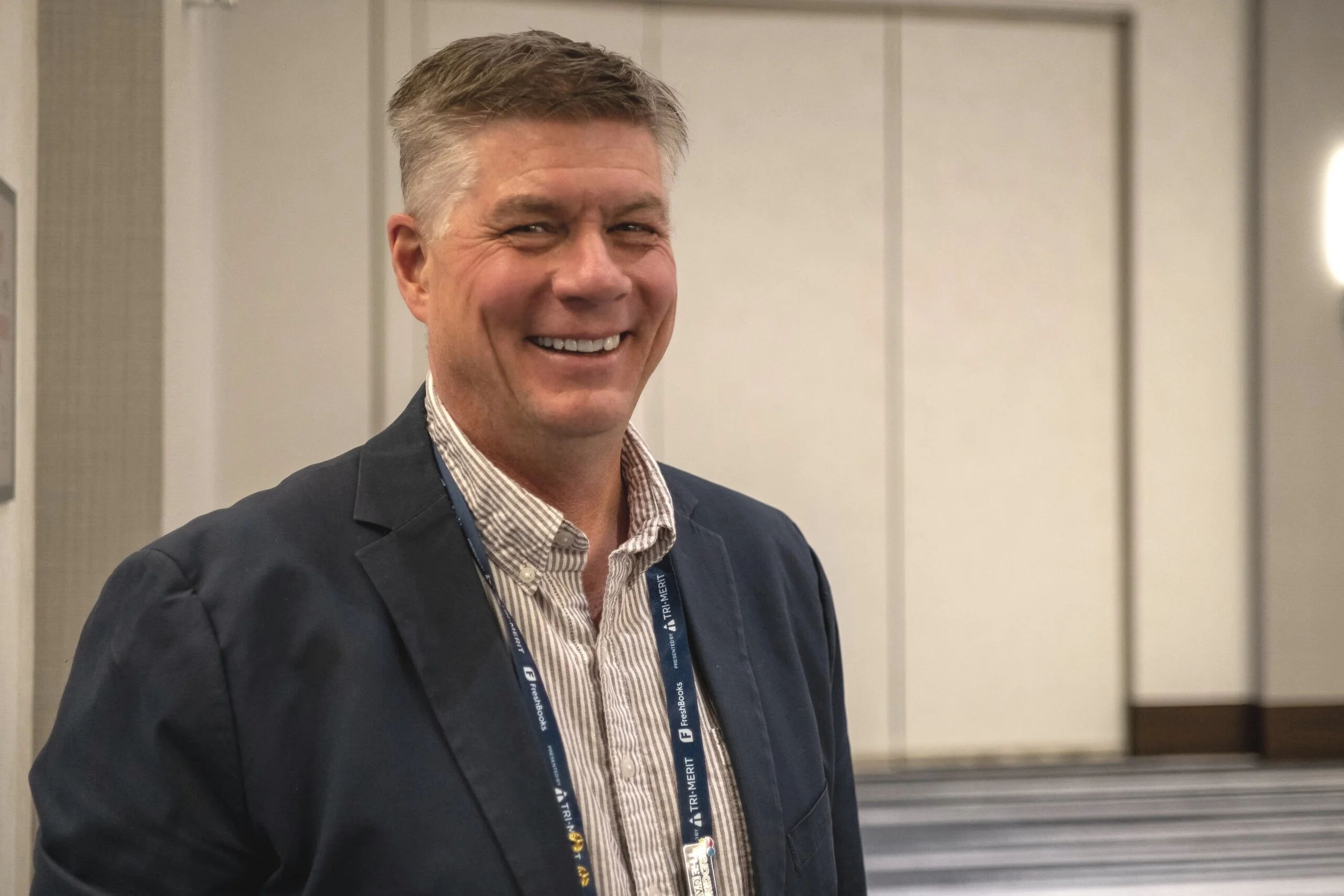
Randy Crabtree, co-founder and partner of Tri-Merit Specialty Tax Professionals, is a widely followed author, lecturer and podcast host for the accounting profession. Since 2019, he has hosted the The Unique CPA podcast, which ranks among the world’s 5% most popular programs (Source: Listen Notes). You can find articles from Randy in Accounting Today’s “Voices” column and the AICPA Tax Advisor, and he is a regular presenter at conferences and virtual training events hosted by CPAmerica, Prime Global, Leading Edge Alliance (LEA), Allinial Global and several state CPA societies. Randy also provides continuing professional education to Top 100 CPA firms across the country.