
From Burnout to Balance
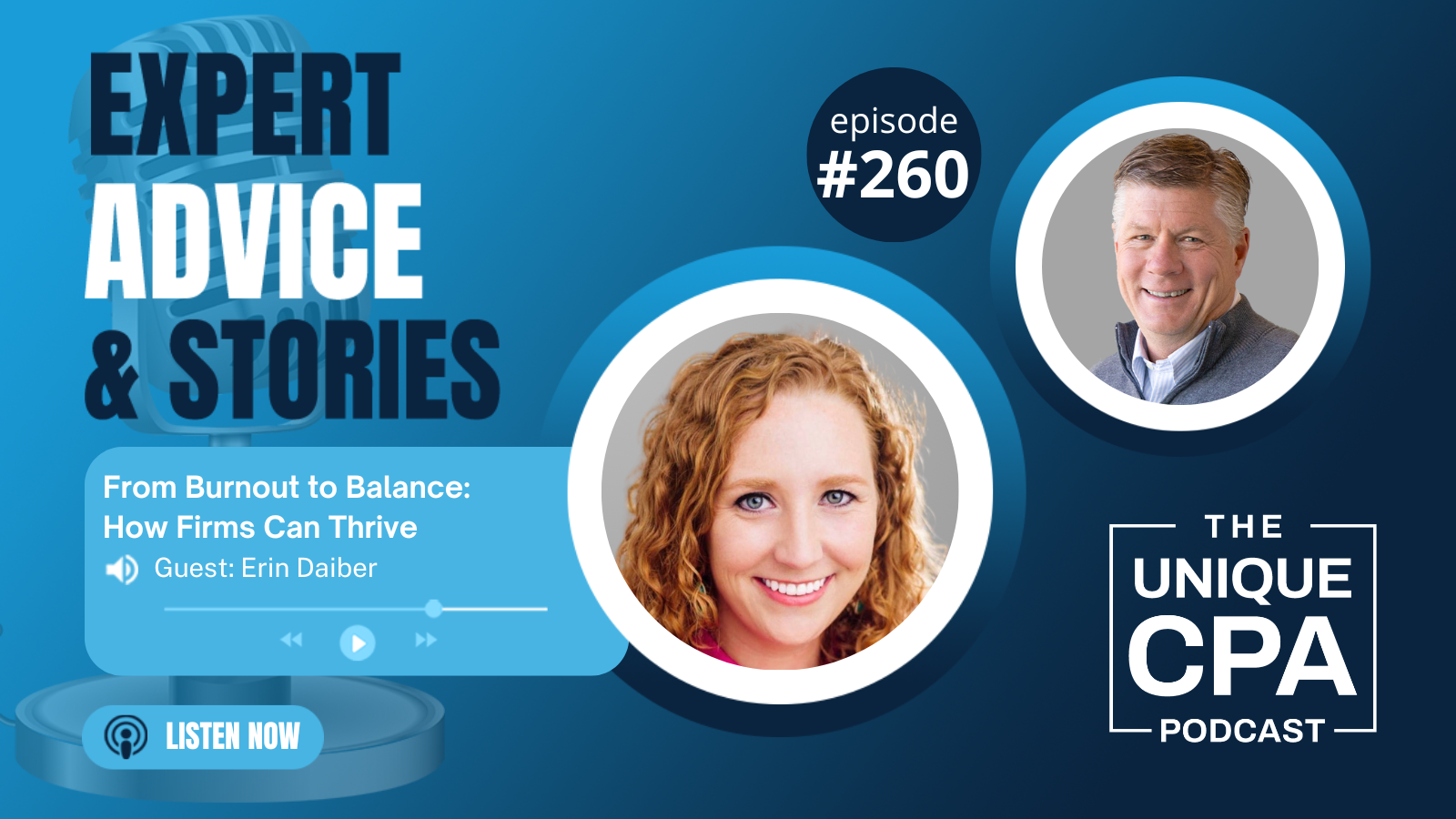
How Firms Can Thrive with Erin Daiber
Support for this episode comes from BILL. Simplify your workflows and accelerate your growth with BILL's accountant console. Take a demo today at BILL.com/uniquecpa for a $250 gift card. Terms apply.
Randy Crabtree sits down with CPA turned leadership coach Erin Daiber on Episode 260 of The Unique CPA. The founder of Well Balanced Accountants, Erin digs into what it actually takes to build a firm that can survive and thrive in a rapidly shifting profession. Bringing a refreshingly grounded perspective on AI adoption, Erin says your focus should be less about chasing every new tool, and more about having a strategy before you start stacking up subscriptions. The conversation moves into the leadership crisis that’s quietly brewing in many firms, mindful of the gap between great technicians and effective leaders, and what happens when nobody’s been developed to take over when senior partners retire. Erin is a fierce advocate for firm independence, and makes a compelling case that most firms turning to PE or M&A could have avoided it with earlier, more intentional investment in their people and processes.
Show Transcript Hide Transcript
Support for this episode comes from BILL. Simplify your workflows and accelerate your growth with BILL’s Accountant Console. Take a demo today at BILL.com/UniqueCPA for a $250 gift card. Terms apply.
Today’s guest is Erin Daiber. Erin is a CPA turned leadership coach, speaker and trainer,: also the founder of Well-Balanced Accountants. Erin works with accounting firms across the country, helping them develop stronger leaders and build healthier, more sustainable firms in addition to other things. We’ll get into that as we discuss things today, but Erin, welcome to The Unique CPA.
Hi, thanks for having me.
Well, thank you. Before we went live, you and I were just discussing when we met. It feels like I’ve known you for a lot longer than it really has been, it’s only 11 months at this point in time, but we met at the Accounting Today’s Firm Growth Forum out in San Diego last year in ’25, correct?
Right!
Yes, it was fun. I love that conference. I think they do a great job. And you also introduced me to the people at CalCPA, which I’ve done some things with, so I appreciate that. Thank you. And you’re active with them too, aren’t you?
Yes, proud member of CalCPA for a very long time, and then I’m active with the board of trustees, an incoming member of the board of directors, active on their management of accounting practice committee. It’s one of those things, you know, you start with one, you have a great time, you just keep adding to the list. But I really love CalCPA as a community for sure.
Yeah, they’ve been great. I’m fortunate to do a few things with them. This past year we hosted a Bridging the Gap Road Show with them out in San Francisco, and that was a lot of fun, and a few other things. So again, thanks for that. So let’s dig into this. Oh, and then we actually met at the Illinois CPA Society’s Summit, I think is what they call it, back in what, August or July of ’25?
That’s right, yes. I was speaking at their conference. And since that’s your local stomping grounds, that was great to run into you there.
Yeah. And I sat in your session, which is, I don’t do that. I have a hard time sitting in sessions sometimes, but I really enjoyed it, so.
Well, I’m honored.
Thank you for making it entertaining. Of course. Alright, so let’s dig into some things today. You know, you’ve got a passion for the profession, obviously you’re a CPA, as I am as well, both of us. Probably not practicing like we used to in the profession, but helping the profession. So I thought we’d discuss a little bit about the future of accounting, because that’s the theme of Bridging the Gap this year. Bridging the Gap ’26 is “the future of accounting is built differently.” And a lot of the things that you do with your coaching and talking with firms, you know, with leadership or processes or the CPA exam or anything in general. I mean, we have to look at things differently. If we don’t, we just stay static. And so when we say—I’m going to do this open-ended question now—when you hear that the future of accounting is built differently, what’s the first thing that comes to mind for you?
The first emotion that comes to mind for me is excitement. I know for some it’s more trepidation or, oh my gosh, what’s that going to look like, but for me it feels like a huge opportunity to really leverage and double down on the things that make accounting great, and look back and say, what are the things that we don’t like about how this profession has evolved? And let’s be very intentional about changing that. I will argue with anybody who says that people like to go to work and do data entry. I really don’t think that’s what gets people out of bed in the morning. And so if technology and AI and anything else that might evolve or emerge can come in and get rid of some of those tedious tasks that really aren’t value add for the client, right? They’re necessary, but they’re not really moving the needle. Then I’m all for that because then I think we get to utilize the specialty of accountants in a different way. They can have more of an impact on clients and have more time for their own life and happiness. And what makes them whole people, not just CPAs.
I agree with that. You know, I didn’t spend however many years getting my degree, although my path was different than most people’s, getting my degree to get excited about going and hitting keystrokes nonstop. I think we’re getting over this, but people talk about AI is going to take our jobs. No, AI is going to allow us to do our jobs, ’cause our job isn’t data entry. Our job is advising the clients, our job is to help them get from point A to point B, whatever that is, from growth in their firms or sending their kids to college or figuring out how they’re going to retire, whatever it is. And so yeah, I’m excited about what the future holds as well. But there are certain aspects of, let’s dig into AI right now, because there are certain aspects of AI, it was interesting, and I didn’t read the whole article, but Alan Whitman wrote an article on LinkedIn yesterday about almost like AI fatigue, or I’ve heard stories recently about people becoming more burnt out because of AI because they’re having to figure out AI at the same time they’re doing everything else. And so we are in a learning time with AI, but I think we are getting a little overwhelmed with AI. How do you work with people to make sure that there’s not this AI burnout, or how do you help them figure out what they need to do or implement or be more efficient or create the processes that are going to make them healthier and happier?
Oh gosh. First of all, I think if you’re experiencing that right now, that’s completely normal. I think a few things are causing that AI fatigue, which is, at least to me, it feels like that is a train that is moving very fast. And so if you’ve now had this several-month distraction of busy season, or like you said, we’re also trying to do our day jobs, and now have to try to invest all of this extra time learning about AI, it can just feel completely overwhelming and impossible. I enrolled in a six-month AI cohort that met for four hours on Saturday and Sunday mornings. Even that was completely overwhelming to keep up with. Luckily it was recorded, so I could hit pause and step away and come back and catch up and take a day off if I needed to, but I realize that’s not something everybody wants to do. I think there’s also something causing the fatigue where there’s a lot of people out here talking about AI, the possibility of it, but we’re lacking practical guidance, and really when we’re busy, we just want somebody to tell us, “Here are the steps you have got to take. If you’re wanting to dive all the way in, here are the steps you can take. If you’re wanting to dabble, here are the steps that you should take.” And I haven’t heard that a lot from people who are speaking to accountants about AI.
So one of the things that we do, first of all, is when a firm is thinking about diving into AI, even at a small level, it’s important to start with a conversation about where you want it to go, having a strategy behind what you’re doing with it, as opposed to just throwing some tools into your tech stack and hoping for the best. What you’ll end up with then is this mishmash of a lot of different tools that aren’t ultimately driving any kind of strategy, and that more importantly are likely not getting you ROI. I know we want to be cutting edge and we want to jump in, but it’s important, I think, to still take a day, take that step back, and really start to think about what are the problems we’re trying to solve with AI? What are the strategic pillars that we’re working towards? Whether that’s firm growth or value, or you know, just even preventing burnout or freeing up capacity for our team, but having some intention behind what we’re trying to drive forward. And then being intentional about selecting those tools.
So even having that initial conversation, I’ve found, is incredibly valuable for the firm and for the leaders, because oftentimes it opens up bigger conversations about things that have to happen, which again, can be a little bit overwhelming, but I’ll give you an example: If we’re going to bring AI tools in to cut down the time of, well, let’s say tax prep, or it could be bookkeeping prep, but we’re still billing by the hour, now we have this huge opportunity for increased efficiency, but if you don’t change your billing practice, your revenue’s going to go down. So how do we address that? And we can’t do one without the other—responsibly, at least. So it’s important to start with that strategy. And then the other thing that I find is missing in firms is real practical training for people about how to use AI. Certainly it’s important to address how to use it responsibly and ethically to make sure that you’re mitigating risk around data breaches and confident PII. But there’s also a component, I see this a lot, where people aren’t really clear about how to interact with these tools, how to prompt them effectively, how to set them up, how to address other systems issues that make AI inefficient. That’s again where you see maybe the burnout: I’m actually getting less done because now I’m trying to mess around with my AI, or I spend so much time chatting with Claude or whoever it is that I’m not getting the work done. So we have helped firms do that also, provide some really practical training about how to use those tools more effectively.
Nice. I think that’s important. I’ve gone through that, and I am currently going through that. I mean, I have ChatGPT, I’ve used ChatGPT for quite a while, and ChatGPT knows me really well, and I use that a lot just to help even just come up with ideas for the podcast. You know, simple things like that. Everybody’s raving about Claude right now, so I had Claude a year and a half ago, got rid of it, and now I’ve got it again. I’m like, okay, why do I have Claude now? What am I going to do with Claude? How do I learn Claude? What am I supposed to do there? I’ve got Beautiful AI to help put presentations together and have no idea how to use it, so it’s just sitting there right now, and I should figure that out. I recently got Canva because I thought, okay, everybody says Canva is so great, and so I put together a marketing piece for my speaking with Canva on Friday. I’m like, I just thought I could give it all my stuff and it’s going to put something together, and I had to do everything. I’m like, okay, I’m doing this wrong. So there is this learning curve, and being intentional about it, which right now I am haphazard about, I think having that intentionality is important. So I’m going to need your help to get myself in line with the tools I need and how to get these going. But yeah, I could see that just from my little experience. And just this morning I decided I’ve got to get a subscription to Otter, because I needed to get a transcript from one of my old podcasts and I couldn’t figure out how to do it without getting it, and so Otter did it for me and I’m like, okay, am I going to use Otter again or not? Why do I have it? So yeah, there are just so many decisions out there, so many options, and just having more of a clear-cut plan is important.
Yeah, and I think one of the things I would also suggest that firms could implement pretty easily is, if you are going to take a training on AI, even if it’s a 45-minute webinar put on by a provider, they’re usually sponsored webinars, you can get them for free, you’ve probably got 12 of them in your inbox right now. Take the class, but block time afterwards to brainstorm about how you’re going to implement or apply what you’ve just learned. Because it’s great to take a course about designing or training an agent of your own, but if you don’t take that step back and think, “how can I leverage this to really streamline or make things easier on me day to day or on my team,” it’s not going to make a difference. But even your conversation about ChatGPT or Claude or Copilot, those are early conversations that really depend on what you’re trying to do. I use different language models for different tasks because I find that some are much better than others depending on what the output is that I’m looking for. So absolutely, those are all conversations that I think are really important.
An example I used with a client recently: they build these presentations to give to certain levels of their membership, but then they want to cut those presentations down to distribute to other groups. So think about a presentation you might do to an audit committee or a board of one of your clients, but then you would want to disseminate slightly different information, just tweaked a little bit, or maybe cut down to go to the next level of the C-suite for your clients. You can train agents to do that, train it on the output that you want, what you’re going to give it, and it will spit out these three different levels of communications that then you can just send off without having to recreate the wheel every time. But again, I didn’t know that, that’s not something instinctively that I knew, oh, this is absolutely what I’m going to use AI for. Somebody else told me that they were using it in a function like that, and I just sort of kept it in my back pocket and then an opportunity presented itself. So it is a learning process and a journey. So have some compassion for yourself as well.
Yeah, no, that’s definitely needed. But in the long run and in the short term, I mean, it has already saved me so much time on different tasks. So it’s already doing it, it’s just the “what do I need to do, what do I need to learn” thing. Alright, so let’s pivot now, because let’s get into more topics of the future of accounting is built differently, and one of your key things you deal with is leadership. And so when you hear the future of accounting is built differently, what, from a leadership standpoint, do you see that statement impacting? And let me set the stage: I think leadership is something that, well, this is, I’m going to give my opinion now, you can tell me if I’m right or wrong, but I think leadership is something that we don’t spend enough time training people on. I think it’s something that is just like, okay, well they’re a good accountant, now we’re going to move them up and they’re going to be a leader, rather than, okay, let’s equip them to be a good leader. So when we talk about the future of accounting is built differently, how do you see that with a leadership aspect of things?
I couldn’t agree more with your statement about not providing enough training. Firms have been talking for years about the need for more soft skill development and really developing leaders or having strong leaders at the top, but not all have put their money where their mouth is, so to speak, and truly invested in building that pipeline and building those effective leaders. But when I think about the future, we’ll have this technological impact that will change the work that we’re doing on a regular basis, which means accountants are going to be much more client-facing, they’re going to be strategic advisors, they’re going to be translating what comes out of the technology so that another human can understand it and use that to make decisions in their business. So we’re going to have to be great at those kinds of skills: communicating and strategic thinking and being more visionary and problem solvers, not just focused on the compliance piece, and that’s going to take strong leaders at the top doing the same.
I think the other component we need to consider right now, and firms are experiencing this every single day, is that these younger generations do not and will not work in the same way that the people who are leading firms today worked to get to where they are. That old mindset of kind of burnout, rebuild, burnout again, rebuild is just not appealing to—frankly, to anyone, let’s be honest. It was not appealing to us when we were in it. We were just told it was what we had to do, or this is what it is. They’re not accepting that anymore. So from a leadership perspective today, what we need are leaders who are willing to take that step back and say, alright, we’re not going to change them. We’re not going to be able to bring new accountants out of school, or even the emerging leaders we have in our firms today, we’re not going to be able to bring them over to our old mindset and our approach to working, so how can we bridge that gap between these generations? How do we connect those two conversations, those two mindsets, those two sets of beliefs and work together, collaborate, connect, as opposed to saying, ugh, they don’t work the way we do and there’s something wrong with them. Because that’s just not going to happen. And I think they have an uncanny ability to work smarter, not harder. Look, everybody is in their growth process, right? So sometimes we need to understand why we did things the way we did things before, to then think about it in a smarter way going forward. So I understand that sometimes maybe when we’re young, we jump the gun and think we know everything. So I’m not making excuses for people. I understand that there are some challenges, but that’s really where I believe the future is going. We need to have those leaders in place who are willing to seek to understand and remain curious about what those individuals in our firms need in order to thrive, and lead with that curiosity first, instead of leading with the judgment about the way it should be.
Yep, every generation’s different. Every generation has the “this is how we’ve done it, so we’re going to keep doing it this way.” Change is scary and I understand that. And that generation is, they want to do this, “No, we’ve done this for 80 years and it’s worked so we’re going to keep doing it this way,” rather than having an open mind. So yeah, I think one of the key things with leadership is just that open mind, being willing to change. Things are inevitably going to change, we can’t stop it. Even though in accounting consistency is a key thing, we have to stop thinking about that with a leadership aspect, because there have to be different ways to do things, because it won’t last if we keep doing the same thing we’ve done for the last hundred years.
No. You know, one of the things that keeps coming up inside of firms, especially when we’re dealing with multigenerations in the workforce, is that it requires such a level of emotional intelligence to connect the senior partners who, like you said, have a lot of evidence that supports that this way works, this way works in the tune of however many hundreds of millions of dollars we’ve made over the last stretch of time. And so I respect that. And we still have this need, we need a pipeline, we need people to do the work. So if what we’re doing is not attractive to that next generation, that’s a problem also. You won’t sustain it. People are going to want to retire. So really leaning into those soft skills, and especially emotional intelligence, to be able to relate to different groups of people, understand where people are coming from, get to know what is important to them, and then figure out how do we work with that, is going to be critical for firms that want to thrive going forward. And unfortunately, a lot of times that’s being neglected until one of those senior partners wants to retire, and then we have that “oh ****” moment where it’s like, well, we don’t have anybody ready to step in, and now we’re scrambling. And these are skills that take time. Ideally, we start to develop them very early on, even as brand new staff, part of their onboarding could be layering in leadership or soft skills, success skills, whatever you want to call them, so that they can be developed and honed in over time.
Yep. Okay, so I think that’s a good segue you just brought us to, actually, is that talking about change, talking about the future, talking about the retirement of potential partners. Because one of the things that we’re seeing right now, we’ve seen it forever, but it’s changed the way it’s doing, it’s just M&A and PE and everything going on, and so a lot of times firms don’t have this ability to stay independent, to have that partner retire without some kind of transaction outside of the current firm. I know one of the things you talk about is helping firms stay independent if that’s what they want. And so what is that conversation you’re having on independence within the firm?
Well, I just am a fierce advocate for those firms that want to stay independent. I think there’s a huge need for the small to mid-market firm to continue to exist. I know as a client of an accounting firm, I don’t want to work with a large firm where I’m just a name, right? Or maybe a number. Where I don’t have that communication. I value that as a client, and so I know that’s important to other clients as well, even those running much larger businesses than mine. So I think that’s important. It’s also really important for the employees. I’ve spoken to a number of, my LinkedIn inbox, when a firm gets acquired, you should see it, about these people saying, “I just signed up to start working for a small firm and now it’s a mega firm. What the heck? What do I do? How do I get out of this?” So I think for everybody it’s a challenge, and I really want to protect and help protect that mid-market and small firm to continue to exist going forward.
So what does that look like? I look at what are the forcing functions that have firms needing M&A or needing PE, and that is that, yes, they don’t have a retirement plan, right? We don’t have a strong pipeline. We aren’t operating effectively, so we now need the money for growth, or we need the money for technological investments. So that just tells me we’ve got some inefficiencies or operational issues that we could be dealing with. Or, you know, we can’t get aligned for whatever reason, we’re just not moving forward, and so this is better for us. So when we work with firms, we have an assessment that we put firms through that is a proprietary process that we’ve developed where we look in three key categories. One is leadership alignment, so really looking at the partner group: are we able to make decisions effectively? Are we having proactive conversations? Can we have healthy conflict? Because if any of those issues exist, those are just a couple of the factors, but if those issues exist and your team is not operating like a well-oiled machine, you are slowing yourself down. And we can’t really be slowed down in these times when things are moving so quickly. We need to be able to make quick, smart decisions and have that team alignment.
Then of course the leadership pipeline: we have to make sure that we’ve got the systems in place to keep your team developing and moving forward and retained, but most importantly developing at a pace that has them ready when you have those retirements, where you have ideally a whole pool of people to choose from that would all be great candidates to take over for somebody who’s getting ready to leave. And then as I mentioned, the operational effectiveness, that’s usually layered across all of it, which is what are the processes or the systems that are just inefficient and not supporting you? So I actually don’t agree that firms need PE Some of them find themselves in a position where they have fewer options, but if we had the conversation three years ago, they would not be in that position today. So it really is a shift to constant improvement and reflection and saying, what are the things that aren’t working for us and how can we be creative in how we solve them? So a lot of times when we’re working with firms to build that capacity, we’re doing it through the lens of, let’s try to not hire, not because I’m not an advocate for hiring more people, that’s not the point. But most firms are having trouble hiring. We have a smaller pool of people, so we can’t only leverage hiring, and I also find that firms often lean on, well, we’ll just bring in more people. But what that does is it allows us to not have to think more outside the box, so we actually frame it as, if you can’t hire anybody else, how would you work to build capacity in your firm? Well, we’d have to change some of these processes, we would have to have our leadership team working more effectively together. A lot of the recent PE deals that I’ve seen were because the leaders could not get themselves aligned with one another on a strategy or a direction, and here we are.
Yeah. Well, that’s one reason that maybe the structure of firms needs to change too. You know, the partnership model may not be the best model; I’ve heard that often. I don’t disagree with it. I think having more of a CEO-led organization probably makes sense because it does get tough: one person doesn’t want to make this change because change is scary, and I don’t want to change ’cause I’m retiring in five years, so why am I going to have to deal with this for the next five years? Then that just bogs down the whole organization. So I don’t know if you have an opinion on that leadership structure within firms.
I’m an advocate for change, so if that new structure works for people, I guess the flip side of that would be, that’s also a symptom of not developing leaders throughout their career. Like that, we’ve just promoted people, and this isn’t true for everybody, but in many cases we’ve promoted people who are great technicians, but we aren’t necessarily screening for the skills to be able to maybe set aside my own personal self-interest for the betterment of the firm. And am I one of those people who can step back and say, where are we headed? Not what do we need right now, but what are we going to need in five years? Because that’s really who you need in the room driving that conversation forward. If we don’t have that, again, that may be part of the screening process, and what are those skills that we’re working on developing in people over time, to say this is a competency required to sit at the table with us and to lead this firm into the future.
Yeah. And that’s so important. It goes back to that, hey, we can’t just focus all our concentration on the data entry and the compliance work and getting the work out and getting new clients. We have to concentrate a lot on the organization itself too, and the change and what’s going to be happening in the future, and have these game plans. If anything else, I think that’s a key aspect that I hear from you, the passion comes out, you love this profession, I can tell that, and all the advice that you’ve given here today has been, I think, something everybody needs to listen to, because this is an amazing profession and it can be amazing-er, if that’s a word, if we just listen to those types of things. Before I start to wrap up, anything else that I missed that you wanted to touch on today?
No, this has been a great conversation. I could talk about it for hours. This always goes by so fast, a 30-minute conversation about these things.
I agree. We could do this again, I’m sure. Alright, so then before I wrap up, I’m hoping to see you out in the real world sometime later this year. We will hopefully connect in passing. We were fortunate that we did a few times last year. But when you’re not thinking about the accounting profession and everything to help firms be the most efficient and more profitable and the happiest and everything, what do you do for fun? What do you do? What are your outside-of-work passions? What do you enjoy?
I am a golfer. I played golf in college. I set it down for a little while when I was working in public accounting, but I love to play in a charity outing, I love to get out and play for fun with friends. So you might find me on the golf course. You might also find me wine tasting. During the pandemic I got my Level 1 sommelier certification. Oh, wow. And that side passion of mine, mostly for the practice, but I find it so interesting that there is a formula and a system, but so many of the components of wine making are out of your control. And I like the idea that something is there and then it’s gone. When that vintage of wine is gone, that’s it. So you’re enjoying something perhaps for the only time. And the other thing that really connected me to that was that a winemaker or somebody in a tasting room somewhere said, part of the beauty of wine is who you share it with, and that is part of the memory making of it. Like, you might remember this great wine that you drank, but it’s also impacted by who was sitting around the table with you. And so that resonated with me as well.
Yep. That time and place, I think, is often, and I’ve had a lot of wine. We usually spend a couple of months in wine country in California during the winter. We didn’t this year just because our first grandchild was born at the end of December, so we weren’t going to leave town for that. But yeah, I always enjoy it and it’s amazing. The experiences you have around wine, or for me beer too, I’m a big beer advocate, and just like one of my favorite beer experiences ever was having a Pilsner Urquell in the Czech Republic, and it tasted different. I’m sure it didn’t, but because you were with who you were with, and it was family, and where you were, the location just has a big impact on those memories. So I completely buy into what you’re saying there. And then last question: if people want to hear more about you and the company, where would they look?
Yes, you can visit our website, it’s WellBalancedAccountants.com. You can also probably Google me, Erin Daiber, and we do host about monthly executive forums for leaders. So if you want to engage in more of these conversations about hot topics and emerging trends and things that are happening, and collaborate with your peers, we would welcome you to join us, and you can find more information about that on our website as well.
Great, Erin. Thank you. I appreciate you being on The Unique CPA.
I loved it. Thank you so much.
About the Guest
Erin Daiber is a CPA-turned-leadership coach, speaker, and trainer, and the founder of Well-Balanced Accountants. A self-described "recovering accountant," Erin brings firsthand experience from public accounting to help firms across the country build stronger leaders, healthier cultures, and more sustainable businesses. She works with accounting firm leaders and their learning & development professionals on succession planning, leadership pipelines, talent retention, and navigating change — including the evolving role of AI in the profession. Her approach is data-driven and customized to each firm's unique needs.
Meet the Host
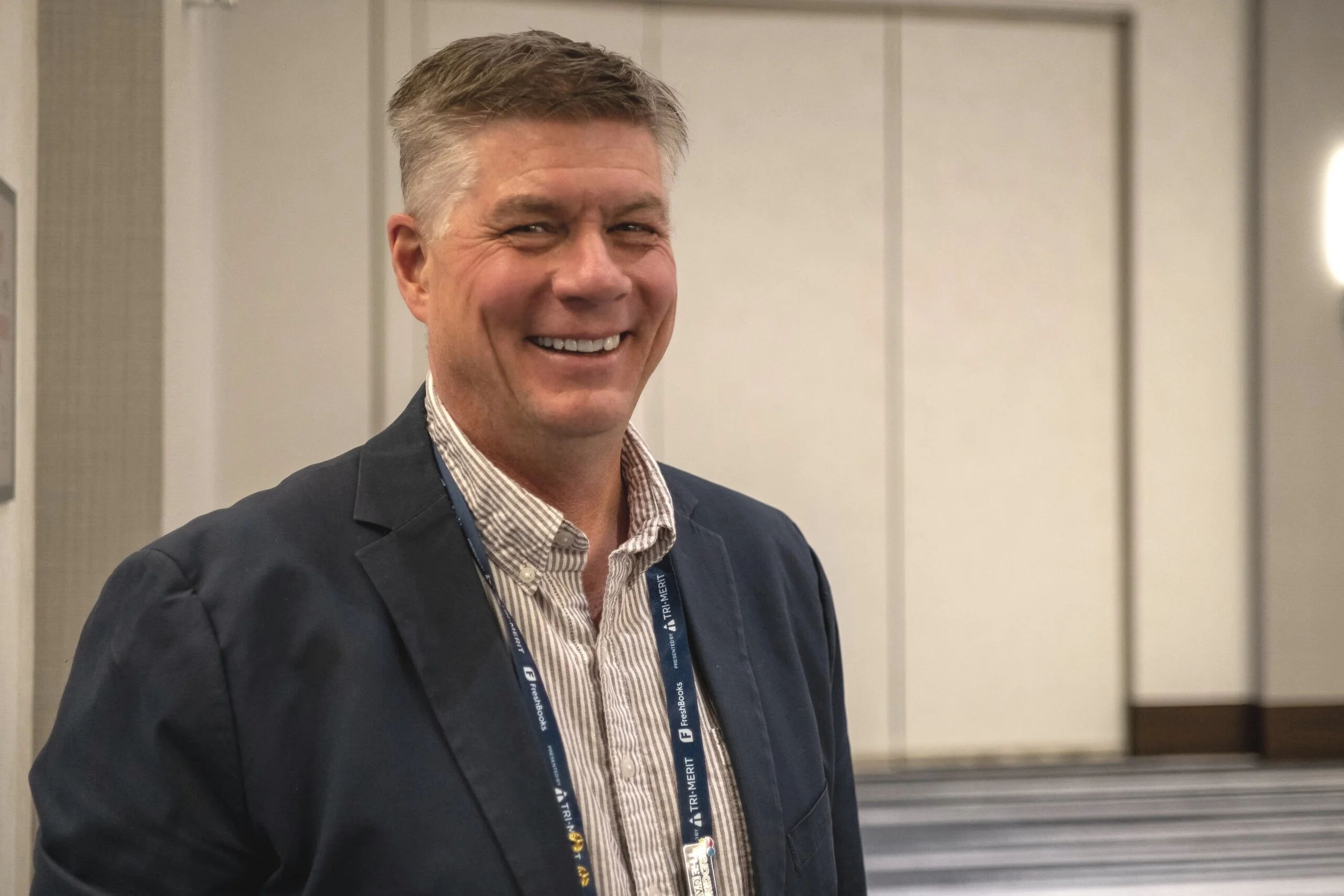
Randy Crabtree, co-founder and partner of Tri-Merit Specialty Tax Professionals, is a widely followed author, lecturer and podcast host for the accounting profession. Since 2019, he has hosted the The Unique CPA podcast, which ranks among the world’s 5% most popular programs (Source: Listen Notes). You can find articles from Randy in Accounting Today’s “Voices” column and the AICPA Tax Advisor, and he is a regular presenter at conferences and virtual training events hosted by CPAmerica, Prime Global, Leading Edge Alliance (LEA), Allinial Global and several state CPA societies. Randy also provides continuing professional education to Top 100 CPA firms across the country.