
Narrative Archeology
Excavate Your Firm's Story with Elliott Bastien Morin
Randy didn’t expect to ever sit through an entire conference session, but Elliott Bastien Morin’s "narrative archeology" workshop changed that pattern. What started as curiosity about excavating stories became a months-long collaboration that transformed Randy’s keynote from five scattered narratives into a single arc that earned a standing ovation, and plenty of Kleenex. On Episode 254 of The Unique CPA, Elliott, the co-founder of 3Motion, explains how he’s spent 15 years interviewing thousands of people to uncover authentic stories, and that he treats storytelling like an archeological dig: finding fragments, piecing them together, and polishing them until they captivate. For accountants who’ve always worked for their clients instead of on their selves and their stories, this framework offers something urgent, and as AI handles more compliance work, the human connection becomes the differentiating factor. The profession is moving from reporting to interpretation, and that shift demands something accountants haven’t always prioritized: a cohesive story that unites teams and resonates with clients in an oversaturated world.
Show Transcript Hide Transcript
Today’s guest is Elliott Bastien Morin. Elliott is co-founder and creative director of 3Motion, which we’ll dig into a little bit later, but I want to give a little background of how I met Elliott in my introduction here. Elliott and I first met, it was probably October of ’24, Intuit Connect. I was in the hall deciding if I’ll go into any sessions, which I normally don’t, and somebody in the hall said, oh, are you going to Elliott’s session? I’m like, I don’t know who Elliott is. What are you talking about? And then he said, oh, he’s the “narrative archeologist,” and he is doing a session on narrative archeology. I’m like, wow, that’s pretty intriguing. I’ve got to go check this out. So being who I am, I wanted to introduce myself to Elliott beforehand and said, hey, I’m going to sit in your session for a little bit, but don’t be surprised if I leave. And that doesn’t mean anything. It just means I don’t stay in these very long. And I was extremely entranced in what was going on in that session, and very impressed. And, at the end of that session, I think I had walked out because I did have to, I think I was speaking in the next session, so I wanted to be ready. But I caught Elliott in the hall. I said, any chance you can come in, listen to my session because I could really use your advice because of what I heard in that last session. So we can dig in a little more about who Elliott is and what 3Motion is, Bbut do you think I got that story? Oh, and first Elliott, welcome to The Unique CPA.
Thanks. I think you nailed the story. I think that’s one of my favorite moments is getting and capturing Randy for more than 40 minutes. I think that was an accomplishment.
Yeah. I go to conferences nonstop. I don’t go to sessions very often. I shouldn’t admit this, because I host a conference, but it’s just the way it is. Too many conferences. So before we get into anything, well, no, let’s get into a few things: I want to ask before we even get into what you and I just talked about we’d get into, I wanted to come into that session because I love storytelling and you were all about storytelling and I’m like, hey, I’ve never trained, I’ve never had anybody critique me. I actually think I’m not great. I always thought of taking criticism or constructive criticism, but I asked you to. So let’s dig back to two years ago, the year and a half ago. What did you see in that session? And be honest, was there, did I need some work?
Let’s go back even a few thousand years, back to Aristotle, who said a story must have a beginning, a middle, and an end. Well, Randy, I think what I saw is that you had five beginnings, five middles, and five ends. Incredible stories altogether, but what we needed to work on was simply the structure and how they come together and have a cohesive message. And so I loved seeing your passion, I loved seeing how you presented, you had the audience captivated. But what I really wanted to do is work on just that structure, that underlying narrative arc, that through line between everything that you had in your head and what you were trying to communicate to your audience. And so that’s where I said, oof, this is a partnership in the making here.
Well, and it’s been a great partnership and we can dig into that a little bit further as we go, but let’s go into the narrative archeologist, the session that I was in, the narrative archeology. Give us the background, backstory, what this is, what you’re trying to accomplish with this session.
Well, we founded 3Motion, which is our creative agency, 15 years ago, and that was really based on a few core components of testimonial based content, mini documentary based content and educational content. And so it was always really about real people talking about real products and the real impact they have. And over the course of the years, we were doing thousands of interviews. We created our own methodology in order to excavate these stories, these true, meaningful and impactful stories from real people. We used that methodology internally for quite some time until we realized, oh my gosh, there actually is a huge potential for us to help folks in more of a workshop setting do this work themselves, and find their own stories in an era where it’s more important than ever to have a cohesive story arc and story for your firm, for your practice, for your personal lives. And so we decided to build this workshop that we now have done quite a few times successfully over the last four years at different conferences.
One of the favorite, I would say, professions or industries that we work with is accountants, because all too often accountants are working for their clients, never really working on themselves and their own stories. But they want to help people, and they all have incredible stories of how they started their practice, how they’ve helped their clients, and so we’re now able to do this at scale where in a room like we did at Connect, there’s 300 people, there’s 300 firms represented in this room. We’re able to tell in a matter of a few hours, 300 unique stories. And so that’s really where this started. It’s a passion of mine and we can talk more about what it is, but that’s really the backstory of how narrative archeology came about. Now you can hear a narrative archeology, well, there’s no archeology involved. Well, what we’re doing is we’re excavating the pieces, the artifacts of a story that create a narrative arc. And so we use archeology as a fun metaphor. I’m not an archeologist.
You look like it though!
But I have worked and consulted with archeologists to make sure that I’m not completely full of it.
Oh, wow.
And we use this as a metaphor, as a journey—to make it fun, to make it relatable, and everybody gets to just take this time to work on themselves and have a good time while doing it. So that’s really the basis of the methodology.
I’m not sure that we’ll be showing any video because we normally don’t, but if people saw it right now, just put that fedora on you and you look like Indiana Jones. So I can see you being the archeologist. In fact, that’s your next career. We’re going to work on getting you into the movies.
There we go.
Alright. So we’ve said archeology and archeologist, narrative attached to it many times, but let’s go through that process. What is this? Because you said everybody’s got stories and we’ll talk about the importance of stories, and maybe you’ll do it as you explain this, but I think stories are so important as a teaching, educational, whatever, methodology. But let’s dig into this workshop. What do you do? How do you go through every phase of this?
Yeah, so to start, my background was in screenwriting. That’s my degree. And so I was highly inspired by this kind of three act structure: How are stories told in a finite amount of time to captivate and hold onto your audience, their attention, their retention? And so I looked at it from that lens of how do we compile these stories with a narrative arc using something very similar to Joseph Campbell’s Hero’s Journey. So we call our SCOPE model, and that stands for Situation, Complication, Objective, Proof, and Ending. So the first part of our workshop is understanding the framework, understanding these key pieces that we need to tell our kinds of stories. There’s a lot of different models out there—they mostly incorporate the same things—and ours is not very different. But understanding that framework is how we start. So there’s a little bit of education at the forefront.
The second part of that workshop is what we call SIFT. So we scope out our area, we scope out the framework, and then we sift. We go in and we do a series of exercises to excavate the pieces of your story. What are you trying to tell? Who is your audience? How are we going to then formulate and put this together into the rough draft of what your story looks like? That’s Search, Identify, Format and Tell. So SIFT. And the last phase is what we call SHINE. And that’s where we work on how are we really bolstering the story so that you captivate your audience’s attention. We go back, we refine, we reiterate, we work on the different pieces and tips and tricks that we can use, and then you present it. You have to be able to tell your story. And so we practice that. And what makes it so compelling in a room where you’re with your peers, where you have this opportunity to exchange ideas and test out different things over the course of a few hours, you get to practice, you get to practice telling your story, and that’s where they really shine. And so that’s the last phase. So we have SCOPE, SIFT, and SHINE.
Got it. And then after you and I originally met and you sat in my session, I knew I was going to be doing a keynote at Bridging the Gap, which is the conference I host. And the first two years I did not, I intentionally did not speak at our conference. I was on a panel, but I decided that this year three, it was time for me to do a keynote. And I thought, okay, this guy knows how to put these together. I feel I know how to speak, but I didn’t know the process of putting it together. It’s just ideas coming together for me. But that whole scope, that whole arc that you were talking about. And so you and I started working together in January of ’25, putting together Bridging the Gap, opening keynote. Let’s go through that process in my keynote, I guess how we put that together and what we did, because it took me a while to really have it sink in. I was like, okay, what does this mean? Where am I going? What am I doing? And just to get to the very end of this, and then I’ll let you kind of, your thought process of what we went through and how we did this, you saw this the whole time, I’m sure: We started in January, I think it was the beginning of July, which was a few weeks before Bridging the Gap, that it finally sunk in my head, this is where we’re going, this is it. I see it now. And I saw it the whole way. I knew we were making progress the entire time. But I don’t have patience and so I wanted that story to be completely in my head from the beginning, but there was just this moment where it just clicked and it was like, yes, we’ve got it. This Elliott guy is pretty smart. He knows what he is doing, so let’s go through the process.
Those are my favorite. Those are my favorite. Those the Randy unlock text messages or voice memos, those were the best because it’s a process, and the beginning of it, it intentionally is modeled so that you understand the framework and where we’re trying to go. But when we’re in that SIFT phase. I mean, it was almost more like, and you can probably attest to this, it’s almost more like therapy, where we’re really reaching for all these different things before we’re choosing any of those pieces. And so when you excavate, you rarely find the whole thing all at once. You find a little piece and you dig a little deeper, and then it’s broken, so you have to look somewhere else and find the other piece that goes with that one. And so that is, I think the appropriate metaphor is you are digging, you are looking for.
Yeah, oh yeah.
And then only once you have those pieces do you put them together and it becomes a full piece that you can then polish or shine. And so with you, you’re an incredibly gifted and natural storyteller. It was never the problem of finding the pieces. It was simply again, because you have a finite amount of time on stage, you could speak for hours. The problem was, or as I say the challenge was, to create a through line so that we could do this in the 45 minutes allotted and leave our audience with a clear message, with a clear objective at the end of your keynote. And so that was the process and we have hours of recordings of you, Randy, speaking, right? But we got down to 40 minutes and a clear—there’s many stories within—but a clear narrative arc that led to, if I hadn’t promised, a standing ovation.
You did. You actually knew that there would be a standing ovation at the end of that. And I don’t know if I doubted you, but I was like, I’m not sure that’ll happen.
That was my money back guarantee, although there was no money involved. But it was my guarantee.
It was your guarantee. Well, my guarantee, the night before the presentation, because you did such an awesome job helping me put this together as I talked to our marketing team. I said, I should have told you this earlier, but you’re going to need to put Kleenex on every single table. And the Kleenex was needed. There was sadness, but a lot of happiness, and tears on both ends of that. But that’s what life is. And I tried to bring absolutely life to that presentation and that talk, and you helped, so I appreciate that.
My pleasure. And I think one of the things I’ll add too, which made this such an amazing experience for me as well, was your vulnerability the whole way through being able to open up to find these different pieces of stories that would go through. That made it so rewarding to really work with somebody that is in tune and open and also trusts the process. Like you said, you may be naturally impatient, but we did take the time, we did do due diligence to the story. And that was part of, I think the beauty of why this works. And I will say, maybe foreshadowing if we end up doing something at Bridging the Gap this year. That is also true to the larger Bridging the Gap community that given the themes that are covered during these conferences, whether it be the road shows or the main event, the folks that consider themselves part of the Bridging the Gap community are incredibly open, they’re incredibly vulnerable in the best way, to explore themselves and bettering themselves, and that lends itself incredibly well to finding your story.
Yep. And I think that’s something, that storytelling, can be so impactful in all different areas of wherever you are, if you’re an accountant, your family, whatever. And so, well, you just mentioned the Bridging the Gap community and vulnerability with that. And I’d be remiss if I didn’t mention that we’ve been, you and I have been doing the Bridging the Gap Road shows together, and it’s been such a great experience. We’ve done three so far, we’ve got a couple planned for after tax season right now. But when we’re talking about stories, we’re hearing a lot of stories when we’re on the road. We’re hearing stories that you actually videotaped of people that have spent time at the conference in the past talking about different things. The roadshow’s about community and connection and collaboration, but we’re hearing how important that is to everybody.
And part of that importance is the accounting profession and just the world in general is always going through change, there’s always situations we’re dealing with in accounting, and it’s things like AI coming in right now. What’s the impact of that? It is private equity investing in the profession. It is lack of people coming in. It is we’re all trying to figure out ways to get away from hourly billing. And so having those people to be able to share their stories of how they’re dealing with these different things, I think is so important and vulnerability plays into that. And so, yeah, I just want to, I thought maybe it’d be fun, you could talk about 3Motion and what you’re doing, but then segue into maybe one of those things we just talked about: How can we dissect that? How can we do some digging, some archeology and come up with a story that we can use to address one of those situations we’re dealing with?
Yeah, we’ve heard a lot of stories, and obviously AI is at the forefront of everybody’s mind. I mean, we’re moving, the industry is moving from this compliance to advisory type world. We’re moving from reporting to interpretation, and how that’s changing the landscape. 3Motion has always focused, we work primarily with B2B, SaaS organizations and our niche is really in financial technologies. That’s what brought us by the way, to what they call the accounting segment. That’s how the last 10 years we’ve really focused and worked so much with accountants, a profession by the way that we absolutely love and have fallen into. But what we do is we tell real stories with real people, and that part lends itself to the fact that if we were to use AI, we would be immediately discredited for faking a story. And I think what we can do is we can obviously use custom LLMs to help us in our methodology, work faster. But if we start to remove the human experience, we immediately lose legitimacy, and that’s very similar to what’s happening in the profession, is that AI is going to help you, yes, do things more effectively, but if we lose that human interaction, that human connection, I think everything gets lost. And that’s what people really need. I’ve had multiple accountants in my career and I always ask, listen, I can get the data, but what do you think? And I need that conversation. I need that person to tell me what they think because I value that human interaction.
So if we use our SCOPE model, I would say right now the situation is we live in a saturated storytelling environment with an influx of AI or marketing messages, I mean thousands a day, from logos to emails, to billboards. And the complication is we can’t differentiate what is real, what is human, what is true. So our objective as a profession right now is to focus on the human aspect, to focus on, like you said, those three things: our community, our collaboration, our connection, and how we can tell real human stories, real experiences, and advise our clients. The proof is once we are able to effectively share your human story to your audience, whether that be your own team, whether that be your clients, you will have in the ending, a more fruitful practice, you will have a happier team, and talking about that work life, the intersections of passions and skills, you’ll have a happier life. I mean, that really is what it comes down to. So we need to reinvest on the human story. We need to reinvest on the people around us.
Alright. And so now we’ve got the SCOPE. If we went to the next phase?
It’s a harder exercise than it seems, but I think that’s the beginning of what the SCOPE of our current story is.
Yep. So then the person you’re working with, the next, sift, say it again. What does that stand for?
Well after you understand the framework. Then SIFT is Search, Identify, Format, and Tell. So in that workshop portion, we’ll search for the different parts. So I kind of improvise what I think my story may be. Now I’m going to search for different parts and different proof points and identify which pieces I am going to put into my story. Once I’ve done that, then I formulate. I’ll go back into my story and there are probably a few incongruities that I can clean up, but then I will format based on the situation, the complication, objective, proof, and ending, and I’ll look for what I think my story is. From there on, I need to tell it—I need to go back and I need to see if this makes sense once I say it out loud. We can work spreadsheets, we can work in a Google Doc, but unless I say it vocally, I’m not sure if this actually makes any sense. And so actually, remember, Randy, one of the exercises that I had you do over and over again is send me voice memos of you telling different parts of your story. And by doing that, you realized, oh wait, no, that doesn’t quite work. Let me go back and let me fix that. And so then you go back to formulate and you tell, and you go back to formulate and you tell.
Oh yeah, I had my phone I was dictating to, I was sitting on Zoom recording myself. I actually did it one time for about an hour and 10 minutes and forgot to hit record, so I took another hour plus and did it again. But every time I did it, it seemed to dial in more, it seemed to make more sense, it started to come together. That’s the whole process I was saying where it was, I understood it, but seeing it as a whole just took for me a little time to get together. But each time I said it out loud, it started making more sense and more sense and more sense, and then you would take it and you would adjust it and you would say, this is good, this is not good, this is where we should leave this out, I’m not sure we should put this in. And man, I had never known such a process before that existed, but I am so grateful that I found you and was able to do that.
And the last phase in SHINE is where you get to do it all over again. And now with a new lens, right? This is where we, again, have now taken all these pieces, we use this metaphor of that vase that you find, that Greek vase that’s in pieces. We glue those pieces together, and then you have the beginning of a very rough story, and the last phase is where we polish, we shine the artifacts, the story altogether. And so normally we shape the story, so we help find how we can cut things out, right? There’s a lot of, we say “kill your darlings.” I don’t know if you remember me telling you that, but it’s, “I love this part of the story, Randy, but we only have 45 minutes and does this really fit how we’re trying to lead the emotion of our audience?” And so we had to cut it or we took that out. So we’re reshaping the story.
Then we add things like hooks. So I asked you multiple times to bring back in things that are what we call callbacks, so that there is things that you referenced earlier come back at the end. We say that it’s called Chekhov’s Gun. If you show a gun in Act One, it’s probably going to go off in Act Three. And so we use those kinds of hooks, those things that really captivate the patterns of our audience’s brains: “Oh, this is a story. I see a pattern here.” I like this. And so that’s the H in SHINE is these hooks. And then we iterate, we go back, we see how many we can fit in. That’s the huge part that we just mentioned, is we have to iterate. It’s not going to happen once. It may happen over months like it did for us, Randy. And then narrate. Narrate is the N in SHINE, and that is exactly what we said. We have to continuously work on how we narrate our story. We use Albert Moravian who had the rule, which was the 7, the 38, and the 55. He was a psychologist who said, listen, 7% of the meaning people get from what you say is the actual words, right? Only 7%. Then there’s 38% comes from the tone of your voice, and 55% is your body language.
Wow.
So you can work as much as you want on the script, but if you’re not actually figuring out how to narrate the cadence at which you speak, I remember we said, Hey, listen, have an intentional pause here. It might feel awkward to be silent on stage for five seconds, but your audience is catching up and they need that pause to know something dramatic. And so we worked on that a little bit, how we narrate. And then the “engage” part is again, yes, those different dramatic beats you can have. How to engage your audience best is the last step in SHINE. So that’s the whole process.
Yeah. It was so much fun. A couple things off that, did I do the pause? I don’t recall.
You did. You did, yeah!
Alright.
You actually, you had a, obviously the great reveal at the end.
Yes.
And we knew that was just going to be a moment. And you naturally have, and this I think is such a beautiful thing about your presentations. You naturally do, like you said, get choked up sometimes. And that is so powerful because it means you’re really feeling the story. It means that emotional journey is actually working, that narrative arc is landing. And so naturally you had those, but sometimes it’s important to remember that the silence, again, is just as important as filling the void.
That’s one thing that I’m not always great at and that you helped me a lot with that. But to say what you said, that emotion part or that feeling part, and I don’t know if I told you this, I may have told you this when we were on one of the road shows, but there was one point in that presentation, that keynote, where I almost like had an out of body experience. It was the mirror moment, I think you know it. And I wasn’t in that room with that audience, I was back in that moment when I was staring in the mirror. And it was such an unbelievable feeling, and then I don’t think I skipped a beat, but then I’m like, I came back. I’m like, I’m in this room, I’m not in that other room I just thought I was in. And I thought for a moment, oh, I wonder if this is what actors feel like.
Randy is method acting!
Yeah. Oh, that was, I was in that moment. Alright, so enough about me. We’re making this the Randy keynote love fest. I didn’t mean that.
No, not at all. I think it’s the proof in the pudding, right?
And yes, that is, but the one thing I want to talk about for a second before we move on here is that the emotions and how engaged and involved you get with this, because you were nervous in that audience watching me, weren’t you?
Yeah, I would say, I mean, I had to have been, but I was saying to myself, okay, Randy, you did it. You got to this point. You got to the, and so I was just ticking off the boxes, making sure that we were staying on track. As we joke in the roadshow, I’m there to just make sure Randy just stays on the structure, right? The structure is a roller coaster. We’re going up, we’re going down, but it does have tracks and so that’s an important thing to make sure that we don’t go off the rails.
Well, I think there was a story maybe I threw in that you had never heard before and you’re like, wait, where’s he going? What’s going on here? Randy, turn it back. Turn it back.
Yeah, turn it back. And you did. Crisis averted.
Alright. So I think it’s time to wrap up. I mean, I could keep talking to you forever. And luckily I’ve been able to do that on the roadshows we’ve been doing this year, but I think we’ve stressed how important it’s to have a structure to these stories and the importance of these stories when you’re building your organization or creating the organization that you want and creating an atmosphere for the people that you work with to thrive and everything. So why don’t you just kind of give us a quick, well, it doesn’t necessarily have to be quick, but a recap of the importance of this and what people really should be looking at and why this is going to be helpful for them.
Yeah. You know, we mentioned it earlier, I think there’s a huge saturation of stories out there. Many of them are not real, or many of them aren’t actually really thinking about who their audience is, and what their audience needs to hear right now. And so I think firms, accountants should be focused on what is their story? What is their differentiating story? This is a podcast called The Unique CPA; everyone is a unique CPA and needs to have a story that reflects that. And the more we can focus on the value of that human connection, the value of where we’re going as advisors to our clients, I think that’s going to be the differentiating factor. And whether it’s a workshop like ours or any investment you can make with a number of other consultants out there, really spending the time to focus on your own story is such an important thing.
And I would say, you know, if you have a team, if you were to ask your team to describe what they do or what the firm does, the problem right now that we see a lot is everyone has a different interpretation or a different story, so doing a group workshop as a team is actually an incredibly valuable experience as well, because it unites everyone around a common mythology, a common story, a common narrative arc, and so it helps really, obviously the sales process too, where now everybody on your team is sharing the same story, the same vision for the firm. And so we’ve seen great success in these kinds of team environments where we come in, we do a one or two day workshop to really align the brand.
And what you said at the beginning of that as well is I think going to be one of the most important things going forward in this profession because of where we are going, because of AI coming in, because of all the things that we spent way too much time on in the past, we don’t have to anymore. And that human connection, that story that you get to share with somebody, your new client, that is going to be the important, the communication aspect of things. This is a skill that maybe a lot of accountants didn’t worry about in the past, this is a skill, but this is going to be super important going forward. So I highly recommend, if it’s not Elliott—and hopefully it is—you look at some kind of workshop for your entire team like this, because believe me, when we were just talking there, that’s my plan is to get you in front of the whole Tri-Merit team so that we can do this as a workshop.
I think there’s one important distinction and I don’t want to ever seem like we’re anti AI. We’re not at all.
No.
But what we’re trying to do is we’re trying to make ourselves AI proof, that we can’t be replaced by AI because again, that human side, that real human is irreplaceable. Leverage AI in every other capacity, but when it comes to telling your story, that needs to be you, it needs to be real.
Yep. And I agree completely. AI is going to make us better. It’s going to make us be able to, as you used the line earlier, live at the intersection of our passions and our skills, because I don’t think many people’s passion is data inputting. That’s just my guess, maybe some people there is, which is fine because if that’s your passion, it’s your passion. But we’re going to, it’s going to allow us to spend more time on that. Alright, well this was awesome, Elliott. I had a great time. I hope the audience did. And I know they see the importance of this, but we just talked about humans a lot and who we are as humans as well. And so when you’re not doing your 3Motion stuff, your archeology stuff, what are your outside of work passions? What do you enjoy doing?
I’ve gotten to an age where I’ve started using my offset smoker on the weekends, so I’ve been doing more cooking and working on perfecting a brisket. And outside of that, tennis, I would say is probably my one of my bigger passions.
Yeah. Well, when you and I were working on my keynote, you were at, what was it, Wimbledon, or where was it? French Open?
I was, no, Wimbledon this year. French Open, hopefully next year. You know, I’ve got to tick them off now. We’re trying to maybe get some clients in Australia, if anybody wants to take me to the Australian Open next year. So that’s definitely been a fun passion. And then motorcycles, what else? We could go on forever.
I know I’ve already talked to you about the motorcycles. You do what you want, but that’s fine. Just know that I need you. So no accidents.
Yes. Those are behind me.
Alright, good. Well, Elliott, thank you so much for being on The Unique CPA. This was a lot of fun. I know everybody will enjoy it. And until I see you next time, which I think will be early May, I appreciate everything you’ve done for me.
Well, thank you so much. It’s always a pleasure, Randy. You’re such an inspiration to the industry, the way you bring community together. It’s just been a pleasure to be in your orbit, and I’m happy to contribute to your ongoing and everlasting story. So thank you.
Thank you. And, Justin, we have to cut all the cool stuff he said about me.
About the Guest
Elliott Bastien Morin is the Founder and Creative Director of 3Motion Creative, a San Francisco based creative agency and video production house. Built to move people through story, sound, and screen, 3Motion helps brands lead with clarity, connect with purpose, and show up in motion. From SaaS and fintech to global brands and fast-growing startups, 3Motion partners with teams ready to turn ideas into action. Every frame Elliott and his team craft and every story they shape is designed to drive momentum and real-world results. Behind every project is a talented, tight-knit team who bring care, craft, and consistency to every detail. It’s their dedication that powers their client work, and it’s their clients’ momentum that keeps 3Motion moving forward.
Meet the Host
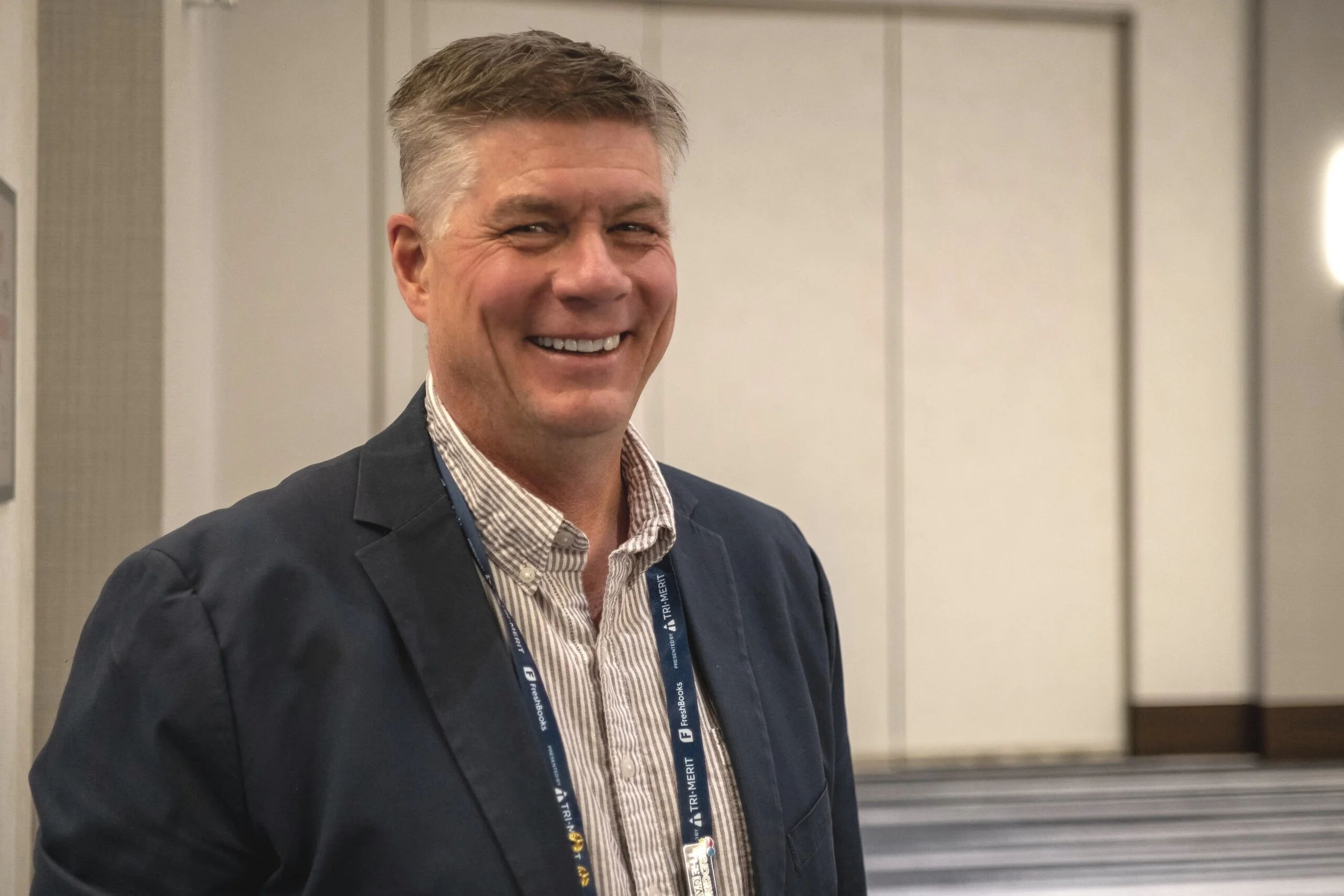
Randy Crabtree, co-founder and partner of Tri-Merit Specialty Tax Professionals, is a widely followed author, lecturer and podcast host for the accounting profession. Since 2019, he has hosted the The Unique CPA podcast, which ranks among the world’s 5% most popular programs (Source: Listen Notes). You can find articles from Randy in Accounting Today’s “Voices” column and the AICPA Tax Advisor, and he is a regular presenter at conferences and virtual training events hosted by CPAmerica, Prime Global, Leading Edge Alliance (LEA), Allinial Global and several state CPA societies. Randy also provides continuing professional education to Top 100 CPA firms across the country.
