
A New Era for The Unique CPA
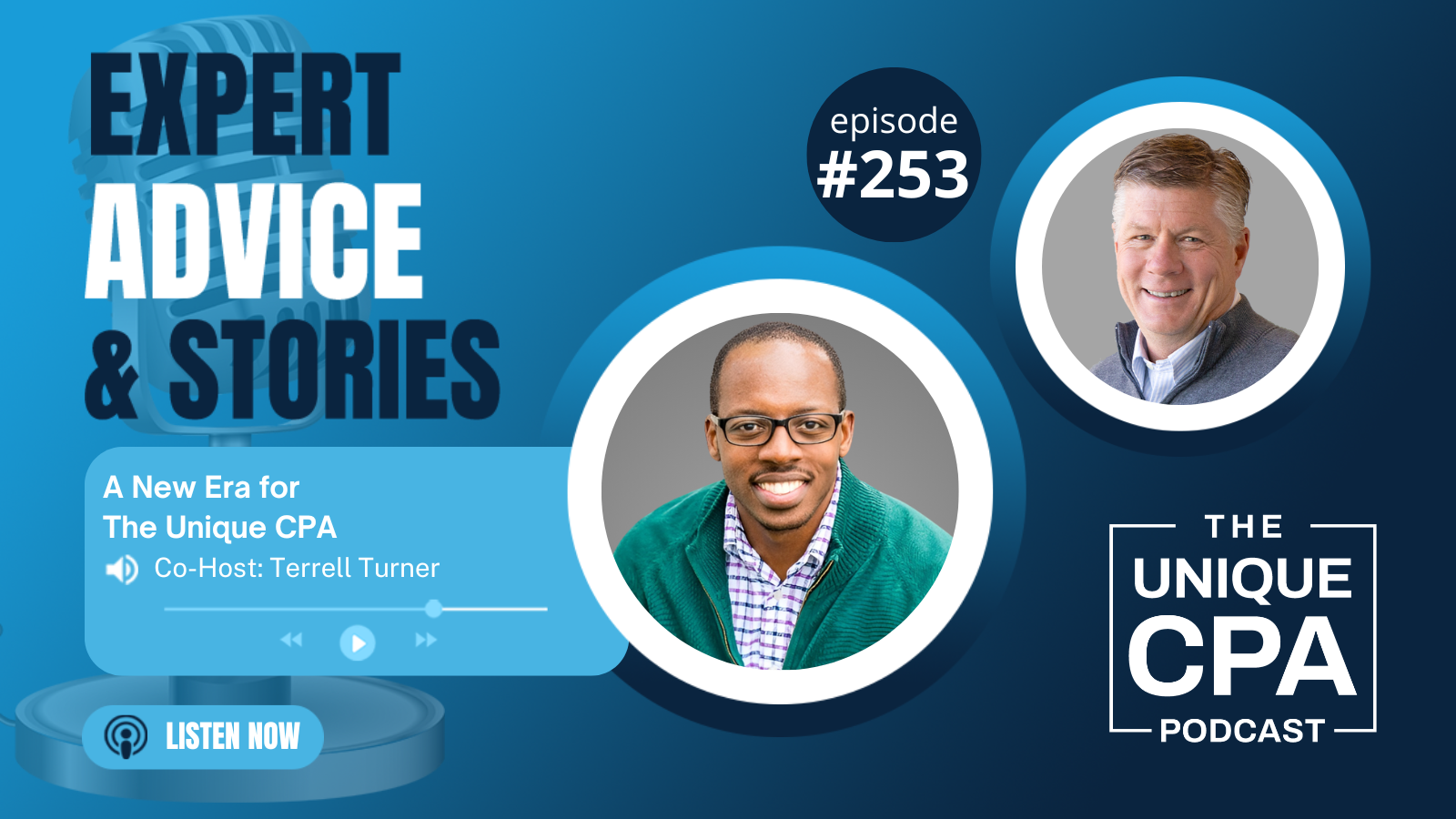
With Terrell Turner
The Unique CPA is evolving. On Episode 253, Randy Crabtree and Terrell Turner sit down to announce a significant shift: Terrell is joining as co-host, and the podcast is becoming fully independent. But this isn’t about changing the mission: mental health, peak firm performance, and elevating the profession remain central. It’s about expanding how those conversations happen. Randy and Terrell brainstorm openly about what comes next, whether it’s live recordings at conferences and roadshows, college campus visits to “bridge the gap” when it comes to talent, or revisiting past episodes on private equity and AI to see how predictions held up. They reflect on how a single LinkedIn message on Christmas Eve 2020 led to their over five-year friendship, and how Terrell once turned Captain Underpants into a marketing presentation for accounting firms after Randy challenged him at dinner. It’s a candid look at what’s stayed the same, what’s changing, and why community matters more than ever.
Show Transcript Hide Transcript
Today’s guest is honestly not a guest, as you’ll hear as we talk about this episode today, but today’s, we’ll say, co-host with me on the podcast is Terrell Turner. Terrell’s been a guest on this twice before, so it’s great to have him back. But we’re going to talk about the future of The Unique CPA, We’re going to talk about the next chapter of The Unique CPA, because if anybody saw the LinkedIn post I did in the third week of February, I announced that Terrell is going to be part of The Unique CPA. And today’s episode is going to be discussing that, and a little bit of brainstorming. We’re going to be brainstorming along with you today to see where this show’s going to go, and we’re not making big changes. We’re going to still be focusing on the same type of topics, we’re just going to be doing it together more often now, and I’m really looking forward to that. So I normally say, “Terrell, welcome to The Unique CPA,” and I’m going to say that right now, but it has a little different meaning today. So, Terrell, welcome to The Unique CPA today and going forward.
Hey, thanks for having me. I am pretty excited about the ideas we started brainstorming from, I guess I call it, a random phone call that I got from you.
Yes. That was a few months ago, wasn’t it?
It was!
Well, you actually probably started this thought process for me because you reached out before last year’s BTG and said, “Hey, you need any help at the conference? You know, I know you’re pretty busy doing those video interviews at the conference. I could take some of that off your plate,” and you did, and that was great. I think, you know, I did half of those recordings last year, you did half, and that whole started my thought process of, “You know what? I should be hanging out with Terrell more. It’s always fun.” So it was in the back of my mind, and then I think maybe beginning of this year, end of last year, that’s when I reached out and said, “Hey, do you want to talk about this?”
Yeah. I mean, I’m glad we did, because I think there’s so much opportunity in the accounting industry, I think just the profession across the board. And I think between both of us, I mean, having an influence within the accounting industry, both here in the U.S. and, I mean, you’re a global star when it comes down to accounting.
That’s you! But yeah, we do, we both have a passion for this profession, which is cool. We both have ideas on how we think we can help the profession be the best it possibly could be. We want to support people, we want to support the profession, we want to make sure that people are mentally and physically healthy in this profession, we want to make sure that firms are running at peak performance—that doesn’t mean peak hours, that means peak efficiency. And so all those types of things. So that continues to be the things we will talk about on the podcast. And the one major reason that this change is happening, and, again, subtle but big. I mean, you’re not going to think, “Wow, this is a completely different podcast,” but you’re going to think, “Wow, this is nice that we know what to expect each week, that we’re going to get these topics that can be meaningful to us,” Is that I decided recently that this is no longer going to be a Tri-Merit podcast—that this is going to be a Randy and Terrell podcast. I guess there’s two points to that: One is Terrell and I are still obviously with our companies. Terrell is the CEO of TL Turner Group, and me as a partner with Tri-Merit, although those days are slowly going away as I transition to new roles. And so that’s there, but this is going to be separate. This is not at all connected with either organization. It’s just us in the profession and us talking. So did I say that well? You think I’m on the right track there? Because we’re brainstorming today.
Yeah, I mean, I think that makes sense because I think it’s just the reality of every person, whether you’re in firm leadership, whether you’re in a career, I mean, everybody’s kind of navigating a similar journey of even if you started a firm, like if you started a company, like you exist outside of that company because, I mean, you’re building it, and there are other conversations that you want to have. Like if anyone goes to, let’s say, the website of my company, they know like, “Hey, we’re talking about a ton of law firm stuff,” but I’m also an accountant myself, I also run a firm, and there’s a whole lot that I love sharing. You and I both speak at different conferences, and I think there’s so much we can share outside of the full-time jobs that we do, and I think that this is definitely a great way for us to collaborate on that, really bringing attention to those conversations that we’re probably already having in small pockets or conversations we’re having one-off, or even, like I said, the phone call that I got from you. Some of those things we talked about in that phone call are things that everyone’s probably trying to figure out themselves, but I think us having this unique platform to be able to bring those conversations into a different light, I think is very needed.
Yep, it is. And so just to continue down that, you know, separation from Tri-Merit, even though still that’s part of my identity, it is not my identity, but part of my identity. You are obviously actively involved with TL Turner Group, and that is part of your identity but not everything. And so when I talk about that, this is now independent—we do need support though. This is not free for us to put together. We have costs involved. So we will be looking for sponsors, and we want to be intentional about sponsors that are part of this journey with us: Sponsors that share the same values we do, the same ideas, the same, you know, we’re still going to be talking about leadership in general in the profession, we’re still going to be talking about people-first cultures, we’re going to be talking about building better firms, and everybody’s definition of better is different. Is better bigger? Is better, you know, more profitable? Is better more streamlined? Is better a niche practice? You know, whatever your definition is of better, we’re going to talk about that. And there’s still going to be these long-form thoughtful conversations, and it’s not just going to be you and I, we will have guests.
And we haven’t even decided if it’s going to be us together each week. I think we’ll probably, maybe Terrell occasionally will do one. Maybe I occasionally do one. Maybe we’ll occasionally do one together. We’ve also considered special segments of The Unique CPA, which we’re considering calling “The Unique CPA Bridging the Gap Series,” which, you know, intentionally ties in with the conference, Bridging the Gap, you know, that I host and that Terrell is now more active with as well going forward on the interview process. And I’m sure more, he is now on the Advisory Council of Bridging the Gap this year as we go to pick speakers.
And so we want this to be interactive from a standpoint we can talk about things we’re passionate about, but we also want to hear what you’re passionate about. We want to know what you want to hear. We want to know what subjects, what topics, what guests, what themes, really are things that you need help with and you want to hear about. And so you’ll hear us say this a couple times today as we’re talking, but you can email us anytime at TheUniqueCPA@RandyCrabtree.com. We will put that in the show notes. But if, again, as I just mentioned, if your mission aligns with our mission and you’re looking to sponsor, you can reach out to that. If you want to just make any comments about the show or, you know, put your two cents in on things that you think we should be doing, you can email that. We’ll be monitoring that all the time because we want this to—we think we are very passionate about this profession, but there’s things we’ll miss, and so if we can get your input on things that we should be discussing, we’d really appreciate it. Anything to add on that before maybe we move on to the next thing?
Yeah, I mean, I think that it is great for the audience to understand, as you mentioned, like with Bridging the Gap, one of the things that I have loved, and heard other people say that they love about a conference like that is just, the conversations that happen at the conference. To where I would tell anyone if you haven’t been at a Bridging the Gap conference to be around some of those conversations that happen, whether it is, you know, at the happy hour event, or you’re listening to a speaker on stage talk about something that isn’t quite technical accounting terminology or technical accounting topics, but it’s something that is on a lot of people’s minds. And I think those kind of conversations happening, and then when I think about conferences that you and I have been at together, I remember there was a conference you and I were at in San Diego and just—I remember the idea you came up with about what you wanted me to talk about at a Bridging the Gap conference. But I think about like the conversation we were having at dinner with eight other people at the table. And I think that there’s a lot of people who don’t have seats at those tables, there’s a lot of people who aren’t regularly part of those types of conversations.
And I think, you know, The Unique CPA podcast is a way to bring that caliber of conversation to a wider audience, and I think people can really benefit from it because many of the episodes that you’ve done in the past, I can tell that, “Hey, I heard people asking you those types of questions after you came off stage,” or I heard that was a conversation we had in the hallway and we’re like, “Hey, let’s go find a guest who can bring clarity or more content to this conversation,” because other people probably have the same concern. They just don’t know where to go to get answers. And I think that The Unique CPA will continue to be that, and I think it’ll be that even more if people are sending in like their questions or their comments or like, “Hey, we’d love to hear about this topic,” or, “Hey, this came up,” and I think we’ll do our best to really go through those and figure out like what’s the best way to really bring more value to the audience. So that part I think is super exciting.
Yeah, and to add to that, and that is a great point, because at last year’s Bridging the Gap, July of ’25, and every year we felt this, but you really, really felt it strong, is this community aspect of the conference. This vibe in those rooms were just through the roof. And so part of this whole evolution to where we are today was that last day of the conference, where I actually challenged people to not let this vibe, not let this connection, not let this community die in these four walls, take it with you and cultivate it and report back. And then part of what we did—and I came up with this idea actually a couple years ago and really never implemented until this year after this July’s conference—was taking Bridging the Gap on the road. And so we’ve done three roadshows now, and the point of those roadshows is “Community, Connection, Collaboration,” and it’s exactly what you were just saying: We have discussions in these roadshows, and you learn as much just having this connection with somebody else sitting at your table when you’re at a conference or the happy hour.
And so what we wanted to do, the next phase of that is what we’re doing now: We’re trying to capture that community aspect of it in the podcast, and that’s why we want your interaction. That’s why we want you to be part of this, we want you to send in your ideas, we want you to direct where we should go. That alone I’m so excited about, because as you said, I hear something and I’ll put it on the podcast, but I don’t hear everything. And so if we give everybody the opportunity to share everything, we can go with that on here. And I’m going to start a brainstorming session right now before we even go into whatever comes next, because you got me thinking, and that’s why it’s so nice to have someone else here with me, especially you, because you’re the smartest person in the world, and so that helps a lot. And I was thinking, how do we go even deeper than just obviously we’re doing the roadshows, and I’m hoping we, and I talked about you being part of the roadshows at some point too. It hasn’t worked yet, but I wanted to see if we can get that to work. But how do we do that live on a podcast when they’re recorded? And so maybe one of the things we discuss is do we do live versions of this? Do we get on LinkedIn Live or something and do a podcast based on a topic that somebody sent in? People can send in comments on there or questions, right? Or YouTube or wherever you do it. I mean, I think that’s an idea that we should look at. Any ideas, any thoughts on that?
Yeah, I mean, I think that’s a great idea because I think that there’s something about capturing the conversation when it is raw and live to where I think people connect with the emotion of the conversation. Because as much as I love creating content, one of the things that I do know is like the editing, it can help polish things, but sometimes the editing takes out the raw connection that was happening of a conversation that’s happening live in person. It is why I’ve been a huge fan, you know, since I started attending, like, in-person events. There’s a different vibe, there’s a different element of the conversation that you get. And I do think us looking at things, because that was one of the ideas that I had when you originally reached out to me about us like being at conferences, doing some stuff live, because one is, it gives people who, for whatever reason, whether it’s timing, whether it’s family dynamics or whether it’s travel logistics that couldn’t be there at that event, to still get at least some exposure to that event to be able to see like, “Hey, here are the types of conversations that happen.” And I think there are some great people who show up at these conferences that have a lot of great things to say that they may not be the people who are sitting on stage talking. They may be the conversation you have like in the audience or with someone in the hallway. And I think being able to do some live events to have, you know, some people drop in to say, “Hey, here’s what we were talking about, you know, at dinner last night. Let’s give, you know, the people who are tuning in live a little glimpse of like, hey, some of those things that you said last night, or some of those things we talked about earlier.” And I think that is a smart idea because you can go live on, you know, just about any platform, and it allows people to ask their questions live. Because if someone can ask a question off of something that I just said five seconds ago, they’re going to get a better answer, as opposed to, well, they sent me an email, I respond three days later. In the moment, you’re going to get a more contextual answer. So I think that’s a great idea.
Yeah. And so again, just listening to you, what you were saying there, even doing this live at a conference, I mean, doing this, I mean, so like Liz and Heather with their happy hour, they do this sometimes. So it’s not, you know, novel, they’re already doing this, but if they’re not at the conference doing it, I don’t want to steal their time. But we could do that. We could get the, you know, with their happy hour platform that they have, they do this, we could do a twenty-minute segment when we’re at a conference and people that can’t make it to that conference, they can at least see what’s going on, we can update them, we can talk about it. Okay, so look at this brainstorming already. Any other ideas we should start throwing out here?
Yeah. I mean, I think that being there live at the conferences I think is great. And I also think, you know, some conversations from like recaps of, “Hey, we went to a conference. What were some of our big takeaways? What were some of the things that stood out to us?” Because, you know, what I do like about collaborating with you on this is that your perspective when it comes down to the accounting industry is very different from mine. I mean, because you have many more years of experience of seeing different things. So like when you see, let’s say a trend happening in the industry, it may be something that you’ve seen before and you can kind of know what’s coming next, or you know, hey, what other questions we should ask. I, you know, I’m a little earlier in that journey than you are, so I think the perspective that you would have, the perspective I would have, I think is worth having that conversation because I will say, one of the conversations that I had at a conference that was, that’s probably been one of the most kind of, I would say, career and also firm-changing conversations for me was at a conference in Las Vegas. I think it was you, Jody Grunden and I went to go get Italian food, and just sitting and listening to you and Jody talk about, you know, your journey. And at that time I may have been, what, four years into leading my firm? And so there was a ton of stuff that I didn’t know. But sitting and listening to you and Jody talk about the things that you were thinking through, like I had a red-eye flight headed home. I didn’t sleep at all on the plane because I’m like, “Yo, I need to rework this. I need to rework this.” So I definitely think that us being able to share, like, hey, here’s what we heard at a conference, you being able to share your perspective, me being able to share my perspective and for me to ask questions. Because like I said, there are things that you understand that I don’t quite know how to wrap my mind around because you’ve already lived through the experience in some ways.
So that was a very nice way of you saying I’m pretty old. So, I appreciate that. While you were talking there, I was just looking back and I know you and I have discussed before, I’m going off topic a little bit here. You and I have discussed before how we got connected. And I honestly don’t know for certain, but I just looked at our text and the very first text I ever received from you—and I know we talked before this—was July 28th of ’21. I’m pretty sure we started talking in January of ’21, and I just don’t remember. I have this feeling it was Scott Scarano, but I don’t think it was. For some reason, I always think that, but I don’t think it was. Did you even know Scott back in January of ’21?
Um, I may have like crossed paths with Scott from a content perspective, but back in ’20, because I didn’t start the firm until April 1st of 2020. So I was very, very early into like trying to figure out what I was doing, trying to figure that out. So I may have, you know, met Scott, like maybe in passing from a content perspective of like commenting on some of his stuff. But I don’t think I had met Scott in person by that point.
Yeah. And I honestly don’t think I had either. So it really bothers me that I can’t remember. Did you know, all right, now we’re going off subject, but this is fine, this is what I do. Did you know Josh Lance?
I did not, so I had never met Josh Lance in person.
Okay. You never, ever had in his entire life?
Yeah, I never met Josh Lance in person. Like I had heard about Josh and, yeah. And like I said, I became more familiar with him through you, Scott, and Kenji, but I had never met him in person.
Yeah. Alright. And now I just went to emails. The first email I received from you—oh, no, the very first message I ever received from you was a LinkedIn message on Christmas Eve of 2020. I’ve got to go see if I could pull this up now and see what this LinkedIn message was.
Oh, I think what I did was, I think I invited you to be on some of my content. I think, yeah, it was December of 2020. I invited you because we were doing some at the time, Business Talk Library Accounting. It was a request for you to be a guest on some of the content we were doing.
Alright. I can’t pull up the message, but that sounds familiar. I do remember being on with you, so that must have been, look at this. We are over five years into this relationship now, and it’s been a great one. Alright, so now we went down memory lane, so we got that out of the way. But that got us to this point, and that’s the cool thing I like talking about, how every little decision you make, every little, well, no matter what, I mean, I could have ignored your LinkedIn message. I don’t know where it came from. Every little decision that you make has an impact on your life, and that one for me had a big impact. I mean, I could see you as a great friend since that moment in time. And so that’s one of the things we need to talk about, is not being afraid to get out of your comfort zone, not being afraid to respond to somebody when you’re not sure if you should, or reach out to somebody when you’re not sure if you should. Those are topics I think make a big difference, and I guess we just proved that based on a LinkedIn message, apparently Christmas Eve of 2020, at least that’s what LinkedIn is telling me.
Yeah. And I think that becomes so essential. I think no matter how you play a role within the accounting industry, like if you’re a firm owner, you’re in firm leadership, or if you’re working in a firm, or you’re working in industry, or even if you’re a vendor who provides services to accountants, or even if you’re in school or you’re a student, I do think that aspect of one is just putting yourself out there, I think, to connect with people. And then I think of just being willing to learn from other people who are making different moves in the industry. And I think that’s one reason I’ve liked a lot of The Unique CPA episodes, where sometimes you’ll have someone who’s been in the industry for a while, someone who is at, let’s say, a Top 20, you know, accounting firm. They’re a partner at a Top 20 accounting firm. And then you may have someone who’s, let’s say, the founding president of the Ritz-Carlton, to where it’s like, there’s so many different, and we see so many different—you may have someone who is maybe two years into starting their own firm of just being able to learn and see all of those different angles, because I think all of us find ourselves somewhere within that spectrum on that scale, and I think even just the conversations with, let’s say, people who want to be in the accounting industry, because I think a lot of organizations are trying to figure out how do we attract the next level of talent. Well, I think being able to have conversations with who are those people who are the next level of talent, and then what’s on their mind, and how do we bridge that gap between the different people who play roles in the industry, I think is something that is very needed.
Yeah. It definitely is. I want to go back real quick to the stories that you said we hear at conferences and at some point before we wrap up, I think we need to tell that story that you teased of you and my conversation at that dinner that led to one of your presentations at Bridging the Gap. But you just mentioned the type of people that have been on and who’s been on, and I just looked: According to ChatGPT, at least, the leader in number of appearances on The Unique CPA is Terrell Turner. Well, it actually says I’m the leader, but I’m not going to count that. So, but it says you are tied with Rob Brown, Jennifer Wilson and Justin Grant, who’s our producer—we couldn’t do any of this without Justin. But that’s what it says. But then you mentioned the people that are on here. I love hearing stories from people, I love hearing what they’re doing, I love the story of the startup, I love the story of, you know, we had one of the first episodes I had was Richard Kopelman. Who [at Aprio] at the time was probably a $75 million firm, and today they’re probably a $750 million firm. And just talking about the way he was looking at growing that firm, you know, Mark Koziel, the head of AICPA, has been on twice. Allan Koltin, probably the most influential person in the accounting profession. Well, him and Mark were number one and number two on Accounting Today’s top one hundred most influential. Allan’s been on a couple times, and I’m sure Alan will be on again, and those are very influential.
But then I had another person I remember, Heather [Martin] was her name. She was about a week into her firm, and I was just like, I want to hear the story. Let’s follow what you’re doing. Let’s hear how you’re building this, what are the challenges you’re having as you start this firm? She left a bigger firm, and I knew her from that other firm, but you know, the challenges from you leaving that firm and what you learned and what’s different and all those kind of stories. That’s what I like. But again, going back to what we said, what I like and what I want to hear doesn’t necessarily jive completely with what someone else has wanted to hear. So remember, TheUniqueCPA@RandyCrabtree.com. Send us your information, send us your ideas, send us your money if you’re a sponsor. Don’t send it to the email address; if you’re interested, if you think we do align, obviously reach out to us. But yeah, and then before you and I went live, I told you that ChatGPT did not list you as one of the most influential people on this podcast. I was wrong because I just read what ChatGPT says and it says, “Several well-known accounting thought leaders have returned multiple times: Ron Baker, Joe Woodard, Geraldine Carter, Mark Koziel, Jennifer Wilson, Terrell Turner.” So there you go. ChatGPT called you out.
I made the list! And you know, I think that’s one of the great things is that there’s been so much content that The Unique CPA has put out. I mean over 250 episodes, since its inception. And I think there’s so much value in many of those conversations that I think people who are new to the show, they weren’t around when those episodes came out. So one of the brainstorming ideas that I have is, even you and I, doing a going down memory lane of just some of the highlights, because there are some critical topics. Let’s say for example, when it comes down to private equity, I think there are several conversations that have happened when it comes down to like the topic of private equity to where I think we can kind of reshine a spotlight on some of those previous conversations, and then also seeing what has changed since that conversation. Like you mentioned about with Allan, like when Alan came on the first time to now, he probably has a completely different perspective.
Oh yeah. Yeah. Allan came on right after the EisnerAmper deal. I think that was the first big deal in private equity. He came on pretty much within a few weeks after that. And at that time, I remember, and this was years ago now, but I remember him saying, “This is not stopping, Randy. You’re going to see significant private equity investments happening, and it’s not going to take that long.” And he had a prediction of how many of the Top 100 firms would have private equity investments, you know, within the next year. And he was pretty much right on, is what I recall. And so going back and reviewing that and maybe see where he was on, where he was off, where he was aggressive, where he was not aggressive enough. Other things, other episodes that same way, talk about technology, you know, like a year or two we can talk about more even on the AI episodes that we’ve had and where that’s going, and has it gone as fast? I had in the past, you know, and does that live up to what we thought it would? Blockchain we probably did talk about at some point in time, and are we really seeing blockchain be integrated into accounting? Maybe you know better than me, but I don’t know that. And so, yeah, going back and reviewing those, that would be a lot of fun.
Yep, absolutely. And I think that, you know, it is something for all of us to keep in mind is some of the ideas or predictions that we made a couple years ago, so many factors have changed to where there’s going to be updates to it. Especially when it comes down to like the topic of, let’s say, AI in the accounting industry, or even what we’ve said about the talent pipeline. So many factors are constantly changing, so I think being able to revisit those conversations and, “Hey, let’s just do an update. Here’s what was predicted two years ago or three years ago. Here’s what the new data tells us, or here’s what the new trends are looking like.” And I think being able to have thoughtful conversations about those things, I think are very, very critical.
And also, one topic that I think that probably, we’ll never be able to talk about enough, I think is when it comes down to like mental health and wellbeing, like within the profession, because I think as all these changes and dynamics are happening, those kind of conversations, I mean, we just get new light to a very essential topic that I don’t think we can ever stop talking about just because there’s so many things happening. And I think, I mean, that’s the topic that I think you’ve been very good at shining a light on and making sure that, hey, we don’t get so caught up in the trends that we forget about this fundamental topic.
Yep. I agree. That’s a topic that’ll always be part of this. Mental health awareness, burnout, is always going to be a passion of mine. Honestly, Bridging the Gap conference came out of that passion, and it, you know, evolved into, you know, not only that, but just building the best firm we possibly can have for the people. If we serve the people that we work with, we serve the clients better. And so that’ll always be a key theme. But before we, you know, go any further, I’ve teased it a couple times. This podcast is not about only education. Education is a big part of it: Educating the profession, solving issues that are happening, highlighting issues of positive or negative, and our thoughts are on it. But it’s also about having fun. And so let’s tell that story about that conference we were at, where I think what I said is, “Terrell can turn any subject, anything into a business talk.” I said, “He can go order French fries at McDonald’s, and the next thing you know, he’s turned it into a talk on accounting and business.” And so I’ll let you, you probably remember better than me, but tell the story and what happened with that, ended up being a challenge, I guess.
So it ended up with an out-of-the-box challenge. And so we’re sitting at dinner and, you know, different people are talking about, you know, different speakers, and there’s some people that I don’t know if they’d ever heard me speak before. And so you bring up like, “Hey, you know what, Terrell can turn anything into a topic,” and then you turn to me and you say, “Well, Terrell, how do you come up with these topics?” And I said, “Well, sometimes it’s whatever’s trending. Occasionally I take a challenge where someone gives me a challenge.” And after I said that, I was thinking to myself like, “No one’s going to think much about that. Like, no one’s going to challenge me right now.” And then you turned to me and you said, “A challenge. Hmm. Well, here’s a challenge for you. You need to come up with a talk about Captain Underpants.” And I was like, “Wait, what?” Like at that point, to be honest with you, I had never watched or read a Captain Underpants book, to where I’m just like, “I have no idea how I’m going to make this work.” And not only did you say I needed to come up with a topic about Captain Underpants, you went a step further and said, “You need to talk about marketing for accounting firms using Captain Underpants.”
Oh, man.
I’m just like, “Alright. This just got twice as difficult because not only do I need to leverage Captain Underpants, I need to relate it to marketing for accounting firms.” And so that started probably a three-month research of me studying Captain Underpants, trying to figure out, how do I make the connection? And like I remember my wife coming home one day and she asked me like, she got an email notification. “Did you buy Captain Underpants?” I’m just like, “Yeah, I did.” She was like, “I didn’t know you liked that cartoon”" I was just like, I was like, “It’s a challenge that Randy gave me.” And she was like, “Randy, like Unique CPA, Randy?” I was like, yeah, she was like, “What does Captain Underpants have to do with that?”
But you did it.
Yes. Yes.
And you crushed it.
You know, I will say, as I started really studying it, watching several episodes and going through it, I’m like, something really jumped out to me. And what I will say is it actually helped me find, I guess you would say, a next phase of social media content that I started doing after that. What it did is it forced me to see is that, you know, there are so many applicable business lessons constantly surrounding us, to where when my team came up with this idea of like, hey, Terrell, since you do this for like your big speeches, because I think the first time you heard me speak in person, I think I talked about an Olympic high jumper.
Yep.
And segued that into running an accounting firm. And so my team was aware of that and they were like, “Well, what if you take, you know, videos that are trending on social media, and then turn that into a business lesson?” And I was like, “Uh, this is going to be a challenge.”
Yes it is!
But it’s something that has helped. I think so many people, I get so many messages from people, you know, online of just like, man, I saw your video. Like even friends that don’t even like that aren’t even in the business sector. I’ve had friends who are social workers say, “Hey, I saw your video. I didn’t know that about accounting,” because they actually listened to what I talked about accounting afterwards. And so I think, you know, your challenge forced me to go to the next level of my communication journey.
Oh, look at that. I’m going to start taking, I’ve already taken credit for creating you, and so now I’ve got to even go further. Just so everybody knows that’s a joke. He has done this all on his own. But I still like to give him a hard time on that. I think that’s a good story to maybe, probably wrap up what we’re doing and, I’ll do a little wrap-up in a second, but before I do that, anything you specifically want to call out before we close up today?
Yeah. Another idea that I wanted to tease, kind of a brainstorming is, because I know a lot of people talk about the talent pipeline, and one of the things that I was fortunate to do, let’s say, what, two weeks ago now, my undergrad alma mater, they asked me to come in, talk to the accounting students, and while there, I actually recorded a podcast in their podcast studio. And I was like, you know what? There’s so many firms as we talk about this at conferences, like the talent pipeline, I’m like, what if we did some content where we actually went to college campuses and talked to college students of like, “Hey, why did you choose accounting, or hey, what is it? What do you think working in accounting is like?” And I think really, again, as the name implies, it’s just bridging that gap between people who are potentially considering accounting and people who are already in accounting, I’m excited about potentially doing some content where showing up on college campuses and talking to students and kind of helping the people who are already in the profession see like, hey, firsthand, here is your next, you say, wave of talent. Here’s what they think about the accounting profession, so that we can start breaking down some of those barriers or some of those differences and how the profession is seen, and really help bridge that gap between those who want to go into the profession or may want to go into the profession, and those who are already in the profession.
I like that idea a lot. Because I often say there’s a perception issue, I think with the profession, and if we can solve that perception issue,—I think people believe that we’re tied to our desk for a hundred hours a week during tax season and that kind of thing, and I think that scares some people away. And if we can show that’s different, if we already get the opinion from people that are going into accounting and what they think on that, and maybe even change that perception at that level? Because it isn’t, people are so much more efficient now than they were in the past. And maybe it is that way at some firms, maybe it isn’t, but yeah, those conversations would be fun. And we’re very lucky to have had a few college students at BTG in the past, and it’s cool to see them, you know, see what I believe is the real accounting profession, which is a lot of fun.
Alright, so we’re going to have lots of time to brainstorm. We’re going to get brainstorming ideas from other people. And so just to kind of recap: You know, this is obviously a change, but not a change of what’s passionate to us. The topics are going to stay mainly the same, the theme’s going to stay the same, the idea of profession is going to stay the same. How we do that, that’ll change based on your input. So at this point in time, we’ve released 252 episodes. It’s a weekly podcast that could change from a standpoint that maybe we throw in an extra podcast here and there. So maybe it’s even a little more than weekly at this point, but we’ll always have the Tuesday releases. That’s going to stay the same. From a hosting standpoint, that’ll change. We’ll see the exact makeup of how we do that. Going forward, I think together two of us would be great as co-hosts. You know, if we both can make it, we will do that. If it makes sense that Terrell interviews somebody then, not me, that makes sense. If it makes sense for me to do it and not Terrell, we’re going to be flexible, but together, I think we make, I think we’re more than one plus one equals two together. So that’s the way I look at this.
And so, you know, we’re really expanding this now. We’re expanding the ecosystem. We want to be more collaborative. We want you as the audience to be part of this. That’s again, why TheUniqueCPA@RandyCrabtree.com. Send us your information, send us your thoughts, send us whatever. Obviously you can reach out to either of us, however you know how to reach out to us too. But if it is an email, I’d rather it went to TheUniqueCPA@RandyCrabtree.com, because we’ll have a few people monitoring that so that we don’t miss anything. We’re going to be, again, deeper with the collaboration. This is interactive. Maybe it’s live episodes, you know, maybe it’s on college campuses. We’ve done a version of The Unique CPA from a bar where I’m a partner in Chicago in the past. You know, maybe we do this on traveling roadshows, we record an episode or we do a live version at the traveling roadshow. So there’s all these ideas. We want to hear from you. We want to be more intentional about these partnerships with you, more intentional about partnerships for, again, people that are aligned with what we’re doing from a sponsorship standpoint. And so, you know, if you as a listener believe in elevating this profession, we want to talk. We want to hear from you. And before we wrap that up, any final thoughts from you on my recap? Did I do okay?
I think you did amazing. I think it’s going to be a great journey for people to witness and also to be a part of as it unfolds.
Alright. Well, I’m not going to thank you for being a guest today because you’re not a guest, you’re a co-host. But thanks for being part of this journey going forward. It’s exciting to me. And, you know, and one thing we didn’t talk about, and we probably should say this: I mean, I’m getting older. I want to keep doing this, but I want this podcast to survive me too, because I think the topics we talk about are important for this profession. So I think we’re starting to get a built-in succession plan, which that’s another topic we probably should be talking about on the podcast too: Succession planning just in general for firms. So we’re at least setting the stage for that with this partnership, and I’m looking forward to that.
So I want to thank everybody. I want to thank you for being part of this community that Terrell and I are part of and helped to create over the years, whether it’s, you know, through the podcast, at conferences in general. We all create communities when we get together. I want to thank you for being part of that, and I’m so excited to see this community thrive and grow and have an impact on this profession. So thanks everybody for being part of this and stay tuned for much more. It’s going to be a fun ride.
About the Guest
Terrell Turner is a Certified Public Accountant and managing partner of the TLTurner Group, providing consulting and training services to make accounting and finance less complicated for law firms. He is also the founder and host of the Business Talk Library, The Finance & Accounting Show, and The Law Practice Today Podcast. Terrell has been honored by being named as an inaugural 40 Under 40 Black CPA Award recipient from the Illinois CPA Society.
Prior to launching his firm in 2020, he served in several finance and accounting leadership roles with Ernst & Young, Navistar Inc., General Electric, and Passport Inc. in both North and South America. Terrell earned his Bachelor’s in Business Administration from Lander University in 2007, and his Master’s in Accountancy from the University of Notre Dame in 2008. He is certified in accountancy by the Commonwealth of Virginia and the State of North Carolina.
Meet the Host
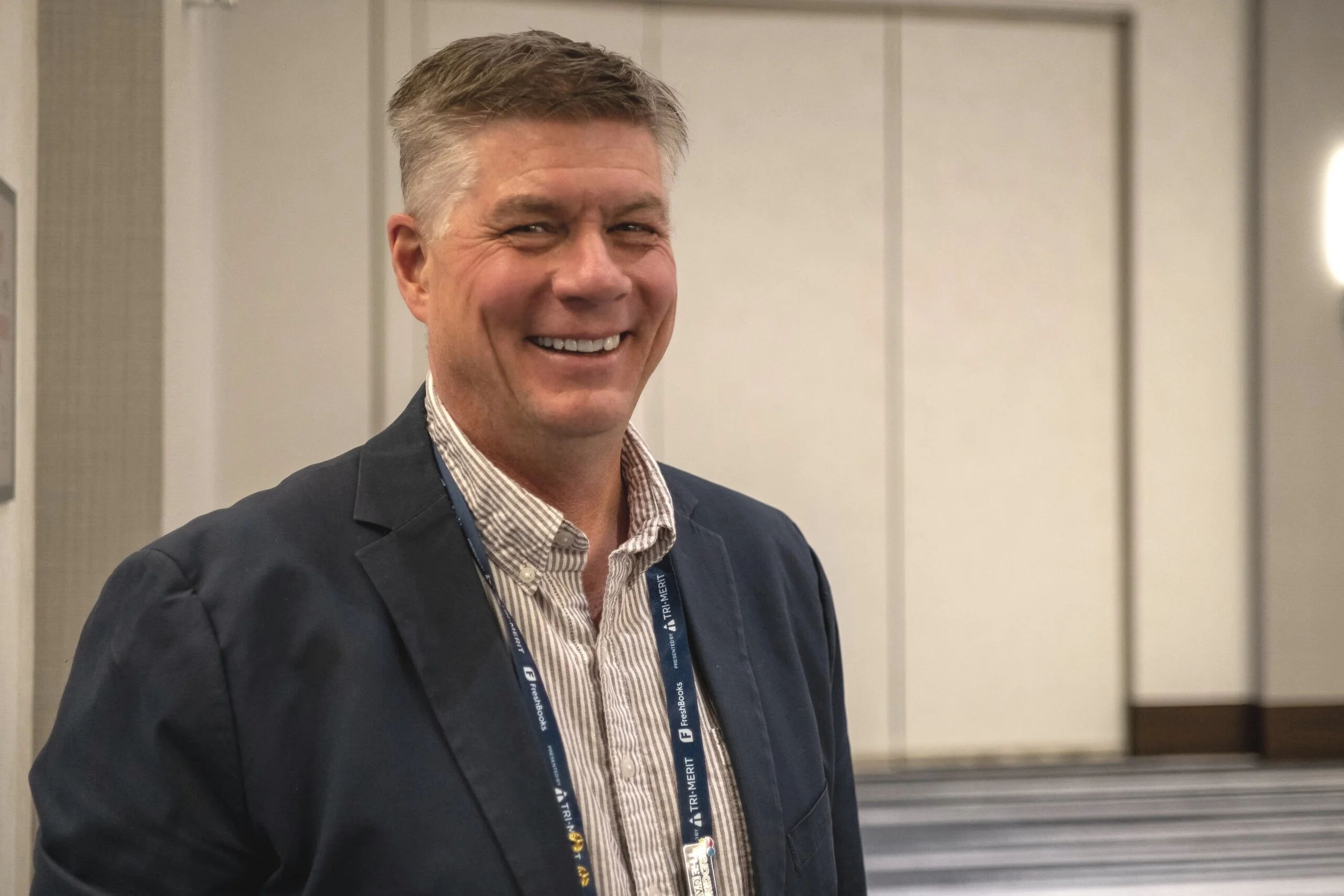
Randy Crabtree, co-founder and partner of Tri-Merit Specialty Tax Professionals, is a widely followed author, lecturer and podcast host for the accounting profession. Since 2019, he has hosted the The Unique CPA podcast, which ranks among the world’s 5% most popular programs (Source: Listen Notes). You can find articles from Randy in Accounting Today’s “Voices” column and the AICPA Tax Advisor, and he is a regular presenter at conferences and virtual training events hosted by CPAmerica, Prime Global, Leading Edge Alliance (LEA), Allinial Global and several state CPA societies. Randy also provides continuing professional education to Top 100 CPA firms across the country.