
How Leaders Can Close the Alignment Gap
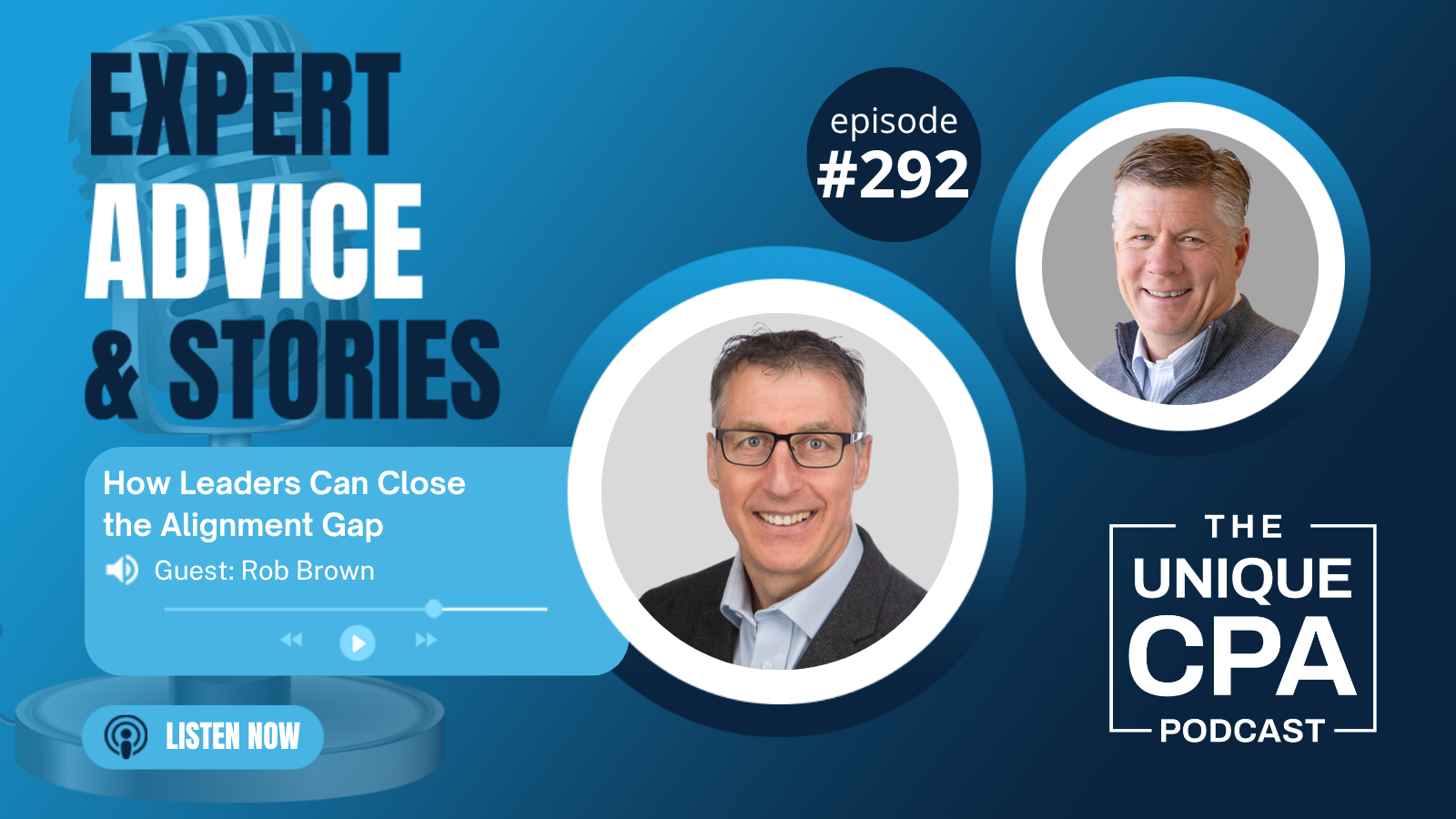
With Rob Brown
Rob Brown returns on Episode 292 of The Unique CPA to unpack, among many other things, what he calls the “alignment gap,” the chasm between decisions made behind closed doors and what the rest of the firm actually sees, feels, and hears. When partners spend months absorbing a deal or preparing for a big change, and all staff get is a 30-minute town hall, panic sets in. Rob identifies three breaks: a time gap, a language gap, and a channel gap. Partners talk capital and succession, but staff rightly ask one question: “What happens to me?” Randy connects this to survey data showing that middle managers have been hit hardest by stress during periods of change, particularly the current one where that change is so rapid. Rob also lays out red flags that leaders miss when managing change: quiet town halls, the “meeting after the meeting,” the subtle shift from “we decided” to “leadership has decided,” indicating a lack of ownership, and discretionary effort quietly disappearing. And the biggest indicator, turnover, is a lagging indicator, because by the time someone resigns, they lost faith six months ago or a year ago. The fix starts with honesty and goes from there.
Show Transcript Hide Transcript
Today I’m joined by Rob Brown, host of Accounting Voices and BACKED, which we’ll talk about a little bit, and co-host of the Inside Public Accounting Podcast. I’ve known Rob for quite a while. He’s been a great supporter of Bridging the Gap, and I’m really excited to have him back on The Unique CPA Podcast. We discussed this before we went live, but we think it’s the third time, I’m pretty sure it’s at least the third time Rob’s been on the show, so Rob, welcome back to The Unique CPA.
I’m honored, Randy. They say people can get invited anywhere once, but to get invited back, that takes some doing. So third time, I must be paying all the right people and greasing all the right palms, as they say.
Well, we need to look back because we have to have like a three timers’ club or something. I’m not sure how many people have been on three times, there’s only a couple at most, I’m guessing, maybe five? I doubt it’s that many.
It’s funny you should say that. The marathons all over the world, the Boston Marathon, the Chicago Marathon, the London Marathon, and there’s a group in London that call themselves “The Ever Presents,” and they’ve run every single London Marathon since it started, maybe 40 or 50 sessions of it. But obviously The Ever Presents get less and less every year as somebody gets older and drops out. So maybe there’s a chip you can give people that do three episodes or five, or just call them The Ever Presents. We could be part of that club.
Let’s do it. I’m going to have to, the brains behind the show, Justin or Terrell, and they’ll come up with a good idea and figure out how we give out that chip.
Maybe like a sobriety chip. I’ve just done my three years. I’ve just done my third episode with Randy Crabtree, and I’m still clean.
I was actually thinking something like that when you said the chip. I’m like, alright, do we want to go down that road? We did, so that’s fine. I think that’s fair enough. Alright, let’s go into that. So I reached out to you a month or so ago and unfortunately I had to postpone this, and I didn’t tell you this before we went on—I’ll say it now—Justin, you can decide if you keep this in or not. But the reason I had to postpone is because my doctor called the morning you and I were supposed to record and said, “I want you to do an MRI today.” And I’m like, whoa, okay, I’m doing an MRI today. She was concerned that I had cancer, and very fortunate, the MRI came back, and I do not. So it was a little nerve-wracking week while we were going through that. But that’s the reason.
Well, you and I are in another club, Randy, that we’ve had a brush with mortality because we did an episode on your show about surviving a stroke, and I had a bleed on the brain and you had your episode. And when you get calls like that, it’s a delicate time, and we dread calls like that, we fear the worst and plan for the best. But they say nothing clarifies your life priorities more than a gun to your head.
Yeah, no, that is true. The amazing thing is two hours after the MRI, the doctor called me and said, “All clear.” I didn’t even have to sleep on it overnight worrying, I mean, I worried for a week ’cause this was building up for a week. Well, you just mentioned the stroke. I think we’re already going on a tangent here, but I love tangents, so this is great, because there’s a lesson in this. You just mentioned the stroke, and people have heard me talk about my stroke before and the struggles, mentally, I went through. What I learned in that, I think, helped so much, and just this week of having a cancer scare, that I did things completely different this time around. I didn’t research the cancer that they thought I might have because I thought I’d go down these roads, and I just let my mind stay as clear as possible and went for it. So at least I learned something. But now I want to learn something else as well. Ooh, look at that segue I just did. I want to learn something as well.
You’re a pro. It’s like you’ve done this before.
Hey, we just try to have fun. So when I did reach out to you, this is the start of this story: Man, you’re supposed to be the guest and I’m doing all the talking, my fault. But this is why we have fun here. So when I reached out to you, I was like, Rob has been doing some new things lately and I want to find out what that is, I think we all want to find out what that is. Over the last year or so, you’ve kind of pivoted into some different areas. So I want you to tell us what you’re doing with Accounting Voices and BACKED and the Inside Public Accounting Podcast, anything else that’s going on, and just give us a little update on you and then we’ll get into a topic.
Thank you, Randy. Hopefully it’s relevant for the audience, although I’m the guy with a foreign accent here, and I’m based in Nottingham, home of Robin Hood in the UK, most of my work and clients are in North America. I’ve been to 48 states out of 50. One of my two daughters lives in North Carolina. I came to the Lord at a Billy Graham crusade in Charlotte, North Carolina 30 years ago this month. So I have a strong affinity with the American audience, and it’s great—I even go into an American twang sometimes, but I’ve not gone into iced tea yet, so I’m holding off on American ways. But we do, a little bit like Madonna, people like you and I, Randy, are of an age. We need to reinvent ourselves sometimes, and not just to stay relevant to the marketplace, but to keep our own brain engaged. You’ve been doing Bridging the Gap for so long now, and you can probably do it standing on your head, but still it’s part of your brand.
So I’ve been thinking, where is the next phase? Your audience may know I’m a former high school math teacher. I ran a business development training company for 20 years up to the pandemic, training bankers, accountants, lawyers, how to sell themselves. I wrote a book called Build Your Reputation, did a TED Talk, but the pandemic changed everything for everyone in so many ways, and training and coaching fell off a cliff. It was just before then that I had my bleed on the brain and I pivoted to accountants. I had a really good accounting client that was very loyal with me at that point, and I started an accounting podcast, called it Accounting Influencers. I started a round table with a guy called Martin Bissett called the Accounting Influencers Round Table, or AIR, and last year I sold my stake in that. It’s mostly a UK membership organization for tech vendors that want to reach accountants more. And I pivoted to Accounting Voices and didn’t quite start fresh, pulled my show out of the round table and branded it from Accounting Influencers to Accounting Voices.
But then, I hit that fork in the road where my shows were very interview based, and I love the interview format for a show because you just ask the questions and the guests have to bring the value. But then people ask, well, Randy Crabtree, what’s he known for? What is he good at? Apart from asking smart people questions, and maybe running the occasional event? And I started thinking, well, what is Rob Brown’s body of work? What is my thesis? What is my go-to? When people mention the name Rob Brown, what do I want them to think of beyond podcaster and interviewer? And I knew I did have a body of work, but it’s not just what you know a lot about, Randy, is it? It’s what you’re passionate about, and you and I are standing a little bit older now in the influencer game and we get into the realms of legacy and what’s important and having a cause or a crusade or what do we want to put right or what bothers us, what myths do we want to bust, or what faulty thinking is out there? Because we’re both very good ambassadors for the brand of accounting. We like to shine a light on cool people that are doing cool things. Your shows are all about that. Your events, you put people on stages that are passionate about the career of accounting.
So there are a few areas and we’ll dip into some with the questions. I’ve started a new show called BACKED, which is a YouTube-only play on our Accounting Voices channel, which is all about capital and equity and control and ownership models and operating models and growth in accounting firms. And I’m interviewing people without taking an editorial stance on PE and asking where they stand and what their firm is, and why have you taken that stance, whether it’s an ESOP or an independent stance, and how are you surviving? Because wherever you are, PE is changing conversations and it’s affecting the profession right down to the smaller firms. I came across a stat recently that said that 91% of US CPA firms are 19 people or less. So as much as we tend to think the top 100, top 500 are in play here, there’s a lot of people out there that are smaller and doing incredible things. Also, the global accounting market is $8 billion, and the US has $2 billion of that. So it’s the single biggest national market in the world. And that acts like the sun—gravity and the planets and the countries, they revolve around what happens in the US and we get pulled into your world eventually. In some ways you’re way ahead of us, the rest of the world, in other ways you are a little bit behind, but the US is the center of gravity, if you like.
So I’m doing BACKED because I recognize that PE is one of the biggest disruptors in the world right now, and on my own Accounting Voices show, I’ve moved to doing some of my own solo shows on the stuff that’s important to me. We’ll talk about the alignment gap today, and the sheer amount of change that’s going on and Leaders Under Pressure is something very close to me, employer brand. How a firm’s attracting the right kind of talent, how are they differentiating themselves as an employer of choice? But I’m also drilling down on AI, which is the other big disruptor. So we just completed a series called “AI Reality in Firms,” and I asked 20 senior firm leaders the same five questions about how AI is landing in their firms. And I’m just about to do another one now called “AI Adoption in Firms,” and I’m asking, okay, how is it really playing out? And where are the measurable results and the use cases?
So part interviews to get other people’s opinions and part my own stuff to put my thoughts out there. But you know what, it’s like, I’ve done a thousand interviews now. You start to see patterns and trends and things that occur constantly that you think there’s something in this. And then you get the outliers, the answers of people that, “I really never thought of that! That’s really quite oblique, that.” So it’s interesting what we do. I’m very much in the accounting and podcasting game. The only other thing that’s worth mentioning, I feel like I’ve been talking forever now, is I work with some firms that are growing fast, maybe under PE, maybe not, but they’re growing too fast, and I interview the leaders to make them more visible within the firm, and we use that externally as well because people trust personal brands more than corporate brands very often. And firms need good ambassadors to talk about the brand and the niches and their talent and what they’re doing and why they’re special. And leaders don’t like doing stuff like that. They don’t lean into thought leadership very much, but it’s very important that they set an example to the firm to say, look, there are great things happening in our firm, and let’s talk about them. So I bring them on camera and it’s much easier to get people talking in a fireside chat, as you well know, than it is telling them to turn the webcam on and say something meaningful. So that brings you up to date with the Rob Brown world, still in the game, still doing things, honored to be still relevant, if I dare say that.
Well, you’re relevant for sure, and I appreciate everything you do. I’ve gotten to jump online with some of your things you’ve done in the past and it’s always been a great time. You do a good job of keeping people engaged and communicating with each other, and so appreciate that. So I want to go into something you talked about: You mentioned, we talked about the alignment gap earlier, and you’re out there working with firms as well, so you’re seeing this. But first, what is the alignment gap? Yeah, just define it for us, I guess. What are you talking about when we talk about alignment gap?
The gap between what happens behind closed doors in the boardroom, or in the partner meetings, and what is seen, felt, and heard in the rest of the firm. There are many ways you could define an alignment gap: The gap between AI investment and AI ROI is another alignment gap. A gap between the promises of private equity and what private equity actually delivers, that might be called an alignment gap. So there are so many ways to define it, but in terms of... I don’t work in firms so much, but I do interview the leaders that work in firms, right? There are people deeper under the hood than I am and how they work. But in asking people what’s working and what isn’t, where are they feeling the pressures, I am sensing that the major disruption is happening below partner level, or outside the boardroom.
For instance, a deal gets done. A change in leadership, an M&A deal, a PE takeover, a new capital, a big new tech system comes in. Not all of it gets delivered in real time down to the people in the ranks, the senior people, the managers, the directors, the associates. I feel that’s where we’re losing people, that alignment gap of engagement, that manager engagement, to what degree are they bought in, and they don’t find out about decisions until they’ve been done, and it’s not perhaps what they bought into, and the partner path has changed for them. There’s a recent poll by Ipsos that asks people what most marks a successful life, and answers on the multiple choice were having children, having a home of your own, but the number one answer was a stable, enjoyable job. Now with all the change going on in accounting, and you know more than most, that’s difficult to say you’ve really got a handle on that. So that’s the alignment gap.
Yeah, right now with all the change that’s happening, and the anxiety, the stress that’s being brought about by it, is having an impact on people. And I’ve seen this, so we do a survey, and in our survey we do see that AI, specifically, we ask questions about, is putting additional stress on people. The positive aspect of the survey is showing that people actually see the benefits that will come from it. So they feel the pain right now, but they see the pain going away in the future, which I don’t think normally people see. They just feel the pain currently, they don’t see the benefit. So that’s a positive.
But I want to go back to something you said with the alignment gap too, because one of the things that we see in our survey is that the manager level, middle management, they’re hit the hardest when it comes to stress within firms, and when we have a lack of accurate communication from the leaders you were talking about that are managing these changes, whether it’s AI or a merger or something else, so do you have any ideas on how we could… One, that’s a communication issue, and that’s going to be important going forward. Communication with AI coming in, us communicating as accountants, not just internally, externally, that’s going to be a super important skill we need. But why is that gap there? Why are we not communicating with our managers correctly? And because when you don’t communicate correctly, people start making up their own ideas, their own answers to what’s going on. So that’s such an important aspect to running any business, but it seems like that gap is as big as any when it comes to it. I think leaders might think, “I’m doing it,” but they’re not. So just expand on that now for me. Why is this happening?
You’ve nailed it almost, Randy. You mentioned the Inside Public Accounting Podcast. I co-host that with Chelsea Summers, the Executive Director there. They produce the AICPA 500 and the Rosenberg survey, and Chelsea’s really big on transparency and the stats, the financial information that doesn’t get shared outside the boardroom, that in itself is a problem. But let’s break it down a little bit further, ’cause I think there are three gaps. So let’s take the scenario where a deal gets done, something changes, and partners have probably had months to absorb that decision because they were part of it, right? They made the decision, they took the vote, and even though it’s hard to get consensus in the boardroom, it gets done one way or another. Then the staff get a 30-minute town hall or a memo and the message goes out, and that’s where it breaks down between the partner group and everyone else, because everyone else needs to find out immediately, but they don’t. So the partners maybe spent six to 12 months meeting the buyers, arguing about the valuation, by the time it gets announced, they’ve worked through all of their doubts and all of their fears, and they’ve made peace with it, and they know where they are. So they stand up, they tell the world, and three breaks happen. The first break for me is the time gap. Staff get an afternoon and the decision makers get it six months. So that’s a problem. And when people get a short amount of time to decide the future, they panic. And remember, there’ll be rumblings before that because rumors, you can’t keep everything silent. So as you hinted, they’ll be making their own minds up about what they feel is going on. But that’s the first, is the time gap.
The second is the language gap. So partners, people at the top will talk about any kind of deal in terms of capital and succession and scale and opportunity, but the staff we’re talking about are asking one question: what happens to me? If I showed you a group photograph, Randy, with lots of people in, the first thing you would do is look for where you are. That’s what we do. I’m in that photo. If I said, Randy, you’re in that photo, you would look for you. And when a decision gets done, we immediately and selfishly and rightfully think, “Well, what’s going to happen to me? What about me? What about my needs? What about my job? What about my clients? What about my path to partner?” So that’s the second thing, that me thing.
And the third gap is the channel. This is how it’s communicated: an email, a slide deck, but where’s the personality, the authenticity, where’s the tone? And people fill the text between the lines with their rumors, they get calls from recruiters, they update the LinkedIn profile because they just don’t know. There’s no reason and there’s no reassurance. One of the reasons you asked me why, partners don’t have the answers: they don’t know how it’s going to shake down. They can’t put their hand on their heart and categorically say, “Rest easy, people, nothing’s going to change. Your comp won’t change. Your job won’t change. Your hours won’t change. Your office won’t change. Your tech won’t.” They can’t say that. So they don’t say anything. That’s a problem.
The second part of why is they’re embarrassed about things that will change. “Yeah, the path to partner’s changed. We brought in three new offices. Now we’re discontinuing that service line and opening up a new one. We’re going to lay off 12 people and take on another 15 people. We’re going to offshore three old departments.” They don’t want to say that stuff, so they shut down, don’t they? So people have to fill those gaps with what they read on LinkedIn, figure it out for themselves. I’ve spoken to firms where staff learned about a deal from the outside, so they felt like they’d lacked agency, they’d lacked a voice, they had to anonymize it, and it’s a problem. Leadership don’t know what to say. They don’t know when to say it, they don’t know how to communicate it, and often they don’t know. So they’ve got their own fears, and if they care, and we’ve got to admit that most decision makers, owners, leaders do care in accounting firms, they can’t guarantee anything once a deal’s been done. And I’ll hold you to your word. If you promise me something, I want to know. I’m going to look you in the eye and you tell me the AI investment we’ve just made is not going to lay off any middle managers. Really? Can you prove that to me? Is that a guarantee? So this alignment gap, it causes a problem.
Oh yeah, for sure. So it’s interesting you were saying that because I was thinking about, I did a presentation just yesterday where I did some research on, like, that situation where this research that was done by Yale found out is if you are just honest about that—hey, identify the situation. Here’s the situation. We just had a PE deal or a merger or something like that. Then be honest: “Okay, everything probably will not stay the same. I don’t know where that’s going to go, but here’s what we’re going to do, and then the path is, we’re going to be in this together. We’re going to be open. We want to hear your feedback, and we’re going to take what happens and we’re going to make sure that we’re all part of this transition to make sure it benefits all of us,” or something like that. So just be honest, just be, hey, there was a situation, I don’t know everything. Be vulnerable. I don’t know everything, but together we’re going to figure this out, we’re going to do it. And when you do that, you’ve basically just created so much trust that it helps. That’s a simple three things: situation, honesty, and path, and boom, you’ve made a huge difference. So there, we can end the podcast now because now everybody knows what they need to hear.
Job done. But that’s another gap, Randy. It’s the gap between knowing what you should do and doing it. You and I both know we should be in the gym more than we are, right? Or we should be running more than we are. Or we shouldn’t smoke as much as we do, or we shouldn’t drink as much as we do. So this, we know, but the gap between knowing and doing, as a Chinese proverb once said: to know and not to do is not to know.
Wait, say that again. That was deep.
To know and not to do is not to know. If you know something but don’t do anything about it, you might as well not know it. It doesn’t make any difference at all because there’s no action applied to the knowing. It’s not applied knowledge at all. To know and not to do is not to know. So it is that idea, isn’t it? That you know, but you don’t do anything about it. And we’re fearful. We don’t want to lose people, we don’t want to upset anyone, that’s a human instinct. We don’t want confrontation. We don’t want to get it wrong, we don’t want to be on the record. And with so much at stake, we go back under the stone or back in the hall, or we leave it to somebody else. Here’s an example: I ask a lot of people who’s responsible for the brand of accounting, and if they’re stuck, I say, well, is it the state societies? Is it the universities and the academic circles? Is it the firms themselves? Is it the accountants themselves? Is it the other professional bodies? And it’s a trick question really, because if people say, okay, it’s the state societies, then if they work in a firm, they won’t do anything about it because it’s now devolved to an entity, right? But it’s not just the state societies. It’s if people say, well, it’s everyone’s job. The problem with “it’s everyone’s job” is that everyone thinks it’s everyone else’s job. So nobody owns the brand of accounting and talks about what an exciting career it is, and shares stories.
And so it’s the same thing with communicating in a firm. We all want somebody else to do it. We all hope that it’s going to seep out by osmosis, one way or the other, and everything will land well. But goodness me, if you don’t give your people a voice and a forum and a means to ask questions as early as possible, and to your point, be really honest with them about what’s going on—and this isn’t just the big firms. There’s changes happening all the time at firms of all sizes, with technology and with brand and with direction and operating models and comp structures and AI. And we could speak to mental health and burnout, oh yeah, and stress. But not knowing.
Do you remember back before the pandemic, Randy, there was something called best practice?
Yes.
So we knew what good looked like and we could make three- to five-year plans. These days, what’s best practice with AI? Nobody has a perfect playbook. People are clueless, they’re finding their own way. So in that void of what’s best practice, or being unable to make long-term plans, people get skittish. Do you use that word skittish?
Oh yeah.
They get uneasy. They don’t know what’s going on. They can’t plan for the mortgage payment in three months. They can’t plan that wedding. They can’t plan how they’re going to fund the next stage of their life. So that unrest is a warning sign, it’s a burnout sign, it’s an engagement and churn turnover sign. We’re really painting the bad picture here, aren’t we? Hopefully we’re not going to end on that.
We’ll get to the positive, but I’m going to go to one more “negative,” or just a sign that we need to see. What you mentioned earlier is that hey, leaders won’t say, “Here’s the situation, and I don’t know.” And so because of that, then, like as you said, people start filling in their own answers. But how do leaders know when their people have stopped believing in them, because they’re not telling them anything? How do they know? And then what can they do about that?
That’s a really good question. There are some warning signs, red flags, signals, you might say. Quietness. That’s always a bad sign and there are ways that manifests. So one might be the town halls go quiet. So you do an all-points brief or a meeting and you call everybody in on a Zoom or Teams call and you say what’s going on, and then you say, anybody got any questions, and nobody’s got any questions, that’s not a good sign. And you should read no questions, not as no concerns, but as no trust, and people not willing to put their hands up and ask a question. ’Cause they’ll ask their friend or their immediate boss or manager. So that’s the first thing, that the meetings go quiet.
The second thing that happens is the meeting after the meeting. So what happens in the corridors, the side channels, the team chats and the parking lot, that’s a dangerous place because you just need a couple of saboteurs or doom and gloom merchants, and before you know it, your firm will fall apart. So that’s something you’ve got to watch out for. The third warning sign I see is the change of language. So the phrase “we decided” becomes “leadership has decided.” So there’s a distance that comes in and the staff hear that distance as people want to put some space between themselves and the decisions. “Not me, I didn’t decide this. This is not on me. It’s not my fault. I’m just the messenger.” That’s a problem, because it becomes us and them.
The fourth thing that sometimes happens is people hear it externally. So a recruiter calls or a client calls because a client’s heard something from one of the partners and the client calls and says, “Oh, what’s happening to the person who’s looking after me?” Or it’s a LinkedIn post, or it’s the trade press, and there’s nothing worse than hearing it from the outside. And you think, well, why am I the last to know? And then perhaps a fifth signal that something’s wrong in a firm is that the discretionary effort goes down. People stop doing the things that’s not billable. Your volunteering goes down, your LinkedIn posting goes down, your thought leadership goes down, your charity work goes down. People just do the job and nothing beyond it. Quiet quitting, we might say. That’s a sign that people are disengaging. They don’t feel like any extra effort is being seen or in any way worth it, and that’s the step before leaving, because the exit interview tells you at that point, a great opportunity came up. But they’d disengaged a long time before that.
So the test for any managing partner should be run on the Monday by asking senior managers to explain in a few sentences why the firm made its last big decision. If the partners up there can get a good answer from the managers, then the managers are going to be able to explain it to everybody else. And if they can’t, nobody in their team, their department, their division, their office is going to know it either. So it’s that kind of alignment. Are we all... the phrase we use in England is “singing from the same hymn sheet.” I don’t know if you use that one over there, but
I know what you mean. I haven’t heard it before, but I know what you mean.
Yes. We’re all in the same church singing from the same hymn sheet. So the leaders who say, I didn’t see a problem until somebody resigned, they are out of the loop, and they are not the leader they thought they were. So they’re the red flags for me.
Yep. So what can we do, and this is a loaded question because we could go on for an hour probably, but right now we’re in a moment of time. We can look back 30 years ago and there was change in the profession, there’s always been change in the profession. But it’s never been as fast as now and so many big changes at the same time, between PE, between AI, and historically, not enough people coming into the profession, a lot of people my age retiring from the profession, so with all this rapid change that’s happening right now, how do we avoid all these things we just talked about? Let’s just, a couple key things: What can leadership start to do today to make sure that they don’t fall into this gap, the alignment gap problem that’s unfortunately happening?
Well, let’s look at it from two angles, Randy, real quick. Let’s look at it from the individual level of the people that are outside the decision loop. So if you and me are staff accountants, what can we do? Well, keep our network fresh, keep talking to people, build our mental resilience, take on projects and learn new skills and learn AI and do all of that stuff so that we are employable, we are promotable, we are a danger to lose, we are an asset to the firm, all of that stuff. Because if we’ve got some stickability in the firm, hopefully whoever’s in charge will want to keep us, and they’ll want to confide in us sooner than they would somebody that’s, shall we say, more superfluous to requirements. So let’s work on our own skills. It was Jim Rohn that used to say, “Don’t pray for less problems, pray for more skills.” So we can all be more adept, can’t we? And getting ready for what might be bad news. We talked about receiving bad news earlier and it comes to us all. So let’s be ready for that. What did they say? Hope for the best, but plan for the worst. That might be a Jack Reacher line by Lee Child. Hope for the best, but plan for the worst. so that’s the first thing we can do as an individual so that change happens. But we’ve got a say in things. We can have change on our own terms because we’ve got some skills to deal with it, and we’ve got our hands on the steering wheel of our own career. We’ve got some options. Be ready for change, be adaptable, be resilient. They say, if you think change is hard, try not changing. And it will happen to you eventually, and you won’t be ready. So that’s from the bottom up.
From the top down, goodness, where would we start with that? But let’s be really quick. If you do make decisions and a deal gets done, make sure your people, the line below you, can answer all the questions that they’re going to get hit with. You might not need to tell the whole firm, but those people in the middle that are between the decision makers and everyone else in the firm, they could be partners, they could be below partner level, but they’re the crucial ones, ’cause if you can get them onside and get them aligned and put them at ease, they’re the ones that will handle the one-on-one questions. What about me from the rank and file in the firm? So bring them into the loop as early as possible in a way that doesn’t violate your NDA or doesn’t scupper the deal. That’s what we would say.
And to your point earlier, if you don’t know the answer, be really honest. So things are going to change. We’re hoping not to have change. But this will change. And when we know more, we’ll tell you. It’ll probably be next week, it’ll probably be the week after. People often don’t mind what’s going to happen to them providing they know. They don’t mind what you’re doing, providing they know what it is and they can make plans. Now, I’m not saying that they can brush bad news off, but good firms will want to keep their clients, they will want to keep their people, they will want to keep the status quo, because if they start losing people, then the deal that was done becomes less valuable than it was. So you and I both know good leaders and bad leaders. And there are some people in the boardroom that just want to get out. Pay me my pension, pay me my equity. I want to sell off into the sunset and play golf. I don’t care about the clients, I don’t care about the staff. But some of them, they care about everything. They care about the legacy, the staff, the name. They’re the ones that want to stay independent. They want control over their own destiny. And that’s actually a way to control the most things, is to stay independent, isn’t it? ’Cause you are not beholden to external money. What would you add to that, Randy? I’ve given you a couple of things. What would you say?
Well, that’s what we said before, just honesty. And I talk about vulnerability all the time, and that’s a lot what you were just saying: Leadership, instead of saying something, they’ll just shut down because they don’t want to look like they’re weak. Change that mindset. I think leadership mindset. I do another presentation lately on the three outdated leadership models that we need to adapt to the changing times, and so leaders just need to, I believe, look at themselves. Not everybody, you just said, there’s some good ones, there’s some bad ones, but just look at it and analyze what you’re doing rather than just saying, hey, we’ve done this this way for 80 years, so we’re just going to keep doing it this way. Because based on the pace of change right now, those models need to be updated. And hopefully that happens, because this is such an amazing profession, such amazing people in this profession. We have such an opportunity right now with this change, especially AI right now, that it’s an exciting time. And let’s not mess it up.
Yeah. Randy, can I just share a few sound bites just to wrap this episode up with what we’ve been speaking about?
Yes.
Ultimately, what I’m saying is that with any big change at the top, the decision makers have a long time to absorb the decision and to get their head straight with it. The people below them have a 30-minute town hall or a much smaller window, and that panic sets in. The managers underneath the decision makers, let’s just call them managers, they’re the first person that the staff below them ask, but they’re the last person that the leadership briefs. So let’s bring them into the fold a lot sooner. Another thing to note is that silence is bad news. People will fill a vacuum with their own thoughts and ideas and rumors. You said that earlier. Another thing to bear in mind is by the time a message feels repetitive to you, half the firm has heard it once. You might think it’s everywhere. You might think you keep saying the same thing, but the bigger the firm, the less it’s trickling through. So just bear that in mind. There’s so many different layers, so by the time the message feels repetitive to you, half the firm has heard it only once. And finally I’d say turnover. In the UK we call it churn, staff churn. The degree to which your people are leaving, turnover’s a lagging indicator. If somebody leaves next week, then they lost faith in your firm probably six months to a year ago. That’s when the belief left, that’s when the doubts started, and you never did anything to assuage those doubts. So it’s not something you did last week when somebody leaves next week. And that’s what good, sensitive leaders are, through their vulnerability that you spoke to, and their honesty and their transparency, they bring more people in at an earlier point to keep them all onside.
Alright, well, all great points, wise points, sharing Rob’s wisdom with the world. Well, I’m not sure the world’s listening, but some decent amount of accountants are listening to the podcast.
And I don’t claim to own the wisdom, Randy, it’s age old. But when you and I interview thousands of people, we get the wisdom, don’t we? And we absorb the wisdom and then we have platforms like this to share that wisdom with the world. So I’m not claiming it’s all original. Hopefully what we’ve said today resonates with people. And wherever they are in the decision-making process, the more equipped to bring better outcomes.
Yep. That’s great. And then before we wrap up, ’cause I think that was a very good wrap, but you’ve been on the show before. You probably remember this, but we always end with a question on when you’re not making the accounting world better, what do you do for fun? What’s your outside-of-work passions?
I play chess.
Alright, nice. That’s the first time I think that’s been said on the show.
Yeah, I learned recently that everyone that plays chess, there’s online platforms to play chess. You get a ranking, it’s called an Elo rating. I don’t even know what that stands for ’cause it doesn’t have the word “chess” in it. But the World Champion has an Elo rating, it’s something like nearly 3000. I’ve got my Elo rating as 1250, but I’ve learned recently that that puts me in the top 7% of chess players in the world.
That’s pretty good!
But there are millions of people who play chess, so there’s millions better than me. But it lets you know where you are in the grand scheme of things. So I’m okay. I’m a decent club player, but I’m not much better than that. I enjoy a game, but I’m not a grandmaster. It’s fun though, right? We need something to take our minds off work.
Yeah, it’s fun strategy. It’s forward-thinking, which some of the things we talk about, hey, let’s look down the road and let’s at least communicate to yourself, you’re not going to communicate to your opponent, I guess.
What are you doing, Randy, these days when you’re not working? ’Cause I know you put in a good shift with work,
So I’m very fortunate that most things don’t feel like work, which is nice. I’m having fun. But the biggest thing right now is our 10-month-old granddaughter, spending as much time with her as possible. So that is my passion. In fact, my wife is over at their house today. And I probably will, actually, I think they’re going to come over to our house later tonight, so I get to see her later today. So that is like the first thing that comes into my mind if anybody asks me anything these days.
And those, they’ll take every ounce of energy and time you’ll give them, those kids and grandkids. I had a stat recently that said, 80% of the time you spent with your child will happen before they reach the age of 12.
Oh, wow. I can believe that; I’m hoping that my stat is different than that, ’cause we still spend a lot of time with our kids.
That’s great.
Weekly we get together. So that’s pretty exciting.
Randy, it’s a joy spending some time with you. Our conversations are always wonderful. And selfishly, I enjoy them. I don’t care what your audience thinks, as long as you and I had a good time. That’s all that counts, right?
I had a great time, and really believe me, I’ll be taking some of the knowledge that you took from other people and shared with me today and I’ll be sharing that with others. So we just pass it on.
That’s how it works.
Yep. Alright, Rob, well thanks for being on the show today.
Bless you, Randy. You’ll see me on Accounting Voices on YouTube, and I’ll look forward to when this show comes out with you, I hope.
About the Guest
Rob Brown, former high school math teacher, part-qualified accountant, and stroke survivor, is the host of the Accounting Voices Podcast, which he rebranded from Accounting Influencers after selling his stake in the Accounting Influencers Roundtable (AIR). Based in Nottingham, England, he has spent over two decades serving professionals in accounting, legal, and financial services as an event host, conference chair, interviewer, panel moderator, emcee, and keynote speaker, with the majority of his work and clients in North America.
Rob also co-hosts the Inside Public Accounting Podcast and hosts BACKED, a YouTube series on the Accounting Voices channel exploring capital, equity, control, ownership models, and growth in accounting firms. His current focus includes AI adoption in firms, private equity as a disruptor, the alignment gap between leadership and staff, employer brand, and leaders under pressure. He also works directly with fast-growing firms, interviewing leaders to build their visibility and thought leadership both internally and externally.
He is the author of Build Your Reputation: Grow Your Personal Brand for Career and Business Success, published in 2016, and his TEDx talk, entitled “The Personal Brand of You,” has amassed nearly 400,000 views on YouTube.
Meet the Hosts
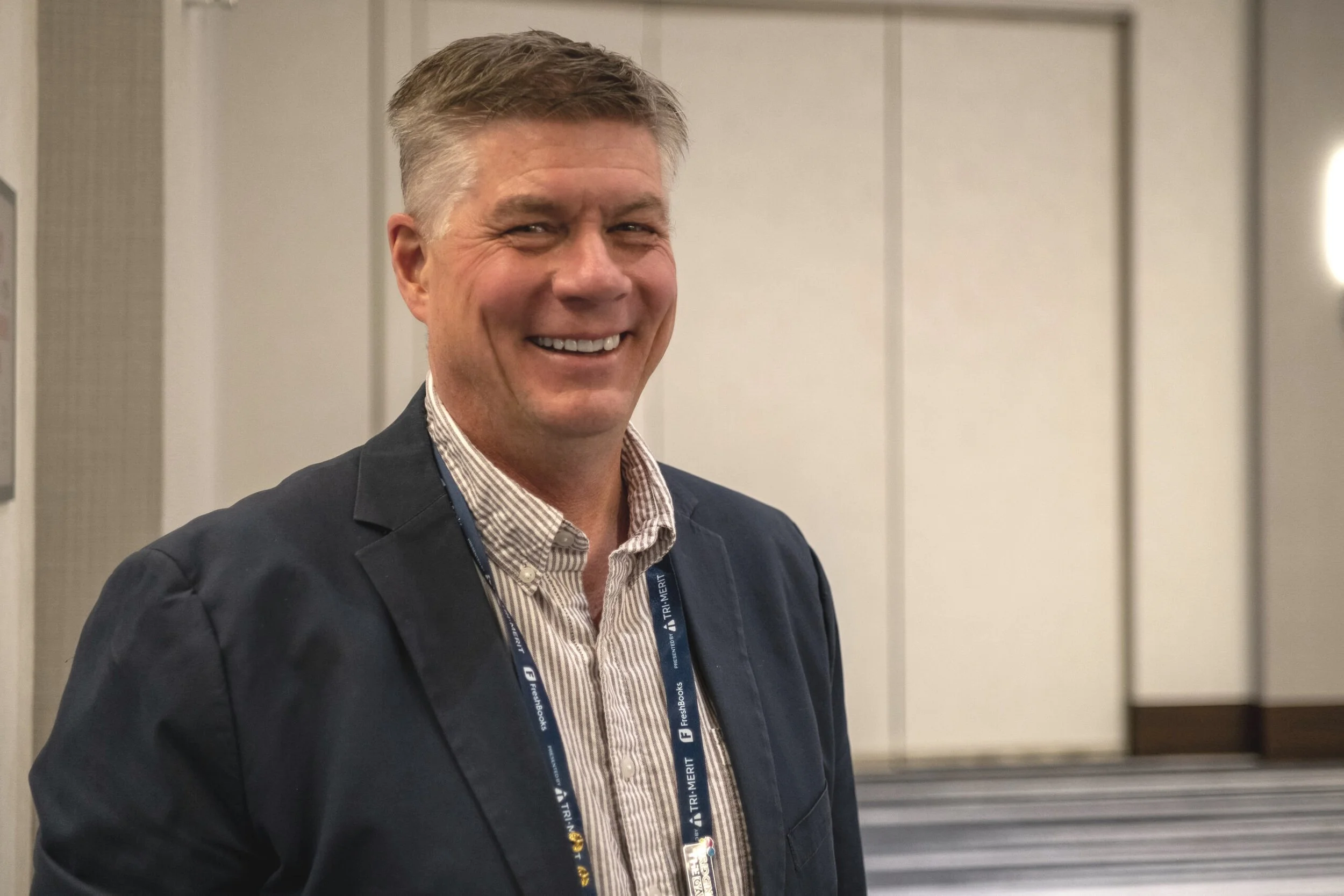
Randy Crabtree, co-founder and partner of Tri-Merit Specialty Tax Professionals, is a widely followed author, lecturer and podcast host for the accounting profession. Since 2019, he has hosted the The Unique CPA podcast, which ranks among the world’s 5% most popular programs (Source: Listen Notes). You can find articles from Randy in Accounting Today’s “Voices” column and the AICPA Tax Advisor, and he is a regular presenter at conferences and virtual training events hosted by CPAmerica, Prime Global, Leading Edge Alliance (LEA), Allinial Global and several state CPA societies. Randy also provides continuing professional education to Top 100 CPA firms across the country.
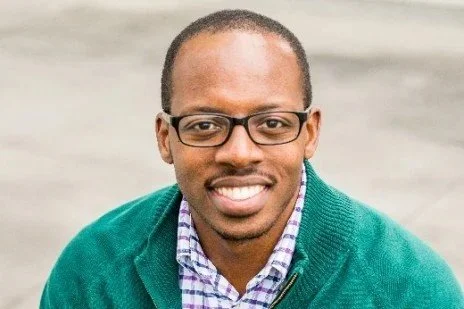
Terrell Turner is a 3x nationally ranked CPA, 2x Top 20 Global Finance Influencer. He is the founder of the TLTurner Group, which has been recognized in NYC Times Square and the NY Times as a top accounting and CFO firm that specializes in supporting law firms. Outside of running an accounting firm, Terrell hosts multiple vlogs and podcasts in addition to co-hosting The Unique CPA. Terrell is also a speaker and a content creator who regularly hosts and collaborates on video and audio content projects with multi-billion dollar corporations, bar associations, universities, and non-profit organizations.