
Helping the World by Helping People
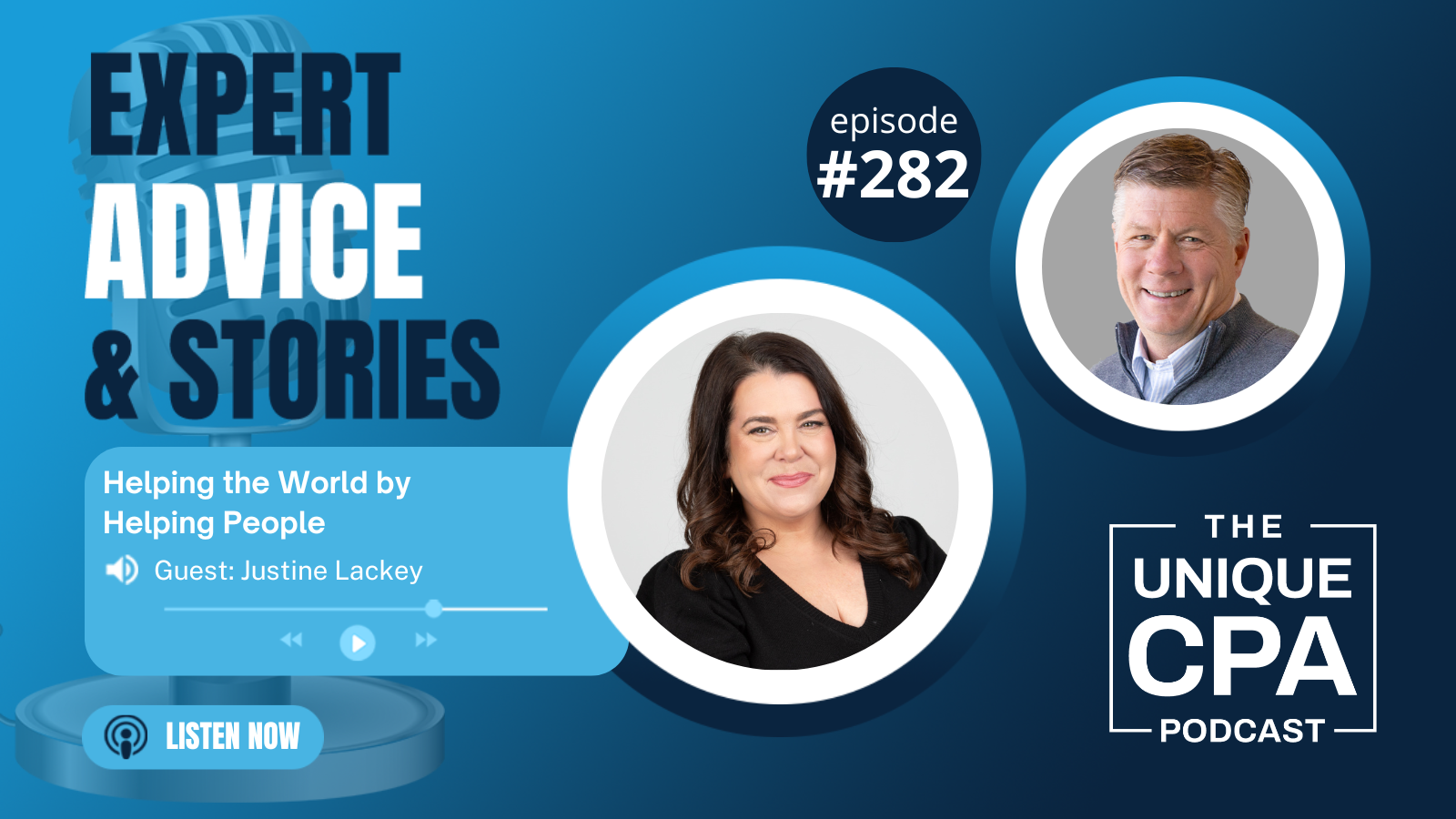
With Justine Lackey
Randy Crabtree sits down with Justine Lackey, founder of The Incubator, on Episode 282 of The Unique CPA. Justine originally built one of the earliest virtual bookkeeping firms out of necessity, long before “remote,” or even anything besides QuickBooks Desktop, became standard practice. Their conversation moves from the mechanics of scaling and selling a firm to the grief that follows a successful exit, and the anxiety that lingers even when everything goes right. Justine breaks down her four-S framework — systems, service, sales, skills — and makes the case for choosing the "right size firm" instead of chasing growth for its own sake. Threaded through it all is a shared conviction that accounting’s stress gets ignored far too often, and that the profession’s future depends less on compliance work than on the relationships built along the way.
Show Transcript Hide Transcript
Today, my guest is Justine Lackey. Justine is founder of Good Cents Management, one of the first virtual bookkeeping firms in the U.S., which she successfully sold in 2023. Today, through her Incubator Community, she helps bookkeepers and accountants, especially women and mothers, build profitable firms that support the lives they want to live. Justine, welcome to The Unique CPA.
Hello, Randy. I’m super excited to be here.
I’m super excited too. I know we’ll have a fun conversation. There’s no doubt about that. So quick, I’m going to ask you to expand on the intro I gave there, but before, because right before we started recording, I had mentioned we had met a year ago and then you reminded me it was two years ago.
It was.
I was trying to remember. Where the two year, was it Scaling New Heights two years ago, or…?
It was at a cabana. It was Scaling New Heights.
Now I remember. And that was with, whose cabana was it?
That was Shirley Koss’s.
That’s what I thought. And that’s where Dawn Brolin’s daughter went and bought me a swimming suit.
That is correct. You’re like, yes. That was our first interaction.
So, Emily, if you’re listening, thank you so much….
I was like, you guys are good friends. Way to go, Emily. She’s like, I got it. Yes, she did. As those rolling girls often do, so, yeah.
That was very nice.
And that was my very first accounting conference.
Was it really?
Even though I had been in the industry for like 20 years, I had never been to a conference, because I was terrified of flying for a really long time, but I saw everybody talking about Scaling New Heights and I was like, I’m going to get on a plane and go. And I did.
Nice. Well, I’m glad you did. I’m glad we, because then we got to get reacquainted last year in Denver at Bridging the Gap, where you were on a panel and thank you for being part of that. I appreciate it.
Thank you for having me. That was great when we talked about selling our firms and a private equity acquisition versus a private buyer acquisition. So that was a very interesting conversation, so thank you for having me to that. Fabulous.
Yeah, no, that was great. And then, one thing I want to thank you before we go into further, and I mentioned this to you, I think when we were at Scaling New Heights this year, is that I really appreciate the recommendation you gave me for Arthur C. Brooks From Strength to Strength. That book is awesome.
That book is amazing. So for people who don’t understand the context of the book, it’s kind of after you go through this career, you know, what’s next? And part of it is when people don’t let go, they don’t end up in a place that maybe is the best. And then there’s people like myself, and where I think you’re going is into that mentorship, cultivating people, right? So that they become their best selves. So yes, I loved that book. I’m so glad. It was a good recommendation.
Yeah, it was funny. I was talking with Kenji Kuramoto, maybe end of last year, and I was so excited to tell him about this book and he was so excited to tell me about the book. And it was the same book. We were both like, you’ve got to read this book.
Oh, really? He’s great. I follow him on social, Arthur Brooks, and he talks a lot about happiness and contentedness and the things that really drive us, or not necessarily drive us, actually satisfy us, enrich us, make us content.
Yeah, it’s great. I’ve listened to it twice so far and I’m starting to again, ’cause it’s kind of the life I think I’ve lived for about the last seven, eight years, plus the life I am transitioning to right after the conference this year. So it’ll be interesting.
It aligns perfectly.
I think so.
I’m happy for you.
Well, thank you. Alright, so let’s get into that. I said I’d let you expand, but let’s start with a question though, ’cause we can expand from there. So I mentioned about your company and that you had sold it in 2023. That this was, you know, early on a virtual bookkeeping firm, that was remote, long before remote was a thing. So really, what did you see different back then than maybe others didn’t?
I want to share something like super illuminating and like, oh, I had this grand vision of where the internet was going to go, but, I had a commercial office at that time and I had a small team. Almost always, I had a team of moms. And at that time the server licenses for Windows Server could only be purchased in packs of three, and I think they were like $900 for the pack, which to me was an enormous amount of money then 17 years ago, I was a single mom. So it was a gradual process. First, I got contacted by ShareFile before they were acquired by Citrix, and I was like, okay, that starts my storage problem. Of course every time you had something go wrong with the server, you had to call in the IT people and they were about a buck fifty an hour then. And then when QuickBooks Online did its first switch, and I sat down with Todd, who’s now with Woodard, who was at Intuit at the time, he is like, listen, they’re not, like, this is where we’re going. I had been involved with the web and the internet since it first started, and I could see the writing on the wall. I could see that, yeah, they’re going to fold CDs, they’re going to fold desktop, they’re going to push it out into the internet. So that part I could see, but it was really driven by the fact that IT at that point was very cost prohibitive. And this was my way out. We had other issues too, because like we shared licenses, but we weren’t technically supposed to do that. So if one mom was trying to log in when the other one was trying to log in, we didn’t have enough licenses to go around, which was so stupid, because it was really was pennywise pound foolish.
It was necessity. What is it called? Something is the mother of invention?
“Necessity is the mother of invention.”
That’s what I thought, there you go.
Yeah, I mean, scrappy for sure.
Innovative. I’m going to go with innovative and scrappy. A combination of both. Alright, so let’s talk more about Good Cents management, the firm that you sold. So looking back at that whole journey, the building of it and the selling of it, is there something in there that, when we talk about success and success is different for everybody and there’s different definitions, but did that teach you something about success?
Just ’cause I think it’s interesting, especially with the CAS conversation that’s happening now, originally the company was called Good Cents Bookkeeping, and then in 2021 we switched to Good Cents Management because we were so much more than bookkeeping. Because now CAS is like developed into that, right? AP, AR, payroll, so just want to talk about that from the evolution standpoint. But when I first started Good Cents, my goal was to build a laundromat. I wanted everything on autopilot. I was like, I just want to have this recurring revenue stream, and the interesting thing is, once I finally got there, I was like, “I’m done.” And I sold it. There’s a number of reasons why I sold it, but I think I was just really ready for something new, and I had done a beta test of my program. The community is called The Incubator, but the program is called The Nest. This is all based on the fact that I have a lot of chickens because branding’s important.
So I did a beta test for my program in 2022 where I stepped into this role of, “Hey, I’m going to teach you how to run a firm. I don’t teach bookkeeping, I don’t teach accounting. I definitely don’t teach taxes. What I teach is how to run a firm.” And so once I knew that we ran the program successfully, I knew that I could step out of the firm and into this new piece of my life. So the interesting thing is that after I closed the sale, which was successful by all measures, I still woke up in the morning and had anxiety about my financial future. I think it’s like, success is always a moving target, and I think, particularly in our profession, we have a tendency to move the goalposts, and we have to be careful with that because it can be a very self-defeating behavior. You measure the game, not the gap, but we’re just always constantly looking behind us.
I completely identify with what you’re saying ’cause I am in the transition mode right now, leaving the company I started 19 years ago.
Yeah. It’s hard.
And starting this new thing, which really I’ve been doing the last handful of years already, just out speaking and the advising part is something new. Teaming up with companies I think are going to have a positive impact on the future of the accounting profession. And I’m old, so I don’t need to work, but it’s still that, I don’t know if I’d say anxiety that is like, I want to keep doing things, I want to keep having a positive impact on this profession, or at least believing that I am. But then it’s like, well, yeah, I should make money too. And so then the money part comes in as, okay, well how do I price this? Like, am I going to be able to get enough income coming in? Do I just ride off into the sunset and that’s it? No, that’s not going to happen. So all those thoughts that you were having, I can completely understand that.
Well, I think when you sell your business, there’s a certain amount of grief associated with that. I think that we often talk about the romantic pieces of entrepreneurship: of the successful exit, the founder, and what we don’t talk about, which is why I so deeply appreciate what you do with Bridging the Gap is, there’s all this really bad stuff that comes along with it. But that doesn’t really make for… it brings people down on LinkedIn when you’re like, “I had a really bad day today,” you know? And so when I told my team I bawled like a baby. I mean, I just cried and I mean, I’m a crier anyway, but.
Well, me too.
It was really hard. It was really hard to step away. So I have compassion and empathy and understanding for that transitionary piece.
Well, thanks.
But it does tie into just having a personal mission. You know, having a mission and values and just sort of how that has changed for me over time. And I worked with a coach and a mentor, actually that’s how I found that Arthur Brooks book was he did a podcast with him. His name is Michael Hyatt.
Oh, I know Michael Hyatt, or of Michael Hyatt.
I was in his business accelerator program for two years. He sunset that. But he developed a program where you kind of go through it and you address the nine domains in your life and you come up with a personal mission statement. And so I did that. That was the first time I flew. I was down to Tennessee, ’cause I thought he was retiring, but he actually introduced a different track, but it was great. And so I came up with a personal mission statement, which I think might relate to what you’re going through and sort of how you see yourself, which is you said, “I want to try to continue to impact this profession,” which is very broad. And so my mission statement became, “I help the world by helping people.” And so you could have an impact on the industry, but really, how do you do that? You do that with relationships one-on-one. So when I work with my students or my clients and they have some really significant change in their business or their life, that impacts everybody around them, from their employees to their clients, and most importantly for me, their friends and family, when they’re happier, when they’re healthier, when they’re less stressed out, when they have more money. So a little bit of that, right? Like I help the world by helping people, and you can help this profession by going out and just helping a single client because that client might have 10 or 20 or 30 employees and then they’re running a better firm.
Right. Before we get into the next thing, ’cause I want to tell you, ’cause I’ve been doing this mission statement for months now, a year, and I keep evolving it. And so the one that I changed to yesterday, which the overall theme is always the same, but yesterday’s is “to inspire change that helps people and the accounting profession thrive.” Because I think change is important, ’cause this is a whole, we don’t change right now, we’re done, we’re gone, ’cause this profession is going to be changing so quick right now. So, all right. Enough about me, but that’s my current one, so we’ll see how long that lasts.
I like it. I think you’re such an impactful, thoughtful person with such experience. I just am not sure if it has to be niche to just accounting, but that’s my take.
No, and I appreciate that, ’cause that was my original thought too. When I originally set up the RandyCrabtree.com website in January, ’cause I knew I was going to be transitioning at some point, I thought maybe the end of this year, it was more than just accounting. But my passion is accounting and I thought, you know what? I’m just going to stay here.
I have to say this: If you look back on your life and you’re like, what would I do differently? You let your fear of flying really control and dominate your life. I’m not afraid of crashing. I’m afraid of not having control, which I think most—
Oh no, I know what you mean.
Oh, yeah. Could relate to like, it’s like they closed that door. I’m like, oh no. You know? But I regret not going to conferences. Because I do think that the accounting community is very unique in the terms of true, honest friendships. They start as professional relationships and then they form into real, true friendships. And I missed out on a lot of that because I didn’t get out of my 20 mile radius. So if somebody was listening to this podcast and they’re afraid of flying, you can do it. I did. Get out there, go to a conference, go to Bridging the Gap! And I went to a marketing and AI conference last year because, like everybody, right? I’m pursuing my AI literacy and looking for other channels outside of the accounting world, and I thought marketing, creative people, maybe a little bit of more artistic, flamboyant side. And I don’t think I saw one time where two people ran across a conference floor and embraced, you know? So when you’re saying, okay, accounting is where my heart is, I understand.
Yeah. And it is, it’s an amazing community and the running across the hug I see all the time, which is pretty cool.
Yeah! Or like when people meet in person, they jump up and down. They’re like, oh my God. You know? So that’s super fun.
it’s kind of like going back to Arthur C. Brooks, his son’s statement that he has incorporated is, you “deal friends” and “real friends.” And the difference between both, so we’ve got both, but there’s so many real friends, and deal friends are fine, which is, people that you’re going to communicate with and talk to, but the real friends is really where it’s at. And that happens so often in this community, the accounting community.
Yeah, and I had forgotten about that expression, deal friends and real friends. And then in that he was talking about when people leave their profession, they realized that a lot of people that they were closely connected to were quote unquote “deal friends,” ’cause they were only related to transactional activity with inside of their business or career, whereas real friends were friendships that existed beyond that. It’s interesting ’cause with some of my clients, even though I sold the business, we continue, we are real friends. Not all of them. I had about a hundred clients when I sold, but there’s a handful of them where we’re still texting and, but not talking about accounting.
No, exactly. Which is great. Okay, so let’s go into more business now, or at least what you’re doing today, ’cause one of the things with your program is, you’re helping people, you’re helping firms, you’re helping them probably find out what they want to be and what their goals are. But I think I’ve heard you say this, or maybe it was written somewhere, one of your messages is helping people move from broke and burned out to prosperous and peaceful. Are those words you actually said, or did I make that up? Or that’s a theme?
No, I mean, I know what broke and burned out feels like. It’s not fun.
And, so let’s talk about that message, but also, why do accountants end up building businesses that they really don’t enjoy? They’re broke and burnt out instead of prosperous and peaceful. So why is that happening, and then how do you help them, what advice do you give, to course correct to get to that prosperous and peaceful?
One of the very first exercises I do with people and sometimes I just do this, as part of free programming is, we talk about the right sized firm. We live in a culture where bigger is better, and we live in an industry where we’re constantly talking about scale. I scaled my firm, the largest we got was a team of 12, I think we’re across six or seven different states, and then I brought it back down. I think we were six when I sold. And so I think the very first thing you have to get very, very clear on is the right sized firm. Do you want to be a solopreneur with 10 clients making X amount of dollars? Fantastic. Do you want to become the H&R Block of bookkeeping? Fine, fantastic. But having exactly where you want to go dictates all of your decisions first. And you don’t have to grow.
Now you’ll have natural churn. So we have to approach this from a CFO/CEO perspective. So even if you have 10 fantastic clients, at some point, one or two of them is going to churn out and what’s the marketing mechanism and that stuff, but you don’t have to go from 10 to 20 or 20 to 40 or 40 to 80. What happens is, as I remember with my own firm, at a certain point, this came from a conversation I had with my midwife when my son, he’s in his twenties now, but she said she was attending a birth and the woman just turned to her and said, “I want to get off,” like she was on a bus, she was in the middle of labor. “I want to get off!” So I remember at a certain point in my business, I was like, “I want to get off.” It just was, it was totally chaos, right? You know?
So how do you get out of the chaos? You get really intentional about how big you want to be. Effectively managing growth, which is harder than we address. Because one of two things are going to happen is you’re going to take on clients before you have the people, or you’re going to take on people before you have the clients, which means then you’re out of money. So we’re always constantly juggling these two things. So managing growth, because if you take on clients and then you can’t serve them, then they’re not happy and they leave and that is a whole problem also. What I teach people is when I was looking at what is this curriculum I’m going to teach people? And it boils down to what I call the 4S framework, right? We need systems, we need service, we need sales, and we need skills. So systems, workflows, right? They don’t have to be complicated. Service: onboarding. How are you doing your monthly bookkeeping every month? How are you keeping track of when Gusto changes their interface or that stuff constantly needs to be updated. Sales, and I focus on service before I focus on sales because if you can’t provide service, I don’t care how many sales you close, they’re just going to leave. But I actually love the conversation around sales and a lot of people do not. And then skills, right? Because we’re in an industry where skill acquisition is a non-negotiable, particularly now, with AI literacy and building out workflows and automation. So it’s really the combination of those four. Do you build them all out at the same time? No, that’s impossible. But you diagnose what in your business needs the most help. So it’s pretty intentional. Very practical.
Oh, yeah, no, for sure. That’s a similar message I’ve started saying just recently about defining. So when I have a burnout discussion, like yesterday, I spoke to a group of small firms up here in the northern suburbs of Chicago. One of the things was, well, really define who you are, who you want to be, who you want to serve, not as the, I like the four S’s, but this is, I’m not an SOP person or a process or procedure. So for me to be able to at least say, define who you are, was a big step for me.
Big wins! Big wins. We celebrate them big and small.
But once you do that, once you understand who you are, who you want to serve, why you exist, even what your end game is, once you have all that, then the other stuff you can fill in the middle, you know? And then once you do that, it’s not just this haphazard growth or maybe growth, maybe not growth, it’s intentional. This is who we are, this is who we want to be, this is why we exist, this is who we want to serve. These are the offerings we want to have. Once all that’s in place, then technology starts to fall in place because now you know what you’re doing. And so once you’re serving clients you’re happy about, you enjoy working with, burnout is a lot less prevalent in my mind.
Yeah. Because you like what you do and you like who you’re doing it with. I will say too, one of the other conversations that I think can be absent is it takes a while to figure this stuff out, and then sometimes when you figure it out, you have to start all over again, right? So in the beginning, I loved working with small businesses, and I do love small businesses. I would say new businesses. But new businesses inherently just are very challenging to work with. They don’t have a solid business model, they don’t have cashflow, bookkeeping is the first thing on the chopping block. So despite my altruistic efforts, I had to decide that I wasn’t going to work with these people anymore, found a book of people to refer them to. You might start working with creatives and then all of a sudden work for your uncle who’s a plumber and figure out you like trades, right? Like it is okay. I think we get so stuck in these, we like, oh, I made this decision to niche and this, and then that’s it. And it’s okay to say, “Hmm, maybe I want to rethink this.” Like, and not everything is so hard and fast and black and white and a lot of times we see posts or memes or books and it’s very malleable and it changes based on who you are and what you’re going through in life and your age too, you know?
Oh yeah, for sure. I think a good example of that is my new co-host on the podcast, Terrell Turner.
Ooh, I love Terrell.
Yeah. He records some of the episodes. I record some. When I first met him in ’21, he had recently started his business. In fact, I may have met him before he officially went live in this business, but when he did, he picked a niche. Some people say niche. I say “nitch.”
Potato, potato.
I’m starting to believe everybody else is right and I’m wrong, but I’m going to stick with it for now.
It depends on you. Is it concierge or concierge? Like, I don’t know.
There you go.
We can debate there. We’ll make a whole podcast just about that.
We’ll pick words and we’ll just dissect different words. That sounds like a good one. When I met him, it was restaurants, that’s what he was going to work with. And now he is all about law firms. He found who he liked, who he loves working with. And he’s crushing it with that. And so your advice of not being stuck, you make a decision, that doesn’t mean the rest of your career has to be that niche. And for him, he’s a great example of that.
Yeah, but permission to change. So I thought I had to keep growing and growing, and then I grew, and then I was like, “Oh, I don’t like this.” And so then we intentionally pulled back. But it does actually lead back to something that I think is important that we should talk about, which is, how do we end up building firms that we don’t like? One is, I think that growth can become unmanageable at some points. If you’re not profitable, you’re going to be pissed. And for as amazing as we all are working with other people’s money, a lot of times I see people who in our industry are not acting as their own CFO.
Oh yeah.
I mean, maybe it’s just me, but that’s what I’ve seen. I also think that there’s an undercurrent and underbelly to our industry that we don’t address directly, even though we deal with it every day, which is, this is inherently an incredibly stressful business. We are working with people’s money. Money makes people cuckoo. The laws change every day. When I first started, I only had to know the payroll and HR laws for New York, New Jersey, and Connecticut, which is what we call the Tri-State area here. Now we have the nomadic workforce, and you’re responsible for knowing every, not just every state, but every municipality. It’s hard. It is just a hard business. So I think that when we’re not in conversation about that, we’re not in community getting support from somebody like yourself or me or the myriad of people that are out there doing this very important work now, it can be a lot to bear. And again, that part of this industry gets lost with all the amazing things that are here: It’s a recurring revenue model. Taxes aren’t going away. You can be highly profitable. We have amazing technology tools. There are so many super great things about it, but it’s very stressful.
It is stressful, but that’s when we, one, being aware of it, because then we can address it, ’cause we’re really good at ignoring it. “It’s just what I do. It’s what I have to do. This is the way it is.” But when we identify what’s causing the stress, we can at least then start to address it. And I think we’re really bad at that part because, “This is just what I do. This is the way the profession has to be.” So I think it’s fixable. It’s changeable. It’s correctable. But we’ll always have deadlines. We’ll always have change. We’ll always have this.
We’ll always have compliance. We’ll always have laws, right? This is the part of evolution. But are we in agreement that maybe we don’t talk about that dark side so much as we talk about the awesome stuff so much? Or is it maybe just me?
No, we don’t talk about the dark side. I agree completely, because we ignore it. Because this is our mindset. Our mindset is this is who I am, this is the profession, this is how it is. We control everything, we try, we think we control everything for our clients, and we make them better, and we help them, but we don’t look at it through that same lens for ourselves. That’s what I see.
I agree, I agree. And I think that’s one of the reasons why a lot of, particularly the solo and small firm owners, zero to five is where they get stuck because they’re constantly in their inbox fixing everybody else’s problems that they can’t get out from underneath, drowning because they don’t carve out any time to work on their own businesses. That’s actually something we started more than two years ago in The Incubator was, we have scheduled coworking sessions. They’re very structured and people come in. You’re not allowed to work on client work during those hours. You have to come in and state with intentionality like, this is what I’m working on in this moment, and it has to be firm specific.
Oh, nice.
Because unless you carve out the time to actually do that work, and that actually, one of the things that I’m fanatical about is tracking metrics and success rates and things, was, you gave us all the materials, but then I don’t have time to implement it. And I think we have a consumption problem where you can consume content all day long, but unless you actually make change, that’s not learning. That’s what differentiates learning from information aggregation is changed behavior, so,
Yep, I agree. Alright, so obviously I think people could tell you’re passionate about this profession. I’m passionate about this profession. We love this profession. We’ve said it multiple times. If we look ahead right now, or if you look ahead, what gives you the most optimism about the future of bookkeeping and accounting? Where do you see this continuing to thrive or even thriving more than it is now? And why are people going to be so excited to come in? What’s the optimistic view of where we’re going as a profession?
I’m like, geez, there’s so many things to get excited about. But that’s just me.
No, I agree. I agree!
I mean, I think if we actually recognize our power to help other people, that’s incredible. And I really want people to hang on to that piece of it more. And we’re starting to hear this more now in our community, the transformation piece, right? Like the best parts of our job is like, when I had a client tell me, “I have worked with bookkeepers and accountants for 10 years and nothing has ever been this clear for me.” I just think focusing on the people element of it is incredibly exciting, the relational piece, and I think particularly because of the inundation with AI, that piece is going to become more pronounced, you know? I don’t think the human in the loop is review work. I think the human in the loop is being in connection with people, going through that experience with them.
Completely agree.
You know, and I think that is what’s important. And I think accounting’s kind of going through this shift too, right? Where when I first entered accounting and when you first entered accounting, everything was like Chase Bank blue. It’s like pocket protectors. And I think people are really understanding that there are so many incredible people, intelligent people, fun people, creative people involved in this profession. So I think that to me has been such a joy to watch, just people really being truly expressive of who they are.
And I love what you just said, because I think that’s one of the optimistic things in the future, the positive things, is that we’re going to attract all these different skill sets, ’cause people aren’t going to think that you’re sitting at your computer typing in data and that’s what accountants do. No, that’s that communication, it’s that creative side. Those are things going to continue to be more important as we go forward, especially like you said with AI being a big part of what happens from a compliance standpoint.
That’s the blessing and curse.
Yeah. So it’s exciting. You can tell we’re both excited about the future of this profession. We both love this profession talking about it, but I’m going to transition now. When we’re not talking about the profession, when you’re not helping people through your community, what are the things you love doing outside of work? What are your passions?
So, I love a good Sunday dinner. I post about those a lot. I come from a really large family, so cooking for my friends and my family is super important to me, though it’s challenging ’cause my two older ones, I have to kind of yo them back to the house. “You’ve got to come home.” I love entrepreneurship in general. And then constant evolution, I really have focused on that as a really key core value of mine, whether it’s skill acquisition, trying to evolve as an individual and a human being, reading, eating more vegetables.
Alright, all good things. And then final thing, people want to hear more about you, your community, what you’re doing. Where would they look, what’s the best place to see what you’re doing or maybe get ahold of you?
Yeah, so you can just go to the website, which is JustineLackey.com. Same thing, just look me up on LinkedIn. I’m over there all the time, probably more than other social platforms.
Alright. Well, Justine, this has been a fun conversation. I think I’ve been smiling and or giggling and laughing the whole time. So thank you for making my Wednesday morning even more enjoyable and look forward to the next time we have a conversation. Thanks for being on the show today.
Thank you so much, Randy. This was super fun.
About the Guest
Justine Lackey is a mentor, coach, and content creator who has helped shape the bookkeeping and accounting world through her bold mix of business strategy, systems, technology, and heart. As the founder of Good Cents Management, one of the first virtual bookkeeping companies in the United States, she built a recognizable New York City-based brand before selling the firm in 2023 to pursue her mission of helping the world by helping people. Today, through The Incubator Community, Justine helps bookkeepers and accountants – especially women and mothers – move from broke and burned out to prosperous and peaceful by building their #dreamfirm.
Meet the Hosts
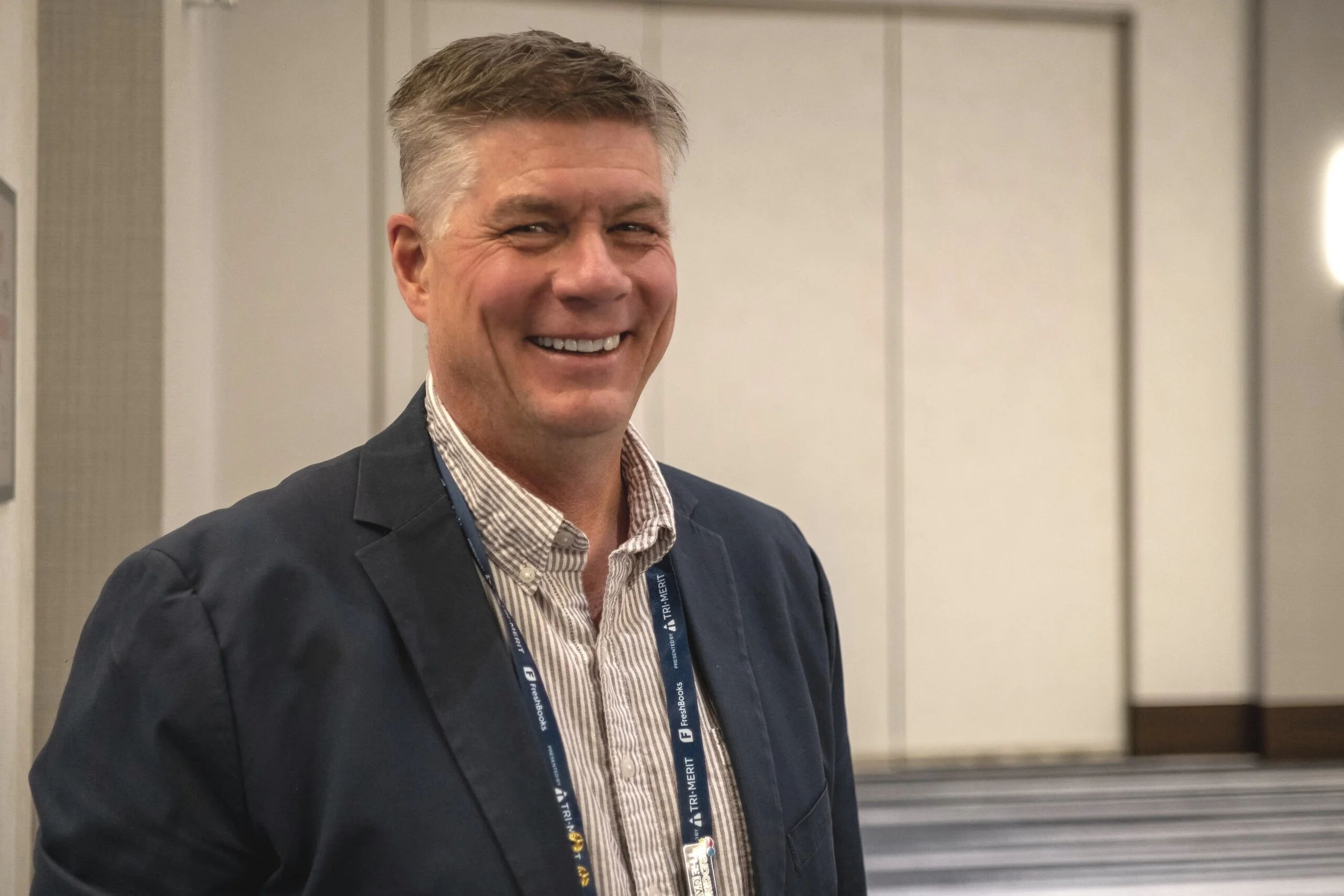
Randy Crabtree, co-founder and partner of Tri-Merit Specialty Tax Professionals, is a widely followed author, lecturer and podcast host for the accounting profession. Since 2019, he has hosted the The Unique CPA podcast, which ranks among the world’s 5% most popular programs (Source: Listen Notes). You can find articles from Randy in Accounting Today’s “Voices” column and the AICPA Tax Advisor, and he is a regular presenter at conferences and virtual training events hosted by CPAmerica, Prime Global, Leading Edge Alliance (LEA), Allinial Global and several state CPA societies. Randy also provides continuing professional education to Top 100 CPA firms across the country.
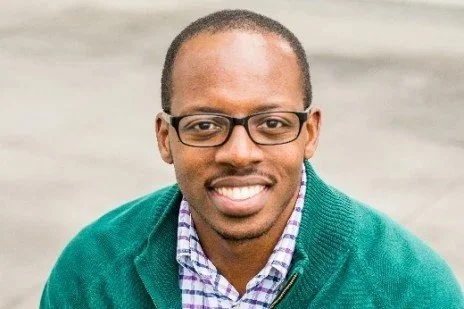
Terrell Turner is a 3x nationally ranked CPA, 2x Top 20 Global Finance Influencer. He is the founder of the TLTurner Group, which has been recognized in NYC Times Square and the NY Times as a top accounting and CFO firm that specializes in supporting law firms. Outside of running an accounting firm, Terrell hosts multiple vlogs and podcasts in addition to co-hosting The Unique CPA. Terrell is also a speaker and a content creator who regularly hosts and collaborates on video and audio content projects with multi-billion dollar corporations, bar associations, universities, and non-profit organizations.