
Build Relationships and Solve Problems
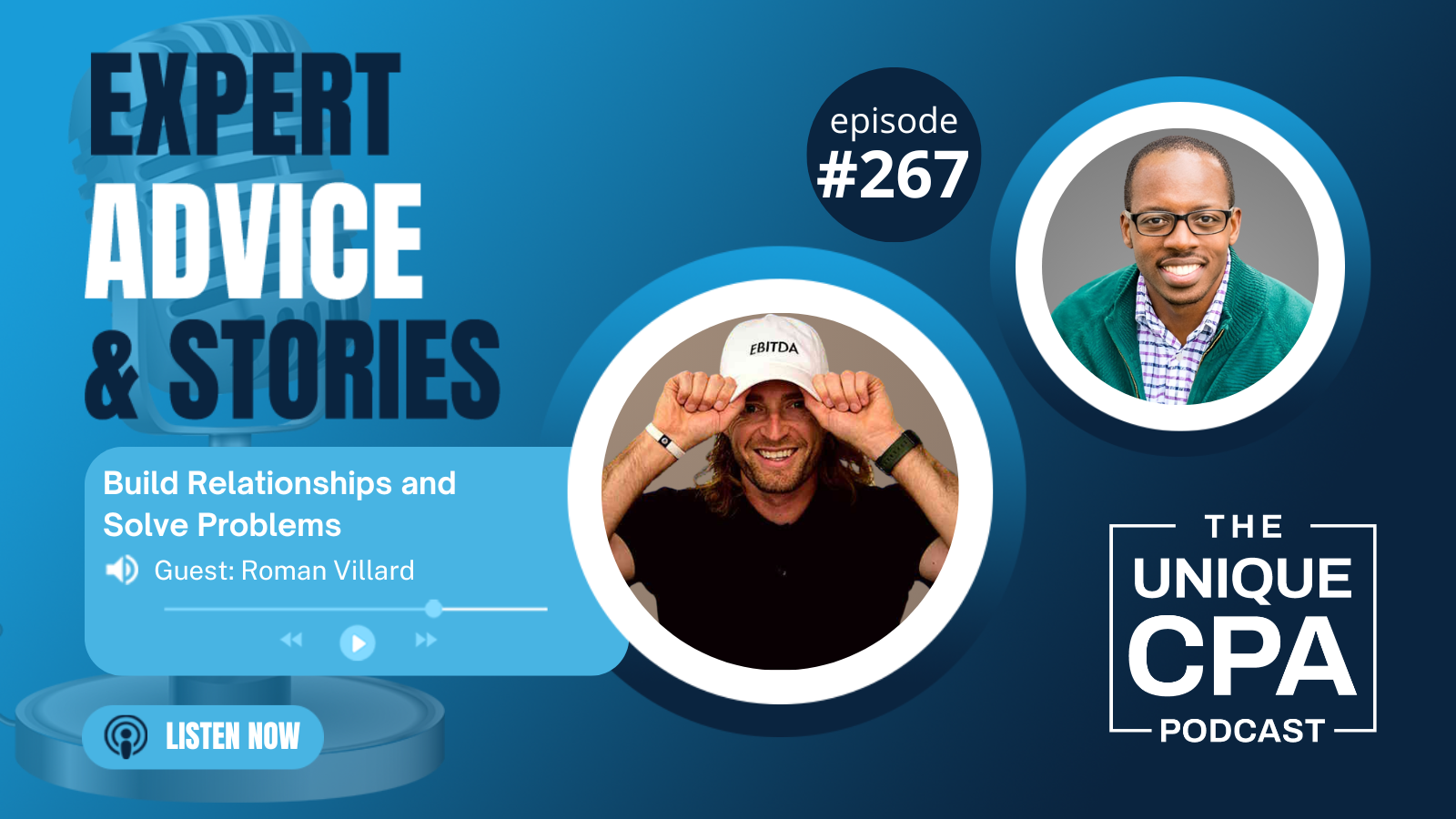
With Roman Villard
Support for this episode comes from BILL. Simplify your workflows and accelerate your growth with BILL’s Accountant Console. Take a demo today at BILL.com/uniquecpa for a $250 gift card – terms apply.
Repeat guest Roman Villard built Full Send, his Boulder-based accounting firm, on a deliberately contrarian premise: hire leadership first, reject the CAS label, and train your team to think like the business owners they serve. Four years and 18 team members later, split between Colorado and Argentina, the results suggest he was onto something. He covers a lot of ground with Terrell Turner on Episode 267 of The Unique CPA: the weekly Friday training rhythm Roman runs entirely from team-submitted topics, why “build relationships and solve problems” is a more honest job description than any service-line acronym, and how managing across cultures has forced a more intentional approach to feedback than most firm owners ever develop. They also get into the genuine complexity of AI adoption right now: Roman is candid that even firms on the forefront are still figuring out how all the moving pieces fit together. (And then there are the 34 miles and 8,000 feet of vertical he’s about to run!)
Show Transcript Hide Transcript
Hey and welcome to The Unique CPA Podcast. Today we are sitting down with Roman, ’cause we’re going to talk about a gamut of things. And I really want to dive into like, you know, what Roman’s been up to with Full Send, I mean, we’ve been seeing Full Send and Roman pop up in so many different places, social media, conferences. I feel like the next time I see you, I need to get an autograph, man. So I’m a big fan of the success, the journey that you’ve been on. But I think also there’s a lot to it behind the scenes I think that people don’t see, and I know you and I have had conversations about this at different conferences and events, so I think we’ll talk about that. And then also just what you’re seeing as your business grows and with AI. So first, for the people who haven’t met you or who aren’t already following you, can you give us a little bit of context on you and your firm?
Yeah, happy to. And that’s a very gracious introduction, so appreciate that and happy to have this dialogue. So, Roman Villard, I am a founder of a firm called Full Send based out of Boulder, Colorado. We have about 18 team members today, focused on predominantly CAS services, transactional accounting through fractional CFO. We stood up a data science team about two years ago, and that team actually has shifted from like traditional data work into automation and AI development for our clients. Beyond that, I’m a father of three, so I’ve got a busy household. I enjoy running and trying to bring the concept of moving your body more to conferences and events that I’m attending to get people healthy.
Nice, I love it. Now, you mentioned, you know, family of three, so age range of those three amazing children?
Yeah, my tiny roommates. They range from five at the oldest, two and a half in the middle, and one at the youngest. We run the gamut of diapers to temperamental five-year-olds.
Gotcha! So I’m very curious, you mentioned about what focusing primarily on CAS with Full Send, was that kind of always a path that you’ve been on, or was there like an inflection point where you kind of turned and said, hey, we’re going Full Send down this road?
Yeah, so it all kind of started at my last firm where we were, you know, more centered around CFO offering with kind of a full stack accounting approach. In my last year there, I was sending out a lot of work to other firms, they were either at capacity or they were, in my opinion, like not doing that great of work. And so, yeah, man, I started Full Send with an intention to dive into CAS. I didn’t really know it was called CAS at the time, this is four years ago, CAS like, I don’t know, as a service or vertical, has grown a lot. But I’ve always carried the mindset that you either are an advisor or you aren’t. And so CAS as a term, “client advisory services,” just doesn’t resonate a whole lot with me ’cause we’re just advisors, we’re consultants. We’re trying to help our clients get from one point to another point, and how we deliver that is through our service and through advisory. So I don’t really delineate a whole lot between CAS or not CAS. We’re just consultants trying to help our clients.
Now, I guess, do you find that from a client standpoint, what terminology do clients tend to resonate with? Because I feel like CAS is like an insider baseball kind of term for us accountants. So what do you find that clients actually resonate with?
Oh, it’s such a good question. ’Cause I’m sure you’re the same way in that you’re not going to tell a prospect, “Hey, we have CAS services for you,” because they would be like, “What are you talking about?” I still think there’s a lot of misinterpretation maybe, in the market of people seeking out services where they may just be looking for an outsourced accounting team to do AR and AP, but then they go looking for a fractional CFO on Google. Or conversely, they may be looking for more financial reporting, controllership type work, and they might type in “bookkeeper” into Google to try to find a bookkeeper. And so I think the terminology that resonates most with our clients is just going to be that outsourced accounting function, finance function in general. We talk a lot about financial systems and integrations and tooling and data and things like that, all of that tends to resonate with clients because they’re swimming in a sea of data and systems, and quite honestly, just need help managing all of them.
Yeah, that makes a lot of sense because I think about that even from my perspective, when I’m talking to clients, a lot of times like we never use the word CAS. I work with mostly law firms, so we never use the word CAS, but what we will talk about is like, they’ll tell me about how they feel about their numbers or they’ll tell me about how they feel about decisions or like, hey, the funny one that always comes up is “I just need another adult in the room when it comes down to decisions,” to where I’m just like, yeah, that’s what we do. We’ll be the second adult in the room.
It’s a great way to frame it. And I learned this from a firm I worked at maybe six or seven years ago, and they would frame it very simply in two different domains. They would say, build relationships and solve problems. Like that’s our job at the end of the day. And I think when you boil it down to what we do, whether it’s CAS or tax or, you know, advisory, whatever you want to call it, that’s what we’re doing. We’re building relationships and we’re solving problems at the end of the day.
I love it. So I’m very curious, like for your team, as you started bringing people into the vision of what you’re creating, did they come from, let’s say, prior CAS experience or was this something like they had to kind of learn the culture of what you were doing?
Yeah, it’s interesting ’cause we have a variety of folks that have come predominantly from industry—industry accounting roles and/or large firms. So we have folks that have come in from the Big Four. We have folks that have come in from, you know, a $60, $70 million startup that has raised a lot of money. And so for those that have more of that accounting services background in Big Four or a large firm, it really has been a rewiring of the mind of “We’re not here just to complete a task for our clients.” Like if you look at that through an audit mindset at a big firm, you are going down a checklist and you’re trying to complete an audit to deliver an audit report. Our work, yes, we do take on tasks and, you know, transactional activity for our clients and invoicing and bill pay and things like that, but we’re doing it through the lens of if you were in this business owner’s shoes or if you are sitting in the internal accountant seat, how would you design this process in order to create maximum value or efficiency for the business? And so, you know, at the transactional level, upward, every single thing we do is kind of done through that lens and it requires a lot of training along the way.
You know, I think that’s a very interesting point because I literally just got off a meeting with my marketing manager and we were going, she’s been actually asking about like, changing into a new, you know, marketing project management tool. And so there’s something about it. I’m just like, all right, I think we need to dig into this a little bit more. And I said, okay, we listed out all the major things that it requires to run a marketing department. And I said, okay, how do you kind of prioritize these? And what I noticed like, the things she tended to prioritize were more tasks kind of managing the execution of the team. And on my list, like the top of the list was the objectives and the goals, the overall strategy, and I realized like, oh yeah, I’ve got some work to do here to help them kind of see like, hey, we need to get on the same page about this. So I’m curious for you, when you have people come into your organization, what does that kind of timeframe look like for the melding of the minds, of like coming into one accord on like, hey, here’s how we operate here at Full Send?
It’s an interesting question because I think it’s a little bit different for everybody based on their background, but we have specific onboarding rhythms for team members to walk them through how we do what we do. Internally, we use Notion as kind of a central database, if you will, of all of our SOPs and how we do what we do with videos and trainings and systems and integrations and like how we like operate as a business, right? And that is one half of the equation. The other half of the equation is training the individual to start to think a little bit differently, start to think a little bit like a business owner, put yourself in the shoes of the client, and that certainly takes a much longer time depending on the experience and background and exposure to the types of businesses that we work with.
And so one thing that we implemented this year actually was a training every single Friday. And this training is, you know, I lead all of the trainings, and the topics that I train on are based on submissions from the team: “Hey, I was in this situation, this deep accounting technical situation. Could we do training on that?” Yeah. Hey, client success, dealing with client issues. How do we deal with this? Okay, how do business owners think in this industry? And so all of these topics are organically coming up based on the work that we do. And we have a training on it every single week, and that just further increases our knowledge base in Notion for future team members to continue to grab onto and learn how we do what we do. So it’s not a specific timeframe, it’s just an ongoing exercise every day.
Now, what helps you develop that perspective? Because you don’t usually hear a lot of people talking about like, hey, here’s a way we’re approaching internal training and ongoing development. So was that something you learned from let’s say a mentor or just the hard knocks of like trying to do it without it?
Yeah. It was developed via listening to our team and asking our team what do they want, what do they need to feel successful, what would help challenge them and help them grow? And they were just like, training, we just want more training. It’s like, done. Okay, let’s figure it out. And so after going through that exercise of discussing with the team, I was talking to Stacy and I was like, we need to do more training, so I’m setting up a weekly training on Friday at 9:00 AM and she’s like, isn’t that a little aggressive? Like, that’s a lot of time and that’s a lot of content for you to have to come up with. And I’m like, no, we’re doing it. I’m going to prioritize this because this is what the team is craving. So it was very organic in that nature. And I mean, there’s a lot of people who do similar things, but I can’t say that it was like pulled from this resource or that person.
You know, I think that’s so important because I will say that has probably by far been like the biggest relief for our team, is really dedicating more energy towards training and like, hey, we’re going to get together on a consistent basis and here’s some of the things that we’re going to go through. And I know for us the way we tend to find those things, it’s like if I see a recurring issue, I’m just like, alright, this is an issue like we need to talk about as a team and we need to kind of train on, because like just, you know, I guess you say reprimanding people for the mistake isn’t fixing it. So often, how do you kind of go about, I know you mentioned like, you know, taking feedback from the team. So if somebody was listening to you like, hey, you know what, I love what Roman said, I want to start doing some regular training, how would you recommend they kind of go about finding the topics so they even know what to train on?
Yeah, there are a few ways to do that. One, I think a firm owner is going to generally know directionally what they should be training on if they want to kind of move their firm a certain direction. So if they want to lean more into, quote unquote “advisory,” they should be training their team about how do you analyze financial statements? How do you get deeper in an industry? How do you evaluate a certain circumstance? And start training on those things. So the firm owners should kind of know based on where they want to go, what they should be training on. Two, ask the team. See what they want, like, and see if that aligns with what direction you want to go. And oftentimes, I think if your team is all running in the same direction, you should have some overlap between where you want the firm to go and what your team desires. And then the third one is very simply opening up Claude or Chat or whatever and saying, hey, here’s a little bit about my firm, if it doesn’t already have that context, what are ten topics that I could train my team on that would help them level up their experience, their learnings, their career development. And it’ll be like, hey, here’s ten subjects. They might be good, they might not be, but it’s a great starting point.
Now, how deep into some of the training do you go? Because I know when some people hear about training, they’re thinking like, oh man, I’ve got to go back and pull out my, you know, my college accounting books and we’ve got to go. So like, give us an example of some of that training, or how technical, or the depth of some of that training.
Another good question. So this morning, we’re recording on a Friday and this morning had a team training. And the team training was how do SaaS founders think. So subscription as a service companies, technology companies, how do the founders of these companies think? And so we walked through the SaaS business model, we walked through the accounting implications of the business model. We walked through deferred revenue, revenue recognition, net revenue retention, all of the metrics that are associated with this industry. And so in developing this training, there were like level two and level three trainings, that were kind of popping up in my conversation and training with the team, but I tried not to go too deep unless the team was like double clicking on specific items. I try to keep it high level enough to where anybody in the team can benefit from it and nobody’s tuning me out or sleeping, but also, you know, enough depth to where it’s really stimulating. That can be kind of a hard bar, but if there’s a lot of interest, then I would do a second training on specific SaaS accounting implications. What I think is important here is that you can create a really easy structure of how to train and create a really easy deck using AI and like it can be really great and set that up in five minutes. But it’s the personal experience and exposure and conversations with clients that really adds that element of, okay, I can now understand the concept based on the situation that happened with the client or based on personal experience that I’m sharing. I think those things tend to really connect well.
Nice. Now, you mentioned about, you know, your team. So can you kind of clue us into like the dynamics of your team? Like what’s the geography, a general idea on the size of the team?
We kind of hover between I think like 17 and 20 people based on a few contractors we pull in on the data side. We have, I’d say 18 people today, eight or nine of which are in Colorado, another eight or nine in Argentina, outside of the two or three contractors that kind of ebb us up to 20, everybody’s full-time. We operate as one team, we don’t really see any difference between where in the world somebody is sitting. They’re all on Team Full Send. We have the exact same bar for hiring no matter where in the world somebody sits. So what led us down this path of hiring Argentina was actually going through a few interviews for a senior accountant role—we had one interview with somebody in Texas, another one, I think it was like Pennsylvania, then we had two Argentinian interviews for the exact same role, same qualifications. And on both fronts, we were super impressed with the team in Argentina and so we started to lean into that about two and a half years ago.
Okay. So I guess with that dynamic, what is it like kind of managing the team in Argentina with, like I said, you’re a team that’s more local, statewide, so how is that dynamic of managing the two?
It’s funny because it’s not all that different because my teammates in Colorado don’t want to go into the office, and so I see them like this anyway, so it’s actually quite similar, I would say. Despite having a singular company culture, there are absolutely, you know, different cultural expectations across borders, and so the way in which we would provide feedback to a team member might actually vary based on geography, because our team in Argentina really likes that direct feedback, wants to know how to improve right away, whereas I think generally our team members stateside prefer the like compliment sandwich type approach when getting feedback. So it’s just a matter of like really getting to know your team, understanding how those communication rhythms should work.
I feel like that’s one of those things that people, I don’t think we talk about as honestly enough of like, when it comes down to like feedback, because I know in our company, like one of our core values is honest conversation because I noticed a lot of like variability. Like I come from a military family, I grew up playing sports from like five to 18, so I’m just like, give it to me straight, I prefer it that way. If you try to give me the compliment sandwich, I’m probably going to start tuning off a little bit. Just give me the feedback straight, whether it was good or bad. And I would say for me as a leader, just like having to learn that dynamic of having, you know, teams in different countries… because we have a team in the Philippines, we have people in Kenya, and then we also have, you know, a person here in the U.S. So it’s like managing that dynamic to where I’m just like, man, I’ve really had to go into leadership development, leadership training to really figure out like, okay, how do I know how to change my modality, still stay focused on the objective, the goal, but change my modality. So I’m curious for you, like how did you kind of really focus on developing, like as a leader, in the process of leading an accounting firm?
Trial and error, baptism by fire. The leadership qualities required in entrepreneurship and just running a company in general are so vastly different than maybe like what a manager leadership would look like internal to another company. And man, I’ve learned so much just by making a ton of mistakes, whether that was hiring and onboarding mistakes or overpromising and under-delivering to clients, not getting the right scope documented for my team to be able to service on, not communicating clearly to my team and setting expectations in a really honest and clear way. A lot of that leadership I think has just been developed through just a lot of errors. And then also a big part of it too is understanding how to communicate as a leader, just by getting to know your team, getting to know their personalities, understanding how do they best receive critical feedback or how do they best communicate? Maybe some people just need a little bit more time to absorb and think and reflect before responding and other people just like bantering back and forth. And so to the extent that I can as a leader, I want to know that for every single person on my team. Now at scale and hiring, you know, maybe 10, 20 more people, that’s not going to be possible, so then it’s a function of how, as a leader, can I continue to create new leaders within the company that can then create new leaders. And that will, I think, be the determinant of success of the company long term.
So I guess from your perspective, like where do you see kind of that line where you kind of transition a little bit from like first, you know, most people start off like, I’m leading myself, okay, now I’m leading people, now I’m a leader of leaders who then have to like, be able to reproduce the culture in others, like, you know, from a staff count standpoint, if someone’s asking like, at what point did you feel like you became a leader of leaders?
So I took an approach, a hiring approach early on of hiring really management director-level first, rather than more analyst, entry-level first. And the reason for that was I wanted to establish that kind of leadership layer as early as possible. So that they could be, you know, self-serving in a lot of ways and like manage their own work, work more autonomously without that oversight. And so for me, it started very, very early, with my first three hires. It was, you know, COO, a director of accounting. And then we started to fill in some team members to support them. And so it started pretty early, but I would say like moving from five to 10 people in an organization, you really are going to start to require that next tier of leadership within the company, I think.
Yeah. And I would say as someone who took the opposite route, I can definitely say I see the phenomenal wisdom in your approach because—
—I don’t know. It is a lot more expensive. And I can attest to that.
And I remember when you and I had that conversation, probably like a couple years ago, I think of just, you know, going down that journey of like, hey, if you start with the next level of leadership first, it is a little more of an expensive route to go, but I think that’s the beauty that none of us have it exactly right. It’s not like, hey, here’s the exact playbook you should use.
Dude, you’re spot on. I mean, everybody has different goals and desires for themselves, for their companies, for their teams, and there’s not one single approach that will work. And for me, maybe this is a bit selfish, but I knew that my core skill sets and talents in contribution to the company were not going to be best served via sitting in an accounting or finance role. Like I knew that sitting in business development, sales, marketing content was just going to be the highest and best use of my time. So my objective was how quickly can I get my time oriented in that manner as fast as possible, and that was just the route that made the most sense for me.
I love it, man. So I guess as you think about like, you know, growing your firm and really expanding, developing your people, one of the big things that’s come up for a lot of accounting firms, and just businesses in general, is this introduction of more AI into how we run the business. So like how has your team been kind of responding to all of the noise and all of the stories and all of the, some of it valuable content that has come out about AI?
Oh boy, how long do we have? So we started by talking a little bit about training. And so a lot of our trainings on Friday mornings, we center around AI quite a bit. We talk to our team about AI all the time. There is like the one-to-one coaching training development that happens, there is the team or pod development that happens from the team leader to their team, and then there’s the firm wide, here’s philosophically how we’re engaging with AI tooling today. That said, I am okay being a laggard in AI today, in this very moment, in May of 2026. And just to double click on that slightly: I don’t think we are, as a firm, laggards in AI. I think we’re actually probably on the forefront. However, there is so much noise and confusion on how to best interact with the novel technology that’s being added to our tech stack across the board. You’ve got all of our existing tools that are developing AI, we’ve got new tools that are developing AI at like a platform level, and then we’ve got infrastructure AI tools that can sit on top of all this that are accounting specific, and then we have the mass market tools that can plug and play into everything. Now, how that all works together in concert, in a secure way to deliver a quality service, I think everybody is still trying to figure out, and so I’ll just leave that there for now. But like, it is super difficult to understand how to engage in this environment today.
You know, I find that to be very true. I have a conversation with a couple people about, like, they’re always asking about all these AI features and I was talking to someone and I stopped and asked him, I was like, okay, I understand all this AI and the technology you’re telling me about, like what is the thing you’re trying to achieve and like how is this helping you do that? When I saw that they were kind of stuck on that, I’m just like, don’t get so caught up in chasing the features that we forget about what we are actually trying to achieve. Because I mean, I think that there’s so many different tools out there, there’s so many different things that are coming up, which I think they can be phenomenal, but I think if they’re not really serving the goal you’re trying to achieve, you might find yourself running down a pretty long rabbit hole.
You’re totally right. It’s all process driven at the end of the day, it’s workflow driven. It’s how does an agent interact within a process? You have to start with a really good process for AI to be effective. You have to start with a really good data set for AI to be effective. And I will say, we have found tremendous efficiencies in building AI tooling for verticalized problems like a specific client or specific like Stripe process. We have built really good tooling to help solve for that. But across the board, our whole client base, we just haven’t found that kind of like magic button to push yet. But I’m thinking in an environment where like QBO has their own agent set for AP and then we have, we’re using RAMP as a bill pay solution, they have their own agent set, how does that agent set communicate with the QBO one? Oh but also our workflow tool has some agents that can connect into these platforms, are they talking to their agents? And like, it just gets really convoluted when you like, really peel back the layers of where all this AI development is happening.
Mmm hmm. It’ll be interesting to see how it unfolds. The last thing I kind of want to talk about is really, you know, with all of the great things going on, I mean, like I said, from managing family, managing the business, managing the team, and just the things that are changing in the industry, one of the things that I’ve always enjoyed, like when you and I have a chance to catch up, is the things that are going on outside of work. And I know you’ve been doing a lot more, running a lot more, training. So like what’s going on in your world in that space?
Oh boy. So we’re recording mid-May. I have a 55K race in Estes Park in eight days that I’ve been training for, for the last number of months.
Oh wow.
It’s 34 miles, 8,000 feet of vert. And so I’ve been training on feet, running between six and nine hours a week, depending on the training cycle. A lot of that is early morning before the kids and family wake up, and sometimes in the afternoon for a double dip run if I’ve got some lunch hours I can play with. So that’s a big thing, it’s taking a lot of time, almost a full day of week dedicated to that. But that’s also during the work week, because I’m with the family 24/7 on the weekends. I’m not going to go out for a four hour run on Saturday. I can’t do that. So family birthday parties, all kinds of kid soccer games, stuff like that on the weekends, that’s where all of my attention is.
Nice, nice. Now what was it about this 55K run that, like why did you even choose to do this?
Yeah, it’s self-induced suffering to be sure. You know, I was really motivated by a friend last year. I started running July 15th of 2025, and I was really motivated by this friend, and a lot of people have said this, but this quote continues to like, bounce around my head: It’s that we overestimate what we’re capable of in the short term and we underestimate what we’re capable of in the long term. And if you would’ve asked me last July, if I would be doing what I’m doing today, I would’ve said absolutely not, there’s no way I would be capable of doing that. But one foot in front of the other, discipline, consistency has kind of opened up this opportunity. You know, hopefully I complete it, that’s the goal. I’ve been training hard, but I’m just continually curious to continue pushing myself in a personal sense and a physical sense, as a father, as a husband, as a business owner, to figure out like where are the limits? Because I think we self-impose these limitations on ourselves that are just fabricated and we’re capable of so much more if we’re willing to push ourselves, to set higher goals, to reach new bounds. And so that’s, I don’t know, the kind of whole reason why I chose to do that.
You know what, I love that. I think that is such a much needed thing, I think within like the accounting field, within just entrepreneurship in general, I think of just being able to set some of those non-business goals. Because I think we hear a lot about like, hey, pushing ourselves to the next level in the business, but we sometimes kind of forget about all those other aspects of life that really, in my opinion, make doing the business worth it, is, you know, those things that I’ve got going on outside of life. Like for me, it’s, you know, my time with my wife and time with my family, it’s just like, to me, it seems like it makes what I do in the business more worth it when I know that, hey, it’s supporting all these other things going on.
It does. And I think business owners, accountants tend to like to live in the black and white, the compliance-based, rules-based type of landscape. And we tend to look at other accountants as, you know, different bars of success of what maybe we could achieve. But I’m like, yes, it’s good to admire different capabilities and qualities of other firm owners and what they’re doing, but at the same time, like why limit yourself to just what they’re doing? Why not look to other industries to see how they’re marketing their firms, to see what kind of benefits they’re providing their team, to live the kind of life you want to live. I know a bunch of firm owners who are like, you know what, I’m going to work remotely from Italy with my family, and then they move to Italy and they continue to work a great firm and everybody else is sitting there like, oh, I wish I could do that. It’s like, well do it. What’s stopping you? I think that mentality needs to grow a little bit with our people.
Absolutely, man. And I think one of the ways that does grow is when we’re able to have conversations like this, also when we’re able to get up in person. And so I know that we see each other at conferences. We’re filming this time, we’re in the, you know, middle of May. So are there some conferences that you kind of have on your list of places that you’re going to be, or you’re planning to be over the next or the rest of the year?
There are, and you didn’t ask me or tell me to plug this at all, but Bridging the Gap is probably one of the biggest ones on my calendar, late July. Super excited about that. Probably one of the more intentional conferences on the circuit. Stoked to be able to participate in it, because it’s just like, it just is so life giving in contrast to maybe the soul sucking element of other conferences that are just so like vendor focused. Bridging the Gap brings humanity, brings life, and it brings an energy that you can’t find in other places. So I’m excited about that. I’ll also be at Scaling New Heights in June. Very excited about Scaling. And then in the fall we’ll turn to Intuit Connect and Digital CPA. So that’s what I’ve got on my radar this year. I believe I’ll be speaking at all of those, which should be fun, on a wide variety of topics, and hopefully bringing kind of a different energy to conferences this year because I want to see more conversation, more debate, more engagement than the typical lecture on a stage. So I’m going to do that, I’m probably going to spin up a few run clubs at those conferences as well. So if anybody wants to get running in the morning before the conference starts, hit me up. I might have something for you.
Nice, I love it man. Well, hey Roman, thank you so much for coming on, man. It’s been a pleasure having you. Always great to sit down and talk. And again, I will say as a friend, as a fan, like, hey, I’m proud of what you’re building, man.
Well, thank you. It doesn’t fall on deaf ears. It feels nice to hear that from people that I’ve looked up to for a long time. And so greatly appreciative of that.
About the Guest
Roman Villard, CPA is the founder of Full Send Finance, which provides high-caliber accounting and data services for growing companies with the goal of changing the accounting industry for the better. A CPA for nearly 15 years, Roman kept his focus on seed through Series B stage startups in the tech sector when he founded Full Send. Having declined a position at EY Tulsa to work at a regional firm, Roman has constantly sought to work with smaller companies.
Full Send seeks to break down the walls of accounting and data services by identifying the best technology to support actionable data, and by identifying the best talent to yield high caliber service. Whether it’s the fundraising journey, pitching to investors, accounting, financial reporting, or the new idea that defines a startup, Full Send has the expertise to help startups grow.
Meet the Hosts
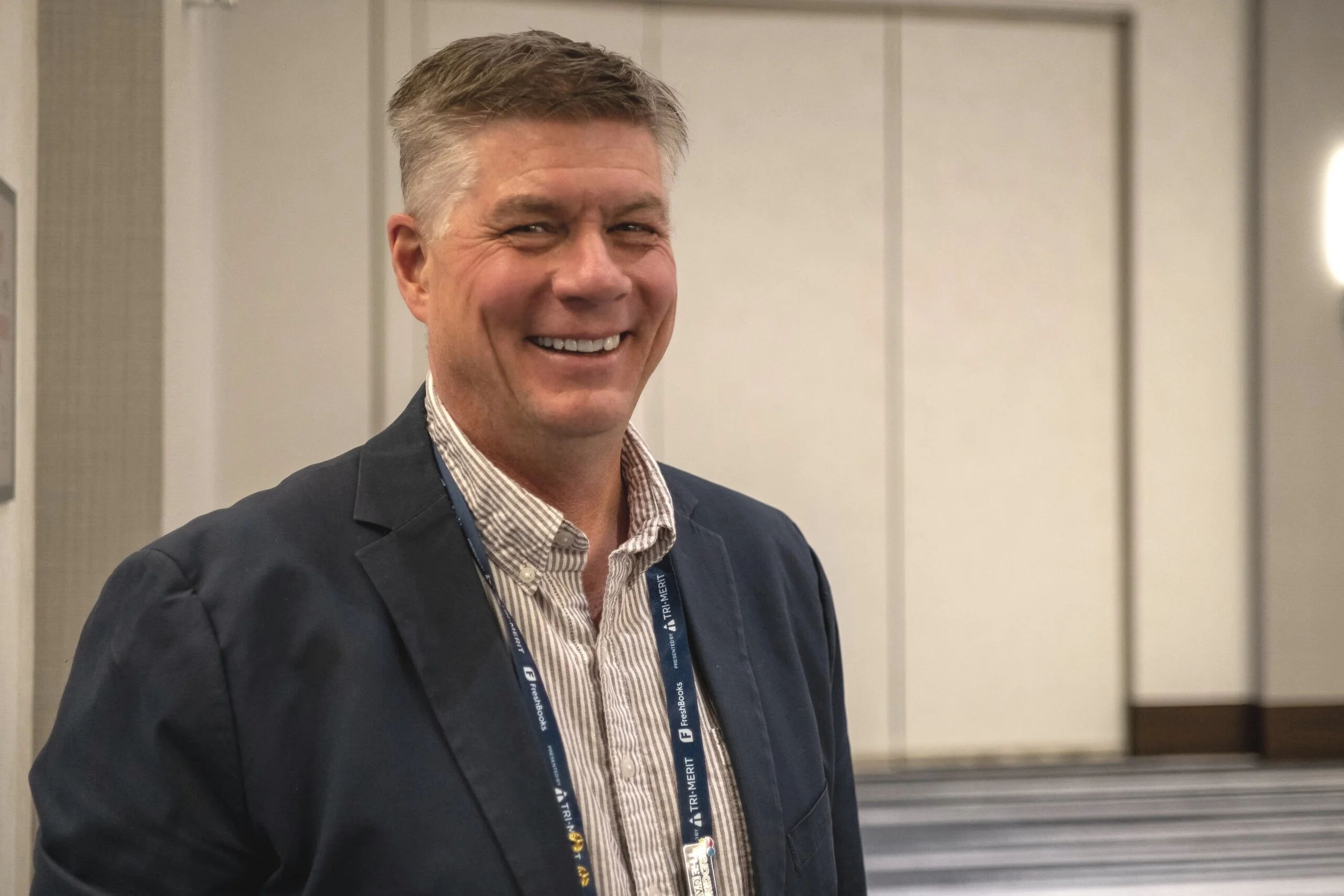
Randy Crabtree, co-founder and partner of Tri-Merit Specialty Tax Professionals, is a widely followed author, lecturer and podcast host for the accounting profession. Since 2019, he has hosted The Unique CPA podcast, which ranks among the world’s 5% most popular programs (Source: Listen Notes). You can find articles from Randy in Accounting Today’s “Voices” column and the AICPA Tax Advisor, and he is a regular presenter at conferences and virtual training events hosted by CPAmerica, Prime Global, Leading Edge Alliance (LEA), Allinial Global and several state CPA societies. Randy also provides continuing professional education to Top 100 CPA firms across the country.

Terrell Turner is a 3x nationally ranked CPA, 2x Top 20 Global Finance Influencer. He is the founder of the TLTurner Group, which has been recognized in NYC Times Square and the NY Times as a top accounting and CFO firm that specializes in supporting law firms. Outside of running an accounting firm, Terrell hosts multiple vlogs and podcasts in addition to co-hosting The Unique CPA. Terrell is also a speaker and a content creator who regularly hosts and collaborates on video and audio content projects with multi-billion dollar corporations, bar associations, universities, and non-profit organizations.