
Fostering a Culture of Experimentation in Accounting
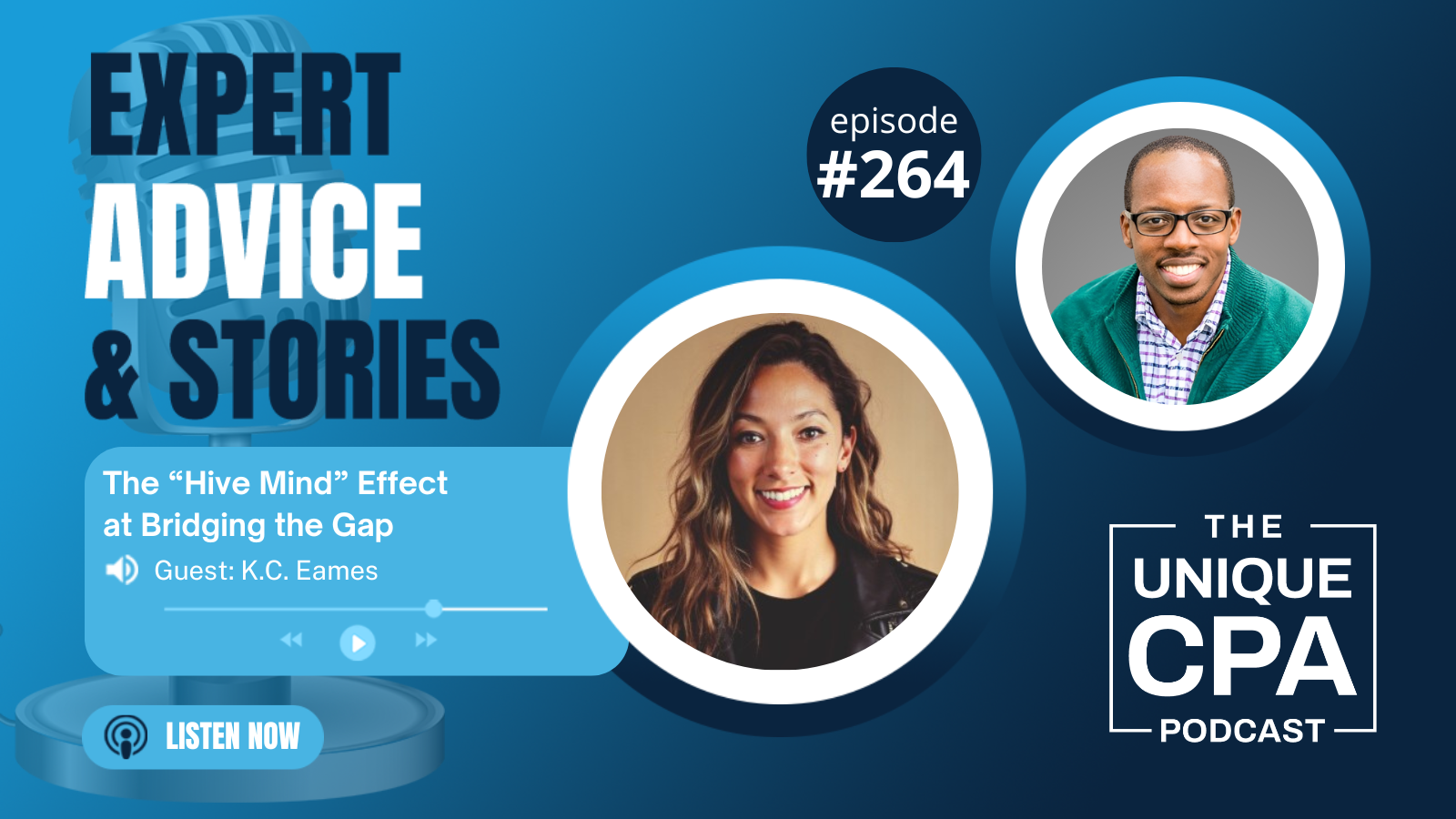
With K.C. Eames
Accountants aren’t supposed to embrace failure. It runs counter to everything the profession is built on. But K.C. Eames, who leads operations at Dark Horse, has spent time thinking carefully about why that instinct holds firms back, and what it actually takes to build a culture where people feel safe to experiment. Recorded live at Bridging the Gap 2025, her conversation with Terrell Turner on Episode 264 of The Unique CPA covers her main stage talk on making it safe for accountants to fail, how Dark Horse uses open communication to surface and celebrate new ideas, and what it felt like to retool her presentation at the last minute to lead with personal stories rather than just a framework. She also reflects on the kind of tight-knit, genuinely collaborative community that keeps drawing her back to Bridging the Gap year after year.
Show Transcript Hide Transcript
Hello and welcome to The Unique CPA with your host, Terrell Turner. Bridging the Gap 2026 is coming soon, so we’re bringing you conversations from last year’s event. Stay tuned for the thoughts of top voices in the profession as we look forward to BTG Charlotte. The Unique CPA is brought to you by RandyCrabtree.com. Log on to learn more.
Welcome back to another episode of The Unique CPA Podcast. We are here at Bridging the Gap 2025, and I am sitting down with the awesome K.C. Eames, welcome to the show, K.C.
Hi, thank you for having me.
Absolutely! Well, I will say: a lot of people have been giving me their feedback about what they think about the conference. Now you’ve been to multiple Bridging the Gap conferences. So tell me what was it like when you went to your first Bridging the Gap conference?
I don’t think I knew what I was getting into. I went two years ago, and then I missed it last year and I totally regret missing it, and so I couldn’t miss it this year. But two years ago, I remember being blown away by the amount of interactions and connections and deep, like, relationships I built, so fast. I was new to Dark Horse at that time, and so I was just kind of new to the scene of being connected with accounting firm leaders and owners, and it was magic. It’s exceeded my expectations this year too.
And so I guess getting connected to the community, how do you feel like that’s helped you in your role at Dark Horse?
I wouldn’t be here without these people. These people help me so much when it comes to just like, firm decisions, the types of strategies and things that we’re thinking about: being influencers, being content creators, how do we get thought leadership out there? I have people that I lean to for all kinds of things that are helping me in my career and helping us at Dark Horse, like running a business.
I think that’s a really good point because I see so many accounting firms. I mean, even if you just go into Google and in whatever city you’re in, you type in “accounting firms,” you’re going to see a lot of them. And I often wonder like how many of them are just trying to figure it out all on their own.
Everyone is. Nobody knows what they’re doing really. And it’s always been such an awesome community because everyone is really collaborative, cooperative and wants to help each other. And I know we say that all the time, but it’s so true. Like I’m in multiple chat groups, Slack groups, on LinkedIn, there’s so many people I can reach out to if I have a specific topic that I need help with, and I have never had a shortage of people wanting to help, giving me advice. There have been a number of people here at Bridging the Gap who I’ve messaged in the past: Can I get a like 15 minutes of your time to run something by you? And they’re like, you know what, here’s an hour. Let’s connect, let’s chat. Like people just want to connect with each other and help others who are, you know, struggling or need help with something.
Now, you know, one of the things that you end up going through as you are getting advice, and you’re trying different things, is that not all things work out exactly how they were planned. So I love the fact that your topic was about creating a safe place where people can try things and hey, some things aren’t going to work out. So can you give us a little bit of an insight into what your talk was about or some of the high points in your conversation for the speech you gave?
Yes. So I talked about how to make it safe to fail and create a culture of experimentation in your accounting firm because I think that, well, one of the main topics is that accountants and experimentation are kind of opposites, right? Like, we like things to be very set and we like to minimize risks and errors and experimentation, you’re going to take a risk, you’re going to have mistakes. And so how do we bridge that gap and start to think more experimentally, how do we make it safe to fail in our organizations? Understanding that people have this natural tendency to want to create and solve problems and be innovative, but if they’re in the wrong environment, if the incentives are wrong, if the structures are not right, people are going to be stifled and restricted, and they’re not going to be their true creative self. So that was a lot of what I talked about is how to create an environment to remove those barriers.
So I’m very curious because as you said, that’s not the normal for accountants. So when an accountant is looking at, hey, I’m part of the Dark Horse team, the Dark Horse community, it’s like, is there a learning curve or an adjustment period for them to say, hey, this is a place where I can experiment a little bit more? How do you help people understand that culture? Because that’s something that’s unique that Dark Horse does.
I think it comes down to transparency is that we all have a shared, we’re all on a shared platform. How we communicate at Dark Horse on Microsoft Teams, and when we get good ideas, we want to praise those ideas. Or even if we don’t play them all the way through, we’re talking about that openly with our principals and with support team members. When an idea is surfaced from someone else, the best ideas are not going to be us from leadership mandating things that we’ve thought of. The best ideas are going to come from them. And so if we create an open communication channel where people are talking about new, cool things and we’re praising ideas when we get them, when a new tool comes in that one of our principals found, it’s like, hey, let’s roll this out, and everybody knows that that person found it. So we’re creating this space where people feel welcome to bring ideas so that we can play it out as a firm and see is this a direction we want to go with this idea.
I love it. I guess, how has, you know, this community kind of helped you feel comfortable with experimentation?
So stepping onto the stage yesterday to speak on this, I originally started thinking of this very formally of like, how do I tell people how to do this? And then I realized there’s so many personal touches in the presentations that I’ve seen here of people talking about their story, their experience, and so I kind of very last minute on my presentation, I reframed it to, “let me just share my experience.” That’s what it is, is how can I share stories of things that I’ve experienced in the past, at firms that I’ve been at where I felt stifled, or firms where I felt like I blossomed the most. How can I just tell those stories so that people come in and take a message from that, rather than just like listing off, here’s what you need to do to be experimental? And so I was getting the feedback from people after hearing that my stories really spoke to them or they had stories that were similar, it made me feel like, okay, like I experimented with this presentation here and it seems like it had good feedback on it.
Nice! So you mentioned that, hey, this was just one of your first times getting up in front of the audience and sharing your insights. So walk us through, what was that like in preparation, leading up to it for you?
It was a lot of preparation ’cause I wanted to nail it. It was a huge opportunity that Randy was so supportive to give me. And then I was surprised when I showed up and had the main stage instead of one of the breakout sessions, so that was a little bit of a shock that morning. But I was buzzing all over, but I was so calm because it was like, this is something I really want to share with people, this is something I’m passionate about. And like I mentioned, being able to speak from my stories and my experience when I got talking. It’s like I can talk about that. I don’t need to memorize something like this is what I have to share is my perspective, my upbringing, and hopefully the lessons I learned are things that people can learn from too.
I love it! Now, you also did a panel discussion as well, so tell us a little bit about that one.
Yeah. Did less preparation for that because it was with Michael Ly. So Michael and I just had more of like a talk show format and we had a few high level sections that we wanted to get to, but we also wanted audience engagement. We were in one of the smaller breakout rooms, which I loved because I think people felt more invited to talk—it’s less intimidating. And so we pulled in the audience for a lot of discussion and that’s where I think all the good synergy comes from at these conferences. There’s so much conversation in the spaces between sessions and well, can we just bring that into one of the sessions? We have all these brains here who are all wanting to think about and talk about the same problems, and now that we’re all here, let’s engage you. So Michael and I had some good improv questions back and forth, just exploring the idea of servant leadership, and everybody had good insight too, of styles of leadership that they’ve worked with in the past that they liked, that they didn’t like. It was a really fun conversation, it was so easy. So I enjoyed it.
I love that about, you know, just I think the art of communication, because I think I’ve gone through that phase where at one point it was like, alright, how do I put together this really good speech? I go in there and I just give the audience the speech. And then I took a step back and just like, you know what, if I engage with the audience more, because that’s something I’ve seen in studying communicators: I love watching comedians when they do their crowd work, where it’s just like, these are not scripted jokes, these are just, hey, whatever the crowd gives me, I’m going to respond based on that. And I find that makes a great experience. So I would say from the people that were in the room that were engaging in the conversation like. Did you find yourself learning from things that they were saying as much as you were giving to them?
Totally. I mean, we listed out where are the types of leadership we want to talk about, but let’s ask the audience, “what are some styles of leadership you’ve worked with?” And they mentioned, one of the participants there mentioned micromanaging and I’m like, yeah. Then my brain starts racing back to, yeah, I had a senior once who just was a hawk over everything I did. And so it’s like that’s why we wanted the audience engagement is because anytime I say something, it sparks something for them, and then they respond, it sparks something for me. That’s the best, that’s the juiciest stuff: that’s authentic communication and sharing of ideas is when you have that back and forth.
I love that about this environment in this conference. So I’m curious on your perspective: when you think about other conferences that you’ve gone to, how does the atmosphere here compare to other conferences? And you don’t have to tell us any names.
So, many of the conferences are, they’re great at bringing people together. They might have some very technical topics, so if you want to dive into this very technical topic, you’ve got some experts in various things like that. There’s something about the energy here and the types of sessions we talk about that seem to be leadership, change management, softer things, things that are a little bit harder to really clearly define. Like experimentation—that’s not the same as like a technical tax topic, right? And so it’s mushier things that we’re all trying to explore and navigate together, so I think it requires so much more dialogue, because nobody’s got this figured out a perfect framework. These are the softer things that we have to be talking about together to try to get to the best way of leading firms and leading the, you know, the accounting industry.
I love it. So before we wrap up, one final question, and this is a question I love asking to everyone: So let’s say you and I are sitting down and there’s another person who joins us who’s never been to a Bridging the Gap, and we’re talking about Bridging the Gap 2026. What is the reason you would give to them for why they should show up to Bridging the Gap 2026?
It feels like the who’s who of accounting. And I talked to my boyfriend about this and I’m like, I know this sounds weird, but it’s like the celebrities in my industry. I get to see people who I’ve heard their voices on podcasts or watch them on webinars, there was this just like buzz of celebrity status. It’s these people who are the 1%, like the top leading the pack in the industry of thinking about the most forward thinking topics. And now they’re my friends! So I’m not as starstruck, but like it’s definitely one not to miss.
Awesome, I love it! Well, K.C., thank you so much for being an amazing guest. Thank you for sitting down and recording this awesome podcast with me.
Thank you. Fun chatting with you.
About the Guest
K.C. Eames serves as the Director of CAS & Client Solutions at Dark Horse CPAs, where she has an impact by guiding accountants in their CAS practices to be more efficient, more effective, and more profitable, while providing game-changing insights and strategic direction to clients. Her experience includes designing systems and processes, supporting technology development, transitioning clients to the cloud and automating their accounting functions. In her own words, Dark Horse is “a unique environment filled with unconventional thinkers who are actively reshaping what a modern CPA firm can look like.”
Meet the Hosts
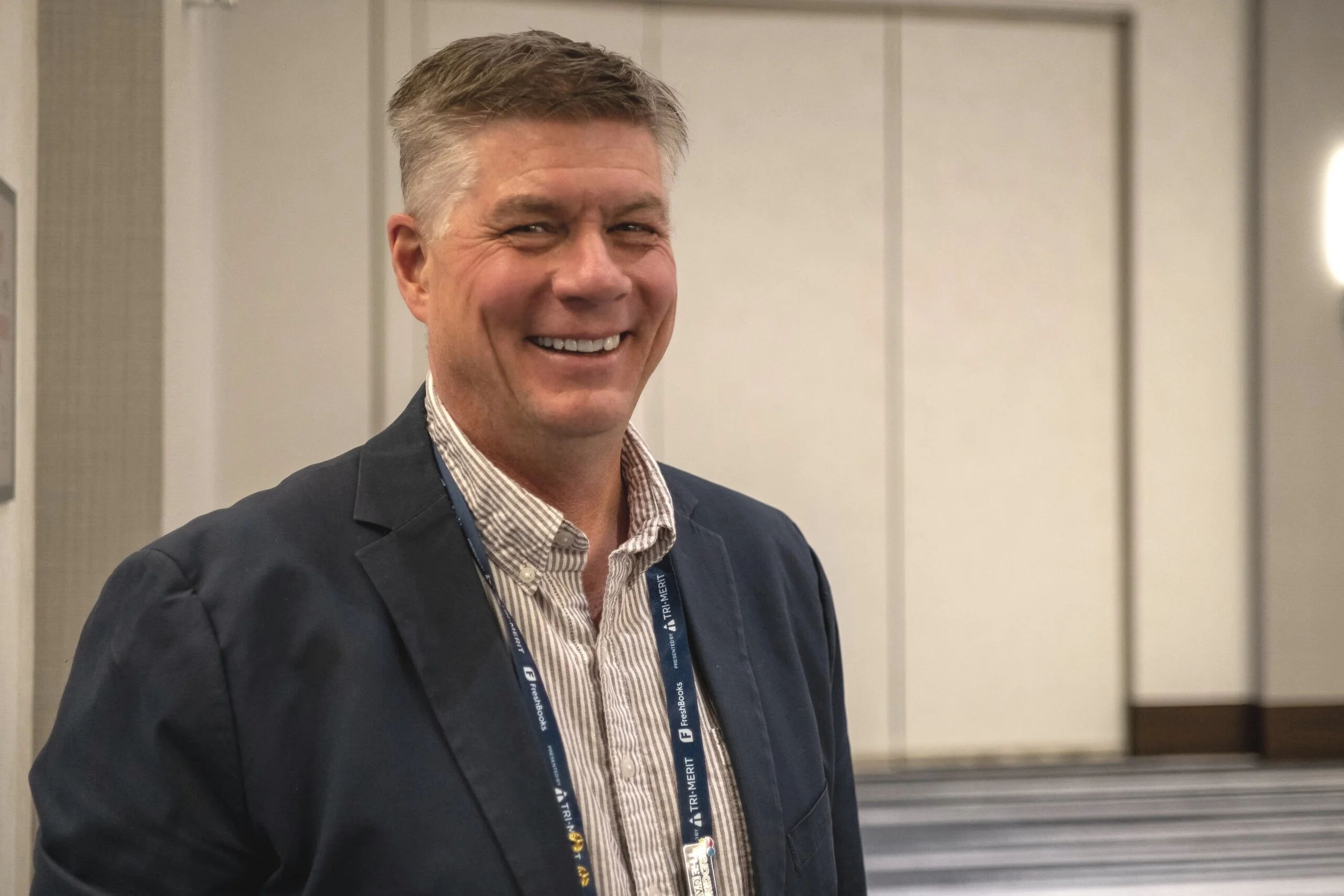
Randy Crabtree, co-founder and partner of Tri-Merit Specialty Tax Professionals, is a widely followed author, lecturer and podcast host for the accounting profession. Since 2019, he has hosted the The Unique CPA podcast, which ranks among the world’s 5% most popular programs (Source: Listen Notes). You can find articles from Randy in Accounting Today’s “Voices” column and the AICPA Tax Advisor, and he is a regular presenter at conferences and virtual training events hosted by CPAmerica, Prime Global, Leading Edge Alliance (LEA), Allinial Global and several state CPA societies. Randy also provides continuing professional education to Top 100 CPA firms across the country.
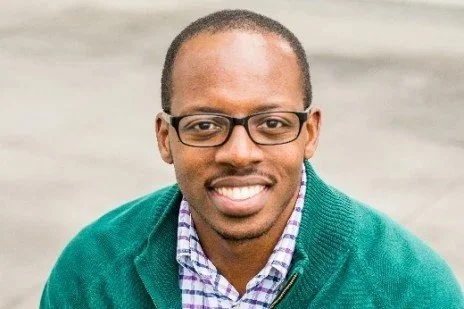
Terrell Turner is a 3x nationally ranked CPA, 2x Top 20 Global Finance Influencer. He is the founder of the TLTurner Group, which has been recognized in NYC Times Square and the NY Times as a top accounting and CFO firm that specializes in supporting law firms. Outside of running an accounting firm, Terrell hosts multiple vlogs and podcasts in addition to co-hosting The Unique CPA. Terrell is also a speaker and a content creator who regularly hosts and collaborates on video and audio content projects with multi-billion dollar corporations, bar associations, universities, and non-profit organizations.